

Week 7 - The Development of Embalming, Restorative Art, and Fune

Presentation
•
Other
•
University
•
Hard

Tina Belt
Used 7+ times
FREE Resource
71 Slides • 0 Questions
1

The Development of Embalming, Restorative Art, and Funeral Transportation
Week 7
2
3
Customary Practices in Preserving the Dead
Evolving preservation methods brought from Europe during the Colonial Period
In European tradition, it was common for nobility to lie in state for several days—or even weeks—before burial
Key historical figures contributed to the development and refinement of these preservation practices
4

(1638-1731) was a Dutch botanist and anatomist, remembered mainly for his groundbreaking methods of anatomical preservation and the creation of his carefully arranged scenes incorporating human body parts.
Frederick Ruysch
5
The Scottish anatomist William Hunter (1718–83), however, is credited with being the first to report fully on arterial and cavity embalming as a way to preserve bodies for burial. His discovery attracted wide attention after his younger brother, John Hunter, in 1775 embalmed the body of a Mrs. Martin Van Butchell.
William and John Hunter

6
In 1838, he published Histoire des Embaumements, detailed a new process whereby bodies could be preserved by the injection of an arsenic solution into the carotid artery, making use of the vascular system to disperse the fluid. Initially devised as a means of preserving corpses for anatomical study, the applications of embalming to the funeral industry soon became clear.
Jean Gannal

7
8
Continued: Limitations and Social Divides in Preservation
Elaborate funerals were typically reserved for the upper classes
Those responsible for caring for the dead were usually from lower social ranks
Limited motivation existed to advance embalming techniques during this time
Preservation methods remained crude through the 18th century
9
Impact of Growing Cities and the Industrial Revolution
Increased need for extended body preservation
Working-class families often faced delays in affording funerals, leaving bodies unburied for longer periods
As families became more geographically dispersed, additional time was needed to notify and accommodate distant relatives and friends traveling for services
10
Preservation Methods Prior to the 19th Century
Various techniques were used before modern embalming emerged, often focused on delaying decomposition rather than long-term preservation:
Disembowelment – Removal of internal organs to slow decay
Filling body cavities with charcoal – Used to absorb moisture and odors
11
Immersion in alcohol – Preserved tissues by preventing bacterial growth
Application of alum or a sere (dried) sheet – Desiccated the body surface
Use of tar and sawdust – Helped seal the body and control odor
These methods varied based on location, available resources, and cultural or religious practices.
12
The Role of Preservation in the 19th Century
Many people wished to be buried in their family plots, in the same soil as their ancestors
Families of fallen soldiers desired their loved ones' bodies to be returned home for burial
These needs created growing demand for more effective embalming methods to delay decomposition

13
Innovations in Preservation
In 1843, John Good patented the first corpse preserver
Devices like corpse coolers and cooling boards used the principle of ice refrigeration
The corpse cooler was portable and designed to target the chest and abdomen—problem areas for decay
It could be placed directly on the body, even while inside the casket
14


15
The Role of Airtight Receptacles and Chemical Embalming in Preservation
Airtight Receptacles:
The use of airtight coffins and burial cases helped slow decomposition by limiting exposure to air, moisture, and bacteria. These containers played a crucial role in extending the time before burial, especially during long-distance transport or delayed services.
16
Chemical Embalming:
The development of chemical preservatives, such as arsenic- and formaldehyde-based solutions, marked a significant advancement in body preservation. These chemicals helped disinfect and preserve tissues more effectively than earlier methods.
17
Influences on Development:
The growing demand for longer preservation periods—driven by social, cultural, and logistical needs—encouraged the evolution of embalming techniques and technologies. The shift from temporary preservation to more lasting methods reflected broader changes in funeral customs.
18
Contribution of Medical Practitioners:
Physicians and anatomists played a key role in advancing preservation methods. Their need to study cadavers for educational and scientific purposes drove the refinement of chemical embalming techniques, which later influenced funeral practices.
Extended Viewing Time:
Improved preservation allowed for longer wakes and viewings, enabling families more time to gather and mourn. This was particularly important in cases of delayed burial due to distance or financial constraints.
19
20
Impact of the Civil War and Abraham Lincoln’s Funeral
The Civil War was a turning point for the widespread use of embalming in the United States. Embalming allowed fallen soldiers to be transported long distances for burial by their families.
The public funeral of President Abraham Lincoln in 1865—featuring a well-preserved body displayed over a 1,600-mile, multi-city journey—helped popularize embalming. It demonstrated the effectiveness of chemical preservation to the general public and marked a cultural shift in American funerary traditions.
21
22
Introduction of Disinfection
In addition to preservation, embalming began to serve a hygienic purpose by reducing the risk of disease transmission. The added element of disinfection became especially important in urban environments and during epidemics.
23
Banned Substances
Early embalming fluids often contained toxic chemicals:Arsenic – Initially popular due to its preservative qualities but later banned because of its health risks to embalmers and its environmental impact
Mercurial Compounds – Also used for disinfection and preservation, but eventually prohibited due to their toxicity and potential to contaminate burial grounds
24
Continued...
Evolution of techniques and instruments
Hand pump
Gravity injector
Trocar
Electric embalming machine

25


26
27
Key Innovators in the Development of Modern Embalming
Dr. Thomas Holmes – Known as the "Father of American Embalming",
J. Anthony Gaussardia – One of the first to receive a U.S. patent for an embalming process that used chemical injections.
Alexander Butlerov & August Wilhelm von Hofmann – Chemists credited with the discovery and identification of formaldehyde,
Samuel Rogers – Patented the trocar
28

During the Civil War, Holmes embalmed Union soldiers killed in battle so that the remains could be shipped back to their families. Holmes charged $100 per body. Abraham Lincoln eventually sanctioned the treatment for all fallen soldiers and officers, and in four years Holmes embalmed several thousand bodies. although some believe this figure to be inflated.
The widespread use of arterial embalming for fallen soldiers made Holmes' technique widely known, and as a result embalming as part of funeral preparations became more accepted in America
Dr. Thomas Holmes
1817-1900
29
Read the 1942 New Yorker article, The First Embalmer. This is an excellent representation of Holmes's character.
Dr. Thomas Holmes
1817-1900
30

Held the first US patent on the process of arterial embalming: October 28, 1856.
John Anthony Gaussardia
31

Both chemists are accredited for having discovered Formaldehyde and its tissue preservative properties.
&
32

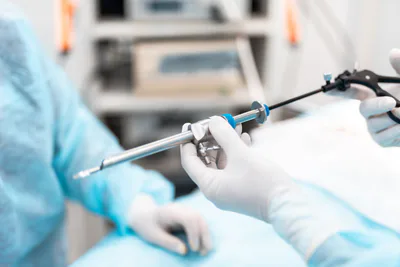
In 1878, Samuel Rodgers patented the “trocar” which allowed embalmers to easily administer preservative fluid. This process of embalming was simpler than the arterial embalming practiced at the time. Although embalmers continued to refine their methods into the 20th’ century, Rodger’s trocar model revolutionized embalming techniques at the time and is very similar to the tool used in mortuaries today.
Samuel
Rodgers
33
The Development of Embalming Schools and the Spread of Embalming Practices
Slow Public Adoption
Despite the advancements in arterial embalming, the general public and many undertakers were slow to embrace the practice.
Ice preservation was more familiar, perceived as less invasive, and considered more respectful by the public—who often viewed embalming as a form of mutilation.
34
Limitations Before the Trocar
Before the invention of the trocar in 1878 by Samuel Rogers, arterial embalming lacked a method for cavity preservation. This limited the effectiveness of embalming and contributed to public hesitation.
35
Influence of Chemical Manufacturers
The rise of commercial embalming fluid production played a critical role in standardizing and spreading embalming practices. By 1880, at least four major companies were producing and distributing embalming chemicals:The Hill Chemical Company (later known as Champion Chemical Company)
The Clarke Chemical Works
Mills and Lacey
Globe Casket Manufacturing Company
36
The Role of Chemical Companies in Embalming Education
Historically, chemical companies did more than just supply embalming fluids—they played a vital role in the development of the profession by:
Offering product demonstrations
Providing hands-on training
Supporting the creation of some of the first embalming schools
Their efforts helped standardize techniques and formalize funeral service as a profession.
Continuing Influence Today
Modern chemical companies remain deeply involved in professional development, offering continuing education, certification programs, and updated training for today’s funeral professionals.
37
The Development of Embalming
Continued: Expansion Through Sales and Training
Traveling Salesmen
In the 1880s, sales representatives from chemical companies, casket manufacturers, and funeral supply businesses traveled extensively to promote their products directly to undertakers and funeral homes.Training Through Sales
Sales often came with hands-on training in embalming techniques for those who purchased embalming chemicals, helping spread knowledge and standardize practices.
38
The Development of Embalming
Civil War Surgeons Transitioning to Civilian Practice
Many surgeons who had performed embalming during the Civil War transitioned to civilian roles post-war.Some became salesmen and educators for embalming fluid manufacturers
Others opened their own undertaking or embalming businesses
39
The Development of Embalming
A Time of Opportunity
The post-war period marked a time of significant professional growth in the funeral industry, with new business models and educational pathways emerging.Warehousing and Chemical Development
As demand increased, companies invested in warehouses and continued refining embalming chemicals, improving both preservation and safety.
40

While Clarke was working as a casket salesman, he enrolled in an anatomy course taught by Dr. C. M. Lukens at the Pulte Medical College, located at the corner of Seventh and Mound Street in Cincinnati. Clarke and Lukens hit it off, and eventually they created a school of embalming where they demonstrated arterial embalming techniques using newly developed embalming chemicals.
The first class was organized Monday, March 8, 1882. Lasting only six days, each of the seven students received intensive training in the amphitheater of Pulte Medical College in Cincinnati. Mr. Clarke and his colleagues took their teachings to Philadelphia, New York City, and Boston where his ventures proved prosperous. (Coincidentally, 1882 was also the founding year for the National Funeral Directors Association.) The Clarke School of Embalming was founded as a permanent institution of learning and renamed Cincinnati College of Embalming in 1909. The College found a home in General Hospital in 1915.
Joseph H. Clarke
41
Auguste Renouard
"The Father of Modern Embalming"

In 1889, C. B. Dolge founded the first permanent school of embalming to popularize the method and his products, and this was known as the United States College of Embalming. Dr. Auguste Renouard was the demonstrator, and later purchased the school which was then run as the Renouard Training School for Embalmers until 1954, when its was absorbed by the American Academy, McAllister Institute.
Renouard came to N. Y. to found an institution which he called the United States College of Embalming. The United States College of Embalming is still in existence as the Renouard Training School for Embalmers.
42
Continued: The Rise of Embalming Education
Introduction of Embalming Schools
As embalming became more accepted, formal education emerged to meet the growing demand for trained professionals.Separation from Chemical Companies
Early training was often provided by chemical companies, but the establishment of independent schools marked a shift toward more standardized, academic instruction.Improved Quality of Instruction
The move to formal educational settings led to more comprehensive and consistent training, raising the professional standards of the funeral service industry.
43
Pioneers in Embalming Education
Joseph H. Clarke founded the first embalming school affiliated with an educational institution in Cincinnati, Ohio in 1882, laying the foundation for professional mortuary education.
Dr. Auguste Renouard opened the Rochester School of Embalming in 1882 (not 1982), and authored one of the first embalming textbooks, The Undertaker’s Manual, which became a key instructional resource.
These early leaders helped transform embalming from a trade into a respected profession.
44
The Development of Embalming
Expanded Curriculum
As schools evolved, they began offering courses beyond embalming, including:Casket selection and merchandising
Funeral ceremony planning and conducting
Practical skills in undertaking and funeral service management
45
The Development of Embalming
Key Contributors
Dr. C.M. Lukens, working alongside Joseph H. Clarke, helped broaden the Cincinnati school's curriculum by introducing courses in merchandising and funeral directing.
A. Johnson Dodge founded the Dodge School of Embalming in Boston in 1910, further shaping the future of mortuary education and helping establish the Dodge Chemical Company as a leader in the field.
These developments laid the foundation for the structured, multi-disciplinary funeral service education we see today.
46

Since 1893 when A. Johnson Dodge founded The Dodge Company, he was appointed principal of the Massachusetts College of Embalming, where he served until 1904, additionally providing embalming training in the field - first with traveling instructors and later through sales representatives who are licensed embalmers, a technical help line, the Dodge Magazine, and technical seminars. He established the Dodge School of Embalming in Boston in 1910.
A. Johnson Dodge
47
Development of Restorative Art
The Origins of Restorative Art
Early Terminology
Restorative art originated under the names derma surgery and demi-surgery, terms used to describe techniques for reconstructing or restoring damaged facial and body features.Purpose and Importance
These techniques were essential in helping to create a natural and peaceful "memory picture" for grieving families—a vital component of the viewing experience.
48
Development of Restorative Art
Joel Crandall: Pioneer of Restorative Art
Often regarded as the founder of modern restorative art, Joel Crandall coined the term “demisurgery” and defined it in 1912 as:“The art of building or creating parts of the body which have been destroyed by accident, disease, decomposition or discoloration, and making the body perfectly natural and lifelike.”
– Joel Crandall, 1912
His contributions laid the foundation for the restorative techniques used in funeral service today.
49
Development of Restorative Art
50
Development of Funeral Transportation
Funeral Processions and the Hearse
Origin of the Word “Hearse”
The term hearse has evolved over time, rooted in both French and Latin:French: Herse – meaning harrow or portcullis, originally referring to the framework that held candles above a coffin during funeral rites.
Latin: Hirpex – meaning rake or harrow, referencing the spiked shape of early funeral biers and candle holders.
Connection to Funeral Processions- The word came to refer to the vehicle that carries the deceased during a funeral procession. The design and purpose evolved from symbolic frameworks to functional, ornate transportation for the dead.
51
Development of Funeral Transportation
Continued: Early Methods of Body Transportation
Bier
A flat, open frame—often made of wood or metal—used to carry the deceased during funeral processions. Typically used before enclosed coffins became common.Bearers
Individuals, often family members or members of the community, who carried the bier or coffin by hand from the place of death to the burial site.Horse-Drawn Carts
As funerals became more elaborate and distances increased, horse-drawn carts or wagons were used to transport the body. These were the earliest versions of what would evolve into the modern hearse.
52
Organized in 1882 as the Crane and Breed Mfg. Co., . In 1893 at the Chicago Worlds Fair, the company exhibited the most elaborate and outstanding funeral car of the 19th Century. Designed for the West Indian and South American trade, its features included extraordinary size, churchlike design, massive carvings in bold relief, gildings, heavy gold fringes and tassels, and lamps of gold. Weighing 2400 lbs as against a standard weight of about 1600 lbs., it was laden with golden angels and cherubs; crucifixes and statues; a processional scene over the middle glass in which the Saviour was depicted bearing the cross and preceded by the two thieves, the tow Martyrs, a throng of Roman soldiers, and others. Other sculpture over the quarter lights showed the adoration of the Christ child and the Ascension. This vehicle was not intended to be used in America, however it was used for the funeral of Chicago's assassinated mayor Carter Harrison.
Crane and Breed

53

Hudson Sampson was one of America's most famous innovators in funeral fashions. In 1898 Samson proposed the most radical change in funeral car design ever to find its way into actual general use. His idea was a funeral car, the body of which should be entirely obscured by gracefully draped imitation of cloth, an immense pall, held up in place by cords and tassels so as to form the draperies, the whole to be carved out of solid wood. This planted the seed for the style of closed, columned hearses with carved wood draperies.
Hudson Samson
54

James Cunningham, Son and Company was an American business based in Rochester, New York, initially manufacturing horse-drawn coaches, that from 1908 onward developed and produced automobiles.
James Cunningham
55
Development of Funeral Transportation
Colonial and Early Funeral Vehicles
Horse-Drawn Hearses
Used widely throughout the 19th and early 20th centuries- primary method of transporting the deceased during funeral processions.Key Innovators
James Cunningham – leading manufacturer of finely crafted horse-drawn and early motorized hearses.
Hudson Samson – early concept of the motorized funeral car.
Crane & Breed – Showcased an elaborate funeral coach at the Chicago World’s Fair.
56
Development of Funeral Transportation
Evolution of Design
Hearse styles evolved from simple wooden carriages to intricately carved and decorated vehicles, reflecting the social status of the deceased and community expectations.
Undertakers’ Buying Patterns
As funeral practices became more formalized, undertakers began investing in customized, stylish hearses to meet client expectations and stay competitive within the industry.
57
Development of Funeral Transportation
Funeral Trolley Cars and the Rise of Motorized Hearses
Funeral Trolley Cars
Used in some urban areas, funeral trolleys were rail-based cars that transported both the deceased and mourners to cemeteries.
Think Abraham Lincoln’s funeral train—an early and iconic example of ceremonial transport over long distances.Introduction of the Gas Buggy
The invention of the gasoline-powered automobile—known as the "gas buggy"—revolutionized funeral transportation, leading to the decline of horse-drawn hearses.
58
Development of Funeral Transportation
Introduction of Other Funeral Automobiles
Undertaker’s Buggy
Horse-drawn carriage specifically designed for funeral processions, providing a dignified mode of transport for the deceased and mourners.
Limousine
Introduced in 1902, limousines offered comfortable and elegant transportation for family members during funerals, becoming a standard part of funeral services.Funeral Automobile Construction
Early funeral vehicles were often custom-built or modified to meet the specific needs of funeral services, focusing on both functionality and respectful presentation.
59

Fred Hulberg: In 1909, Fred Hulberg of New York City specified in a letters patent eight innovations which joined together to form a new and improved combined hearse and passenger vehicle. The drawings displayed a large, boxlike passenger section of a truck-like vehicle, in front of which and directly above the motor was a rectangular container for the casket. The driver sat in the open, much like the driver of a fire truck. This compound vehicle amounted to a combination of a horse-drawn hearse, a funeral trolley car, and an automobile power plant. Sixteen feet long, selling for about $6,000 the invention was designed to replace three carriages and a hearse.
Fred Hulberg
60
Development of Funeral Transportation
Design of Gasoline-Powered Hearses
Fred Hulberg (1909): Credited with designing one of the first gasoline-powered hearses in the United States.
Crane & Breed: One of the earliest companies to manufacture and market motorized funeral cars, building on their reputation from the horse-drawn era.
These innovations marked the beginning of the modern funeral vehicle industry and reshaped funeral procession traditions.
61
Development of Funeral Transportation
Evolution and Features of Hearses
Sizes and Variations
Hearses have been manufactured in various sizes to accommodate both adult and child caskets, ensuring a respectful presentation for all services.Color Options
While traditional hearses are often black, manufacturers have offered a range of colors—such as white, gray, silver, and even customized finishes—to reflect personal or cultural preferences.
62
Development of Funeral Transportation
Specialized Features
Combination Vehicles: Designed for dual use as both ambulances and hearses, popular in smaller communities.
Hydro-Leveling Suspension: Enhanced ride quality and simplified the loading and unloading process.
Side-Service Doors: Provided added convenience and flexibility for directing services and handling remains.
63
Development of Funeral Transportation
64
Development of Funeral Transportation
Development of Funeral Vehicles Throughout the 20th Century
Limousines
Introduced to provide transportation for family members and close friends during funeral processions, limousines became a symbol of dignity and comfort.Flower Cars
Specially designed vehicles used to carry floral arrangements separately from the hearse, helping to create an organized and elegant presentation during services.
65
Development of Funeral Transportation
Vans and Converted Vehicles
As funeral services diversified, vans and other modified vehicles were adapted to meet various needs, including transporting multiple family members, equipment, or serving as combination vehicles for specialized purposes.
66
Development of Funeral Transportation
History of the Funeral Home Ambulance Service
Origin
Funeral homes began offering ambulance services in the early 20th century, largely because they already had the vehicles (hearses) and personnel capable of transporting individuals. In many communities, especially rural areas, they were the only ones equipped to respond quickly in emergencies.Responding to Community Needs
Funeral directors often served dual roles, providing both emergency medical transport and mortuary services. This was seen as a public service, filling a critical gap before the widespread development of organized EMS (Emergency Medical Services).
67
Development of Funeral Transportation
Discontinuation
As emergency care standards evolved, regulations around training, equipment, and response protocols became more stringent. By the 1970s and 1980s, most funeral homes discontinued ambulance services due to increasing liability, cost, and the rise of professional EMS systems better suited to handle medical emergencies.
68
Development of Funeral Transportation
Timeline of EMS Evolution and Funeral-Based Ambulance Services
Early 1900s
Funeral homes often provided ambulance services, using hearses and other vehicles to transport patients and the deceased.
Funeral directors served as first responders in many rural and underserved communities due to lack of formal emergency services.
1920s-1930s
Funeral homes became primary providers of ambulance transport in many towns, as few hospitals or dedicated EMS agencies existed.
Vehicles were modified hearses or specialized ambulances purchased by funeral homes.
69
Development of Funeral Transportation
1940s-1950s
The rise of hospitals and some municipal ambulance services began to reduce funeral home ambulance roles.
Funeral homes continued ambulance operations in many smaller or rural areas where dedicated EMS was unavailable.
1960s
Increased medical knowledge and technology raised standards for emergency care.
Ambulance services began requiring trained medical personnel, including EMTs and paramedics.
70
Development of Funeral Transportation
1970s
The development of modern EMS systems, influenced by federal funding and legislation (e.g., the National Highway Safety Act of 1966), led to professionalization of ambulance services.
Funeral homes gradually phased out ambulance services due to increased regulations, liability concerns, and the emergence of dedicated EMS providers.
1980s-Present
Funeral homes generally no longer operate ambulance services but focus on mortuary and funeral care because modern EMS agencies operate with advanced medical equipment, standardized training, and rapid response protocols.
71
Development of Funeral Transportation
The Development of Embalming, Restorative Art, and Funeral Transportation
Week 7
Show answer
Auto Play
Slide 1 / 71
SLIDE
Similar Resources on Wayground

67 questions
Quiz 2
Presentation
•
University
65 questions
DCS1101 - Functions (Week 8)
Presentation
•
University
67 questions
Cleft Sentences and auxiliary verbs for emphasis
Presentation
•
University
65 questions
English for Socializing: Networking
Presentation
•
University
67 questions
1st class_
Presentation
•
University
62 questions
LOS ESPACIOS DE LA NAVEGACIÓN
Presentation
•
University
66 questions
W7 -Subnetting IP Networks (SY25-26 / C305-304I)305-304I)
Presentation
•
University
66 questions
ENGLISH IV review - UNIFRANZ
Presentation
•
University
Popular Resources on Wayground
10 questions
Safety Day 2026 – Student Review

Quiz
•
9th Grade
21 questions
Continents and Oceans
Quiz
•
6th Grade
20 questions
Parts of Speech
Quiz
•
5th Grade
16 questions
Subject & Predicate
Quiz
•
5th Grade
25 questions
Multiplication Facts
Quiz
•
5th Grade
12 questions
Map Skills
Quiz
•
3rd Grade
22 questions
Continents and Oceans
Quiz
•
5th Grade
15 questions
Rounding Decimals
Quiz
•
5th Grade
Discover more resources for Other
20 questions
Disney Trivia
Quiz
•
University
10 questions
Spanish Greetings and Goodbyes!
Presentation
•
6th Grade - University
20 questions
Physical or Chemical Change/Phases
Quiz
•
8th Grade - University
39 questions
Unit 7 Key Terms
Quiz
•
11th Grade - University
25 questions
SER and Subject Pronouns
Quiz
•
8th Grade - University
38 questions
Unit 6 Key Terms
Quiz
•
11th Grade - University
19 questions
Key Concepts in Buddhism
Quiz
•
University
0 questions
Cell Domain Basic Review (Biology)
Quiz
•
University