

Weathering and Erosion

Presentation
•
Science
•
10th Grade
•
Medium
Standards-aligned

Heather Spudich
Used 26+ times
FREE Resource
52 Slides • 16 Questions
1


Weathering, Erosion and Soil
2
3

Weathering is the process in which materials
on or near Earth’s surface break down and
change.
Two types of weathering
○ Mechanical Weathering
○ Chemical Weathering
What is Weathering?
4

What causes weathering?
● Rain
● Wind
● Sleet
● Snow
● Temperature
● Gravity
● Plants
● Animals
5

Mechanical Weathering (Physical
weathering)
Is a type of weathering in which rocks and
minerals break down into smaller pieces
● Temperature and pressure play
major role in Mechanical
Weathering
6

Abrasion (Physical battering)
● Abrasion occurs when rocks scrape or crash
against each other and overtime become
smoother and more rounded
● Rocks wear down due to water, gravity, and
even wind
7

Abrasion
1. Water- rocks bang and crash against each other in
waves or streams. Water can wear down rock.
2. Gravity- Rocks can fall on each other causing them
to crack, scrape, or break into smaller pieces
3. Wind- Sand blown by wind can wear down rock like
sandpaper
8


Water carries
rocks, smoothing
and breaking them
down
Running water can
smooth rock
surfaces
9


Rocks falling causes
them to break up
into smaller rocks
Gravity plays a
role in
abrasion
10


Wind
Abrasion
Wind blown
sand and
particles can
wear down rock
over time.
11

How does temperature play a role in
mechanical weathering?
Frost Wedging
The freeze-thaw cycles of water in the cracks
of rocks
-Water finds its way into cracks of rocks and freezes and
thaws over and over. When water freezes, it EXPANDS
putting pressure on the rock. Overtime this pressure
causes the cracks to become bigger eventually causing the
rock to break.
12


Frost Wedging
13


Frost Wedging
14
15

Exfoliation (onion skin weathering)
The process by which outer rock layers are
stripped away
-Rocks are exposed to the sun and heat up during
daylight causing them to expand. At night the
temperature cools down and the rock contracts.
Over time this cycle continues to repeat itself
causing the rock to flake and peel apart.
16


Exfoliation (onion skin weathering)
17


Exfoliation (onion skin weathering)
Half Dome at Yellowstone
National Park
18
19


Sugarloaf Mountain- Rio De Janeiro,
Brazil
20
Fill in the Blanks
Sugar Loaf Mountain formed due to
Type answer...
21
22

How does pressure play a role in
mechanical weathering?
Root Wedging/Biological Weathering
Process by which plants and their roots wedge
into cracks of rocks splitting them apart
23


Root Wedging/Biological
Weathering
24
25

What climate is most likely to
experience physical weathering and
why?
● Climates with wet weather and cool temperatures
are more likely to experience physical weathering.
Water and cool temperatures allow for abrasion,
frost wedging, exfoliation and plants to grow.
26
Multiple Choice
keeps the rocks in place
makes the rocks last longer
expands cracks and breaks rocks
causes rocks to fall in landslides
27
Multiple Choice
weathering
erosion
soil conservation
decomposition
28
Multiple Choice
Sediment is blown off a surface from wind.
Wind-blown sediment strikes a surface.
Wind blows large chunks of rock off a surface.
Sediment falls off of a surface on its own.
29
Multiple Choice

Process through which rocks are physically broken into smaller pieces.
Rocks are broken down through chemical changes.
Rocks are worn away from acid in plant roots.
Rocks broken down by machinery.
30
Multiple Choice

Which statement best explains why this process results in weathering?
frozen water acts as a solute
water expands when it freezes
the mass of water increases when it freezes
frozen water dissolves most types of rock
31
Multiple Choice
Acidic groundwater dissolving limestone
frost wedging
Paper being burned
32
Multiple Choice
wind only
earthquakes and gravity
ice and 007
wind, water, and ice
33
Multiple Choice
Hot and Wet
Cold and Dry
Hot and Cold
Cold and Wet
34
Multiple Choice
True
False
35
Multiple Choice
burrowing plants
ice wedging
plant roots
acid rain
36
Multiple Choice
Process through which rocks are physically broken into smaller pieces.
Rocks are broken down through chemical changes.
Rocks are worn away from acid in plant roots.
Rocks broken down by machinery.
37
Multiple Choice

during photosynthesis
when roots grow into cracks of rocks and expand the rock
when the plant moves water from the roots to the leaves
38
Multiple Choice
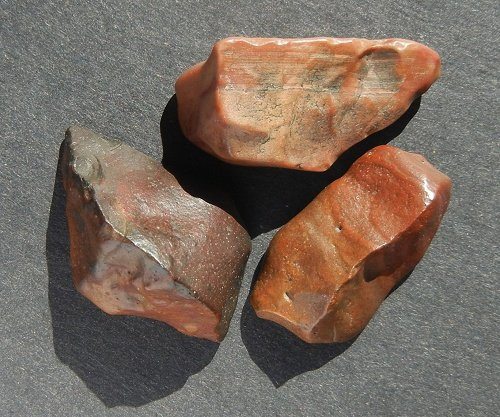
These rocks were made smooth by wind blowing smaller rock particles across their surface. This is an example of:
ice wedging
chemical weathering
acid rain
abrasion
39
Multiple Choice
Weathered mountain would be taller.
Weathered mountain would be rounder and less jagged.
Weathered mountain would be more jagged and less rounded.
Weathered mountain would have no trees.
40

Chemical Weathering
Is the process by which rocks and minerals undergo
changes in their composition.
●
Water, Oxygen, Carbon Dioxide, and Acid Precipitation
play major role in Chemical Weathering
●
When rocks interact with these agents, it can cause
rocks to dissolve and some new minerals to form
41


Examples of Chemical Weathering
Iron reacts with Oxygen to
form rust color in rocks that
have iron (Hematite)
Acid precipitation can dissolve
calcium carbonate and form
caves
42

How does WATER play a role in Chemical
Weathering?
● Water can dissolve many kinds of
minerals and rocks
● Serves as a medium in which reactions
can occur
● Water can react directly with minerals in
a reaction
43

HYDROLYSIS
Break down of rock and minerals
caused by its reaction with water
A-B + H2O A-OH + B-H+
Reactants Water Product A Product B
44


Water reacts with Feldspar (big molecules) and
breaks it down into Kaolinite (smaller molecules)
45

How does OXYGEN play a role in chemical
weathering?
Oxidation
The chemical reaction of oxygen with
other substances
● Earth’s Atmosphere is 21 percent oxygen
46

How does OXYGEN play a role in chemical
weathering?
Iron in rocks and minerals combines with
oxygen in the water and air to form
minerals with the oxidized form of iron.
● Creates compounds called OXIDES
● Hematite- a common mineral that contains the
oxidized form of iron
47

How does CARBON DIOXIDE play a role in
Chemical Weathering?
● Carbon dioxide (CO₂) reacts with water (H₂0) to form a
weak acid called carbonic acid.
● The natural pH of rainwater is slightly acidic (pH5.6)
● Decaying matter, soil and respiration have high levels of
CO₂
● Water can seep into the ground and combine with CO₂ in
the soil creating carbonic acid. This acid can dissolve
limestone and form caves
48

Acid Precipitation
● Is caused by sulfur dioxide, carbon dioxide and
nitrogen oxide
● These oxides are released into atmosphere by human
activities, such as burning fossil fuels
● These oxides combine with Oxygen and Water in
atmosphere to form strong acids
● Acid precipitation is anything under pH of 5.6
49

Effects of Acid Precipitation
● Acid precipitation is harmful to many organisms
● Destructive to many human made structures
● Can do much damage to forests and make forest more
vulnerable to disease and insect damage
50


Effects of Acid Precipitation
Acid rain can
seep into the
soil and
dissolve
nutrients, such
as magnesium
and calcium,
that trees
need to grow
and be healthy
51


Effects of Acid Precipitation
Cleopatra’s
Needle in
Egypt did not
undergo
weathering,
but then it was
moved to NYC,
chemical
weathering
dissolved the
symbols
52

What Affects the Rate of Weathering?
The rate of weathering is very, very slow. It can
take 2000 years just to weather 1 centimeter of
limestone.
Four factors affect the rate of weathering:
● Climate
● Rock type and composition
● Surface Area
● Topography
53

Climate
● Climate is the major influencer for the rate of
weathering
● Climate includes all precipitation, temperature, and
evaporation
● Chemical weathering is faster in regions with warm
temperatures, abundance rainfall, and lush vegetation,
like regions near the Equator
● Physical weathering is faster in cool environments
where water can undergo freeze-thaw cycles (frost
wedging)
54


World map of chemical weathering
55

Rock Type and Composition
● Different rock types and compositions weather at
different rates.
● Some rocks are considered more resistant to
weathering
● Example: Calcite rocks like limestone weathers faster
than quartz rocks like granite, which weather at a
slower rate.
56

Surface Area
● Weathering occurs on the surface of rocks. The more
surface that is exposed, the greater the effect of
weathering.
● Weathering creates more surface area
● Weathering has more effect on multiple, smaller rocks
as opposed to one big rock.
● Mechanical weathering can increase the rate of
chemical weathering
57


24cm²
48cm²
58
Multiple Choice

climate and mass of rock
climate and size of rock
type of rock and size of rock
type of rock and climate
59

Topography
● Rocks on level ground tend to stay in place longer than
rocks on slopes
● Gravity helps move rocks down sloped areas. This can
expose new layer of rock to weathering due to erosion
60

Erosion
● The removal of weathered rock and soil from its
original location
● Remember: weathering does not involve the movement
of anything. It is just making things smaller or
changing their composition.
● How does erosion occur?
61

Agents of Erosion
● Running water
● Glaciers
● Wind
● Living Things
● Gravity
●
62

Water
● Water is the most powerful agent of erosion
● Running water can produce dramatic changes in
landscape
● Streams can reshape entire landscapes and have the
greatest impact when there is a large volume of water
that is moving very fast.
● Water flowing down slopes will cut downward and carve
steep valleys
63


Mississippi River
The Mississippi
river can carry
550 million
metric tons of
sediment into
the Gulf of
Mexico each
year!
64


65

Destructive Results of Erosion
● Water can carry away fertile soil, which is bad for
agriculture
● Running water can cut small channels into the side of a
slope forming a Rill. Overtime, Rills can become deeper
and wider and turn into Gullies.
66


Rills- form when water
forms small depressions
as water runs downhill
Gully- when rills
become deeper and
wider
67

Erosion by Water
● Remember, water is the most powerful agent of
erosion and is responsible for dramatically changing
the landscape.
● Let’s look at some examples of how water changes the
landscape…
68


Streams carry sediment to coastal areas
forming Deltas
Weathering, Erosion and Soil
Show answer
Auto Play
Slide 1 / 68
SLIDE
Similar Resources on Wayground

60 questions
Bio Semester Review
Presentation
•
9th Grade
64 questions
IGCSE Economics-Economic Development
Presentation
•
10th Grade
64 questions
The Roman Republic + Empire
Presentation
•
10th Grade
61 questions
Lesson #17 - The Progressives Respond (1890-1920)
Presentation
•
10th Grade
61 questions
Unit 1 Test 1 Review (Lessons 1.1 - 1.3)
Presentation
•
9th - 10th Grade
69 questions
Part 3 EOC Review
Presentation
•
10th Grade
63 questions
Introduction to Physical Science Lesson
Presentation
•
9th Grade
65 questions
Physical Science Bonding
Presentation
•
9th - 10th Grade
Popular Resources on Wayground
10 questions
Safety Day 2026 – Student Review

Quiz
•
9th Grade
21 questions
Continents and Oceans
Quiz
•
6th Grade
20 questions
Parts of Speech
Quiz
•
5th Grade
16 questions
Subject & Predicate
Quiz
•
5th Grade
25 questions
Multiplication Facts
Quiz
•
5th Grade
12 questions
Map Skills
Quiz
•
3rd Grade
22 questions
Continents and Oceans
Quiz
•
5th Grade
15 questions
Rounding Decimals
Quiz
•
5th Grade
Discover more resources for Science
10 questions
Exploring Chemical and Physical Changes

Interactive video
•
6th - 10th Grade
10 questions
Exploring the Electromagnetic Spectrum for Middle School Science
Interactive video
•
6th - 10th Grade
10 questions
Exploring Force and Motion Concepts
Interactive video
•
6th - 10th Grade
10 questions
Exploring Air Masses and Weather Fronts
Interactive video
•
6th - 10th Grade
10 questions
Exploring the States of Matter
Interactive video
•
6th - 10th Grade
10 questions
Exploring Forces: Net Force, Normal Force, Gravity, and Friction
Interactive video
•
6th - 10th Grade
10 questions
Differentiating Thermal Energy and Temperature
Interactive video
•
6th - 10th Grade
10 questions
Exploring the States of Matter and Thermal Energy
Interactive video
•
6th - 10th Grade