

Cycling of Energy

Presentation
•
Biology
•
9th - 12th Grade
•
Practice Problem
•
Medium
+1
Standards-aligned

Mari Youngman
Used 18+ times
FREE Resource
16 Slides • 14 Questions
1
2

3
Multiple Choice
What are the reactants of Photosynthesis?
H2O and C6H12O6
O2 andCO2
O2 and C6H12O6
CO2 and H20
4
Carbon pool- any where carbon can be found, such as plants
Stocks- another way to say carbon pool, also called resevoirs
Carbon flux- The process by which carbon moves from one pool to another
Fossil Fuels- a natural fuel formed from the remains of living organisms
Carbon sequestration- the process of moving atmospheric carbon into other pools
Carbon Sink- a pool that absorbs more carbon than it releases
Carbon Source- a pool that releases more carbon than it stores
Biomass- organic matter
Combustion- the process of burning something

5
Fill in the Blanks
What is an example of a carbon sink?
Type answer...
6

7
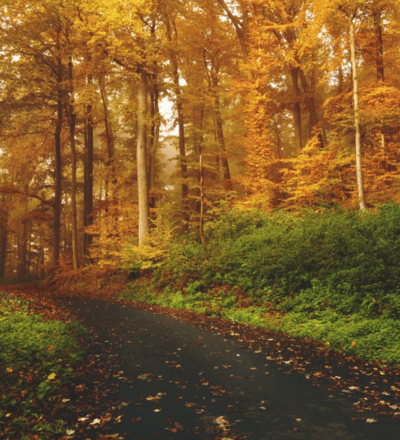
There is a fixed amount of carbon on earth (closed environment), most of it has been stored for hundreds of thousands of years.
The burning of fossil fuels is releasing stored carbon into the atmosphere
Carbon on Earth
8
Deforestation
Coal, oil, and gas combustion
Human activities emit 60 or more times the amount of carbon dioxide released by volcanoes each year.
Volcanic eruptions
Natural
Anthropogenic- human influenced

9
Multiple Select
In what ways does photosynthesis play a role in the carbon cycle?
Plants can act as a carbon sink
Plants take up oxygen and produce carbon dioxide
Plants take up carbon dioxide to produce oxygen
Plants play no role in the carbon cycle
10
11
Multiple Choice
Which option best explains the interrelated nature of photosynthesis and cellular respiration?
The products for cellular respiration are the products for photosynthesis
The reactants for photosynthesis are the products of cellular respiration
There is no connection
The reactants of photosynthesis are the reactants of cellular respiration
12
Solvent- water is a universal solvent, ability to dissolve many substances
Moderate temperature- large bodies of water are able to moderate the temperature of nearby land, this is due to waters high heat capacity
Cohesion- water molecules ability to stick to itself
Adhesion- waters ability to stick to other molecules
Expansion- water molecules for hexagonal crystalline structures during freezing which causes an increase in size
Properties of Water
13

14
Multiple Choice
Do plants have a role in the water cycle?
yes
no
15

16
Multiple Choice
How does water get from the ground, or surface back into the atmosphere?
Percipitation
Photosynthesis
Evaporation
Condensation
17
Plants in the water cycle
Plants absorb water from soil, the water moves from the roots, through the stems, to the leaves. Once it reaches the leaves, some of it escapes through the stomata.
This is called transpiration
18
Multiple Choice
What is the vessel system that carries water through the plants?
Phloem
Cambium
Meristem
Xylem
19
20
Multiple Choice
What is evapotranspiration, in science?
A spelling bee word
The process of water vapor being released from plants and soil into the atmosphere
The process of water vapor being released from the soil into the atmosphere
The process of water vapor being released from the ocean into the atmosphere
21
Producers- the basis of the food web, organisms that can make their own food
Consumers- organisms that must eat other organisms to survive
Decomposers- organisms that consume dead organic matter
Trophic Level- levels of an ecosystem, grouping together organisms with the same role
Only 10% of the energy stored in biomass moves from one trophic level to the next
Energy flow in ecosystem
22

23

24
Multiple Choice
How much energy moves from one trophic level to the next?
5%
10%
15%
20%
25
Multiple Choice
What would a herbivore, such as a beetle, be considered?
primary consumer
producer
apex predator
secondary consumer
26
Multiple Choice
Are most ecosystems food webs or food chains?
Food webs
Food chains
27
Match
Alligator
Cordgrass
frog
grasshopper
apex predator
producer
tertiary consumer
primary consumer
apex predator
producer
tertiary consumer
primary consumer
28
Multiple Choice
Which of the following is not a carbon source?
Volcanoes
Deforestation
Plants
Fossil fuel combustion
29
Multiple Choice
How do animals actively return carbon to the atmosphere?
photosynthesis
cellular respiration
formation of glucose
decomposition of organic matter
30
Show answer
Auto Play
Slide 1 / 30
SLIDE
Similar Resources on Wayground

26 questions
Limiting Factors and Carrying Capacity EOC Review
Presentation
•
9th - 12th Grade
25 questions
Population Ecology
Presentation
•
9th - 12th Grade
23 questions
Inscribed Angles and Polygons in Circles
Presentation
•
9th - 12th Grade
23 questions
Intro to improv
Presentation
•
9th - 12th Grade
23 questions
Los Adjetivos: Parte 2
Presentation
•
9th - 12th Grade
24 questions
Plate Tectonics
Presentation
•
9th - 12th Grade
24 questions
Protein Synthesis
Presentation
•
9th - 12th Grade
26 questions
DNA Structure & Replication
Presentation
•
9th - 12th Grade
Popular Resources on Wayground
10 questions
How much do you know about our Portrait of an Eagle?

Quiz
•
10th Grade
10 questions
Fast Food Slogans
Quiz
•
6th - 8th Grade
21 questions
Continents and Oceans
Quiz
•
6th Grade
20 questions
Parts of Speech
Quiz
•
5th Grade
16 questions
Subject & Predicate
Quiz
•
5th Grade
25 questions
Multiplication Facts
Quiz
•
5th Grade
12 questions
Map Skills
Quiz
•
3rd Grade
22 questions
Continents and Oceans
Quiz
•
5th Grade
Discover more resources for Biology
20 questions
Characteristics of Life
Quiz
•
9th - 10th Grade
10 questions
Exploring the 4 Major Macromolecules and Their Functions

Interactive video
•
9th - 12th Grade
20 questions
Cell organelles and functions
Quiz
•
10th Grade
20 questions
Cell Transport
Quiz
•
9th - 12th Grade
25 questions
photosynthesis and cellular respiration
Quiz
•
9th Grade
20 questions
Macromolecules
Quiz
•
10th Grade
16 questions
Population Ecology
Quiz
•
9th - 12th Grade
20 questions
Cell Organelles
Quiz
•
9th Grade