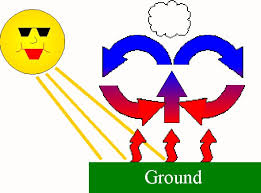
Heat Transfer: Conduction, Convection
Presentation
•
Science
•
6th - 8th Grade
•
Practice Problem
•
Easy
+7
Standards-aligned
Jennifer Whiteaker
Used 2+ times
FREE Resource
46 Slides • 35 Questions
1

2
3
4
5
6
7
8
Multiple Choice
True or False. Energy cannot be created or destroyed; it can only be transformed.
True
False
9
10
Drag and Drop

11
12
13
14
15
16
17
18
19
20
21
22
23
24
25
26
27
28
29
30
31
32
33
34
35
36
37
38
39
40
41
42
43
44
45
46
47
48
49
Multiple Choice
What is Convection?
Direct contact?
Mass movement of molecules
Electromagnetic Waves
None of the above
50
Multiple Choice
What is Conduction?
Direct contact
Mass movement of molecules
Electromagnetic Waves
None of the above
51
Multiple Choice
What is Radiation?
Direct Contact
Mass moment of molecules
Electromagnetic waves
None of the above
52
Multiple Choice
What is heat transfer?
The movement of heat from one object to another
The creation of heat energy
The loss of heat energy
The transformation of heat from one form to another
53
Multiple Choice
In which direction does heat move?
From warmer to cooler
From cooler to warmer
From north to south
From east to west
54
Multiple Choice
When energy increases, the speed of molecules ______.
Increases
Decreases
Stay the same
55
Multiple Choice
When molecules are heated, what happens to them?
They speed up, becomes less dense, and rise
They speed up, become more dense, and rise
They slow down, become less dense, and sink
They slow down, become more dense, and sink
56
Multiple Choice
What happens to warmed molecules after they rise to the top?
They cool down, become more dense, and sink
They cool down, become more dense, and rise
They warm up, become more dense, and rise
They warm up, become less dense, and sink
57
Multiple Choice
What is conduction?
The transfer of heat through direct contact
The transfer of heat through the rise of warm fluids and sinking of cool fluids
The transfer of heat through electromagnetic waves
The transfer of heat through fluids
58
Multiple Choice
Objects that easily transfer heat (metals are good at this)
Conductors
Insulators
Fluids
Molecules
59
Multiple Choice
Objects that do not allow heat to transfer easily through them (wood, plastic, fabrics)
Conductors
Insulators
Molecules
Fluids
60
Multiple Select
Which example(s) describes conduction?
An egg frying in a pan
Feeling heat from the sun
Jumping in a lake to cool off
Cooking a hot dog over a fire
61
Multiple Choice
Which molecules have more energy?
Cold
Hot
62
Multiple Choice
What is convection?
Transfer of heat in a fluid through currents
Transfer of heat through direct contact
Transfer of heat through electromagnetic waves
63
Multiple Select
What two states of matter are considered fluids?
Solids
Liquids
Gases
Plasma
64
Multiple Choice
As fluids are ______, they become _____ dense and rise.
Heated; more
Heated; less
Cooled; more
Cooled; less
65
Multiple Choice
The best place to cook a hot dog is above the fire. Why?
Because heat rises
Because heat sinks
Because there are more molecules above it
Because there is more room
66
Fill in the Blanks
Conduction or Convection?
Type answer...
67
Fill in the Blanks
Conduction or Convection?
Type answer...
68
Multiple Choice
Lava lamps work because of what type of heat transfer?
Conduction
Convection
69
Draw
Draw (colored) arrows representing the tranfer of heat through convection in a pot of boiling water.
70
Multiple Choice
True or False: Heat always transfers from the cool object to the warmer object.
True
False
71
Multiple Select
Identify the example(s) of convection.
Floating in a hot air balloon
Lava lamps
Heating a marshmallow over a fire
Cooking a burger on the grill
72
Match
Match
radiation
radiation AND conduction
convection
radiation
radiation AND conduction
convection
73
Multiple Choice
74
Multiple Choice
Scoopy McScooperson places a hot spoon into a container of ice cream. How does this help him scoop out the ice cream?
The coolness from the ice cream is conducted to the spoon making it easier to scoop out.
The coolness from the ice cream is radiated to the spoon making it easier to scoop out.
The warmth of the spoon is conducted to the ice cream making it easier to scoop out.
The warmth of the spoon is radiated to the ice cream making it easier to scoop out.
75
Multiple Choice
76
Multiple Choice
77
Multiple Select
Select all that apply. Which of the following are examples of radiation?
microwave
Sunlight
Fire
touching a piece of hot metal
78
Multiple Choice
How does heat energy reach the Earth from the Sun
Convection
Radiation
Conduction
79
Multiple Select
Select all that apply: Which of these are examples of conduction?
touching hot metal
warming a spoon makes it easier to dip
an egg cooks on hot pavement
sunlight feels warm
80
Match
Match these
Heat transfers through waves/rays
Liquid (or air) heats up, speeds up and spreads out, becoming less dense. As it rises, it cools, slows, and comes back together. This increases density, making it sink again.
Heat transfers from objects that are touching.
Radiation
Convection
Conduction
Radiation
Convection
Conduction
81
Multiple Select
Select 4 answers. Which of the following is an example of Convection?
Convection currents
The energy driving the water cycle
lava lamp ^v
water boiling
hitting hot metal

Show answer
Auto Play
Slide 1 / 81
SLIDE

Similar Resources on Wayground
73 questions
Tides and Seasons Review
Presentation
•
6th - 8th Grade
77 questions
Ecology Ch 4
Presentation
•
7th - 8th Grade
74 questions
Identifying DNA as the genetic material
Presentation
•
KG
80 questions
Ecosystems - Food Chains/Webs
Presentation
•
6th - 8th Grade
74 questions
Eukaryotic vs. Prokaryotic
Presentation
•
6th - 8th Grade
74 questions
Cells Cell Theory
Presentation
•
6th - 8th Grade
74 questions
Cell Theory and History Lesson
Presentation
•
6th - 8th Grade
74 questions
Cells and Cell Theory
Presentation
•
6th - 8th Grade
Popular Resources on Wayground
10 questions
How much do you know about our Portrait of an Eagle?
Quiz
•
10th Grade
10 questions
Fast Food Slogans
Quiz
•
6th - 8th Grade
21 questions
Continents and Oceans
Quiz
•
6th Grade
20 questions
Parts of Speech
Quiz
•
5th Grade
16 questions
Subject & Predicate
Quiz
•
5th Grade
25 questions
Multiplication Facts
Quiz
•
5th Grade
12 questions
Map Skills
Quiz
•
3rd Grade
22 questions
Continents and Oceans
Quiz
•
5th Grade
Discover more resources for Science
17 questions
7.6D Aqueous Solutions
Quiz
•
7th Grade
20 questions
Scientific Method and Variables
Quiz
•
8th Grade
20 questions
Scientific method and variables
Quiz
•
8th Grade
27 questions
Counting Atoms - Subscripts
Quiz
•
8th Grade
10 questions
6.6D - Relative Density Review
Quiz
•
6th Grade
20 questions
Claim, Evidence and Reasoning (CER)
Quiz
•
6th - 8th Grade
18 questions
Counting Atoms
Quiz
•
7th - 8th Grade
20 questions
Density
Quiz
•
6th Grade