
U6: Hagia Sophia and San Vitale

Presentation
•
Arts
•
12th Grade
•
Practice Problem
•
Easy
Celso Medrano
Used 3+ times
FREE Resource
13 Slides • 7 Questions
1
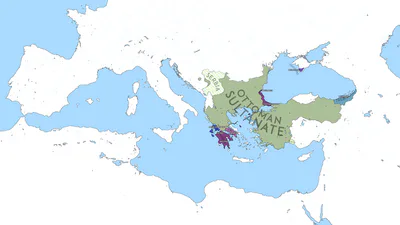
Prior to fall of Western Roman Empire in ~470 CE, Roman Empire divided into Western and Eastern Empires.
Eastern Empire expands and declines over period of centuries (400 - 1453 CE); Capital = Constantinople
Marks beginning of Middle Ages; transitional, "silent" period between fall of Rome and Renaissance
Latin church converted Germanic peoples to Roman Christianity, Byzantium converted Slavic peoples to Orthodox Christianity
Roman Christianity: Christ is creation of God, therefore lesser; Orthodox Christianity: God and Christ equal in divinity
2
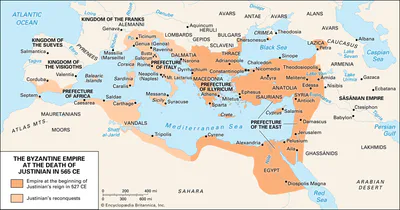
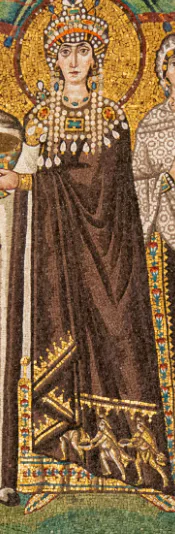
Emperor Justinian I; sought to restablish territories of Roman Empire; declared Christianity only lawful religion
Saw himself as defender of faith, established religious uniformity of Orthodoxy across empire.
Married Theodora, former actress/prostitute; became his advisor
Constantly at war during reign
Collapse of empire in 1453 leads to exodus of scholars towards west; introduced to classical Greek studies which helps inspire Renaissance

3
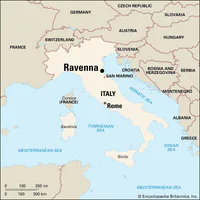
Ravenna= former capital of western Roman Empire; capital of Ostrogothic Empire
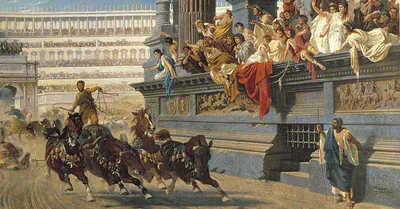
Greatest internal threat= Nika riots
To suppress insurrections, Theodora convinces Justinian to stay and establish his authority.
Conquered Ravenna to establish a seat in former western empire
Ravenna = richest areas for 5th and 6th century mosaics in Italy
4
Multiple Choice
Select the capital of the Eastern (Byzantine) Roman Empire.
Adrianople
Athens
Rome
Constantinople
5
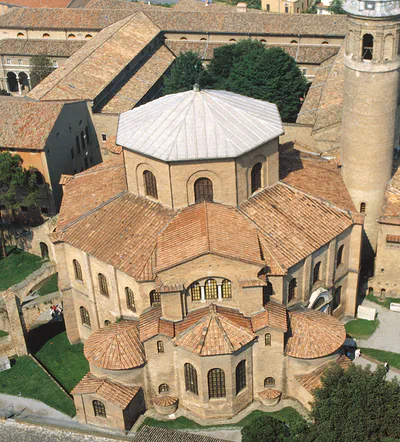
San Vitale
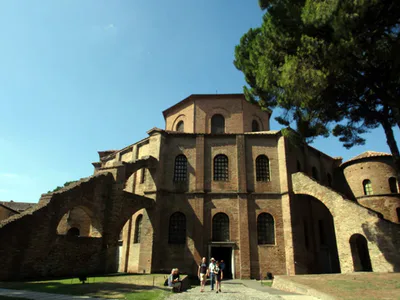
MEDIUM: Brick, marble, and stone veneer; moaic
LOCATION: Ravenna, Italy
CULTURE OF ORIGIN: Byzantine Europe
DATE: 526 - 547 CE
6
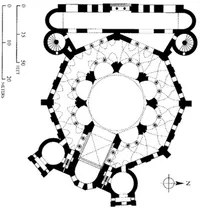
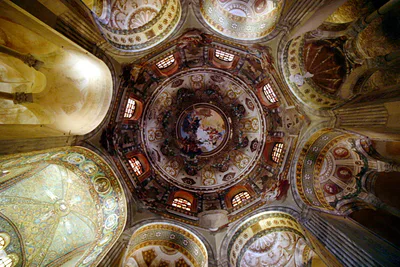
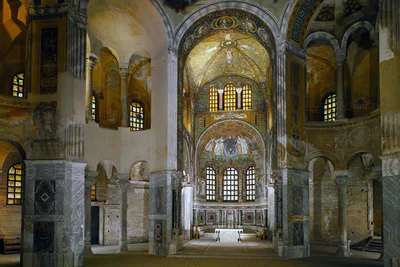
Round central plan chosen for practical, religious, and political reasons
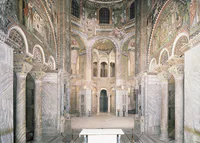
Dome-covered inner octagon above surrounding octagon giving light
Dedicated to San Vitalus- Roman slave and Early Christian martyr
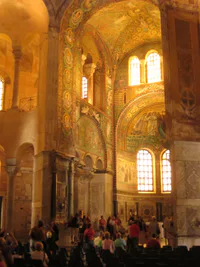
Stark, unadorned exterior; lavish and rich interior (symbolized the soul)
Cross-vaulted sanctuary interrupts ambulatory.
Unsymmetrical narthex: Could have been to force visitors to re-orient themselves: transition from material world outside to spiritual world in.
7

8
Fill in the Blanks
San Vitale demonstrates a round
Type answer...
9
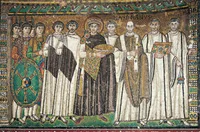
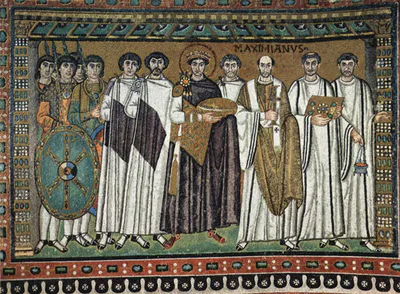
Mosaic located on right side of altar
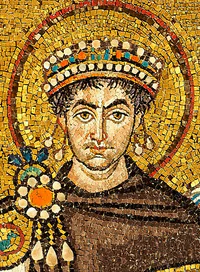
Justinian in center holding paten (bowl for Eucharist); holding up towards Christ mosaic in apse
Justinian dressed in purple robe with golden halo
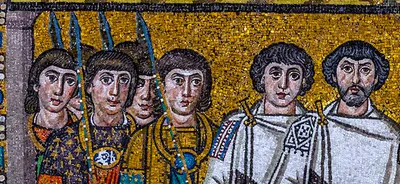
Flanked by clergy (religious power) and soldiers (military power)
Feet point down, faces “cookie cutter”, bodies losing corporeality, not accurate portrayal of depth: crowded composition, shading less accurate, gold background typical of Byzantine
10
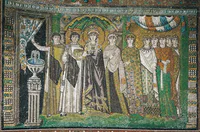
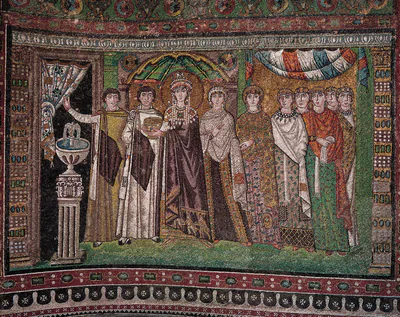
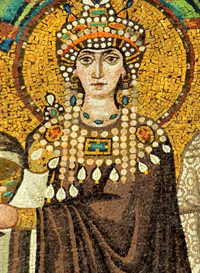
Located on opposite wall of Justinian mosaic: first significant woman in a mosaic program.
Pearled stranded crown
Both mosaics show slow forward movement
Richness in costumes: men in silk tunics
No background in Justinian's; understood as procession taking place in sanctuary, making him part of every rite held in San Vitale
Justinian and Theodora never visited; always present through image
11
Multiple Choice
Where is San Vitale located?
Constantinople
Ravenna
Rome
Sicily
12
Multiple Choice
The Byzantine mosaics of Emperor Justinian and Empress Theodora from the Church of San Vitale in Ravenna differ from classical Roman mosaics in that they
focus on realism, illustrating the concern of Byzantine art for making religious subject matter more relatable
employ diagonal lines and stacked bodies, showing the focus of early Christian art on drama and emotional impact
portray secular leaders, demonstrating the preference of Byzantine art for historic over religious subject matter
favor stylized figures against a gold-leaf background, reflecting the emphasis of early Christian art on spirituality
13
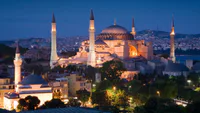
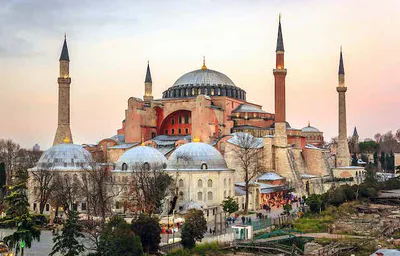
Hagia Sophia
ARCHITECTS: Anthemius and Isodorus
MEDIUM: Brick and ceramic elements with stone and mosaic verneer
LOCATION: Constantinople (Istanbul), Turkey
CULTURE OF ORIGIN: Byzantine Europe
DATE: 532 - 537 CE

14
"Hagia Sophia" = "Holy Wisdom"
Built as personal church for emperor and his court; not for public congregation
Only emperor could enter sanctuary (church and state become one)
1453: Turks launched assault on Hagia Sophia; taken over by Sultan Mehmet II and converted to mosque
Widespread panic from Christians ensues; fears that Europe would fall under Islamic control
1934: Turkish President aimed to westernize Turkey, turned to museum and prohibited public prayer
15
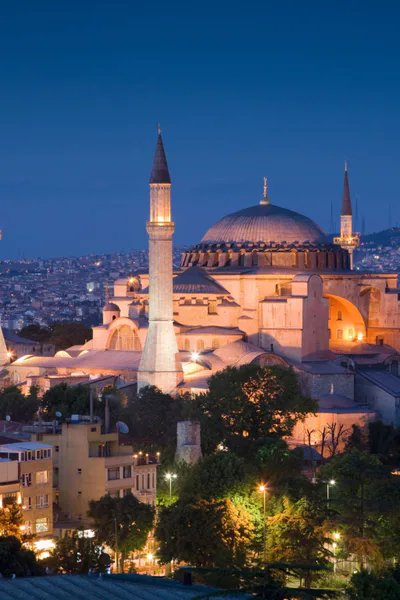
Four Turkish minarets; added after Ottoman conquest
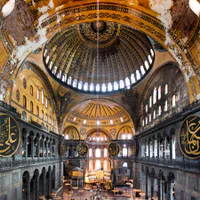
Plain exterior; lavish interior
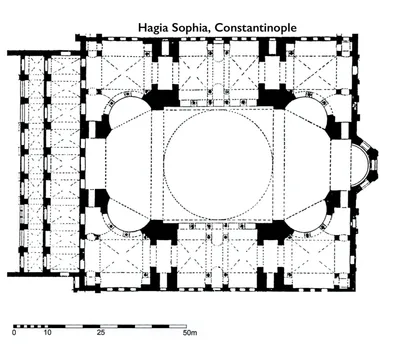
Interior= 3 football fields long
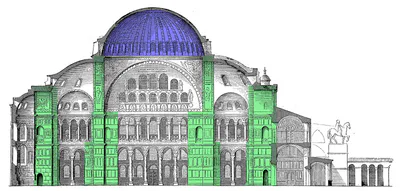
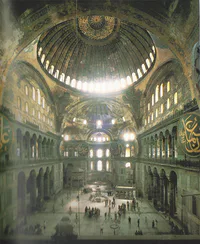
Dome 108’ diameter, crown 180’ feet above ground: first structure to achieve greater height than Pantheon
Unifies central and basilica plans.
Large piers (columns) and half domes help offset thrust (force) from central dome
16
Fill in the Blanks
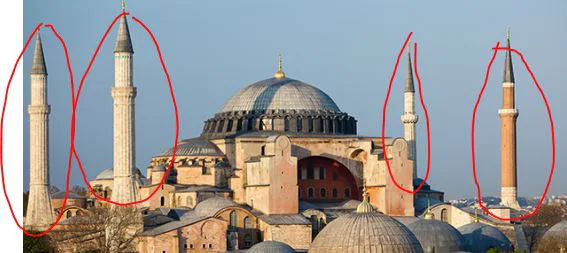
Four
Type answer...
17
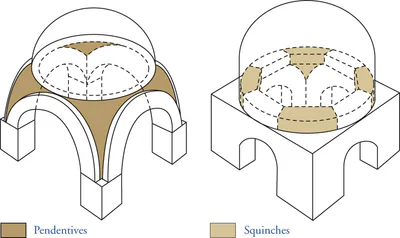
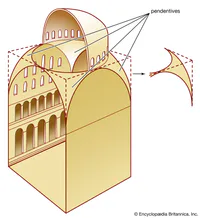
Dome rests on four pendentives (main Byzantine architectural contribution creating a dome that rests on a larger dome)
Makes possible a round dome on a square base (rather than Pantheon where drum was used) to keep central plan
FUN FACT!
During emergency repairs on dome in 1990’s found graffiti from 10th century repairman imploring God for protection as worked on scaffolds 150 feet above floor.
18
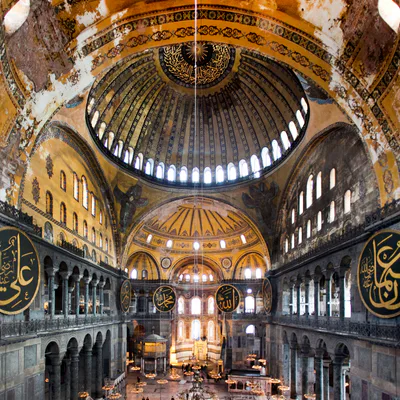
Dome thin brick set in mortar
Four acres of golden glass cubesMihrab under apse; muezzin (man who calls Muslims to prayer) location under dome
Main dome rests on 40 windows; gives illusion of sitting on a band of light
19
Multiple Choice
The patron of the building was
Charlemagne
Mehmet II
Justinian
Isodorus
20
Multiple Choice
An important structural innovation of the building is the use of
Pendentive
Groin vault
Corbelled galleries
Concrete construction
Prior to fall of Western Roman Empire in ~470 CE, Roman Empire divided into Western and Eastern Empires.
Eastern Empire expands and declines over period of centuries (400 - 1453 CE); Capital = Constantinople
Marks beginning of Middle Ages; transitional, "silent" period between fall of Rome and Renaissance
Latin church converted Germanic peoples to Roman Christianity, Byzantium converted Slavic peoples to Orthodox Christianity
Roman Christianity: Christ is creation of God, therefore lesser; Orthodox Christianity: God and Christ equal in divinity
Show answer
Auto Play
Slide 1 / 20
SLIDE
Similar Resources on Wayground

17 questions
U.S Enters WWII
Presentation
•
11th Grade
16 questions
Small Island After Term-break Review
Presentation
•
11th Grade
14 questions
French and English Colonies
Presentation
•
11th Grade
19 questions
World War II - Day 1 - The Rise of Hitler
Presentation
•
11th Grade
18 questions
First Mexican Federal Republic and the Constitution of 1824
Presentation
•
12th Grade
15 questions
Join or Die
Presentation
•
11th Grade
20 questions
Origins of Russia
Presentation
•
KG
11 questions
Proiect franceza
Presentation
•
12th Grade
Popular Resources on Wayground
10 questions
How much do you know about our Portrait of an Eagle?

Quiz
•
10th Grade
10 questions
Fast Food Slogans
Quiz
•
6th - 8th Grade
21 questions
Continents and Oceans
Quiz
•
6th Grade
20 questions
Parts of Speech
Quiz
•
5th Grade
16 questions
Subject & Predicate
Quiz
•
5th Grade
25 questions
Multiplication Facts
Quiz
•
5th Grade
12 questions
Map Skills
Quiz
•
3rd Grade
22 questions
Continents and Oceans
Quiz
•
5th Grade
Discover more resources for Arts
20 questions
Brand Labels
Quiz
•
5th - 12th Grade
10 questions
Exploring the 4 Major Macromolecules and Their Functions

Interactive video
•
9th - 12th Grade
21 questions
Los paises hispanohablantes y sus capitales
Quiz
•
12th Grade
20 questions
Cell Transport
Quiz
•
9th - 12th Grade
20 questions
Budgeting
Quiz
•
9th - 12th Grade
20 questions
Investing
Quiz
•
9th - 12th Grade
11 questions
NFL Football logos
Quiz
•
KG - Professional Dev...
25 questions
Spanish Cognates
Quiz
•
7th - 12th Grade