Search Header Logo
1.2 Groups and periods

1.2 Groups and periods

Assessment

Presentation

•

Science

•

7th Grade

•

Practice Problem

•

Easy

Created by

William Katumba

Used 5+ times

FREE Resource

4 Slides • 57 Questions

1

Recap & Review

What did we look at yesterday?

Complete these review questions to jog your memory about yesterday's class.

2

Fill in the Blank

Google this; (Textbook is out of date)

How many naturally occurring elements exist today?

3

Fill in the Blank

Google this;

How many elements are in the periodic table?

4

Multiple Choice

What side of the periodic table are metals on?
1

left

2

right

3

top

4

bottom

5

Multiple Choice

What does malleable mean?
1

able to bend

2

will break easily

3

can be used for wire

4

is shiny

6

Multiple Choice

What does ductile mean?
1

electricity flows easily

2

quacks like a duck

3

can be drawn into a wire

4

able to bend

7

Multiple Choice

What side of the periodic table are nonmetals on?
1

left

2

right 

3

top

4

bottom

8

Multiple Choice

Question image
Is oxygen metal or nonmetal?
1

metal

2

nonmetal

9

Multiple Choice

Question image
Is gold metal or nonmetal?
1

metal

2

nonmetal

10

Multiple Choice

Which has a higher density?
1

metal

2

nonmetal

11

Multiple Choice

What do metals conduct?
1

heat

2

electricity

3

both

4

neither

12

Multiple Choice

All of these properties describe metals EXCEPT...
1

malleable

2

conductors

3

brittle 

4

luster

13

Multiple Choice

Question image
How would this element be classified?
1

Metal

2

Nonmetal

3

Metalloid

4

Metamorphic

14

Multiple Choice

Silicon is a semiconductor and has properties of both metals and nonmetals. What type of element is Silicon? 
1

Metal

2

Nonmetal

3

Metalloid

4

Pretty

15

Multiple Choice

A certain substance does not conduct heat or electricity, and breaks easily when hit with a hammer. What other property might this substance have?
1

can be pulled into long wires

2

dull surface

3

high density

4

malleable

16

Multiple Choice

Question image
Some students conducted a laboratory investigation to learn more about the physical properties of different elements. They observed four samples and recorded their observations in the table . Based on these observations, which sample is most likely a nonmetal?
1

Sample 1

2

Sample 2

3

Sample 3

4

Sample 4

17

Multiple Choice

What way of classifying elements did we look at yesterday?

1

Metals OR Nonmetals

2

Groups

3

Liquids or Gases

4

Metals or Metalloids

18

Multiple Choice

Approximately what percentage of the periodic table is comprised of metals?

1

20 %

2

50 %

3

80 %

4

99 %

19

Multiple Choice

Page 61;

When metals dissolve in water they form.........

1

acidic solutions

2

alkaline solutions

20

Multiple Select

Page 61;

Which of the following non metals dissolve in rain water to form acidic rain?

1

Sulfur dioxide

2

Nitrogen dioxide

3

Carbon dioxide

4

Sulfur monoxide

5

Nitrogen monoxide

21

Multiple Choice

Page 61;

When non metal oxides dissolve in water they form.........

1

acidic solutions

2

alkaline solutions

22

Multiple Choice

Page 61;

Chemical properties describe .........

1

things you can observe and measure

2

chemical reactions

23

Fill in the Blank

Page 61;

Physical properties describe things you can _____ and _____

24

Multiple Choice

Page 61;

When metals and non metals react with oxygen, the products are;

1

Oxides

2

Monoxides

3

Carbons

4

Oxygen & Hydrogen

25

Multiple Choice

Page 61; TRUE or FALSE

Most metal oxides are gases at 20°C

1

TRUE

2

FALSE

26

Multiple Choice

Page 61; TRUE or FALSE

Most non metal oxides are gases at 20°C

1

TRUE

2

FALSE

27

Fill in the Blank

Page 61;

Most ____ oxides are solids at 20°C

28

Fill in the Blank

Page 61;

Most ____ oxides are gases at 20°C

29

Multiple Choice

Acid rain is formed when ______ oxides dissolve in water

1

metal

2

non metal

30

Multiple Choice

If an element has a high melting point, its is most definitely a .....

1

metal

2

non metal

31

Multiple Choice

If an element has a low boiling point, its is most definitely a .....

1

metal

2

non metal

32

Metal or non-metal?

Carefully study the image below and help Gonza decide if the elements are metals or nonmetals

media

33

Multiple Choice

Question image

From the table, Element X is a ________

1

Metal

2

Non-metal

3

Metalloid

34

Multiple Choice

Question image

From the table, Element Y is a ________

1

Metal

2

Non-metal

3

Metalloid

35

Multiple Choice

Question image

From the table, Element Z is a ________

1

Metal

2

Non-metal

3

Metalloid

36

Lesson 1.2; Groups and periods

Lesson objectives;

  • Use patterns to predict properties of elements

  • Compare the patterns in properties in the groups and periods of the periodic table

    Use pages 62-63 of your textbook to complete this worksheet.

37

Fill in the Blank

Page 62;

In the periodic table, the _____ columns are called groups

38

Fill in the Blank

Page 62;

In the periodic table, the vertical columns are called ______

39

Fill in the Blank

Page 62;

The elements in a group have ____ properties

40

Multiple Select

Page 62;

Going down the group, there is a pattern in the properties such as; (select 3 answers)

1

Melting point

2

Boiling point

3

Density

4

Volume

41

Multiple Choice

Recall;

What does 'melting point' mean?

1

The temperature at which a solid melts / turns to liquid

2

The temperature at which a liquid boils / turn to vapor

3

The amount of space occupied by an object

4

How much mass something has for its volume

42

Multiple Choice

Recall;

What does 'boiling point' mean?

1

The temperature at which a solid melts / turns to liquid

2

The temperature at which a liquid boils / turn to vapor

3

The amount of space occupied by an object

4

How much mass something has for its volume

43

Multiple Choice

Recall;

What does 'density' mean?

1

The temperature at which a solid melts / turns to liquid

2

The temperature at which a liquid boils / turn to vapor

3

The amount of space occupied by an object

4

How much mass something has for its volume

44

Multiple Choice

Recall;

What does 'volume' mean?

1

The temperature at which a solid melts / turns to liquid

2

The temperature at which a liquid boils / turn to vapor

3

The amount of space occupied by an object

4

How much mass something has for its volume

45

Multiple Choice

The name given to vertical columns in a periodic table is;

1

Groups

2

Periods

3

Compounds

4

Bases

46

Multiple Choice

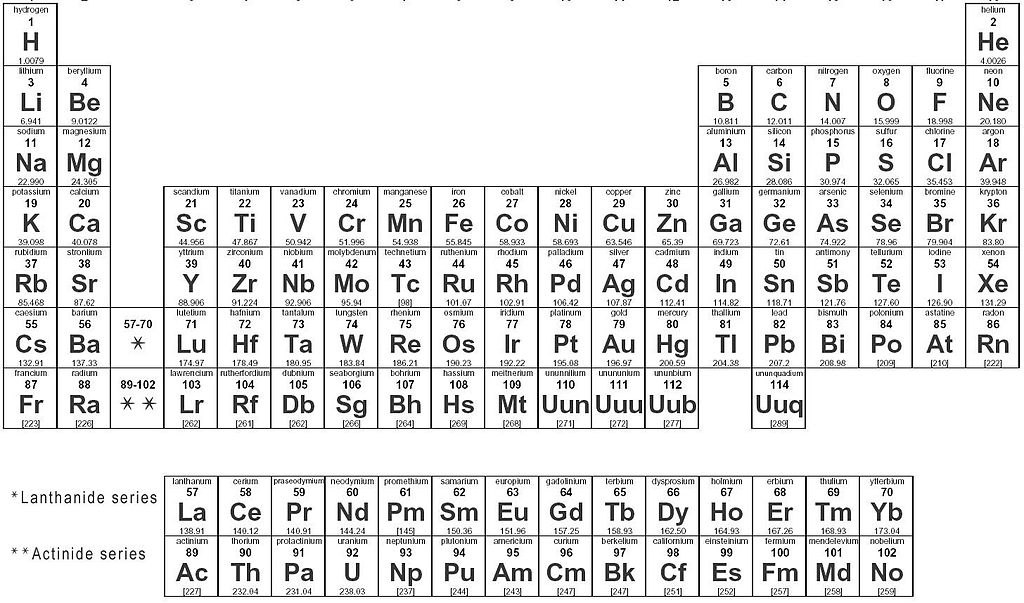
Can you find Palladium (Pd) in the periodic table in your textbook? Which other elements are in the same group as Palladium?

1

Ni = Nickel

Pd = Palladium

Pt = Platinum

2

Rh = Rhodium

Pd = Palladium

Ag = Silver

3

Co = Cobalt

Pd = Palladium

Au = Gold

4

Ir = Iridium

Pd = Palladium

Cu = Copper

47

Multiple Choice

In the periodic table, the melting point increases as you go down the group (vertical column). Based on this information, which of the following is correct about the melting points of the Palladium group?

1

Nickel > Palladium > Platinum

2

Nickel < Palladium < Platinum

3

Nickel = Palladium = Platinum

48

Multiple Choice

In the periodic table, the melting point increases as you go down the group (vertical column).

Look at the copper group in your periodic table. Which metal in the group has the lowest melting point?

1

Copper

2

Silver

3

Gold

49

Multiple Choice

In the periodic table, the melting point increases as you go down the group (vertical column).

Look at the copper group in your periodic table. Which metal in the group has the highest melting point?

1

Copper

2

Silver

3

Gold

50

Multiple Choice

In the periodic table, the melting point increases as you go down the group (vertical column).

True of False?

Cobalt has a higher melting point than Iridium.

1

TRUE

2

FALSE

51

Fill in the Blank

Page 63;

The _____ rows of the periodic table are called periods

52

Fill in the Blank

Page 63;

The horizontal rows of the periodic table are called _____

53

Multiple Choice

Page 63; Look at the bar charts;

Which of the following is the correct description of the pattern of melting points going across?

1

melting points increase then they decrease

2

melting points increase from left to right for the first four elements, the melting points of the other elements are low

3

melting points in the periods have a similar pattern to melting points in a group

4

melting points are all the same

54

Multiple Choice

What is the difference between groups and periods in the periodic table?

1

Groups are vertical columns, Periods are horizontal rows.

2

Periods are vertical columns, periods are Groups rows.

55

Multiple Choice

What can be said about the patterns of the melting points in groups VS periods.

1

Melting point in groups increases down the column, melting point in periods increases for first four elements only, then decreases

2

The pattern is the same for groups and columns, the melting point increases in both cases

3

In groups, the melting point increases left to right, in columns, it increases down the column

4

There are more elements in a period compared to a group.

56

Multiple Choice

One of the differences between groups and periods is;

1

Groups have more elements than periods

2

Groups have less elements than periods

3

Groups only have metals

4

Periods have both metals and non metals

57

Multiple Choice

Page

How many periods are in the periodic table?

1

4

2

5

3

6

4

7

58

Multiple Choice

How many elements are in the first period of the periodic table?

1

1

2

2

3

8

4

6

59

Multiple Choice

How many elements are in the first group of the periodic table?

1

1

2

2

3

4

4

6

60

Poll

I know this for sure! - so far..

Columns = Groups

Rows = Periods

Metals = alkaline solutions

Non metals = Acidic solutions

In the columns (groups), Melting point increases down the group

In the rows (periods), melting point increases for the first four elements

61

ALL DONE!

- BUT, THERE'S HW!!!!

GO TO GOOGLE CLASSROOM AND COMPLETE THE GRAPHING ACTIVITY FOR HW

Recap & Review

What did we look at yesterday?

Complete these review questions to jog your memory about yesterday's class.

Show answer

Auto Play

Slide 1 / 61

SLIDE