
Week 2 Review Lesson

Presentation
•
Science
•
8th Grade
•
Practice Problem
•
Medium
+3
Standards-aligned

Angela Hicks
Used 7+ times
FREE Resource
12 Slides • 10 Questions
1

Lesson 2 Review
Atoms, Periodic Table, Genetics
2
The atom is the building block of all matter.
Made up of proton (+ charge)
neutron (0 charge). Proton and neutron make up the nucleus (+ charge)
Surrounding the nucleus in levels are the electrons (- charge)
Atoms

3

Atomic theory believes that all matter is made up of single unit called an atom. Over time the looks and discovery of different parts of the atom have been made. Above is the time line showing how the looks have changed.
atom protons nucleus electrons electron cloud
neutrons electrons electrons are
in levels somewhere
4
Arrangement of elements in groups and periods. Atomic number of elements increases by 1 as you move left to right. Three types of elements on periodic table.
Periodic Table

5

Groups are columns numbered 1-18 puts elements together with similar
properties. Reactivity of the elements increases as you go down the group and across the period Right to Left.
The group number tells the number of electrons in outer energy level
1-1, 2-2 , 13-3,14-4, 15-5, 16-6, 17-7, 18 -8
Period are rows that are numbered 1-7. Elements increase in atomic number by 1 as you move left to right.
Groups & Periods
1 18
2 13 14 15 1617
3 4 5 6 7 8 9 10 11 12
1
2
3
4
5
6
7
6

Metals are the largest group of elements on the Periodic Table. Their reactivity increases as you move down the group and Right to Left on the Period.
Group 1 Alkali Metals are the move reactive metal elements on the periodic table.
Metals
7

Nonmetals
The nonmetals are located on the far right of the periodic table. These elements do not have the same properties as those of metals. Their reactivity increases as you move from the bottom of the group to top and from left to right on the period. Group 17 Halogens (Salt Makers) are the most unstable nonmetal group and Group 18 Noble Gases are the most stable because their outer shell is naturally filled with 8 electrons.
8

These elements are located in between metals and nonmetals. They are known as the "stair step" elements. They share properties of both metals and nonmetals.
Metalloids
9
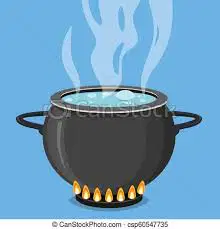
Heat transfers from hot to cold.
Heat will continue to move from one object to another until both or all objects are the same temperature. The greater the temperature difference, the faster the heat will move.
Heat is the total Kinetic and Potential energy in an object very different from temperature. Temperature is the average kinetic energy in an object.
Heat Transfer
10

Chemical changes occur when the chemical composition of an object has been changed to something different and a new substance has been created.
Chemical changes occur daily. If you see smoke, smell an odor, heat released or taken in, bubbles, light, a sound created and more. These are all signs of a chemical change.
In nature we call this chemical weathering.
Physical Change Chemical Changes
Physical changes only change the appearance of a substance or object and/or its state of matter. The chemical composition of the substance or object has not been changed at all.
In nature we call this physical or mechanical weathering.
11

Erosion is the moving of earth's surface from one location to another either by wind or water.
Deposition is the depositing of the earth moved by wind or water to another location.
Erosion and Depositon


Chemical and Physical Weathering
Chemical weathering causes a change in the
rock when a reaction occurs with the minerals
in the rock and water.
Physical weathering is the breaking of rocks into
smaller pieces by wind or water to another location.


12

Genetics is the passing down of traits from parents to offspring. Traits that are stronger and can appear by themselves or with a smaller trait are called Dominant traits. Those smaller traits (Recessive) only appear when there are 2 of them together.
The Punnett Square is a tool used to predict the outcome of offspring and traits.
Describing a trait using the Dominant and Recessive trait codes is Genotype. We describe the traits as homozygous or heterozygous. Homozygous traits only occur when there are 2 dominant or 2 recessive traits showing up at the same time together (DD dd). Heterozygous is when a dominant and recessive trait appear together (Dd)
Phenotype is the physical description of a trait. G stands for Green and g stands for Yellow
Genetics
Genotype: 50% are heterozygous Gg 50% are homozygou gg
Phenotype: 50% are Green
50% are Yellow
13
Multiple Choice
Genetic traits that come out as 50% heterozygous and 50% homozygous are examples of
genotype
phenotype
dominant
recessive
14
Multiple Choice
Identify the type of atomic model showing the discovery of the protons.
Billard Ball
Chocolate Chip Cooke
Plum Pudding Model
Bohr Model
15
Multiple Choice
An old bicycle has rusty spokes, chain and handles on it. The rust is a sign that the metal on the bicycle has undergone a ______.
mechanical change
physical change
chemical property
chemical change
16
Multiple Choice
Large amounts of earth being moved from one location to another due to strong winds and/or water.
Deposition
Chemical Weathering
Erosion
Earthquake
17
Multiple Choice
Heat transfers from
cold to cold
hot to hot
cold to hot
hot to cole
18
Multiple Choice
When earth's surface particles are moved by water and/or wind to another location is known as
chemical weathering
chemical change
physical weathering
erosion
19
Multiple Choice
The area on the periodic table that has the most elements and their reactivity increases from the top of the group to the bottom of the group and also as you move from right to left on the period.
Transitional elements
Metals
Nonmetals
Metalloids
20
Multiple Choice
New crust is formed every day deep inside the ocean where underwater volcanoes are erupting causing the older sea floor to spread away from the newly formed crust. This is an example of
divergent boundary
transform boundary
convergent boundary
Ring of Fire
21
Multiple Choice
The part of the sun that is seen everyday is known as the
corona
chromosphere
photosphere
atmosphere
22
Multiple Choice
Christmas lights, flashlights, and handheld games are all examples of a series circuit. A house on the other hand can have the power turned off in one area and still have power in the other areas. This is an example of
electrical current
parallel circuit
block and tackle circuit
electricity
Lesson 2 Review
Atoms, Periodic Table, Genetics
Show answer
Auto Play
Slide 1 / 22
SLIDE
Similar Resources on Wayground

15 questions
Weather Fronts
Presentation
•
8th Grade
17 questions
calc speed/motion graphs
Presentation
•
8th Grade
17 questions
Acceleration
Presentation
•
8th Grade
18 questions
Lunar Cycle
Presentation
•
8th Grade
16 questions
Intro to the Solar System
Presentation
•
8th Grade
18 questions
Scientific Method Notes
Presentation
•
8th Grade
19 questions
law of superposition
Presentation
•
8th Grade
19 questions
1.3 Microscopes
Presentation
•
8th Grade
Popular Resources on Wayground
10 questions
Safety Day 2026 – Student Review

Quiz
•
9th Grade
21 questions
Continents and Oceans
Quiz
•
6th Grade
20 questions
Parts of Speech
Quiz
•
5th Grade
16 questions
Subject & Predicate
Quiz
•
5th Grade
25 questions
Multiplication Facts
Quiz
•
5th Grade
12 questions
Map Skills
Quiz
•
3rd Grade
22 questions
Continents and Oceans
Quiz
•
5th Grade
15 questions
Rounding Decimals
Quiz
•
5th Grade
Discover more resources for Science
20 questions
Newton's Laws of Motion
Quiz
•
8th Grade
15 questions
potential and kinetic energy
Quiz
•
8th Grade
21 questions
Newton's Laws of Motion
Quiz
•
8th Grade
20 questions
Elements, Compounds and Mixtures
Quiz
•
8th Grade
10 questions
Exploring Chemical and Physical Changes

Interactive video
•
6th - 10th Grade
20 questions
Physical vs Chemical Changes
Quiz
•
8th Grade
20 questions
Conduction, convection, and Radiation Practice
Quiz
•
8th Grade
21 questions
Waves and Wave Properties
Quiz
•
6th - 8th Grade