
- Resource Library
- Science
- Earth & Space Science
- Groundwater
- Module F Unit 1 Lesson 3 Surface And Ground Water

Module F Unit 1 Lesson 3 - Surface and Ground Water

Presentation
•
Science
•
6th Grade
•
Practice Problem
•
Easy
+4
Standards-aligned

Jesse Jayne
Used 43+ times
FREE Resource
16 Slides • 13 Questions
1

Surface and Groundwater
How does fresh water flow on Earth?
By the end of this lesson, you should be able to explain the processes involved in the flow of water, both above and below the ground.
2
Multiple Choice
carbon cycle
nitrogen cycle
water cycle
rock cycle
3
Multiple Choice
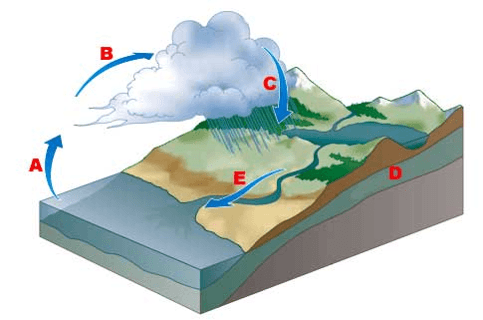
runoff
precipitation
evaporation
condensation
4
Multiple Choice

runoff
precipitation
condensation
transpiration
5
Multiple Choice
rain, snow, melted glaciers
ocean water
icebergs
water from fossilized animals
6
Multiple Choice
What percentage of the world's water is found in the Oceans?
25%
50%
75%
97%
99%
7
surface water
groundwater
water table
channel
tributary
watershed
divide
aquifer
8

-97% is salt water - 3% fresh water
- Only 1% of that 3% is liquid
- There is a huge demand for fresh water...
Where on Earth is freshwater found?
9
Open Ended
Other than water for drinking, what other uses does fresh water have? Where is the highest demand?
10

- Surface water is water located on Earth's...surface
- Precipitation, such as rain, or comes up from the ground.
- Surface water flows form higher to lower ground.
- Water that flows across Earth's surface is called runoff.
On Earth's Surface
11
12
Multiple Select
Which of these choices are examples of surface water?
streams
well water
rivers
lakes
13
Open Ended
How does surface water become groundwater?
14

-Not all surface water becomes ground water-some seeps into the ground
-Water drains through the soil and filters down into the underground rock, collecting in the spaces between rock particles.
- This is groundwater
Beneath Earth's Surface
15

16
17
-As precipitation falls it flows from higher to lower areas - eventually gathering together to form channels (the path a stream flows).
-This channel will continue to grow and erode rock and soil over time.
- A tributary is a smaller stream that feeds into a river system.
Have you visited any of the Delaware River's tributaries in Pike County or elsewhere?
18
19
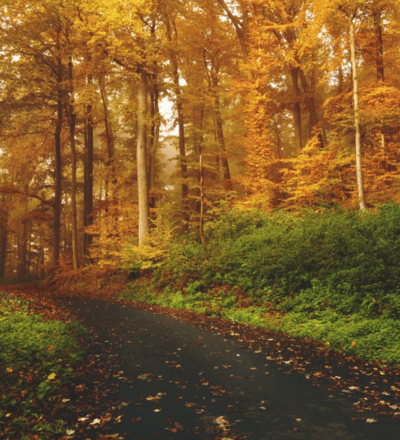
-An area of land drained by a river system.
-Watersheds are separated by divides.
-Largest watershed is the Mississippi River Watershed.
-Many Factors affect the flow in a watershed.
Watersheds
20


21
Poll
Can water quality get so bad, that it makes it difficult to survive?
Yes., It is essential to growth
No, It can be bad and people still manage
22


The change in elevation over a certain distance (steepness or slope of the land). The higher the gradient the faster the water moves.
Gradient
The amount of water that mover through a channel in a given amount of time. An increase in flow can cause an increase in speed.
River Flow
Materials carried in a stream. Streams with high flow carry a larger stream load. Faster streams carry larger loads. Deposit loads where they slow.
Stream Load
23
Open Ended
What land feature separates watersheds?
24
Open Ended
How would an increase in gradient affect the speed of water?
25


Water seeps into the ground. Aquifers store water in the ground and allows it to flow. Water tables rise and fall depending on the amount of water in the aquifer.
It trickles down from Earth's Surface
Water is stored in the pore spaces of rocks. The storage space of an aquifer is measure by their porosity. Permability is the measure of the movement of water within the aquifer. Aquifers with high porosity and permeability are a useful water source.
Fills Tiny Spaces Underground
26
27
28
Open Ended
What are so of the ways that groundwater becomes discharged?
29
Open Ended
What are some of the ways people use surface water and groundwater?
Surface and Groundwater
How does fresh water flow on Earth?
By the end of this lesson, you should be able to explain the processes involved in the flow of water, both above and below the ground.
Show answer
Auto Play
Slide 1 / 29
SLIDE
Similar Resources on Wayground

21 questions
Seismographs: Recording Vibrations
Presentation
•
6th Grade
20 questions
asexual and sexual reproduction
Presentation
•
6th Grade
20 questions
States of Matter Review
Presentation
•
3rd Grade
21 questions
Soil
Presentation
•
6th Grade
22 questions
Classifying Rocks
Presentation
•
6th Grade
22 questions
Matter & Atoms Review
Presentation
•
6th Grade
22 questions
Seasons
Presentation
•
6th Grade
23 questions
Energy Flow in Ecosystems
Presentation
•
6th Grade
Popular Resources on Wayground
10 questions
How much do you know about our Portrait of an Eagle?

Quiz
•
10th Grade
10 questions
Fast Food Slogans
Quiz
•
6th - 8th Grade
21 questions
Continents and Oceans
Quiz
•
6th Grade
20 questions
Parts of Speech
Quiz
•
5th Grade
16 questions
Subject & Predicate
Quiz
•
5th Grade
25 questions
Multiplication Facts
Quiz
•
5th Grade
12 questions
Map Skills
Quiz
•
3rd Grade
22 questions
Continents and Oceans
Quiz
•
5th Grade
Discover more resources for Science
10 questions
6.6D - Relative Density Review
Quiz
•
6th Grade
20 questions
Claim, Evidence and Reasoning (CER)
Quiz
•
6th - 8th Grade
20 questions
Density
Quiz
•
6th Grade
10 questions
Exploring Chemical and Physical Changes

Interactive video
•
6th - 10th Grade
20 questions
Food Chains & Food Webs
Quiz
•
5th - 7th Grade
18 questions
Interpreting Distance/Time Graphs
Quiz
•
6th Grade
10 questions
Decoding the Periodic Table of Elements
Interactive video
•
6th - 10th Grade
15 questions
Potential and Kinetic Energy
Quiz
•
6th Grade