Search Header Logo
  1. Resource Library
  2. Science
  3. Biology
  4. Natural Selection
  5. 7.2 Natural Selection
7.2 Natural Selection

7.2 Natural Selection

Assessment

Presentation

Science

6th - 8th Grade

Hard

NGSS
MS-LS4-4, MS-LS4-2, MS-LS4-1

+4

Standards-aligned

Created by

Lloyd Cascabel

Used 1+ times

FREE Resource

16 Slides • 43 Questions

1

Evolution

is the gradual change in organisms over time. There are many theories or beliefs on how this occurred. Some people thought that nothing changes. Some people thought that living things changes based on their needs (they control it). But for one scientist, Charles Darwin, the species that survive best have traits that are ideal to be passed on. To understand this better, watch the video that follows this slide.

media

2

3

Evolution

The most accepted theory of evolution is the “theory of evolution by natural selection,” which was proposed by Charles Darwin and Alfred Russel Wallace in the nineteenth century.

media

4

Whose Idea are these?

Darwin and Wallace (left, center) had separate investigations and expeditions to test their ideas. But they have similar ideas:

Natural selection happens when members of the same kind of species that are best suited for their environment survive and reproduce at a higher rate than other members of the species.

Remember the green insect, the long-necked tortoise, and the examples we used in class?

On the next slide, provide an example of natural selection. Make it unique!

media

5

Open Ended

Provide an example of how differences in physical traits can cause one little advantage to be selected by nature – which means that it will become a common trait for the next generation.

6

Multiple Choice

Which of the following means "change over time"
1

natural selection

2

speciation

3

evolution

4

isolation

7

Multiple Choice

Any inherited trait that gives an organism an advantage in its environment is called ___.
1

a mutation

2

an adaptation

3

evolution

4

natural selection

8

Open Ended

Provide an example of an adaptation.

9

Natural Selection

Nature selects those with desirable traits, and those survive and reproduce. Over time, the desirable trait becomes the most common because it has been past down generation after generation.

media

10

media

Why did the predator (bird) eat only the green beetles in this situation?

11

https://www.youtube.com/watch?v=vnktXHBvE8s

12

So what's the proof?

Remember, several observations provide evidence for evolution including;
1. fossil record,
2. similarities in morphology (body structure and physical traits)
3. embryology (similarities during embryo stage), and 

4. DNA similarities in organisms, 

media

13

Open Ended

Suggest a reason why did the bird only eat the green beetle.

14

Fossil Record

Fossils of ancient organisms have similar structures and DNA than that of organisms today, suggestiing they are ancestors of living organisms.

media

15

Embryology

  • Rsearching embryos has led to the observation that many organisms start out very similar in their early development.

media

16

Similar Body Structures

  • Organisms with similar body structures indicate a common ancestor.

  • Similar body structures that species have inherited from a common ancestor are called Homologous Structures.

media

17

The Fossil Record

Almost all fossils found are of extinct animals. Scientist have been able to study Earth's history from these fossils. They have been able to piece together what the past may have been like, and that these ancient remains are ancestors to organisms living today.

media

18

Dating Fossils

Relative Dating--comparing fossils to others and determining age based on which layer it was found in.


Radioactive Dating-- determining the ACTUAL age of a fossil by examining radioactive decay of an organism.

media

19

Multiple Select

SELECT ALL THAT APPLIES

Which of the following is evidence for the theory of evolution by natural selection?

1

ability to fly

2

similar bone structures

3

similar fetus/embryo appearance

4

similar DNA

20

Multiple Choice

____ is when members of a species that are best suited for their environment survive and reproduce at a higher rate than other members of the species
1

natural selection

2

artificial selection

3

speciation

4

adaptation

21

Multiple Choice

___ are mistakes in the DNA that cause variation within a species.
1

mutations

2

adaptations

3

speciations

4

isolations

22

Multiple Choice

The differences among a species, like different bird beaks, are called
1

theories

2

variations

3

adaptations

4

genes

23

Multiple Choice

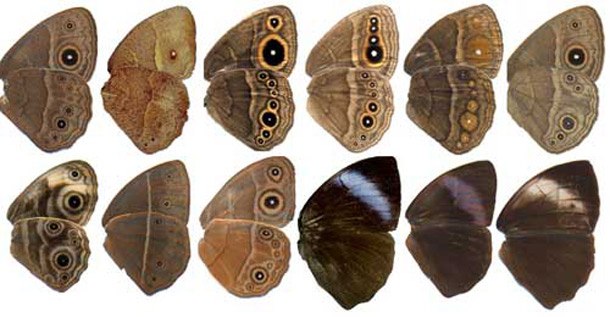
Question image
These moths are all the same species. The differences between their wings is an example of ________________
1

Natural Selection

2

Variation

3

Homeostasis

4

Extinction

24

Open Ended

Provide one example of variations you notice among people.

25

Multiple Choice

Mutations are a change in what?
1

DNA

2

skin color

3

height

4

sense of taste

26

Multiple Choice

Question image

Who was the Scientist most famous for his study of natural selection and evolution?

1

Albert Einstein

2

Gregor Mendel

3

Charles Darwin

4

Rudolf Virchow

27

Homologous, Analogous and Vestigial Structures

When comparing different species physical characteristics, we can find 3 groups of traits that provide us an understanding of where organisms came from and their similarities.

ANALOGOUS STRUCTURES - these are structures that come from different kinds of bones/skin but have a similar function.

HOMOLOGOUS STRUCTURES - these structures come from the same kind of bones but now function differently.

VESTIGIAL STRUCTURES - these structures are accessory and has no function but shows similarities with other organisms.

media

28

Multiple Choice

Body part you have that use to have a purpose but now has little or no function

1

vestigial organ

2

embryology

3

homologous structures

29

Multiple Choice

Question image

What do you call similar structures that related species have inherited from a common ancestor?

1

Analogous Structure

2

Vestigial Structure

3

Homologous Structure

30

Multiple Choice

Question image

What do we call structures that no longer perform their original function?

1

Analogous Structure

2

Vestigial Structure

3

Homologous Structure

31

Multiple Choice

Parts of the body that are similar in form to other species because they have a common ancestor.

1

fossil record

2

homologous structures

3

embryology

32

Multiple Choice

Question image

What do you call a characteristic that allows an organism to survive in an environment?

1

variation

2

adaptation

3

selection

4

overproduction

33

Multiple Choice

A trait or change in lifestyle that helps a plant or animal survive in its environment

1

adaptation

2

evolution

3

homologous

4

vestigial

34

Multiple Choice

Scientist that contributed the most to our understanding of evolution

1

Darwin

2

Lamarck

35

Multiple Choice

Organisms with the best suited adaptations for their environment are more likely to survive and reproduce than organisms that are not very well adapted

1

natural selection

2

artificial selection

3

creationism

36

Multiple Choice

The more offspring an organism has the greater the odds that a few of them will survive, reproduce and pass on those traits

1

overproduction

2

variation

3

selection

4

adaptation

37

Multiple Choice

Over long periods of time natural selection produces organisms different than their ancestors

1

overproduction

2

selection

3

adaptation

4

variation

38

Multiple Choice

Question image

This makes an organism more suited to its environment

1

species

2

lifespan

3

adaptation

4

mutation

39

Multiple Choice

Question image
Charles Darwin came up with this theory 
1

Natural Selection

2

Mutation

40

Multiple Choice

Question image
Darwin wrote that organisms with traits that are best suited to the environment will ________________
1

increase in number

2

become extinct

41

Multiple Choice

Question image

The pelvic bone of whales is not needed for movement within the water. This is an example of a(n) ______________ structure.

1

vestigial

2

analogous

3

homologous

42

Multiple Choice

About 96% of the information in human DNA is found in gorilla DNA. This evidence supports which statement?
1

Humans evolved from gorillas.

2

Gorillas and humans diverged from a common ancestor.

3

As gorillas evolve, they will become more similar to humans.

4

Gorillas and humans are too different for meaningful genetic comparisons.

43

Multiple Choice

Q. Where did human evolution take place?

1

Europe

2

Africa

3

Asia

4

America

44

Multiple Choice

Which of the following environmental factors is the reason that bipedalism evolved in early hominins?

1

Bipedalism evolved when the environment changed from grassland to rainforest.

2

Bipedalism evolved when the environment changed from rainforest to grassland.

3

Bipedalism evolved when the environment was constantly cycling between different climates in a short period of time.

4

Bipedalism evolved because early homins moved out of Africa into a new region.

45

Multiple Choice

Who are the closest living relatives to humans?

1

chimpanzees

2

gorillas

3

lemurs

4

kangaroos

46

Multiple Choice

What continent did humans evolve from?

1

the Americas

2

Asia

3

Africa

4

many places all at once

47

Multiple Choice

Our ancestors begin to hunt to meet their __________ needs

1

Dress

2

Sport sport

3

Food

4

Self defence

48

Multiple Choice

Question image

This image shows that 

1

These animals have no simliarities in their structures. 

2

Two different species may have evolved from a common ancestor. 

3

These animals are from the same species.

4

These animals likely evolved from different ancestors due to their differences.

49

Multiple Choice

Question image

Humans evolved from monkeys

1

true

2

false

50

Multiple Choice

Question image
The picture represents what evidence of evolution?
1

Homologous structure

2

Analogous structure

3

Vestigial structure

4

Heterozygous structure

51

Multiple Choice

Question image

The forelimbs of mammals have similar anatomy because these groups descended from a recent common ancestor. Their bone structure is an example of a(n) ______________ structure.

1

vestigial

2

analogous

3

homologous

52

Multiple Choice

Question image
The diagram shows fossils in different rock layers. Which of these statements about the age of these fossils is most likely correct?
1

Fossil A and C are the same age

2

Fossil B is older than fossil C

3

Fossils A is older than fossil B

4

Fossil D is older than fossil C

53

Multiple Choice

Question image

Many different groups of organisms have wings, even though they do not share a recent common ancestor. This is because they evolved in environments with similar selective pressures. Wings are an example of a(n) ______________ structure.

1

vestigial

2

analogous

3

homologous

54

Multiple Choice

Vocab check:

The theory that organisms have slowly changed over time...

1

fossil record

2

relative dating

3

evolution

4

adaptation

55

Geologic Time Scale

  • A Calendar of Earth's History

  • Spans 4.6 billion years

media

56

Multiple Choice

Vocab Check:

Relative dating means...

1

dating a relative

2

comparing two fossils and determining which is older

3

Using carbon to identify the exact age of a fossil

4

none of the above

57

Selective Breeding

When humans control the breeding of organisms, and specific traits in offspring are revealed in a relatively short period of time (Only a few generations versus many).

media

58

Multiple Choice

True or False? In Natural selection an animal chooses to adapt in a single generation, and survives.

1

true

2

false

59

Multiple Select

Darwin studied....

Select all that apply

1

finch beaks

2

variations in species

3

fossils on the Galapagos Islands

4

all of the above

Evolution

is the gradual change in organisms over time. There are many theories or beliefs on how this occurred. Some people thought that nothing changes. Some people thought that living things changes based on their needs (they control it). But for one scientist, Charles Darwin, the species that survive best have traits that are ideal to be passed on. To understand this better, watch the video that follows this slide.

media

Show answer

Auto Play

Slide 1 / 59

SLIDE