Evidence of Evolution Notes
Presentation
•
Science
•
6th - 8th Grade
•
Medium
+2
Standards-aligned
Christine Warden
Used 8+ times
FREE Resource
13 Slides • 30 Questions
1
Evidence of
Evolution
2
Fossils
●
Provide historical evidence about the order in
which changes have occurred
●
Fossils found in young layers of rock (ie closer
to the surface) tend to be more similar to
present day organisms; oldest ancestors in
deepest layers
●
Extinction of organisms allow for new
resources to be available and allow for new
mutations to be shown as beneficial or not.
3
Extinction
The fossil records show many species that no longer exist – these
species are said to be extinct.
There are four main reasons:
1.
Environmental changes are too quick (e.g. destruction of
habitat, ice age, too hot – resulting in lack of food, to few
resources available)
2.
A new predator kills them (e.g. humans hunting them).
3.
A new disease kills them.
4.
They can’t compete with another new species for food
4
Extinction
Humans are responsible for the
extinction of the Dodos.
1.They were hunted.
2.
Human introduced new
animals which ate their
eggs.
3.
Forests, where they lived,
were destroyed.
5
Multiple Choice
Which of the following can be learned by using the fossil record?
When organisms changed or evolved
when organisms became extinct
when organisms appeared on Earth
All the above
6
Multiple Choice
Fossils show how the sizes of certain animals has changed drastically over millions of years
Fossils show that some species have gone extinct
Fossils show how life forms present today are different than those from the past
Different sedimentary rock layers provide evidence for how the environment has changed over time
7
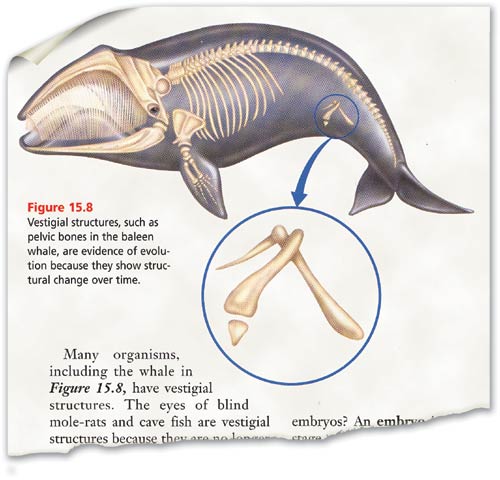
1.Remnants of structures that were
once useful, but do not serve a
purpose now.
2.
Help in identifying relationships
between organisms.
Vestigial Structures
8
●
Structures are formed and set
up the same way.
●
Homologous structures may
not necessarily perform the
same function but they share
a common ancestral origin
due to how they develop.
Homologous
Structures
9
●
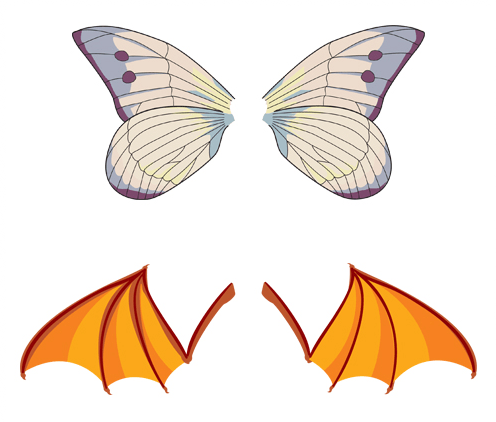
Structures of different
species having similar
function but not from
the same origin.
●
Structures are not
formed the same way,
but they have a similar
appearance/function.
Analogous
Structures
10
Review of Homologous and Analogous Structures
11
Multiple Choice
What term describes part of organisms, that have a similar structure but a different function?
homologous structure
homologous chromosome
vestigial structure
analogous structure
12
Multiple Choice
The appendix has no apparent function in humans today, but scientists think it used to help human ancestors digest certain foods. The appendix could be considered a _____________.
Homologous structure
Vestigial structure
Analogous structure
Adaptive structure
13
Multiple Choice
Which would be an example of a homologous structure?
a bird wing and a bat wing
a cat arm and a whale fin
a dolphin fin and whale fin
a bird wing and a butterfly wing
14
Multiple Choice
Homologous structures are defined as the same structure but different functions. In vertebrates, the presence of homologous structures suggest?
all vertebrates have a common ancestor
all vertebrates developed at the same rate
all vertebrates developed internally
15
Multiple Choice
Two body structures, found in unrelated species, have different structures but serve similar functions in each species. This describes___________.
Homologous structures
Analogous structures
16
Multiple Choice
Which would NOT be an example of an analogous structure?
a bird wing and a bat wing
a cat arm and a whale fin
a dolphin fin and whale fin
a bird wing and a butterfly wing
17
Multiple Select
Which are examples of vestigial structures? Select all that apply to receive credit!
human appendix
whale pelvis
tail bone
18
Multiple Choice
Similarities in bone arrangements, like those in the picture, support the hypothesis that...
these organisms are not well adapted
these organisms share a common ancestor
these organisms all share the same DNA sequences
these organisms are members of the same species
19
Multiple Choice
the wings of a red-tailed hawk
the hind limbs of a house cat
the fins of sharks
the tailbone of a human
20
Multiple Choice
What is this an example of?
Homologous structure
Analogous structure
Vestigial organs
Functional adaption
21
1.
Embryos from different vertebrates are very similar
during early stages of development.
2.
The longer they are similar during development the
more closely related they are.
Embryonic
Structure
22
Multiple Choice
look very similar.
have very different features.
show different stages of development.
have only a tail if they are non-human.
23
Multiple Choice
have more characteristics in common with each other than with reptiles or birds.
are still hard to tell from reptiles and birds.
have the same features as fish, reptiles, and birds.
do not have tails.
24
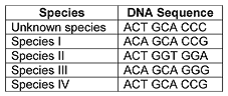
●All organisms share the same
genetic material.
●The more alike two organisms are,
the more alike their DNA base
sequence, the more amino
acids/proteins they have in
common (genetic sequence).
DNA
What does this cladogram diagram tell us?
25
Mutations
These are changes, through everyday
wear and tear, to the DNA.
Most mutations have no effect.
Sometimes it can cause a new
characteristic.
26
Mutations
Very occasionally it can give an
organism a better chance of
survival – longer fur, longer
legs
Overtime, time these useful
mutation can help a species
adapt to an environment –
and eventually lead to the
evolution of a completely
new species.
27
Multiple Choice
Species I
Species II
Species III
Species IV
28
Multiple Choice
share a common ancestor
share a common environment
share a common population
speciation
29
Multiple Choice
Hippopotamus
Baleen Whale
Grazing Mammals
Camels
30
Multiple Choice
What number is the common ancestor of C and D
1
2
3
4
31
Multiple Choice
Organisms that have the most DNA sequences in common
have the same number of legs
Are the least related
are randomly distributed
Are the most related
32
33
Match
Analogous Structure
Homologous Structure
Comparative Embryology
Biochemical Evidence
Vestigial Structures
Same function different structure
Same structure different function
Comparing embryological development of different species
Comparing DNA and amino acid sequences of different species
Structures in the body of an organism that no longer work.
Same function different structure
Same structure different function
Comparing embryological development of different species
Comparing DNA and amino acid sequences of different species
Structures in the body of an organism that no longer work.
34
Multiple Choice
True
False
35
Multiple Choice
The picture shows a/an ___________
homologous structure
vestigial structure
36
Multiple Choice
An anatomical feature that no longer seams to have a purpose in the current form of an organism
Homologous structure
Analogous structure
Vestigial structure
None of the above
37
Multiple Choice
very similar DNA sequence
exactly the same DNA sequences
no proteins in common
completely different DNA sequence
38
Multiple Choice
Amphibians
Sharks
Ray Finned Fish
Crocodiles
39
Multiple Choice
The fossil record help scientists
better understand the kinds of organisms that lived in the past
better understand how the environment has changed over time
better understand how organisms have evolved over time
all of the above
40
Multiple Choice
The cave fish and minnow are related to each other but the cave fish is blind and only has the remnants of an eye. What type of structure is this?
vestigial
analogous
41
Multiple Choice
1. Which scientist formulated the theory of evolution through natural selection?
Charles Darwin
Thomas Malthus
James Hutton
Jean-Baptiste Lamarck
42
Multiple Choice
Relative dating finds how old things are
in exact age
compared to something else
by finding the year marked on the bones
43
Multiple Choice
Scientists can explore whether two different animal species have evolved from a common ancestor, using evidence from all of the sources below except
Comparing their strands of DNA
Comparison of the animals' bone structure
Comparison of the experiences of each organism
Studying their embryos during development
Evidence of
Evolution
Show answer
Auto Play
Slide 1 / 43
SLIDE

Similar Resources on Wayground
36 questions
Major Tectonic Plates Guided Lesson
Presentation
•
6th - 8th Grade
39 questions
Review for Benchmark!
Presentation
•
6th - 8th Grade
36 questions
What is Matter?
Presentation
•
7th - 8th Grade
37 questions
Ohm's Law
Presentation
•
7th Grade
36 questions
Biotic and Abiotic Factors
Presentation
•
7th Grade
37 questions
Unit 1 Recovery
Presentation
•
6th - 8th Grade
33 questions
Electromagnets!
Presentation
•
6th - 8th Grade
36 questions
Newton's Laws Physics Girl
Presentation
•
6th - 8th Grade
Popular Resources on Wayground
10 questions
5.P.1.3 Distance/Time Graphs
Quiz
•
5th Grade
10 questions
Fire Drill
Quiz
•
2nd - 5th Grade
20 questions
Equivalent Fractions
Quiz
•
3rd Grade
22 questions
School Wide Vocab Group 1 Master
Quiz
•
6th - 8th Grade
20 questions
Main Idea and Details
Quiz
•
5th Grade
20 questions
Context Clues
Quiz
•
6th Grade
20 questions
Inferences
Quiz
•
4th Grade
12 questions
What makes Nebraska's government unique?
Quiz
•
4th - 5th Grade
Discover more resources for Science
8 questions
Amoeba Sister Asexual vs Sexual Reproduction
Interactive video
•
8th Grade
19 questions
Introduction to Properties of Waves
Presentation
•
6th - 8th Grade
16 questions
Interactions within Ecosystems
Presentation
•
6th - 8th Grade
10 questions
Exploring the Layers of the Earth
Interactive video
•
6th - 10th Grade
16 questions
Photosynthesis and Cellular Respiration Review
Quiz
•
7th Grade
20 questions
Abiotic & Biotic Factors
Quiz
•
7th Grade
15 questions
Punnett Squares
Quiz
•
6th Grade
10 questions
Exploring the Evolution of Cell Theory
Interactive video
•
7th Grade