Search Header Logo
Cell Terms Part 1

Cell Terms Part 1

Assessment

Presentation

•

Biology

•

9th - 12th Grade

•

Medium

•
NGSS
MS-LS1-2, MS-LS1-1, MS-LS1-6

+1

Standards-aligned

Created by

Stacey Ramay

Used 34+ times

FREE Resource

9 Slides • 20 Questions

1

Multiple Choice

All living things are made up of _____. 
1

Cells 

2

Bacteria 

3

Virus 

4

ATP

2

Multiple Choice

A cell is...
1

the basic unit of structure and function in living organism

2

an organism

3

a basic part of everything that we see

4

found only in animals, not plants

3

media

2. ALL CELLS HAVE

•A cell membrane
•Cytoplasm
•Ribosomes (a very simple organelle)
•Genetic material (DNA and RNA)

4

media

23. PHOSPHOLIPID BILAYER

•Another name for the cell membrane
•A favorite term to use on the STAAR for the cell
membrane
•Made of 2 layers of lipid molecules

5

Multiple Choice

Question image
I am the outer most layer of an animal cell. What am I?
1

cell wall

2

nucleus

3

cell membrane 

4

cell skin

6

media

24. PLASMA MEMBRANE

•Another name for a cell membrane
•Also a favorite term to use on the
STAAR for the cell membrane

7

Multiple Choice

The function of the plasma membrane is....
1

to regulate what enters and leaves the cell.

2

fight bacteria and viruses that enter the cell.

3

provide rigid support and protection to the cell.

4

make sure each cell can move

8

Multiple Choice

Question image
This is a picture of the......
1

cell membrane

2

phospholipid bilayer

3

plasma membrane

4

all of these

9

media

5. CELL WALLS

•A rigid layer of saccharides outside
the plasma membrane (cell
membrane) in plants, fungi, and
bacteria
•Plants are made of cellulose (acts as
fiber in our diet)

10

Multiple Choice

Question image
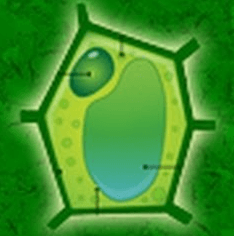
A rigid layer that lies outside the cell's  membrane is...
1

Cytoskeleton

2

Cilia

3

Cell Wall

4

Flagella

11

media

17. ORGANELLES

•Specialized structure that
preforms a job in the cell

12

Multiple Choice

The fluid of dissolved molecules that fills the cell and suspends organelles.

1

nucleus

2

vacuole

3

lysosome

4

cytoplasm

13

Multiple Choice

These connect amino acids to build proteins in the cell. They are needed for cell function

1

cell membrane

2

ribosomes

3

vacuole

4

golgi Body

14

media

16. MEMBRANE BOUND ORGANELLES

•Organelles encased by a
membrane
•Examples are nucleus,
mitochondria, chloroplast

15

Multiple Choice

Question image
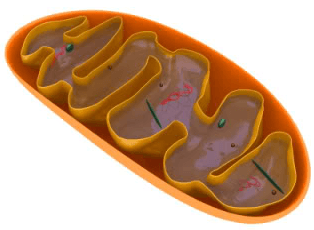
What are tiny organelles that convert glucose into ATP?
1

Ribosomes

2

Vesicles

3

Cytoskeleton

4

Mitochondria

16

Multiple Choice

The site of photosynthesis
1

ribosome

2

mitochondria

3

chloroplast

4

nucleus

17

Multiple Choice

The center of the cell contains DNA

1

nucleus

2

ER

3

golgi Body

4

ribosomes

18

media

30. UNICELLULAR

•Made of only one cell

19

media

26. PROKARYOTIC

• No nucleus – most important thing to remember!!!
• DNA bunched in middle of cell
• No membrane bound organelles
• No internal membranes
• Unicellular
• Cell walls made of peptidoglycan
• Examples: Bacteria

20

Multiple Choice

Prokaryotic cells do NOT have a nucleus. 
1

True 

2

False 

21

Multiple Choice

Question image
Which of the following is an example of a prokaryotic cell? 
1

Virus 

2

Plant Cell 

3

Bacteria 

4

Animal Cell 

22

Multiple Choice

A prokaryotic cell is...

1

Cells that don't contain a nucleus but do contain other membrane-bound organelles.

2

Cells that contain a nucleus but no other membrane-bound organelles.

3

Cells that contain a nucleus and other membrane-bound organelles.

4

Cells that don't contain a nucleus or any other membrane-bound organelles.

23

media

9. EUKARYOTIC

• ***has a nucleus****
• Membrane bound organelles
• Mitochondria – to break down carbohydrates
• Chloroplast – plants only for photosynthesis
• DNA in nucleus
• Unicellular or multicellular
• Plants and fungi have cell walls. Animals do not

24

Multiple Choice

A Eukaryotic cell is...

1

Cell that has no membrane.

2

Cell with no membrane-bound organelles.

3

A cell containing a nucleus and other membrane-bound organelles.

4

A cell containing a nucleus and other nucleus-bound organelle.

25

Multiple Choice

Which of the following is a Eukaryotic cell?
1

Bacteria 

2

Virus 

3

Animal/Plant Cell 

4

All of the above. 

26

Multiple Choice

Only eukaryotic cells have....
1

membrane-bound organelles 

2

DNA

3

ribosomes

4

cell membranes 

27

Multiple Choice

Question image
The two kinds of cells are Prokaryotes and Eukaryotes. How are they different?
1

Prokaryotes have a nucleus.

2

Eukaryotes have a nucleus.

3

Prokaryotes are plant cells.

4

There is no difference.

28

Multiple Choice

Question image
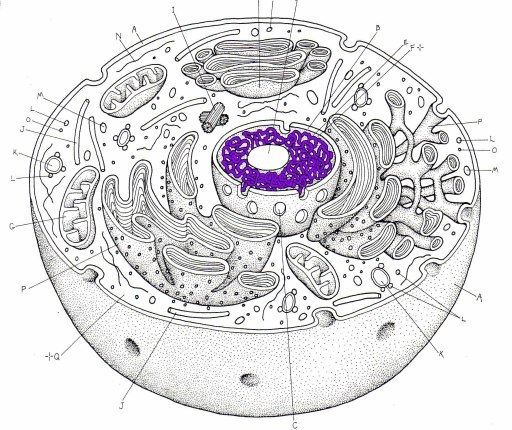
What kind of cell is this?
1

Eukaryotic

2

Prokaryotic

29

Multiple Choice

Plants and animal cells are examples of ___ cells 
1

prokaryotic cells 

2

eukaryotic cells 

pattern-tertiary
All living things are made up of _____. 
1

Cells 

2

Bacteria 

3

Virus 

4

ATP

Show answer

Auto Play

Slide 1 / 29

MULTIPLE CHOICE