

untitled

Presentation
•
•
Practice Problem
•
Hard

abod souri
FREE Resource
92 Slides • 39 Questions
1
Multiple Choice
Adding energy to water causes the water particles to...
speed up
slow down
2
Multiple Choice
Kinetic energy is what type of energy?
chemical
electric
motion
sound
3
Multiple Choice
As the kinetic energy of the particles increased, the _____ of the particles ________
speed; decreased
speed: increased
space; decreased
space; increased
4
Multiple Choice
The faster the particles move, the less kinetic energy there is.
True
False
5
Multiple Choice

Temperature is a measure of _____________.
average kinetic energy
average potential energy
the sum of kinetic & potential energy
the difference of kinetic & potential energy
6
Multiple Choice

As temperature increases, kinetic energy ________.
stays the same
increases
decreases
7
Multiple Choice
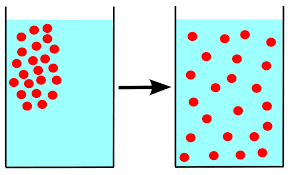
The movement of particles from an area of higher concentration (more particles) to an area of lower concentration. The particles spread out.
Dissolving
Diffusion
Density
Thermal Expansion
8
Multiple Choice

In which image has diffusion completed ?
1
2
3
9

General SCIENCE
Grade 6
10

My dear girls…………
Good Morning
11

Textbook
Make sure you have the following
before we start:
01
02
03
04
Notebook
Pencil, Eraser, Ruler
Fully charged laptop
12

Learning Golden Rules
You agree to:
1. Listen to your teacher.
2. Ask questions by raising your hand.
3. Be prepared to start the lesson by having
your resources ready.
4. Open your textbook and notebook.
5. Be in your school uniform.
6. Try your best and be an active learner!
7. Do not interrupt when some one is talking.
13

—SOMEONE FAMOUS
“Push yourself because no one
else is going to do it for you.”
14


Unit 3 – Understanding matter
Module - Energy and Matter
15


Particles in
Motion
Lesson 1
16

Learning Objectives
✓ Understand how do particles move
✓ Analyze what determines how much energy
particles have.
✓ Interpret what happens to a liquid when kinetic
energy changes.
✓ Explain how do particles in a gas behave compared
to particles in a liquid.
✓ Explain what evidence is there that particles in a
solid move.
✓ Estimate how does the total amount of a substance
affect its energy.
17

Vocabulary
✓ Particles
✓ Volume
✓ Random motion
✓ Diffusion
✓ Collisions
✓ Kinetic energy
✓ Movement
✓ Thermo dynamics
✓ Temperature
✓ Thermal expansion
✓ Thermal contraction
✓ Celsius
✓ Kelvin
✓ collide
18


19


Textbook # 5
Starter Activity
What is the relationship between temperature and particle motion?
Select the statement you agree the most.
Answer in the textbook
20
Poll

What is the relationship between temperature and particle motion?
Select the statement you agree the most.
A
B
C
D
21


Materials needed
1.Pencil or any wooden material
2.Spoon or any metal material
Proceduce
•Hold both the materials in your hand
and write the observation in the
science notebook.
•Hold both the materials in hand for 2
mins and write the observation.
Inclass Activity
Result
Pencil – cold or hot or nothing
Spoon – cold or hot or nothing
Choose the answer based on your observation.
After 2 mins :
22


What did you observed from the above activity?
23


What did you observed from the above activity?
•
At first the metal block or spoon feels colder in the
hand than the wooden block or pencil.
•
After a while, the sensation of two temperature goes
away.
24


What is temperature, and how is it measured?
•Temperature is a measure of the average kinetic energy of the
particles of a material.
•The faster particles move, the higher the temperature.
•Temperature can be measured using thermometers that operate
through thermal expansion.
•The sensation of warmth depends on the flow of energy into or out
of the skin.
25
Multiple Choice
.....................................is a measure of the average kinetic energy of the particles of a material.
Temperature
Heat
Thermal
cold
26
Multiple Choice
Temperature can be measured using
27
Poll
Can human hands be a thermometer?
28


Hands can be thermometer?
29


What are
these doing?
Activity
30

Solid Liquid Gas Card sort - Group sort
You can open this webpage in a new tab.
31


How do particles move?
Do you think these particles move when an object is still?
➢ A particle is small unit of matter.
➢ All matter is made up of particles that are constantly moving.
32


Particles in Motion Lab
33


Inclass Activity
Textbook # 10
34


Inclass Activity – LAB – Wait for it
Textbook # 11
35


Inclass Activity – LAB – Wait for it
Textbook # 11
36


Inclass Activity – LAB – Wait for it
Textbook # 11
37


How do particles move?
Movement and collisions
•
In the lab Wait for it, the food coloring moved when
the water in the beaker appeared to be completely
still.
How did this happen?
The particles in matter are in random motion.
Random Motion is movement in all directions and at
different speeds.
Think about adding food coloring to water.
✓ The movement of the water particles pushes the food
coloring particles around.
✓ The food coloring spreads out, or diffuses.
38
39


How do particles move?
Movement and collisions
Take a look at the figure below. Notice
that as you move from left to right, the
particles become more diffuse.
40
Multiple Choice
The particle arrangement that would best represent liquid milk is
41
Multiple Choice
Which image best represents the diffusion process?
42
Multiple Choice
Identify which image have more energy and can break a wall?
Give reason.
43


What determines how much energy a particles have?
How does the motion of the ball in
the image relate to its energy?
Recall that energy is the ability to cause change.
44
45


Investigation
Textbook # 13
46


Investigation
Textbook # 13
47


Investigation
Textbook # 13
The dye in the beaker at the higher temperature
diffuses more quickly than dye in the beaker at the
cooler temperature.
48


Investigation
Textbook # 13
49


Investigation
Textbook # 13
The dye diffused faster in the beaker at the higher
temperature. So, the more energy that is added, the
faster the particles move. If the particles are moving at
a faster speed, they will collide more often and cause
the dye particles to diffuse faster around the beaker.
50


What determines how much energy particles have?
Movement and Energy
Scientists use diffusion to find out how fast the
particles of a substance are moving.
•The faster the particles move, the faster
diffusion occurs.
•When thermal energy is added to a substance,
the motion energy, also called kinetic energy,
of the particles increases.
•As the kinetic energy of the particle increased,
the speed of the particles increased.
•The faster particles move, the more kinetic
energy they have.
51


What determines how much energy particles have?
Movement and Energy
52


Question time:
➢
What causes particles of a substance to move faster?
➢
How can you model motion in a still image?
Answer:
Answer:
53


Question time:
Answer:Adding energy to the particles, such as heating the
substance on a hot plate increases the kinetic energy of the
particles
➢
What causes particles of a substance to move faster?
➢
How can you model motion in a still image?
Answer:In a still image, motion can be modeled by adding
motion lines to the part of the image that should be
moving.
54


Three-Dimensional Thinking:
➢
Add motion lines to the liquid particles model on the right to
show they are moving faster than the liquid particles on the
left. Circle the model that has more kinetic energy.
Textbook # 14
55
Multiple Choice
What happens to particles in matter when heat is added?
they have less energy
they have more energy
the energy doesn't change
they have no energy
56
Multiple Choice

Which of the following would cause the particles to spread out faster in the liquid?
freezing the mixture
removing heat energy
adding heat energy
decreasing the temperature
57
Poll
Temperature can describe the energy of an object
58


What happens to a liquid when kinetic energy changes?
59


Investigation
Textbook # 16
60


Investigation
Textbook # 16
61


Investigation
Textbook # 16
As the temperature of the liquid goes up, the liquid
level rises or expands in the thin tube.
62


Investigation
Textbook # 16
63


Investigation
Textbook # 16
As the kinetic energy (or temperature) of the particles
goes up, the speed of the particles increases causing
more particle collisions, which leads to increased volume.
As the kinetic energy (or temperature) of the particles
goes down, the speed of the particles decreases causing
fewer particle collisions. In turn, the volume of the liquid
decreases.
64


What happens to a liquid when kinetic energy changes?
Energy and Volume
•As the temperature of a material increases,
its particles begin to move faster and the
kinetic energy increases.
•Also, as the average kinetic energy of the
particles increases, they spread out.
•The increase in a material’s volume when
particle motion increases is known as
thermal expansion.
65


What happens to a liquid when kinetic energy changes?
Energy and Volume
•As the particles that make a substance lose
kinetic energy, they slow down and move
closer together.
•The particles take up less space. This is
known as thermal contraction.
•Thermal contraction happens when
particle motion decreases and causes the
particles to occupy less volume.
66


67


Three-Dimensional Thinking:
➢
Draw a diagram to model what the particles on would look like
if they went through thermal expansion. Which model has
more kinetic energy.
Textbook # 17
68

What happens to a liquid when kinetic energy changes?
•The properties of thermal expansion and contraction can be used to
measure temperature.
•Temperature is the measure of the average kinetic energy of the particles
in a material.
•The temperature of a substance depends on how much kinetic energy the
particles that make up the material have.
•The lower the kinetic energy of the particles, the lower the temperature of
the substance.
•Energy, volume, and temperature are all related.
•When the temperature decreases, the particles slow down, which causes
them to take up less space.
•Lower temperatures mean less kinetic energy and a smaller volume.
•If temperature increases, the particles move faster, and take up more space.
•Higher temperatures mean more kinetic energy and a greater volume.
Energy and Temperature
69


70


What happens to a liquid when kinetic energy changes?
Temperature Scales
71


Question time:
Answer:
➢
What is the freezing point of
water at each temperature scale?
72


Question time:
Answer:
➢
What is the freezing point of
water at each temperature scale?
73


Three-Dimensional Thinking:
➢
Construct an explanation about the relationship between
average particle speed and temperature.
Textbook # 18
➢
What conclusions can you make about kinetic energy and
temperature?
74


Three-Dimensional Thinking:
➢
Construct an explanation about the relationship between
average particle speed and temperature.
Textbook # 18
➢
What conclusions can you make about kinetic energy and
temperature?
75
Multiple Choice
……………………. Means to decrease in volume
kinetic
expand
contract
energy
76
Multiple Choice
The faster the particles in an object move, the higher the …….of the object
temperature
heat energy
chemical properties
potential energy
77


How do particles in gas behave compared to particles in
liquid?
78


Investigation
Textbook # 19
79


Activity - Investigation
Textbook # 19
80


Investigation
Textbook # 19
81


Investigation
Textbook # 19


82


How do particles in gas behave compared to particles in
liquid?
•In gases, particles move at high speeds.
•They have high amounts of kinetic
energy.
•Gases can expand and contract.
•Being able to smell food over a distance
is evidence for the movement of gas
particles.
Gas Particles
83
Multiple Choice

84
Multiple Choice
When the balloon was placed in the freezer to cool, the balloon ……….
expanded
remained unchanged
moved with greater kinetic energy
contracted
85
Multiple Choice
During the investigation, when the balloon is taken out from the freezer and kept outside for few minutes, what did you observe?
the balloon remain unchanged
the balloon contracted
the balloon expanded
the space between the particles increases
86
Multiple Choice

Which of the following correctly identifies the processes observed in images A and B?
87


What evidence is there that particles in a solid move ?
88


Investigation
Textbook # 20
89


Investigation
Textbook # 20
90


Investigation
Textbook # 20

91


Investigation
Textbook # 20
92


Investigation
Textbook # 20
Answers : The particles really close to each other, but
not really moving. You would still need to show that the
particles move apart from each other.
93


What evidence is there that particles in a solid move ?
•The particles of a solid cannot move as
much as the particles in liquids and gases.
•In a solid, the particles vibrate back and
forth in place.
•Particles of a solid have low amounts of
kinetic energy.
•Expansion and contraction do occur in solids,
but it is hard to see because the particles
hold each other in place.
Solid Particles
94


Question time:
Answer:
➢
Why are liquid better than solids for use in thermometers?
95


Question time:
Answer:
➢
Why are liquid better than solids for use in thermometers?
96
Multiple Choice
How are particles arranged in a solid?
97
Multiple Choice
How are particles arranged in a solid?
98


How does the total amount of a substance affect its
energy?
99


Investigation
Textbook # 21
100


Investigation
Textbook # 21
101


Investigation
Textbook # 22
102


Investigation
Textbook # 22
103


Investigation
Textbook # 23
104


Investigation
Textbook # 23
105


Investigation
Textbook # 23
The greater the mass of a substance,
the more energy the substance has. A
substance with greater mass has a
greater number of particles. The more
particles that are present, the greater
the energy of that substance.
106


Three-Dimensional Thinking:
➢
A student left their half-full water bottle out in the Sun all day
and would like to cool it down. They could add cool tap water
to fill up their water bottle or they could add a small amount
of cold water from the refrigerator. Present an argument on
which option you would recommend. Support your
recommendation with evidence.
Textbook # 24
107


How does the total amount of a substance affect its
energy?
Energy and Mass
•Two substances at the same temperature
have the same average kinetic energy of
their particles.
•When one substances has more
particles, that substance has more
energy.
•Think about two samples of water at the
same temperature. The sample with more
mass will contain more total energy
108


Question time:
Answer:
➢
What is the relationship between mass and energy?
109


Question time:
Answer:
➢
What is the relationship between mass and energy?
110


Lesson Review
Textbook # 26
111


Lesson Review
Textbook # 26
No kinetic energy
Greater kinetic energy
Greater kinetic energy
112
Draw
Model each statement above. Model the first statement solid particles, the second statement liquid particles and the last statement gas particles
113


Lesson Review
Textbook # 27
114


Lesson Review
Textbook # 27
115


Lesson Review
Textbook # 28
116


Lesson Review
Textbook # 28
117


Lesson Review
Textbook # 28
118


Lesson Review
Textbook # 28
119

Thank You
120
Multiple Choice
What do you call the energy of motion?
matter
kinetic energy
diffusion
temperature
121
Multiple Choice
Anything that takes up space is _____.
a particle
matter
temperature
water
122
Multiple Choice
The movement of substances from an area of high concentration to an area of low concentration.
temperature
kinetic energy
diffusion
particles
123
Multiple Choice
A small unit of matter.
particle
volume
mass
diffusion
124
Multiple Choice
Particles move in ______ with no pattern.
a square
a circle
random motion
125
Multiple Choice
The greater the kinetic energy the ______ the temperature.
lower
greater
126
Multiple Choice
When particles move faster they bump into each other and need more space. This is called ____.
random motion
diffusion
thermal expansion
thermal contraction
127
Multiple Choice
What best describes the particles in a solid?
close together and moving freely
far apart and moving freely
close together and vibrating in place
far apart and vibrating in place
128
Multiple Choice
When a substance is heated, the particles gain energy and move apart. The volume of the substance being heated ______.
increases
decreases
stays the same
129
Multiple Choice
A liquid thermometer works because liquid ________ when warmed.
expands
contracts
solidifies
condenses
130
Multiple Choice
Most highway bridges are built with expansion joints that can move back and forth. What is the reason for this?
expansion joints are cheaper than stationary joints
the materials that make up the bridge will expand and contract with changes in temperature
there is no real good reason to use expansion joints
131
Multiple Choice
A large balloon is taken to a shady area and filled with cool air. The balloon is then taken to a bright, sunny location. After a short time, the balloon begins to expand. WHAT explanation does this investigation verify?
A balloon filled with cool air will rise into the atmosphere
the sunlight had no effect on the balloon
as particles gain energy the material takes up more space
Adding energy to water causes the water particles to...
speed up
slow down
Show answer
Auto Play
Slide 1 / 131
MULTIPLE CHOICE
Similar Resources on Wayground

128 questions
Marine Science Ch 10
Presentation
•
9th Grade
124 questions
HAP4 Central Nervous System
Presentation
•
10th - 12th Grade
124 questions
Freizeit
Presentation
•
8th Grade
122 questions
Mesopotamian Geography and Society
Presentation
•
6th Grade
129 questions
Personal and Occupational Health and Safety
Presentation
•
9th - 12th Grade
129 questions
Marine Science Ch 11
Presentation
•
9th Grade
131 questions
Module 4 CFR PART 21
Presentation
•
Professional Development
127 questions
Judicial Branch 2
Presentation
•
9th - 12th Grade
Popular Resources on Wayground
10 questions
Safety Day 2026 – Student Review

Quiz
•
9th Grade
21 questions
Continents and Oceans
Quiz
•
6th Grade
20 questions
Parts of Speech
Quiz
•
5th Grade
16 questions
Subject & Predicate
Quiz
•
5th Grade
25 questions
Multiplication Facts
Quiz
•
5th Grade
12 questions
Map Skills
Quiz
•
3rd Grade
22 questions
Continents and Oceans
Quiz
•
5th Grade
15 questions
Rounding Decimals
Quiz
•
5th Grade
Discover more resources for
26 questions
SLIME!!!!!
Quiz
•
KG - 12th Grade
20 questions
Place Value
Quiz
•
KG - 3rd Grade
4 questions
K-2 Force and Motion Lesson
Presentation
•
KG - 2nd Grade
12 questions
Tone and Mood
Presentation
•
KG
10 questions
Day and Night Patterns
Quiz
•
KG
20 questions
Disney Characters
Quiz
•
KG
12 questions
Nouns and Verbs
Quiz
•
KG - 2nd Grade
15 questions
Short Vowels
Quiz
•
KG - 2nd Grade