Search Header Logo
AC1.8 Valence electrons and Ionic Compounds

AC1.8 Valence electrons and Ionic Compounds

Assessment

Presentation

Chemistry

9th - 12th Grade

Medium

Created by

Mecia B.

Used 2+ times

FREE Resource

9 Slides • 21 Questions

1

media

2

media

3

Multiple Choice

Question image

According to the octet rule, atoms react with each other in order to attain _ electrons in their outermost energy level or shell.

1

2

2

4

3

6

4

8

5

10

4

Multiple Choice

Question image

Which of the following elements loses one electron in order to attain an octet?

1

potassium

2

calcium

3

helium

4

boron

5

fluorine

5

Multiple Choice

Question image

Which atom is likely to gain one electron in order to attain an octet?

1

sodium

2

helium

3

iodine

4

chlorine

6

Multiple Choice

Question image

Which atom will likely gain three electrons in order to attain an octet?

1

nitrogen

2

lithium

3

aluminum

4

oxygen

7

Multiple Choice

Question image

Each elements will gain electrons to attain an octet except

1

potassium

2

fluorine

3

oxygen

4

hydrogen

8

media

9

Multiple Choice

Question image

What is the condensed configuration for the sulfur atom?

1

[Ar]3p4

2

[He]3s23p4

3

[Ne]3s23p4

4

[Na]3s23p4

10

Multiple Choice

Question image
What is the electron configuration for this atom?
1

1s22s22p6

2

1s22s22p5

3

1s22s22p3

4

2s22p3

11

Drag and Drop

Anions are ​
elements that form ​
ions and ​
electrons.
Drag these tiles and drop them in the correct blank above
non-metal
negative
lose
metal
metalloid
gain
positive

12

Multiple Choice

Question image

What atom matches this electron configuration?
1s22s22p63s2

1

Neon

2

Magnesium

3

Aluminum

4

Potassium

13

Multiple Choice

Question image

What anion matches this electron configuration?
1s22s22p63s2

1

Al-

2

Na-

3

Mg

4

Ne-

14

Multiple Choice

Question image
What is the electronic configuration of iron?
1

1s22s22p63s23p64s23d6

2

1s22s22p63s23p63d8

3

1s22p63s23p64s23d6

4

1s22s22p63s23p64s13d6

15

media

16

Multiple Choice

Question image

What is the chemical formula for calcium bromide if Ca2+ + Br- forms the ionic compound?

1

CaBr2

2

Ca2Br

3

CaBr

4

CaBr3

17

Multiple Choice

Question image

What is the chemical formula for aluminum chloride if Al3+ + Cl- forms the ionic compound?

1

Al3Cl

2

AlCl

3

AlCl3

4

Al3Cl3

18

Multiple Select

Which groups tend to not form ions? Check all that apply.

1

1

2

14

3

13

4

17

5

18

19

media

20

Multiple Choice

Question image
Which type of bond transfers electrons?
1

ionic

2

covalent

3

metallic

21

media

22

media

23

Multiple Choice

Question image

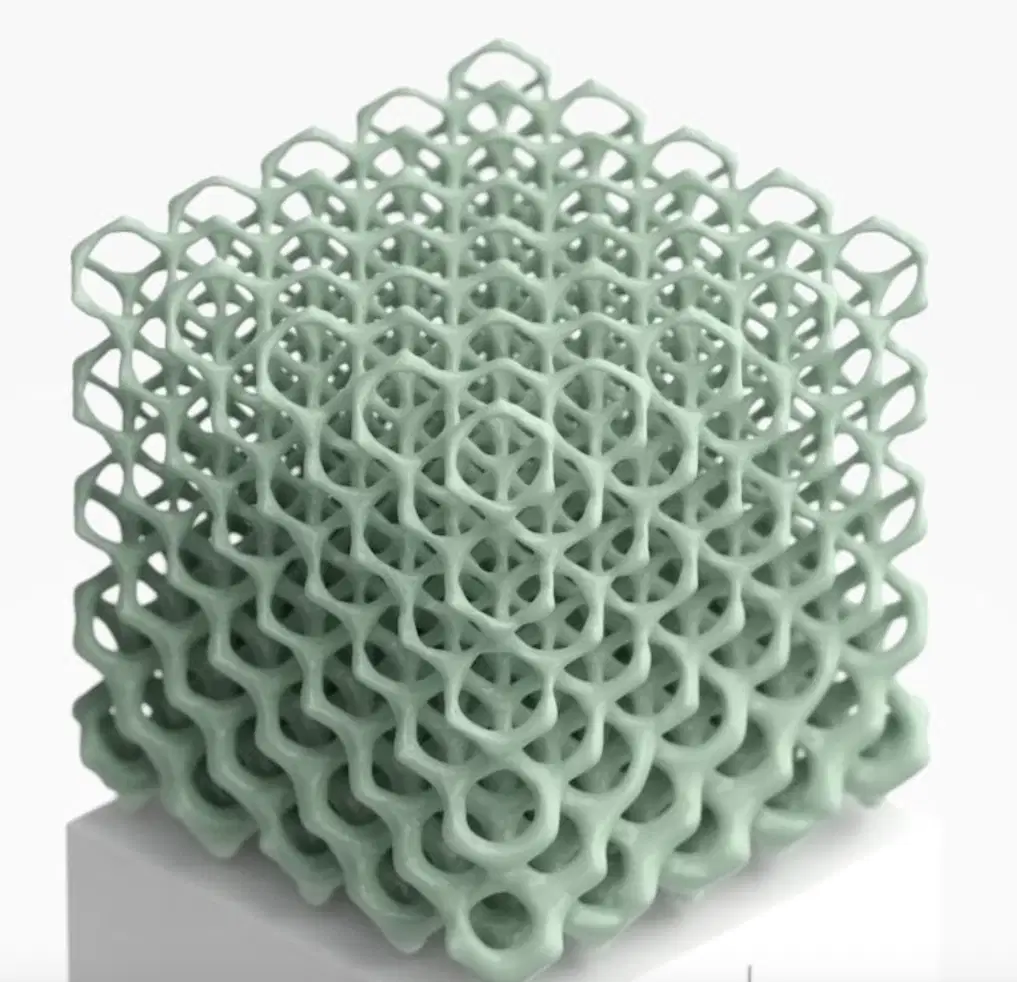
This type of solid forms a regular repeating three-dimensional structure called a crystal lattice.

1

amorphous

2

crystalline

3

glass

4

diamond

24

Multiple Choice

Question image

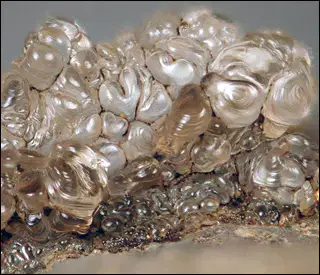
In amorphous solids, the atoms or molecules are held together in a completely random formation.

1

true

2

false

25

Multiple Choice

Question image

Which of the following is true of solids?

1

All solids have a crystalline structure.

2

All solids maintain a defined shape and size if conditions remain constant.

3

All solids have a lattice structure at the atomic level.

26

Multiple Choice

Question image

One major difference between crystalline and amorphous solids is that

1

crystalline solids have a precise melting point.

2

amorphous solids have a lattice structure.

3

amorphous solids always behave consistently and uniformly.

4

crystalline solids break unpredictably and can produce curved fragments.

27

media

28

media

29

Multiple Choice

  1. Atoms of an element, Y, have the electronic configuration 1s22s22p63s23p5. The compound most likely formed with sodium, Na, is:

1

Na2Y

2

NaY

3

Na3Y2

4

NaY2

30

Multiple Choice

  1. Atoms of an element, Z, have the electronic configuration 1s22s22p4. The compound most likely formed with oxygen, O, is:

1

O2Z

2

OZ

3

OZ2

4

OZ4

media

Show answer

Auto Play

Slide 1 / 30

SLIDE