

U2L2 - Lecture Notes - How Atoms Differ

Presentation
•
Chemistry
•
12th Grade
•
Easy
Standards-aligned

Bryan Vaughan
Used 26+ times
FREE Resource
7 Slides • 10 Questions
1

Lesson 2
How Atoms Differ
Unit 2
The Structure of the Atom
2

The number of protons and the mass number define
the type of atom.
Essential Questions
• How is the atomic number used to determine
the identity of an atom?
• Why are atomic masses not whole numbers?
• Given the mass number and atomic number,
how are the number of electrons, protons, and
neutrons in an atom calculated?
3

Atomic Number
•Each element contains a unique positive charge in their nucleus.
•The number of protons in the nucleus of an atom identifies the element
and is known as the element’s atomic number.
•Because all atoms are neutral, the number of protons and electrons in an
atom must be equal.
Atomic number = number of protons
= number of electrons
4
Multiple Choice
What is the atomic number?
the number of protons
the number of protons and neutrons
the number of neutrons
the number of atoms
5
Multiple Choice
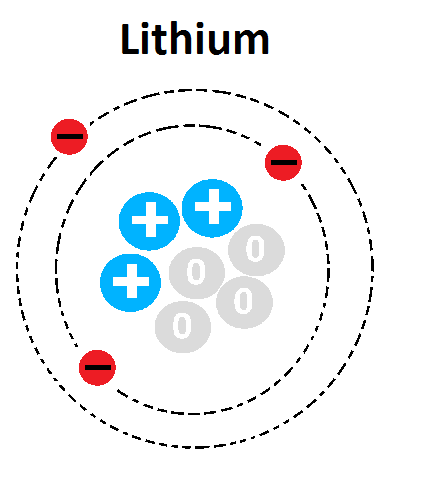
1
3
4
7
6
Multiple Choice

The fluorine atom has an atomic number of
19
9
7

Isotopes and Mass Number
•All atoms of a particular element have the same number of protons and
electrons but the number of neutrons in the nucleus can differ.
•Atoms with the same number of protons but different numbers of neutrons
are called isotopes.
•In nature, most elements are found as mixtures of isotopes. Usually, the
relative abundance of each isotope is constant.
–Example: In a banana, 93.26% is potassium-39, 6.73% is potassium-41 and
0.01% is potassium-40. In another banana or in a different source of
potassium, the percentage composition of the potassium isotopes will still be
the same.
•Isotopes containing more neutrons have a greater mass.
•Isotopes of an atom have the same chemical behavior.
How Atoms Differ
Copyright © McGraw-Hill Education
8
Multiple Choice

A charged atom
An atom with different amounts of neutrons
An atom with different amounts of protons
A neutral atom
9
Multiple Choice
Which of the following can vary for atoms of the same element?
number of protons
number of electrons
number of neutrons
10

Isotopes and Mass Number
•The mass number is the sum of the protons and neutrons in the nucleus.
Mass number = atomic number + number of neutrons
11
Multiple Choice
the number of protons
the number of protons and neutrons
the number of neutrons
the number of protons and electrons
12
Multiple Choice
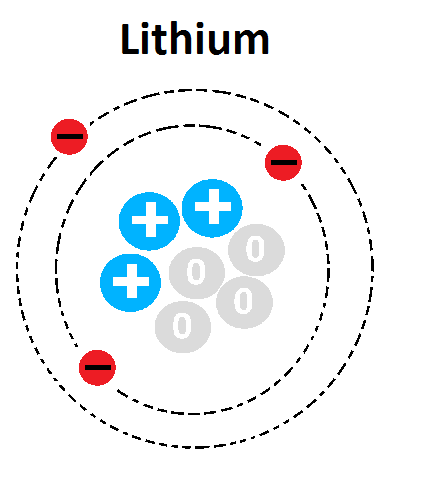
What is the mass number of this atom?
1
3
4
7
13
Multiple Choice

16
15.99
8
Doesn't contain any neutrons
14

Mass of Atoms
•One atomic mass unit (amu) is defined as 1/12th the mass of a carbon-12
atom.
•One amu is nearly, but not exactly, equal to one proton and one neutron.
How Atoms Differ
Copyright © McGraw-Hill Education
15
Multiple Choice
Which of the three sub-atomic particles is the lightest?
the proton
the electron
the neutron
16

Mass of Atoms
•The atomic mass of an element is the weighted average mass of the
isotopes of that element.
•Because isotopes have different masses, the weighted average is not a
whole number.
17
Fill in the Blanks
The ______ ____ of an element is the weighted average mass of the isotopes of that element.
Lesson 2
How Atoms Differ
Unit 2
The Structure of the Atom
Show answer
Auto Play
Slide 1 / 17
SLIDE
Similar Resources on Wayground

15 questions
APPLICATION LETTER
Presentation
•
12th Grade
12 questions
Geometry - Lesson Area of Circle Sector and Length of Arc
Presentation
•
12th Grade
13 questions
Satire
Presentation
•
12th Grade
11 questions
Reading tips
Presentation
•
12th Grade
13 questions
thermochemistry
Presentation
•
12th Grade
12 questions
U6L4 - Lecture Notes - Molecular Shapes
Presentation
•
12th Grade
13 questions
4.2 NATURAL RUBBER
Presentation
•
12th Grade
13 questions
Physical properties of carboxylic acid
Presentation
•
12th Grade
Popular Resources on Wayground
10 questions
Safety Day 2026 – Student Review

Quiz
•
9th Grade
21 questions
Continents and Oceans
Quiz
•
6th Grade
20 questions
Parts of Speech
Quiz
•
5th Grade
16 questions
Subject & Predicate
Quiz
•
5th Grade
25 questions
Multiplication Facts
Quiz
•
5th Grade
12 questions
Map Skills
Quiz
•
3rd Grade
22 questions
Continents and Oceans
Quiz
•
5th Grade
15 questions
Rounding Decimals
Quiz
•
5th Grade
Discover more resources for Chemistry
20 questions
electron configurations and orbital notation
Quiz
•
9th - 12th Grade
20 questions
Physical or Chemical Change/Phases
Quiz
•
8th Grade - University
15 questions
Periodicity Module Exam Practice Quiz
Quiz
•
9th - 12th Grade
8 questions
Label Energy Diagram
Quiz
•
9th - 12th Grade
10 questions
Endothermic/Exothermic
Quiz
•
9th - 12th Grade
6 questions
Energy Change
Quiz
•
9th - 12th Grade
20 questions
Physical & Chemical Properties & Changes
Quiz
•
9th - 12th Grade
6 questions
Collision Theory
Quiz
•
9th - 12th Grade