

Ion Formation

Presentation
•
Chemistry
•
8th Grade
•
Easy
Standards-aligned

Amal Aljabri
Used 5+ times
FREE Resource
12 Slides • 13 Questions
1

Chapter 3: Ionic Compounds and
Metals
Section 1: Ion Formation
2
Open Ended

Comment on the picture
3
Multiple Choice
Chemical bond is ...
the physical mixing of two different atoms.
the force that holds two atoms together
the energy used up when two atoms combined.
the temperature that changes the phase of matter.
4
Multiple Choice
Each group in the periodic table has its own characteristic properties based on the number of
neutrons
valence electrons
protons
ions
5


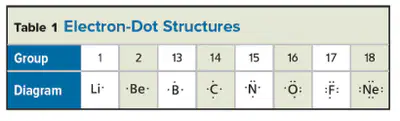


A chemical bond is the force that holds two atoms together.
What is chemical bond?
chemical bond
Chemical bonds form by the attraction between the positive nucleus of one atom and the
negative electrons of another atom.
- Define chemical bonds.
- Introduce Cation and Anion.
- Describe Cation and Anion.
6
Multiple Choice
Why do elements bond?
To be friends
To create a new element
To become stable
7


1. Define chemical bonds.
2. Introduce Cation and Anion.
3. Describe Cation and Anion.
Key terms:
Ion Formation
Chemical Bonds ةيئايميكلا ةطبارلا
Cationنويتاكلا
Anion نوينلاا
8
Multiple Choice
Which best describes a valence electron?
an inner electron that participates in chemical bonding
an outermost electron that participates in chemical bonding
an inner electron that does not participate in chemical bonding
an outermost electron that does not participate in chemical bonding
9

The ion could be:
Cation
Anion
Loses electrons
Accept electrons
It has a negative charge
Metals form Cation
Non-metals form Anion
To achieve Octet Rule by having 8 electrons in
their outer shell and become stable
It has a positive charge
https://edushare.moe.gov.ae/Uploads/Resources/cb0b0d9c-
4385-4d8e-8d69-c1b6c1c2b2cf/4946220703285248/index.html
Slide 2 – Vid. 3
when atom accept
electron, it becomes.…..
and when atom lose
electron, it becomes..…
Na
Na+
F
F-
- Define chemical bonds.
- Introduce Cation and Anion.
- Describe Cation and Anion.
10
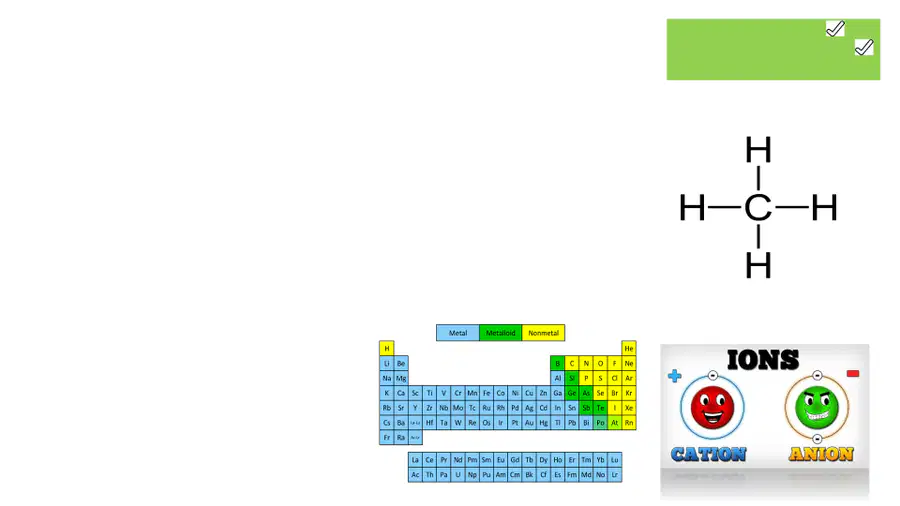
Check Point
• What is chemical bond?
• Metals form ………
• Non-metals form ………
- Define chemical bonds.
- Introduce Cation and Anion.
- Describe Cation and Anion.
11
Multiple Choice
When an atom loses an electron, it becomes a
positive ion
negative ion
neutral ion
neutral atom
12
Multiple Choice
What is the greatest number of valence electrons an atom can have?
2
3
8
12
13
Multiple Choice
An ionic bond is the attraction between
similarly charged ions
oppositely charged ions
neutral ions
neutral atoms
14
Multiple Choice
Which group of elements is the most stable?
metals
metalloids
nonmetals
noble gases
15
Multiple Choice
Atoms are most stable when their outer shell is full or complete.
True
False
16




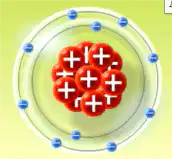

Positive Ion Formation
Noble Gas
To achieve Octet Rule by having 8 electrons in
their outer shell and become stable
Sodium Cation (Na+) 1s22s22p6
- Define chemical bonds.
- Introduce Cation and Anion.
- Describe Cation and Anion.
17

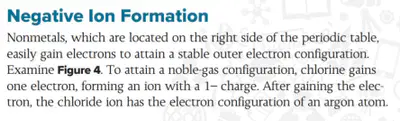
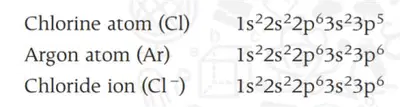


Negative Ion Formation
- Define chemical bonds.
- Introduce Cation and Anion.
- Describe Cation and Anion.
To achieve Octet Rule by having 8 electrons in
their outer shell and become stable
18
Multiple Choice
What part of an atom is involved in chemical bonding?
proton
neutron
electron
19
Multiple Choice
Atoms gain or lose electrons to become stable by satisfying this rule.
Ionic law
Lewis structure rule
Periodic law
octet rule
20
Multiple Choice
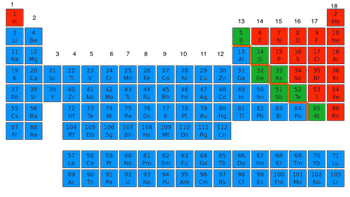
Where are metals located on the periodic table?
Blue
Green
Red
21

Cl need 1 electron
1s22s22p6 3s23p5
Cl-
Na has extra electron
1s22s22p63s1
Na+
Chlorine atom [Cl]
Sodium atom [Na]
Non-metal
metal
1s22s22p6
https://edushare.moe.gov.ae/Uploads/Resources/dd18bbf4-3930-4c0c-a6a6-00a9efefa31f/6431147/index.html
Slide 3 - vid. 2
https://edushare.moe.gov.ae/Uploads/Resources/b059d1a1-475a-47ef-8814-499098c928d6/6375441937989632/index.html
Slide 4 – Vid. 1
1s22s22p6 3s23p6
- Define chemical bonds.
- Introduce Cation and Anion.
- Describe Cation and Anion.
22


Decide which is better to reach stability by either losing or gaining electron for:
1- [F9]: 1s22s22p5
2- [K19]: 1s22s22p6 3s23p6 4s1
23

❑ Oxygen gains two electrons to form?
A. Cation
B. Anion
❑ Elements with a full octet have which configuration?
A. ionic configuration
B. halogen configuration
C. noble gas configuration
D. transition metal configuration
PLENARY
24

Critical question
Cl need 1 electron
1s22s22p6 3s23p5
Cl-
Chlorine atom [Cl17]
Non-metal
1s22s22p6 3s23p6
Na has extra electron
1s22s22p63s1
Na+
Sodium atom [Na11]
metal
1s22s22p6
How many
protons do we
have ?
25

Chapter 3: Ionic Compounds and
Metals
Section 1: Ion Formation
Show answer
Auto Play
Slide 1 / 25
SLIDE
Similar Resources on Wayground

21 questions
8.L.5 Review
Presentation
•
8th Grade
14 questions
Element Block and APEMAN Strategy
Presentation
•
8th Grade
17 questions
The Periodic Table and Energy-Level Models
Presentation
•
8th Grade
16 questions
Energy Transformations
Presentation
•
8th Grade
20 questions
Build an Atom
Presentation
•
8th Grade
19 questions
STAAR Review Atoms and the Periodic Table
Presentation
•
8th Grade
18 questions
Mass to Mole, Mass to Mass Conversions Classwork
Presentation
•
9th Grade
20 questions
Properties of Matter
Presentation
•
9th Grade
Popular Resources on Wayground
10 questions
Safety Day 2026 – Student Review

Quiz
•
9th Grade
21 questions
Continents and Oceans
Quiz
•
6th Grade
20 questions
Parts of Speech
Quiz
•
5th Grade
16 questions
Subject & Predicate
Quiz
•
5th Grade
25 questions
Multiplication Facts
Quiz
•
5th Grade
12 questions
Map Skills
Quiz
•
3rd Grade
22 questions
Continents and Oceans
Quiz
•
5th Grade
15 questions
Rounding Decimals
Quiz
•
5th Grade
Discover more resources for Chemistry
20 questions
Physical or Chemical Change/Phases
Quiz
•
8th Grade - University
20 questions
Counting Atoms
Quiz
•
8th Grade
33 questions
Quizizz Savvas S3 T6 L3 Changes in Matter Review
Quiz
•
7th - 8th Grade
12 questions
Reading the Periodic Table
Quiz
•
7th - 8th Grade
20 questions
States of Matter
Quiz
•
8th Grade
20 questions
Counting Atoms Practice
Quiz
•
8th Grade
20 questions
Atomic Structure, Valence Electrons, Periods and Groups
Quiz
•
8th Grade
16 questions
Find the Number of Protons, Neutrons, and Electrons
Quiz
•
8th Grade