

verbal and non verbal

Presentation
•
English
•
University
•
Practice Problem
•
Easy

Chiheng Xie
Used 3+ times
FREE Resource
47 Slides • 13 Questions
1

Culture and Verbal
Communication
谢持恒
Session 4
2024-03-28
2

CONTENTS
•I. Introduction
•II. Understanding Culture
•III. Verbal Communication
•IV. Cultural Variations in Verbal Communication
•V. Cultural Context in Verbal Communication
•VI. Challenges and Misunderstandings
•VII. Strategies for Effective Intercultural Communication
•VIII. Case Studies and Examples
•IX. Conclusion
3

01
I. Introduction
4

I. Introduction
- Definition of culture
culture
- Importance of verbal
verbal communication
communication within
within cultural contexts
contexts
- Overview of how
culture influences
verbal communication
5

02
II. Understanding Culture
6

II. Understanding
Culture
- Definition of culture and its components
components (values, beliefs, norms, etc.)
- Cultural diversity and its significance
- Impact of globalization on cultural interactions
7

Language
🞛 Language is a set of codes and symbols,
along with the rules for combining them
together.
🞛 Different groups of people speak and write
different languages, and have different
codes, symbols and roles to facilitate their
communication.
2012/8/18
7
Dou Weilin: Introduction to ICC
8

Language and Culture
🞛
Language helps in communication with
people from different backgrounds.
Language
Cultur
e
●Cultural literacy is necessary in order
to understand the language being used.
Language
Culture
2012/8/18
8
Dou Weilin: Introduction to ICC
9

1.1 Language as a reflection of the
environment
Camel
English
• “falling snow”
“fallen snow”
• “flaky snow”
• “crusty snow”
“snow packed into
ice”
English
• Dromedary
• Bactrian
Arabic
• More than 400 words
Snow
2012/8/18
9
Dou Weilin: Introduction to ICC
10

1.2 Language as a reflection of
values
Women’s subordination
Follow the man you marry, be he a fool or a crook.
——嫁鸡随鸡,嫁
狗随狗
The husband sings, the wife accompanies.
——夫唱妇随
Chinese kinshipTerms
English
Chinese
Grandmother
Brothe
r
外祖母
祖母
哥哥
弟弟
2012/8/18
10
Dou Weilin: Introduction to ICC
11

1.3 Language Affects People’s Way
of Thinking
Language
shapes
people’s
thinking,
beliefs,
and
attitudes,
and
itdetermines
the
way
people see the world and thus their culture.
——Sapir-Whorf
hypothesis
Language Determinism
2012/8/18
11
Dou Weilin: Introduction to ICC
12

Cultural Impact on Verbal
Communication
Phonemic Level
Lexical
Level
Syntactical
Level
Discourse
Level
Discourse
Level
Phonemic Level
Syntactical Level
Lexical Level
Discourse Level
Pragmatics
2012/8/18
12
Dou Weilin: Introduction to ICC
13

03
III. Verbal Communication
Communication
14

III. Verbal Communication
- Definition and components of verbal
verbal communication (language, tone,
tone, context, etc.)
- Role of verbal communication in
expressing cultural identity
- Importance of language choice in
intercultural communication
15

Culture-loaded Words
🞛 At lexical evel
Sender
Receiver
Symbol
✔ Meanings
of
words
are
not
in
words
themselves but in the minds of the sender
and the receiver.
2012/8/18
16
Dou Weilin: Introduction to ICC
16

Same denotational and connotational
meanings
Animal Words
Color Words
Numbers
和平鸽
Dove/鸽子
像狐狸一样狡猾
Fox/狐
狸
✔ Some
words
have
the
same
denotational
and
connotational meanings in the two languages.
2012/8/18
17
Dou Weilin: Introduction to ICC
17

Same denotational but different
connotational meanings
✔ There are many words with the same denotational
meaning but different connotational meanings.
Owl
A symbol of wisdom
•As wise as an owl
猫头鹰
A symbol of bad luck
2012/8/18
18
Dou Weilin: Introduction to ICC
18

Different denotational and
connotational meanings
✔ Both denotational and connotational meanings are
different in many other words.
Dragon
Afire-spitting
mythical
animal,
signifying
fierceness
•He is a bit of a dragon here.
long
(龙)
A symbol of the emperor in feudal China
•Descendants of the dragon (龙的传人)
Chinese
Dragon
Dragon
Loong
2012/8/18
19
Dou Weilin: Introduction to ICC
19

04
IV. Cultural Variations in
in Verbal Communication
Communication
20

IV. Cultural Variations in Verbal Communication
- Language differences
differences across
cultures (idioms,
dialects, accents)
- Politeness norms and
and speech acts in
different cultures
- Cultural differences in
in nonverbal cues
accompanying verbal
verbal communication
communication
(gestures, facial
expressions)
21

05
V. Cultural Context in
Verbal Communication
Communication
22

V. Cultural Context in Verbal Communication
- High-context vs. low-context cultures
cultures and their implications for
for verbal communication
- Power distance and its impact on
communication styles
- Individualism vs. collectivism and its
influence on verbal expression
23

pragmatic rules
✔ Pragmatics is the study of the effect of language on
human language.
✔ Speech
behavior
must
beinconformity
with
rules of
speaking.
✔ The use of rules of speaking from one’s own native
speech community when interacting with members of the
host
speech
community
orsimply
when
speaking
ina
second language is known as pragmatic transfer.
2012/8/18
25
Dou Weilin: Introduction to ICC
24

3.1. Addressing
The forms of address in every language reflect
social
status
of
the
speaker,
of
the
addressee,
orofthe
relationship
between
them.
People
here
call
meLao
Wai
(old foreigner).
At first I was quite upset. I
looked
at
myself
in
the
mirror,
and
Iwasn’t
old:
I’m only in my forties.
Later,
Ifound
they
also
called
foreign
children
Xiao
Lao
Wai,
Irealized
it’s
a
general
term
for
any
foreigner.
Chinese
Address System
3 Differences
English
Address System
2012/8/18
26
Dou Weilin: Introduction to ICC
25

06
VI. Challenges and
Misunderstandings
26

VI. Challenges and Misunderstandings
- Stereotypes and cultural
cultural biases affecting
affecting verbal
communication
- Language barriers and
and strategies for
overcoming them
- Cultural
misunderstandings in
cross-cultural
communication
27

3.2 Greeting and Leave-taking
Englis
h
•Comment
on
weather
Chinese
•去哪儿呀?
•吃过了吗?
✔ Greeting
is
realized
differently
in
various
languages.
2012/8/18
29
Dou Weilin: Introduction to ICC
28

Greeting and Leave-taking
✔ The guest has to decide how long it is appropriate to
stay, and having decided to leave, needs to know what
to say.
Chinese
West
•I’m leaving now.
•I’m
sorry
to
have
taken
upso
much
of
your
time.
•Find
reasons
to
leave related to
themselves
rather
than
to
their hosts.
2012/8/18
30
Dou Weilin: Introduction to ICC
29

3.4 Offer and Thanks
✔ Offer-makings
are
different
between
English
and
Chinese.
Englis
h
Interrogative
sentences
China
Command
2012/8/18
31
Dou Weilin: Introduction to ICC
30


Explicit / Implicit Communication
2012/8/18
33
Dou Weilin: Introduction to ICC
31

Low context/ Implicit Communication
Association of speaking with negative
consequences:
一言既出,驷马难追;
祸从口出;
言多必失;
Inadequacy of spoken words :
言不尽意;
言外之意;
只可意会,不可言传;
2012/8/18
34
Dou Weilin: Introduction to ICC
32

5 key aspects of Chinese verbal
style
🞛 Han xu or implicit communication (含蓄)
🞛 ting hua or listening centeredness (听话)
🞛 ke qi or politeness (客气)
🞛 zi ji ren or a focus on insiders (自己人)
🞛 mian zi or face-directed communication
strategies (面子)
🞛 -----Ge Gao and Stella Ting-Toomey (1998)
2012/8/18
35
Dou Weilin: Introduction to ICC
33

8 Chinese and North Americans clash
in everyday interactions:
🞛 1. What is not said vs. What is said
🞛 2. The use of We vs. I
🞛 3. Polite vs. Impolite talk
🞛 4. Indirect vs. Direct talk
🞛 5. Hesitant vs. Assertive speech
🞛 6. Self-effacing vs. Self-enhancing talk
🞛 7. Private vs. Public personal questions
🞛 8. Reticent vs. Expressive speech
2012/8/18
36
Dou Weilin: Introduction to ICC
34

07
VII. Strategies for Effective
Effective Intercultural
Communication
35

VII. Strategies for Effective Intercultural Communication
•- Developing cultural sensitivity and awareness
•- Active listening and empathy in intercultural interactions
•- Adaptation and flexibility in communication styles
36

08
VIII. Case Studies and
Examples
37

VIII. Case Studies and Examples
•- Real-life examples of successful intercultural communication
•- Instances of cultural misunderstandings and their resolutions
•- Analysis of cross-cultural communication in various contexts (business,
diplomacy, social interactions)
38

09
IX. Conclusion
39

IX. Conclusion
•- Recap of key points regarding culture and verbal communication
•- Importance of understanding cultural nuances for effective communication
•- Call to action for promoting cultural awareness and sensitivity in communication
practices
40

THE END
THANKS
41

Introduction to Verbal and Non-Verbal
Communication
• Verbal communication involves the use of
words and language.
• Non-verbal communication includes
gestures, facial expressions, and body
language.
• Both forms of communication work
together to convey messages and meaning.
• Verbal and non-verbal cues can
complement or contradict each other.
Photo by Pexels
42

Types of Verbal Communication
• Oral communication includes spoken
words and vocal tone.
• Written communication involves written or
printed words.
• Formal communication follows predefined
rules and structures.
• Informal communication is casual and
spontaneous.
Photo by Pexels
43
以下称呼是否正确或得体?如何称呼是礼貌的方式?

44
Poll
在校园里对一位大学教师称呼“师傅”
得体
不得体
45
Poll
在大街上对一位中年女教师称呼“女士”
得体
不得体
46
Poll
对来自美国的70多岁的旅游者称呼“爷爷”
得体
不得体
47
Poll
对一位美国教师称呼“Teacher Smith"
得体
不得体
48
Poll
中国学生称呼他的英语教授为 “Dr. Eric Shepherd"
得体
不得体
49

Importance of Non-Verbal Communication
• Non-verbal cues can convey emotions,
attitudes, and intentions.
• Facial expressions can communicate
happiness, anger, sadness, and more.
• Body language and posture can indicate
confidence or nervousness.
• Non-verbal signals can be universal or
culturally specific.
Photo by Pexels
50
Open Ended
你认为我们是单时制文化还是多时制文化?为什么?
51
Multiple Choice
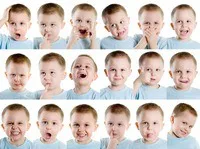
Communication without words is called
Silent speaking
Nonverbal communication
Verbal communication
Interpersonal communication
52
Multiple Choice

What type of nonverbal communication do you see being violated?
Space
Tone of voice
Eye contact
Smiles
53
Multiple Choice

The image above can mean:
I agree
I do not agree
I don't know
All of the above
54
Multiple Choice

Using your face to communicate a feeling is called
facial expression
gestures
impression
55
Multiple Choice
Which of the following gesture means "Hello?"
56
Multiple Choice
Which of the following is NOT a form of non-verbal communication?
A. Gestures
B. Posture
C. Email
D. Eye contact
57
Multiple Choice
The way people dress and their physical appearance doesn't convey any non-verbal cues.
True
False
58

The Power of Body Language
• Body language can reinforce or contradict
verbal messages.
• Gestures and postures can influence
perceptions and interpretations.
• Eye contact and hand movements play
crucial roles in communication.
• Understanding body language can
enhance interpersonal relationships.
Photo by Pexels
59

Cultural Influences on Communication
• Culture shapes communication norms and
expectations.
• Non-verbal cues may vary across different
cultures.
• Language barriers can impact intercultural
communication.
• Cultural awareness and sensitivity are
essential for effective communication.
Photo by Pexels
60

Improving Verbal and Non-Verbal Communication
Skills
• Active listening enhances understanding
and empathy.
• Practicing good posture and maintaining
eye contact demonstrate engagement.
• Using clear and concise language
improves clarity.
• Cultural competence and empathy foster
effective cross-cultural communication.
Photo by Pexels
Culture and Verbal
Communication
谢持恒
Session 4
2024-03-28
Show answer
Auto Play
Slide 1 / 60
SLIDE
Similar Resources on Wayground

62 questions
WEX - Interviewing
Presentation
•
KG - University
48 questions
Revision: PM N6_ Module 2
Presentation
•
KG - University
51 questions
CPAS 3
Presentation
•
University
50 questions
Pre-class for Week 10
Presentation
•
University
52 questions
The Teaching of English in the K to 12 Curriculum
Presentation
•
Professional Development
51 questions
02 VCPR and Consent S25
Presentation
•
Professional Development
54 questions
November 22, 2023
Presentation
•
University
52 questions
The sound of language
Presentation
•
University
Popular Resources on Wayground
10 questions
Safety Day 2026 – Student Review

Quiz
•
9th Grade
21 questions
Continents and Oceans
Quiz
•
6th Grade
20 questions
Parts of Speech
Quiz
•
5th Grade
16 questions
Subject & Predicate
Quiz
•
5th Grade
25 questions
Multiplication Facts
Quiz
•
5th Grade
12 questions
Map Skills
Quiz
•
3rd Grade
22 questions
Continents and Oceans
Quiz
•
5th Grade
15 questions
Rounding Decimals
Quiz
•
5th Grade
Discover more resources for English
20 questions
Disney Trivia
Quiz
•
University
10 questions
Spanish Greetings and Goodbyes!
Presentation
•
6th Grade - University
20 questions
Physical or Chemical Change/Phases
Quiz
•
8th Grade - University
39 questions
Unit 7 Key Terms
Quiz
•
11th Grade - University
25 questions
SER and Subject Pronouns
Quiz
•
8th Grade - University
38 questions
Unit 6 Key Terms
Quiz
•
11th Grade - University
19 questions
Key Concepts in Buddhism
Quiz
•
University
0 questions
Cell Domain Basic Review (Biology)
Quiz
•
University