

Lesson Week 5-Nut

Presentation
•
Science
•
1st - 5th Grade
•
Practice Problem
•
Medium

KODCHAKORN KLONGKLAW
Used 1+ times
FREE Resource
14 Slides • 18 Questions
1
Pom-pom Launcher
2
Multiple Choice
What affected the distance the pom-pom traveled?
How far you pulled back the balloon
How fast you pulled back the balloon
How gentle you pulled back the balloon
3
Multiple Select
What types of energy change do you think you observed in your device?
Pulling back the ballon = Kinetic energy
Pulling back the ballon = Stored energy
Let the ballon go from your hands = Stored energy
Let the ballon go from your hands = Kinetic energy
4
Multiple Choice
What is the evidence of energy transfer that you observed from Pom-pom?
The pompom did not move until you stretched the balloon and launched it.
The pompom did not move even you stretched the balloon and launched it.
5
Multiple Select
What is Energy?
Ability to launch pompom
Ability to sing
Ability to do any kinds of work
6
Types of Energy
7
Story Time!
Clean, but Dangerous Energy
8
Once upon a time, in a land full of wonder and curiosity, there was a group of friendly animals who loved to learn about the amazing things in the world. One sunny day, they gathered under a big tree for a special story time about something called "Energy From Nuclear Fuel."
The wise old owl, Professor Oliver, stood at the front of the group with a big smile on his face. He began to tell the young animal friends about how most power stations worked. "Most power stations," Professor Oliver said, "use fuels like coal or gas to make electricity. They burn these fuels to create steam, which turns big turbines that make electricity."
9
Multiple Choice
'Clean, but Dangerous Energy' referred to
Nuclear energy
Chemical energy
Electrical energy
10
Multiple Choice
What is the primary source of energy in nuclear power stations?
a) Wind
b) Fossil fuels
c) Nuclear reactions in materials like uranium
d) Solar panels
11
The little squirrel named Sammy was curious and asked, "But Professor Oliver, how are nuclear power stations different?"
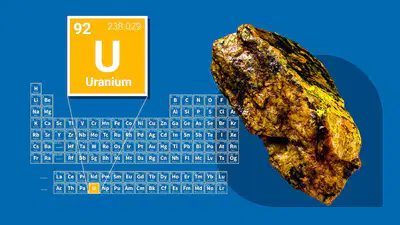
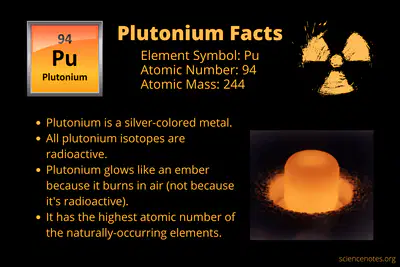
Professor Oliver nodded and continued, "Nuclear power stations are quite unique. Instead of burning fuels, they use something special called nuclear reactions. These reactions happen inside special materials like uranium or plutonium. When these materials undergo nuclear reactions, the tiny parts inside atoms, called nuclei, split into even tinier pieces. And when they do that, they release a tremendous amount of energy!"
12
13
Multiple Choice
In a nuclear reaction, what part of an atom splits into smaller pieces to release energy?
a) Electrons
b) Protons
c) Neutrons
d) Nuclei
14
All the baby animals were fascinated. They couldn't believe that such small things could create so much energy. Professor Oliver went on, "You know, just 1 kilogram of nuclear fuel can make as much energy as burning nearly 3 million kilograms of coal! It's like magic!"
The baby animals were wide-eyed with wonder. They imagined tiny particles dancing inside uranium, creating a beautiful light show of energy. "But where does uranium come from?" asked Lila the bunny.
15
Multiple Choice
How much energy can 1 kilogram of nuclear fuel produce compared to burning nearly 3 million kilograms of coal?
a) Less energy
b) About the same energy
c) More energy
d) No energy
16
Professor Oliver smiled and explained, "Uranium and other complex elements in the periodic table were made inside stars a long, long time ago, during a spectacular event called a supernova. This happened way before our Sun was even born! So, you could say that nuclear power is like a gift from the stars."
As the story continued, Professor Oliver shared that while nuclear power had many advantages, like producing a lot of energy and not emitting harmful greenhouse gases, it also had some disadvantages, like the challenge of handling radioactive materials safely and the issue of nuclear waste.
17
Multiple Choice
Where do complex elements like uranium come from?
a) Volcanoes
b) Supernova
c) Underground deposits
d) Ocean currents
18
To help the baby animals understand better, Professor Oliver drew a colorful table on a big leaf. On one side, he listed the advantages of nuclear power, like "Lots of Energy" and "No Air Pollution." On the other side, he listed the disadvantages, like "Radioactive Materials" and "Nuclear Waste."
The baby animals learned a lot that day and were grateful for Professor Oliver's wonderful story about "Energy From Nuclear Fuel." They realized that the world was full of amazing things to discover, and they couldn't wait for their next adventure in learning. With hearts full of curiosity, they said goodbye to Professor Oliver and went off to explore more of the incredible world around them.
19
Multiple Choice
Which of the following is NOT an advantage of nuclear power?
a) Produces a lot of energy
b) No air pollution
c) the challenge of handling radioactive materials safely and the issue of nuclear waste
20
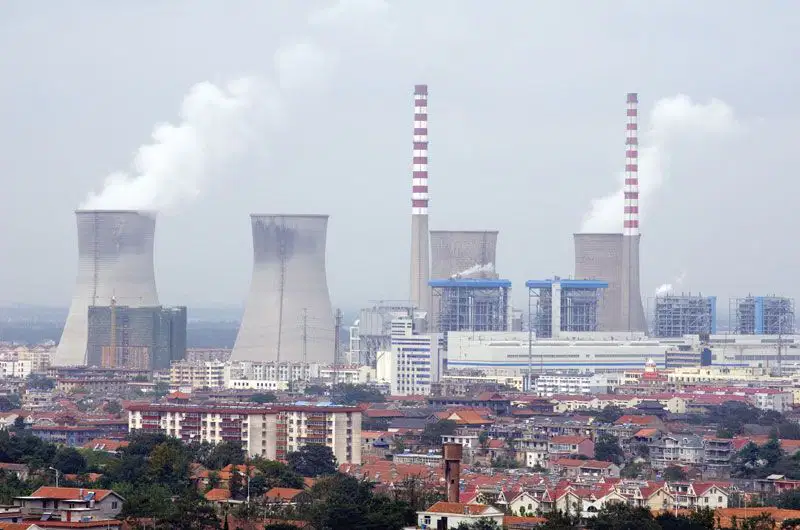
is when the nucleus of an atom is broken in half. This releases a tremendous amount of energy. This is clean energy because there is no burning of fuels.
Nuclear energy
21
Multiple Choice
What is the primary source of energy in nuclear power generation?
a) Burning of fossil fuels
b) Splitting of an atom's nucleus
c) Harnessing wind energy
d) Converting solar energy
22
Multiple Choice
Why is nuclear energy often considered "clean" when compared to some other forms of energy production?
a) It does not require any natural resources.
b) It releases no energy.
c) There is no burning of fuels involved.
d) It generates greenhouse gases.
23
Multiple Choice
Which place was mentioned in the video about 'Nuclear Accident'
Chernobyl Disaster (1986)
Fukushima Daiichi Disaster (2011)
Three Mile Island Accident (1979)
Kyshtym Disaster (1957)
24
Potential Energy
stored energy waiting to be released
Chemical Energy
Nuclear Energy
energy released when particles inside a material are broken or created
energy stored in the nucleus of an atom
25
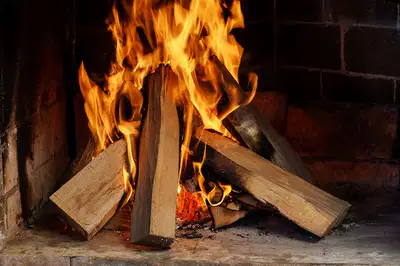
Chemical Energy
energy released when particles inside a material are broken or created

26
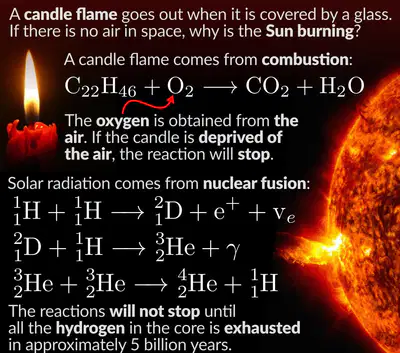
Nuclear Energy
energy stored in the nucleus of an atom
27
Kinetic Energy
Electrical Energy
energy from the movement of charged particles
28
Multiple Choice
Which type of energy is released when links between particles in a material are broken or created?
a) Kinetic energy
b) Nuclear energy
c) Chemical energy
d) Electrical energy
29
Multiple Choice
What type of energy is stored in the nucleus of an atom?
a) Kinetic energy
b) Chemical energy
c) Nuclear energy
d) Thermal energy
30
Multiple Choice
What are examples of chemical reactions that release stored chemical energy?
a) Running and jumping
b) Burning wood and digesting food
c) Cooking food and reading a book
d) Riding a bicycle and swimming
31
Multiple Choice
What type of energy is associated with the movement of charged particles?
a) Nuclear energy
b) Thermal energy
c) Chemical energy
d) Electrical energy
32
Multiple Choice
Which type of energy is associated with running and jumping?
a) Chemical energy
b) Nuclear energy
c) Kinetic energy
d) Thermal energy
Pom-pom Launcher
Show answer
Auto Play
Slide 1 / 32
SLIDE
Similar Resources on Wayground

27 questions
SCIENCE LESSON
Presentation
•
1st - 4th Grade
29 questions
Fossils
Presentation
•
1st - 5th Grade
23 questions
Computer Science preparatory
Presentation
•
1st - 5th Grade
23 questions
Black History Month: Science Edition
Presentation
•
2nd - 5th Grade
24 questions
Types of Forces, Motion, and Net Force
Presentation
•
KG
27 questions
Space Club 10
Presentation
•
1st - 5th Grade
23 questions
Adaptations
Presentation
•
2nd - 5th Grade
22 questions
Notes and Rests
Presentation
•
1st - 4th Grade
Popular Resources on Wayground
19 questions
Naming Polygons

Quiz
•
3rd Grade
10 questions
Prime Factorization
Quiz
•
6th Grade
20 questions
Math Review
Quiz
•
3rd Grade
15 questions
Fast food
Quiz
•
7th Grade
20 questions
Main Idea and Details
Quiz
•
5th Grade
20 questions
Context Clues
Quiz
•
6th Grade
20 questions
Inferences
Quiz
•
4th Grade
19 questions
Classifying Quadrilaterals
Quiz
•
3rd Grade
Discover more resources for Science
12 questions
PS.5.1.1 & PS.5.2.2 EOG Practice
Quiz
•
5th Grade
17 questions
Natural Resources
Presentation
•
2nd Grade
48 questions
5th Grade FSA Science Review
Quiz
•
5th Grade
20 questions
Science Review
Quiz
•
5th Grade
20 questions
Food Chains and Food Webs Review
Quiz
•
5th Grade
28 questions
5th Grade Assessed Life Science Review
Quiz
•
5th Grade
29 questions
5th Grade Science EOG Review Weather/Matter/Body Systems
Quiz
•
5th Grade
20 questions
NC Science EOG Prep (5th Grade)
Quiz
•
5th Grade