
Review for CA2

Presentation
•
Chemistry
•
10th Grade
•
Practice Problem
•
Easy
Standards-aligned

Nguyen Luu
Used 22+ times
FREE Resource
20 Slides • 9 Questions
1
Exploring the Periodic Table
A fascinating journey into the world of elements, their properties, and their organization. Discover the building blocks of matter and unlock the secrets of the chemical universe. Join us as we delve into the wonders of the periodic table.
2
Periodic Table
Group (column): 1-18
Period (row): 1-7

3
Multiple Choice
Which element is an alkali metal?
Hydrogen
Calcium
Zinc
Sodium
4
Elements are arranged in order of increasing atomic number
Properties

5
Multiple Choice
The properties of carbon are expected to be most similar to those of
Phosphorus
silicon
boron
aluminum
6
Exploring the Periodic Table
Periodic Table: Arranged in order of increasing atomic number
Group: Elements in the same group have same chemical properties
Period: Elements arranged in rows from 1-7
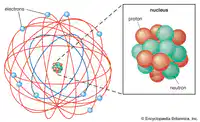
Bohr Diagram: Visual representation of an atom's electron arrangement
Valence Electron: Electrons in the outermost energy level
Lewis Dot Structure: Diagram showing valence electrons as dots around the element symbol
7
Multiple Choice
Which diagram shows the valence electrons as dots around the element symbol?
Periodic Table
Bohr Diagram
Lewis Dot Structure
Group
8
Bohr model, description of the structure of atoms proposed in 1913 by the Danish physicist Niels Bohr.
Bohr Diagram

9
Ink-Pair-Share

10
Valence Electrons
Group Number: 1-18
Group (Number + Letter): 1A, 2A….: Valence Electrons
11

12
Ink-Pair-Share

13
Lewis Dot Structure
Lewis Dot Structure is a diagram that shows the valence electrons as dots around the element symbol. It is a simple and visual way to represent the electron arrangement in an atom. By using Lewis Dot Structures, chemists can easily determine the number of valence electrons and predict the chemical behavior of elements.
14

15
Response Card
Draw the Lewis dot structure for the following elements:
Oxygen, Phosphorus, Calcium
16
Atomic Theories and Periodic Table
17
Multiple Choice
Who proposed the concept of the atom as the fundamental unit of matter?
Democritus
J.J. Thomson
Marie Curie
Isaac Newton
18
Democritus and the Atom
Did you know? Democritus, an ancient Greek philosopher, proposed the concept of the atom as the fundamental unit of matter. He believed that atoms were indivisible and indestructible. This idea laid the foundation for modern atomic theory, revolutionizing our understanding of the physical world.
19
The Evolution of Atomic Models
1. J.J. Thomson's Plum Pudding Model: Proposed that electrons are embedded in a positively charged 'soup' of matter.
2. Ernest Rutherford's Gold Foil Experiment: Discovered the mostly empty space of the atom with a small, dense nucleus at its center.
3. Niels Bohr's Quantum Model: Introduced energy levels and revolutionized our understanding of atomic structure.
20
Response Card
What similarities exist between the Bohr model and the structure of our solar system?
21
Multiple Choice
Which scientist proposed the Plum Pudding Model?
J.J. Thomson
Ernest Rutherford
Niels Bohr
Marie Curie
22
Multiple Choice
In a famous experiment conducted by Ernest Rutherford, positively charged alpha particles were scattered by a thin gold foil. Which of the following is a conclusion that resulted from this experiment?
The nucleus is negatively charged
The atom is a dense solid and is indivisible
The mass is conserved when atoms react chemically
The nucleus is very small and the atom is mostly empty space
23
Exploring the Periodic Table
Dmitri Mendeleev created the first periodic table in 1869. He organized elements based on atomic mass and chemical properties, leaving gaps for undiscovered elements. This method helps predict properties of undiscovered elements. Mendeleev's work laid the foundation for the modern periodic table.
24
Reorder
Democritus
Dalton
Thomson
Rutherford
Bohr
25
Multiple Choice
Who created the first periodic table in 1869?
Dmitri Mendeleev
Marie Curie
Albert Einstein
Isaac Newton
26
Dmitri Mendeleev
Dmitri Mendeleev created the first periodic table in 1869. His table organized the elements based on their atomic mass and predicted the existence of undiscovered elements (Physical and chemical properties). Mendeleev's periodic table laid the foundation for our understanding of the elements and their properties. It is considered one of the most significant achievements in the field of chemistry.
27
Multiple Choice
Which property did Mendeleev use to order his periodic table?
Shielding effect
Eletronegitivity
Atomic Weight
Metallic Character
28
Response Card
After Mendeleev constructed the periodic table, he predicted the discovery of several elements that were not yet known. What prediction was Mendeleev able to make about these unknown elements, based on his table?
29
Quiz
Exploring the Periodic Table
A fascinating journey into the world of elements, their properties, and their organization. Discover the building blocks of matter and unlock the secrets of the chemical universe. Join us as we delve into the wonders of the periodic table.
Show answer
Auto Play
Slide 1 / 29
SLIDE
Similar Resources on Wayground

23 questions
electromagnetic waves
Presentation
•
10th Grade
23 questions
H3 Le subjonctif (régulier)
Presentation
•
10th Grade
24 questions
Acid + Base Review
Presentation
•
10th Grade
21 questions
Incas
Presentation
•
10th Grade
23 questions
Naming Covalent Compounds
Presentation
•
10th Grade
20 questions
Boyle's Law and Charles' Law
Presentation
•
10th Grade
26 questions
Chemical Bonds
Presentation
•
10th Grade
26 questions
Types of chemical reactions
Presentation
•
10th Grade
Popular Resources on Wayground
6 questions
PRIDE Always and Everywhere
Presentation
•
12th Grade
20 questions
Lab Safety Quiz

Quiz
•
6th Grade
26 questions
KOR Review Kahoot Questions
Quiz
•
8th Grade
21 questions
Continents and Oceans
Quiz
•
6th Grade
12 questions
Unit Zero lesson 2 cafeteria
Presentation
•
9th - 12th Grade
20 questions
Parts of Speech
Quiz
•
5th Grade
10 questions
Riddles Riddles fun Riddles
Quiz
•
6th - 12th Grade
16 questions
Subject & Predicate
Quiz
•
5th Grade
Discover more resources for Chemistry
21 questions
Lab Safety
Quiz
•
10th Grade
20 questions
Scientific Method
Quiz
•
10th - 12th Grade
20 questions
Lab Safety
Quiz
•
10th Grade
12 questions
Significant figures
Quiz
•
9th - 12th Grade
20 questions
COUNTING ATOMS
Quiz
•
10th Grade
40 questions
26-27 Unit 1 Density and Metric Conversions
Quiz
•
10th Grade
20 questions
12.2 Scientific Notation and Significant Figures
Quiz
•
10th Grade
5 questions
Atomic Theory Intro Video

Interactive video
•
10th Grade