

Quarter 1 Review for Unit Test - rough draft

Presentation
•
Other
•
KG - Professional Development
•
Practice Problem
•
Hard

Kathleen Ozment
FREE Resource
18 Slides • 39 Questions
1

Chapters 1, 2, 8
Quarter 1 Review for Unit Test
2

Experimental Design
Independent Variable: What is
changed or manipulated (only
can change 1 thing at a time)
Dependent Variable: What is
being measured
Constants: Remain
unchanged; can have multiple
Control Group and Experimental
Group:
●
Control Groups are used for
comparisons ; no change has
happened in this group
●
Experimental Groups are
experimented upon and the
independent variable is being
used in this group
3
Multiple Choice
Two teachers want to test the effect of noise on memory. They put students into 3 groups. All groups are asked to memorize ten words in 5 minutes. After five minutes, each student writes down as many words they can remember from the list. Group one spends their 5 minutes with classical music playing. Group two spends their 5 minutes with pop music playing. Group three spends their five minutes in silence.
The independent variable in this experiment is:
the number of words memorized
The type of music
The number of groups
The number of students in each group
4
Multiple Choice
Two teachers want to test the effect of noise on memory. They put students into 3 groups. All groups are asked to memorize ten words in 5 minutes. After five minutes, each student writes down as many words they can remember from the list. Group one spends their 5 minutes with classical music playing. Group two spends their 5 minutes with pop music playing. Group three spends their five minutes in silence.
What is the dependent variable in this experiment?
number of words memorized
number of students in each group
time given for memorization
type of music
5
Multiple Choice
Which answer should be a constant in the previous experiment?
number of words memorized
music type
time given for memorization
6
Multiple Choice
What is the control group in the previous experiment?
number of students
group with classical music
group with pop music
group with not music
7


Graphing and Data
Quantitative data: think quantity
●
Numbers, measurements
Qualitative data: think quality
●
Descriptions and adjectives
8
Multiple Choice

How does an enzyme affect activation energy?
raises it
lowers it
no effect
9
Multiple Choice
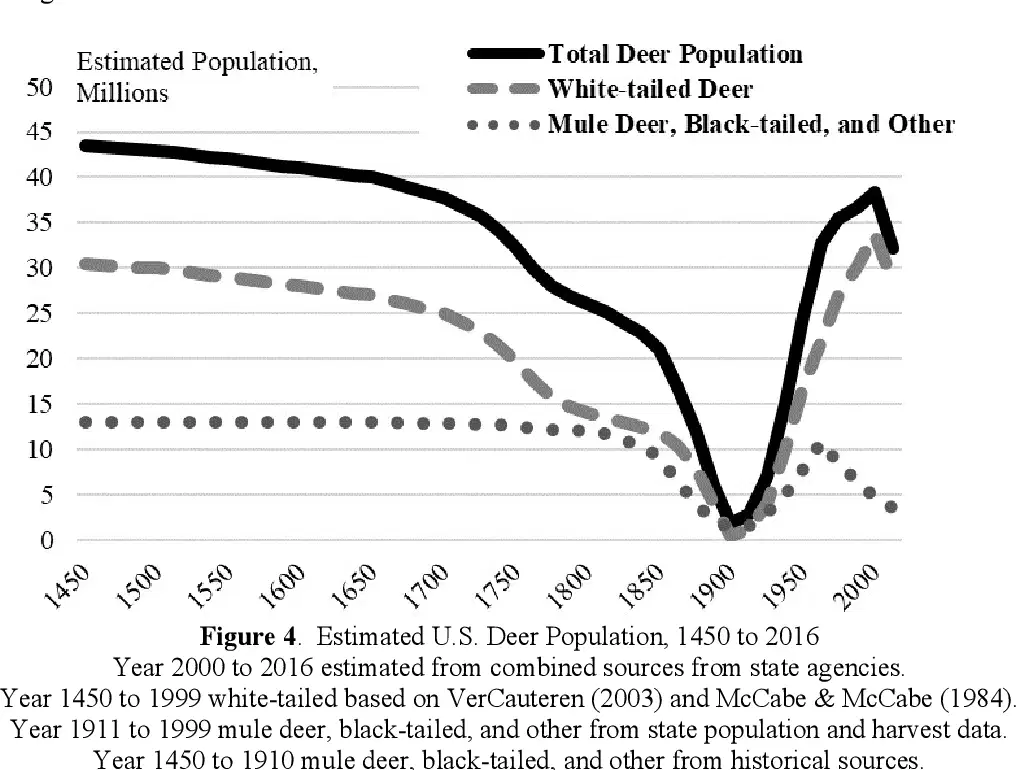
During what year were the populations of the white tailed deer and mule deer the same?
1450
1750
2000
1900
10

Biogenesis vs Spontaneous Generation
Current theory! Life
can only come from life
Person
Experiment Info:
SG or Biogenesis?
Redi
Jars of meat that were open had flies; those closed did not
Biogenesis
Needham
Loosely sealed flasks of broth eventually had bacterial growth
SG
Spallanzani
Sealed flasks did not have bacteria & open flasks did
Biogenesis
Pasteur
S-shaped necked flasks never had growth until the neck was
broken off and broth exposed to air
Biogenesis
Life can arise from
nonliving entities
11
Multiple Choice

The results of Spallanzani's experiment indicate that bacteria come from:
broth
bacteria in the air
dirty glassware
heat
12
Multiple Choice
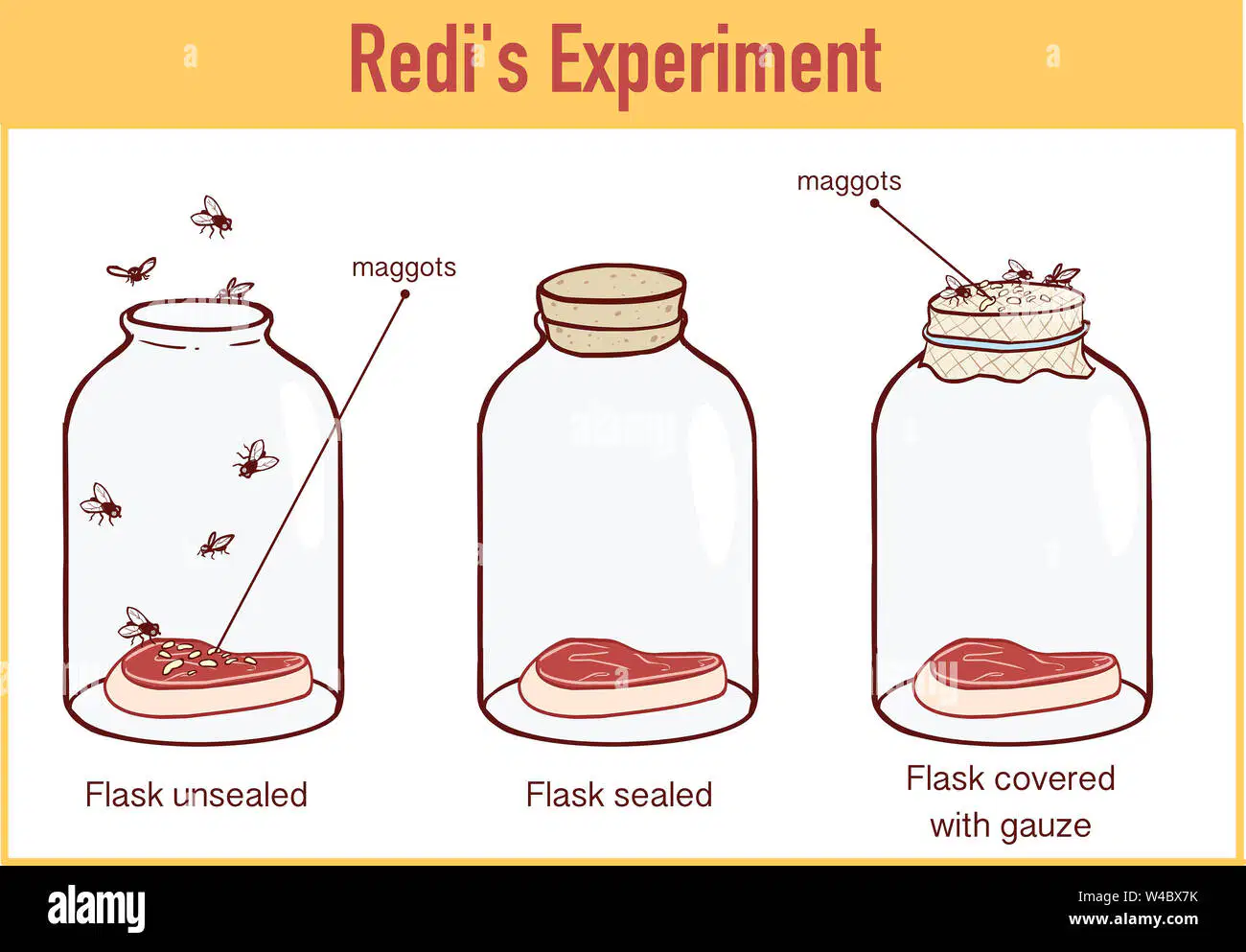
The results of this experiment support the concept of:
spontaneous generation
biogenesis
13


Branches of Biology:
Botany
Plants
Zoology
Animals
Genetics
Heredity
Anatomy
Body Structure
Ecology
Interactions in Envt.
Microbiology
Bacteria
The study of:
14
Multiple Choice
Which of the following is NOT correctly paired?
botany-plants
anatomy - body structures
microbiology - bacteria
ecology - recycling resources
15


Metric System:
16
Multiple Choice
2.003 cm = _______ m
20.03
.2003
2003
.02003
17
Multiple Choice
35.40 km = _____ hm
3.540
354.0
.3540
.03540
18


Periodic Table:
Protons = Atomic Number
Electrons = Proton Number
Mass = Protons + Neutrons
(usually found as a decimal)
Neutrons = Mass - Neutrons
19
Multiple Choice

How many protons are in this element?
96
54
42
138
20
Multiple Choice
How many neutrons are in this element?
96
54
42
138
21
Multiple Choice
How many electrons are in this element?
96
54
42
138
22


Types of Chemical Bonds
Covalent - Two atoms share a pair of electrons
Ionic - electron(s) are transferred from one atom to another
Hydrogen - hydrogen forms a weak temporary interaction with another molecule
Van der waals - any positive to negative interaction between neighboring
molecules
23
Match
Match the following types of chemical bonds:
covalent
ionic
van der waals
hydrogen bonds
shared electrons
transfer of electrons
+ - interaction between neighbors
hydrogen weakly attracted to - area
shared electrons
transfer of electrons
+ - interaction between neighbors
hydrogen weakly attracted to - area
24


Isotopes
Isotope: atoms of the same element with different numbers of neutrons
Radioactive isotopes - isotopes that emit radiation
How are radioactive isotopes used?
1)
Dating fossils and artifacts
2)
Used in research as “tracers” to follow molecules in
an organism
3)
Medical testing
4)
Medical treatment
25
Multiple Choice
T/F
Isotopes of an element contain different numbers of protons.
true
false
26
Multiple Choice
T/F
Radioactive isotopes can be used to diagnose and treat some diseases.
true
false
27
Multiple Choice
T/F
Isotopes of an element contain different numbers of protons.
true
false
28


Water
● Formula: H2O
● In ONE water molecule, the
H and O are held together by
a polar covalent bond
● In neighboring water
molecules, they are held
together by hydrogen bonds
Polar covalent bond
Hydrogen bond
29
Multiple Choice
Water contains 2 H atoms and one O atom that are attached by a:
hydrogen bond
ionic bond
nonpolar covalent bond
polar covalent bond
30
Multiple Choice
One water molecule is attracted to another by:
a polar covalent bond
hydrogen bonds
ionic bonds
hydrophobic bonds
31


Properties of Water
1.Less dense as solid - keeps
ponds, lakes, and streams from
freezing
2. Cohesion - water sticks to water; causes
surface tension
3. Adhesion - water sticks to other
molecules
Both contribute to capillary action
4. High heat of vaporization - takes lots of
energy to change temperature of water
5. Universal solvent - able to dissolve many
solutes
32
Multiple Choice
Which statement is false?
Water is cohesive in that it sticks to other water.
Water is adhesive in that is sticks to other molecules.
Solid water is more dense than liquid.
Water has a high specific heat and resists temperature changes.
33


pH Scale
Definition: measure of hydronium ion concentration; how acidic or
basic a solution is
34
Multiple Choice
Which pH below has the most H+ and is the most acidic?
pH of 2
pH of 7
pH of 4
pH of 13
35
Multiple Choice
Which pH below is neutral?
pH of 2
pH of 7
pH of 4
pH of 13
36
Multiple Choice
Which pH below has the most H+ and is the most acidic?
pH of 2
pH of 7
pH of 4
pH of 13
37


Carbon
●
Molecules that contain carbon are organic molecules
●
Carbon has 6 electrons - 4 are valence electrons (valence means
located in outer shell and available for bonding)
●
Carbon is versatile!!
○Can form four bonds
○Can form single, double, and triple bonds
○Can make rings, chains, and branched
chains
38
Multiple Choice

How many valence electrons does carbon have?
2
4
6
8
39
Multiple Choice
How many chemical bonds can carbon form?
2
4
6
8
40
Multiple Choice
T/F
Carbon is a versatile atom that can form single, double, and triple bonds.
true
false
41
Multiple Choice
T/F
Carbon is a versatile atom that can form straight chains, rings, and branched chains.
true
false
42

Biomolecules
●Biomolecules are the molecules that make up living things
●Made up of monomers that build polymers
category
monomer
function
examples
1.Carbohydrates
Monosaccharide
●Used for energy
Glucose, lactose,
cellulose
2. Lipids
Fatty acid
●Stores energy
●Make up cell
membrane
Triglyceride, waxes, oil,
fats, phospholipids
3. Proteins
Amino Acid
●Structure
●Run chemical
reactions
●Move materials
in/out of call
Actin, myosin, collagen,
keratin, enzymes
4. Nucleic Acids
Nucleotide
●Store and transmit
genetic info
DNA, RNA
43
Match
Match the following monomers to their correct biomolecule category.
fatty acids
proteins
nucleic acid
carbohydrate
lipids
amino acids
nucleotide
monosaccharide
lipids
amino acids
nucleotide
monosaccharide
44
Categorize
glucose
oils and fats
glycogen
starch
triglycerides
hemoglobin
collagen and keratin
DNA
RNA
45


Enzymes:
●
Enzymes are proteins that act as catalysts by
speeding up reactions in the body.
●
They do this by LOWERING the activation energy.
46
Multiple Choice
What is the name of the location on the enzyme that binds to the substrate?
product
active site
enzyme substrate complex
product location
47
Multiple Choice
T/F
An enzyme works by lowering the activation energy of a reaction and can be used over and over again.
True
False
48


Cell Theory:
1. Organisms are made up of cells
2. Cells are the basic unit of life
3. All cells come from pre-existing cells
Botanist Schleiden
Biologist Schwann
Physician Virchow
Credit for cell
theory is given
to these guys!
49


Cells Shape and Size
●
Cells are so little, so they
can maximize their ratio of
surface area to volume.
●
Smaller cells have a higher
ratio which allows more
molecules to move across
the cell membrane.
●
Cells are so small because
they need to be able to get
the nutrients in and the
waste out quickly.
The shapes of cells usually relate
to their function:
50
Multiple Choice
Which statement is NOT part of the cell theory?
Cells all have a nucleus.
Cells come from other cells.
All living things are made of cells.
The cell is the basic unit of all living things.
51
Multiple Choice
Which of these cells is most likely to function in sending messages long distances in the body? (reminder: Shape will be related to function!)
52


Microscope Parts:
Total Magnification:
●
Objective lens x eyepiece
lens (always 10)
Objective lens:
●
Low (4x)
●
Medium (10x)
●
High (40x)
53
Multiple Choice

What number on the diagram is pointing to the base?
11
9
12
10
54
Multiple Choice
What number on the diagram is pointing to the eye piece?
1
3
6
8
55
Multiple Choice
What number on the diagram is pointing to the rotating nosepiece?
11
9
12
2
56
Multiple Choice
What number on the diagram is pointing to the objective lens?
2
3
10
11
57
Multiple Choice
What number on the diagram is pointing to the diaphragm?
6
7
10
11
Chapters 1, 2, 8
Quarter 1 Review for Unit Test
Show answer
Auto Play
Slide 1 / 57
SLIDE
Similar Resources on Wayground

52 questions
Forms of Energy
Presentation
•
6th - 7th Grade
51 questions
Sifat Zat dan Perubahannya
Presentation
•
7th Grade
53 questions
MASA PENDUDUKAN JEPANG
Presentation
•
8th Grade
51 questions
Unit 1 Weather Review
Presentation
•
7th Grade
53 questions
Dibujo técnico
Presentation
•
6th Grade
53 questions
Ch2 Engineering Presentation
Presentation
•
9th - 12th Grade
50 questions
Biomes and Ecosystems
Presentation
•
7th Grade
50 questions
Making Inferences
Presentation
•
6th - 8th Grade
Popular Resources on Wayground
6 questions
Secondary Safety Quiz
Presentation
•
9th - 12th Grade
10 questions
MyPath Diagnostic Overview
Presentation
•
6th - 8th Grade
20 questions
Lab Safety Quiz

Quiz
•
6th Grade
21 questions
Continents and Oceans
Quiz
•
6th Grade
20 questions
Adding and Subtracting Decimals
Quiz
•
5th Grade
20 questions
Parts of Speech
Quiz
•
5th Grade
16 questions
Subject & Predicate
Quiz
•
5th Grade
21 questions
Lab Safety
Quiz
•
10th Grade
Discover more resources for Other
6 questions
Secondary Safety Quiz
Presentation
•
9th - 12th Grade
10 questions
MyPath Diagnostic Overview
Presentation
•
6th - 8th Grade
20 questions
Lab Safety Quiz
Quiz
•
6th Grade
21 questions
Continents and Oceans
Quiz
•
6th Grade
20 questions
Adding and Subtracting Decimals
Quiz
•
5th Grade
20 questions
Parts of Speech
Quiz
•
5th Grade
16 questions
Subject & Predicate
Quiz
•
5th Grade
21 questions
Lab Safety
Quiz
•
10th Grade