

lezione verbi ARE

Presentation
•
Other
•
12th Grade
•
Practice Problem
•
Easy

Patrizia Pini
Used 9+ times
FREE Resource
12 Slides • 5 Questions
1

2A.1
Regular -are verbs
UNITÀ 2
Il tempo libero
STRUTTURE
Lezione 2A
As you learned in Lezione 1B, the infinitive is the
basic form of a verb. In English, it is preceded by
the word to: to be, to play, to eat, and so on. In
Italian, the infinitive is a single word formed by
stem and one of three endings: -are, -ere, or ire.
2A.1-1
© by Vista Higher Learning, Inc. All rights reserved.
parlare
to speak
lẹggere
to read
partire
to leave
Regular -are verbs
2
Fill in the Blanks
3
4

2A.1
Regular -are verbs
UNITÀ 2
Il tempo libero
STRUTTURE
Lezione 2A
2A.1-2
© by Vista Higher Learning, Inc. All rights reserved.
To form the present tense of a regular -are verb,
drop the -are and add the ending that corresponds
to the subject performing the action.
parlare (to speak)
io parlo
tu parli
Lei/lui/lei parla
I speak
you speak
you speak;
he/she/it speaks
noi parliamo
voi parlate
loro pạrlano
we speak
you speak
they speak
Regular -are verbs
5

2A.1
Regular -are verbs
UNITÀ 2
Il tempo libero
STRUTTURE
Lezione 2A
2A.1-3
© by Vista Higher Learning, Inc. All rights reserved.
Use the same endings to conjugate other regular
-are verbs in the present tense.
Regular -are verbs
6

2A.1
Regular -are verbs
UNITÀ 2
Il tempo libero
STRUTTURE
Lezione 2A
2A.1-4
© by Vista Higher Learning, Inc. All rights reserved.
Regular -are verbs
abitare
arrivare
aspettare
cambiare
cenare
cercare
chiamare
(in)cominciare (a)
comprare
desiderare
dimenticare
disegnare
diventare
frequentare
guidare
imparare (a)
incontrare
insegnare
to live (in)
to arrive
to wait (for)
to change
to have dinner
to look for
to call
to begin (to)
to buy
to desire, to want
to forget
to draw
to become
to attend; to date
to drive
to learn (to)
to meet (with)
to teach
lavorare
mandare
mangiare
pagare
pensare (a/di)
portare
praticare
ricordare
(ri)tornare
spiegare
studiare
telefonare (a)
trovare
usare
viaggiare
to work
to send
to eat
to pay
to think (about/
of)
to bring; to wear
to practice
to remember
to return; to
come back
to explain
to study
to telephone
to find
to use
to travel
Regular -are verbs
7
Multiple Choice
Dove ABITARE i tuoi genitori?
abito
abita
abitano
abitiamo
8

2A.1
Regular -are verbs
UNITÀ 2
Il tempo libero
STRUTTURE
Lezione 2A
2A.1-5
© by Vista Higher Learning, Inc. All rights reserved.
The English equivalent of the Italian present tense
varies depending on the context of the sentence.
Carlo balla.
Carlo dances.
Carlo isdancing.
Carlo does dance.
Io guido la macchina.
I drive the car.
I am driving the car.
I do drive the car.
Suoni la chitarra?
Do you play the guitar?
Are you playing the guitar?
Will you play the guitar?
Regular -are verbs
9
Multiple Choice
Voi BALLARE la salsa?
balliamo
ballate
balli
ballo
10

2A.1
Regular -are verbs
UNITÀ 2
Il tempo libero
STRUTTURE
Lezione 2A
2A.1-6
© by Vista Higher Learning, Inc. All rights reserved.
Verbs whose stems end in -c or -g require a
spelling change in the tu and noi forms. Add an h
to the stem in order to maintain the hard sound of
the c or g.
Giochiamo a pallacanestro.
We’re playing basketball.
Tu spieghi le regole del gioco.
You explain the rules of the game.
Regular -are verbs
11
Multiple Choice
Noi CERCARE una nova macchina
cerchi
cerchiamo
cercate
cercono
12

2A.1
Regular -are verbs
UNITÀ 2
Il tempo libero
STRUTTURE
Lezione 2A
2A.1-7
© by Vista Higher Learning, Inc. All rights reserved.
To create the tu and noi forms of most verbs with
stems ending in -i, such as mangiare and
studiare, drop the i before adding the ending.
Mangi il pesce tutti i giorni?
Do you eat fish every day?
Mangiamo allo stadio.
We’re eating at the stadium.
Studi bene in biblioteca?
Do you study well in the library?
Studiamo sempre insieme.
We always study together.
Regular -are verbs
13
Multiple Choice
Cosa NOI MANGIARE per cena?
mangi
mangare
mangiamo
mangio
14


2A.1
Regular -are verbs
UNITÀ 2
Il tempo libero
STRUTTURE
Lezione 2A
2A.1-8
© by Vista Higher Learning, Inc. All rights reserved.
Some common verbs that are followed by a preposition
in English do not take a preposition in Italian.
Ascoltano musica rap.
They listen to rap music.
Cerco una bicicletta.
I’m looking for a bicycle.
Aspetta la sua amica.
She’s waiting for her friend.
Perché guardi i giocatori?
Why Are you looking at the players?
Attrezzi
To express yourself with greater accuracy, use these adverbs: oggi (today), domani
(tomorrow), spesso (often), sempre (always), tutti i giorni (every day), a volte
(sometimes), abbastanza (enough).
Regular -are verbs
15

2A.1
Regular -are verbs
UNITÀ 2
Il tempo libero
STRUTTURE
Lezione 2A
2A.1-9
© by Vista Higher Learning, Inc. All rights reserved.
Other verbs may require the use of a preposition
in Italian, especially when followed by an infinitive.
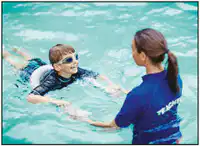
Telefonano a Luigi.
They’re calling Luigi.
Penso a loro.
I’m thinking about them.
Il bambino comincia a parlare.
The baby’s starting to talk.
Penso di studiare arabo.
I’m thinking of studying Arabic.
Regular -are verbs
16


2A.1
Regular -are verbs
UNITÀ 2
Il tempo libero
STRUTTURE
Lezione 2A
2A.1-10
© by Vista Higher Learning, Inc. All rights reserved.
Giochiamo a calcio.
We’re playing soccer.
Imparate a nuotare?
Are you learning to swim?
Regular -are verbs
17


2A.1
Regular -are verbs
UNITÀ 2
Il tempo libero
STRUTTURE
Lezione 2A
2A.1-11
© by Vista Higher Learning, Inc. All rights reserved.
Provalo!
Complete the sentences with the correct present tense form
of each verb in parentheses.
1. Io _____ (parlare) italiano.
2. Giulia e Anna non ________ (studiare)
spagnolo.
3. Lei ________ (cercare) una palestra
vicino a casa.
4. Noi ________ (mangiare) il pesce
il venerdì.
5. Sara e Paola ________ (suonare)
il pianoforte.
6. Tu ________ (giocare) a calcio.
7. Franca ________ (viaggiare) spesso
in Europa.
8. Io e Marcello ________ (pensare) di
andare alla partita.
9. Tu e Annabella ________ (incontrare)
Jacopo oggi?
10. ________tu la pizza?
parlo
Regular -are verbs
2A.1
Regular -are verbs
UNITÀ 2
Il tempo libero
STRUTTURE
Lezione 2A
As you learned in Lezione 1B, the infinitive is the
basic form of a verb. In English, it is preceded by
the word to: to be, to play, to eat, and so on. In
Italian, the infinitive is a single word formed by
stem and one of three endings: -are, -ere, or ire.
2A.1-1
© by Vista Higher Learning, Inc. All rights reserved.
parlare
to speak
lẹggere
to read
partire
to leave
Regular -are verbs
Show answer
Auto Play
Slide 1 / 17
SLIDE
Similar Resources on Wayground

13 questions
BACHILLER - EAES
Presentation
•
12th Grade
11 questions
Modals of probability
Presentation
•
12th Grade
14 questions
Word Choice
Presentation
•
12th Grade
11 questions
Second Lesson - French
Presentation
•
12th Grade
14 questions
Chap. 16 Relations entre les organisations et leur écosystème
Presentation
•
12th Grade
16 questions
Leçon_Quizizz_Méiose_Brassage
Presentation
•
KG
12 questions
PULSE 2 UNIT 8 SPORTS & COMPETITIONS
Presentation
•
12th Grade
11 questions
News Item 4
Presentation
•
12th Grade
Popular Resources on Wayground
11 questions
Hallway & Bathroom Expectations

Quiz
•
6th - 8th Grade
10 questions
HCS SCI 03 Summer School Assessment 2
Quiz
•
3rd Grade
11 questions
Home Scope
Quiz
•
7th - 8th Grade
12 questions
2026 TAP Technology in the Classroom
Presentation
•
Professional Development
15 questions
HCS SCI 05 Summer School Assessment 2 Review
Quiz
•
5th Grade
15 questions
HCS SCI 04 Summer School Review 2
Quiz
•
4th Grade
59 questions
Geometry Unit 3 Review
Quiz
•
9th - 12th Grade
14 questions
FAST ELA READING SMAPLE TEST MATERIALS

Passage
•
3rd Grade