Search Header Logo
Chemistry Semester 1 Review

Chemistry Semester 1 Review

Assessment

Presentation

Chemistry

10th Grade

Medium

NGSS
HS-PS1-1, MS-PS1-1, MS-PS1-2

+6

Standards-aligned

Created by

Chika Okolo

Used 7+ times

FREE Resource

22 Slides • 59 Questions

1

media

2

Multiple Choice

The measure of the pull of gravity.

1

Weight

2

Gravity

3

Volume

4

Density

3

Multiple Choice

The amount of matter in an object; measured by grams, milligrams, or kilograms.

1

Matter

2

Mass

3

Weight

4

Volume

4

Multiple Choice

Question image

Which cup of water has a bigger volume?

1

Left Cup

2

Right Cup

5

Multiple Choice

Question image
Metric unit used to record mass.
1
cm3
2
grams (g)
3
miliLiter
4
liter (L)

6

Multiple Choice

Anything that has mass and takes up space.

1

Mass

2

Matter

3

Weight

4

Volume

7

Multiple Choice

How much space an object takes up.

1

Mass

2

Weight

3

Volume

4

Matter

8

Multiple Choice

Tool used to measure MASS

1

Metric Ruler

2

Triple Beam Balance

3

Graduated Cylinder

4

Thermometer

9

Multiple Choice

Question image

Find the mass.

1

550.4 g

2

559.4 g

3

559.6 g

4

550.6 g

10

Multiple Choice

Question image

50 mL of water was added to the graduated cylinder. After we drop in the object, the new water level goes up to 60 mL. What is the volume of the blocks? (Hint: new volume- old volume)

1

8 mL

2

10 mL

3

60 mL

4

5 mL

11

media

Density, mass and volume

12

Multiple Choice

A crayon has a mass of 10g and volume of 5 ml. What is the density?

1

30 g/ml

2

15 g/ml

3

1 g/ml

4

2 g/ml

13

Multiple Choice

Frank has an eraser. It has a mass of 4g, and a volume of 2cm3. What is its density?
1
8 g/cm3
2
2 g/cm3
3
1/2 g/cm3
4
24 g/cm3

14

Multiple Choice

Question image
Which liquid has the least density?
1
Water
2
Glycerine
3
Corn Oil
4
Corn Syurp

15

Multiple Choice

Question image

The mass and an unknown property are graphed for five samples of the same solid material.

1

Density

2

Energy

3

Volume

4

Weight

16

media
media

​Chemical vs Physical Properties

17

Multiple Choice

What kind of properties can only be observed when a substance changes into a different substance?
1
physical properties
2
chemical properties

18

Multiple Choice

Properties that can be observed without changing the identity of the substance.
1
Physical
2
Chemical

19

Multiple Choice

Example for physical property
1
odor
2
burns in air
3
reacts with water to create hydrogen gas
4
rust

20


Physical change:
1. Temporary change (e.g. change of state of matter)
2. Same substance
Chemical change
1. Permanent change - must go through chemical change to reverse
2. New substance formed.

media

Chemical vs Physical Changes

Examples

21

Multiple Choice

Question image
what is the definition of physical change?
1
any change that results in the formation of new chemical substances. 
2
rusting
3
changes affecting the form of a chemical substance, but not its chemical composition.
4
any property that is measurable, whose value describes a state of a physical system

22

Multiple Choice

Question image
One cup of water is left outside for two days when it was checked there was only half a cup left. What happened?
1
evaporation; chemical change
2
condensation; physical change 
3
evaporation; physical change
4
condensation; chemical change

23

Multiple Choice

Question image

A balanced particle-diagram equation is shown.

Which statement describes the type of change and the chemical properties of the product and reactants?

1

The equation represents a chemical change, with the product and reactants having identical chemical properties.

2
  1. The equation represents a physical change, with the product and reactants having identical chemical properties.

3
  1. The equation represents a chemical change, with the product and reactants having different chemical properties.

4
  1. The equation represents a physical change, with the product and reactants having different chemical properties.

24

Multiple Choice

Question image
When you break a cracker into pieces it is a 
1
Chemical change
2
Physical change
3

Chemical property

4

Physical property

25

Multiple Choice

Question image
Which of the following is a sign that a chemical reaction has occurred?
1

Oxygen combines with substance to form rust

2

bubbles forming

3
formation of a gas
4

heat, light, or temperature change

5

All the above

26

Multiple Choice

Question image

Which statement describes a chemical property of cobalt?

1

can be drawn into a wire.

2

conducts electricity and heat.

3

combines with oxygen to form rust.

4

can be flattened into sheets

27

Multiple Choice

Question image
What is the definition of chemical change?
1
any change that results in the formation of new chemical substances. 
2
changing clothes
3
matter cannot be created or destroyed, only change form
4
changes affecting the form of a chemical substance, but not its chemical composition.

28

media
media

29

Multiple Choice

Properties that DO depend on the amount of matter present.

1

Mass

2

Hardness

3

Extensive

4

Intensive

30

Multiple Choice

Properties that do NOT depend on the amount of a substance.

1

Mass

2

Hardness

3

Extensive

4

Intensive

31

Multiple Choice

Which of the following is an extensive property?

1

Color

2

Mass

3

Odor

4

Luster

32

Multiple Choice

Question image

Which of these observations describes an extensive property of gold?

1

Shiny, bright appearance

2

1,943 degrees Fahrenheit melting temperature.

3

19.3 g/cm3

4

100 grams

33

Multiple Choice

Which of the following is an extensive property?

1

Hardness

2

Boiling Point

3

Density

4

Weight

34

Multiple Choice

Which of the following is an intensive property?

1

Color

2

Mass

3

Volume

4

Weight

35

Multiple Choice

What kind of physical property is this? Density

1

intensive

2

extensive

36

Multiple Choice

Question image

Olivia measured mass and another property, X, of three pure samples of the same compound. She recorded her data in the table.

Which of the following best describes property X?


1
  1. X is an intensive property because it varies directly with the size of the sample.

2
  1. X is an extensive property because it does not vary with the size of the sample.

3
  1. X is an intensive property because it does not vary with the size of the sample.

4
  1. X is an extensive property because it varies directly with the size of the sample.

37

Groups of the Periodic Table

Names of the columns

media

38

  • Elements in groups behave similarly.

  • Many of the important groups have names.

39

Alkali Metals

All have 1 valence electron

media

40

All VERY reactive!

The get more reactive as you go down the column.

media

41

Group 2

Alkaline-Earth Metals

media

42

Alkaline-earth Metals

All have 2 valence electrons

media

43

Group 17

Halogens

media

44

Halogens

All have 7 valence electrons

media

45

Halogens

Also VERY reactive!

media

46

Group 18

Noble Gases

media

47

Noble Gases

All have 8 valence electrons

(except for He, it has 2!)

media

48

Noble Gases

Very UNreactive!

media

49

Groups 3-12

Transition Metals
Called transition metals because their charges change, depending on what they're bonded to. I.e. they do not have a set # of valence e-.

media

50

Multiple Choice

Question image
Each column in the periodic table is called a _________ .
1
period
2
group
3
cluster
4
unit

51

Multiple Select

Elements in the same group have : (2 correct answers)

1

Similar chemical properties

2

Similar names

3

Same number of outer (valence) electrons)

4

The same number of protons

52

Multiple Select

Question image

Which two groups are the most reactive?

1

halogens

2

alkaline earth metals

3

noble gases

4

alkali metals

5

salts

53

Multiple Choice

Question image

Which group of elements is the most snooty and doesn't want to play with any of the other groups?

1

Halogens

2

Lanthanides

3

Alkali Earth Metals

4

Noble Gases

5

Alkali Metals

54

Multiple Choice

Which group does Bromine belong to?

1

Alkali Metals

2

Alkaline-Earth Metals

3

Halogens

4

Noble Gases

5

Transition Metals

55

Multiple Choice

Which group does sodium belong to?

1

Alkali Metals

2

Alkaline-Earth Metals

3

Halogens

4

Noble Gases

5

Transition Metals

56

Multiple Choice

Question image

Which of the following elements is most likely to have similar properties to those of sodium (Na)?

1

Magnesium (Mg)

2

Sulfur (S)

3

Francium (Fr)

4

Titanium (Ti)

57

Multiple Choice

Name this group: These metals contain familiar metals such as gold, iron, and copper.

1
2
3
4

58

Multiple Choice

Which two elements have the most similar chemical properties?

1

Ca and F

2

B and Ga

3

Li and Ag

4

He and O

59

Multiple Choice

Which of the following will have similar properties?

1

O, S, Se

2

O, F, Ne

3

N, Ne, Na

4

H, K, P

60

Multiple Choice

Find an element with similar chemical properties to Barium (Ba).

1

Ca an Ra, because they are in the same group and have similar chemical properties.

2

Cs and La, because they are in the same period number.

3

Ca and Y, because they are 90 degree angle and have similar properties.

61

media

62

Multiple Choice

Question image

How many valence electrons are found in atoms of group 1?

1

7

2

6

3

4

4

1

63

Multiple Choice

Question image

USE THE PERIODIC TABLE

How many valence electrons does Phosphorus have?

1

31

2

5

3

15

4

4

64

Multiple Choice

Question image

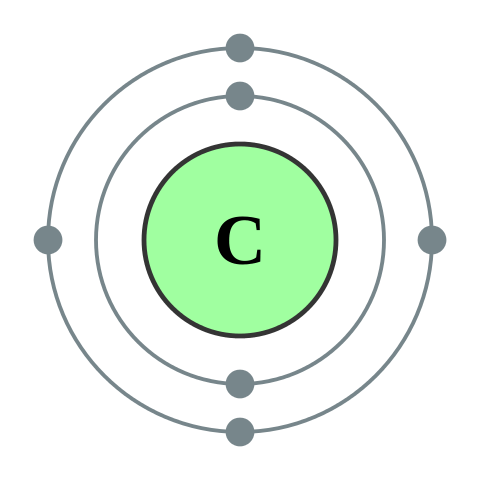
How many valence electrons does carbon have?

1

4

2

5

3

6

4

7

65

Multiple Choice

Question image

How many TOTAL electrons does Phosphorus have?

1

15

2

11

3

20

4

5

66

media

67

Multiple Choice

How did Dmitri predict elements?

1

Time traveled

2

Predicted the properties by the atomic numbers left

3

Guess and checked

4

Calculated the atomic mass and properties

68

Multiple Choice

Dmitri Mendeleev arranged the 63 known elements at the time by __________________.

1

atomic number

2

atomic weight

3

neutron number

4

none of the above

69

Multiple Choice

What was observed that led to arrange sixty-three already-known elements by increasing atomic weights in the periodic table?

1
  1. A repetition occurs in chemical and physical properties.

2
  1. An atomic weight corresponds to the existing abundance.

3
  1. The number of neutrons and protons increased by one.

4
  1. The chemical compounds formed by the elements increased by one.

70

Multiple Choice

How are the elements arranged on the periodic table today?

1

By atomic mass

2

By number of electrons

3

By atomic number

4

By alphabetic order

71

Multiple Choice

In 1869, Mendeleev created a periodic table in which elements were ordered by atomic weight and placed in groups based on their chemical properties. Mendeleev's decision to design the periodic table in this way allowed immediate advances in chemistry by —

1
  1. providing a framework for models of electron configurations.

2
  1. discovering the inert gas family, the noble gases

3
  1. providing an explanation for the reactive properties of the alkali metals.

4
  1. predicting the physical/chemical properties of yet undiscovered elements

72

media

Two Types of Substances

1. Element: simplest form

of matter from which
more complex
substances are made
(listed on the Periodic
Table)
– All the atoms that make up

an element are alike

– Ex. Helium

73

Multiple Select

Choose all the items that are elements.

1

NaCl (table salt)

2

Sulfur

3

O2

4

Water

5

Air

74

Multiple Choice

Which of the following will NOT break down due to a chemical change?

1

NaCl

2

Ni

3

H2O

4

FeO2

75

media

Two Types of Substances

2.

Compound: two or more elements chemically combined
in a fixed proportion

Can be broken down, but only by chemical reactions

– Have properties different elements that make them up

Ex. H2O
(Water)

Ex. C6H12O6

(Sugar)

Ex. NaCl
(Table Salt)

76

Multiple Choice

Question image

Mercury is (Hg)

1

Element

2

Compound

77

Multiple Choice

Question image

Water is (H20)

1

Element

2

Compound

78

Multiple Choice

Question image

Oxygen is (O2)

1

Element

2

Compound

79

Multiple Choice

Question image

Carbon Dioxide (CO2)

1

Element

2

Compound

80

Multiple Select

Choose all of the items that are compounds.

1

NaCl (table salt)

2

Sulfur

3

O2

4

Water

81

Multiple Choice

Question image

A suspension is a mixture of a solid and a liquid. The solid can be seen evenly throughout the liquid. After a long period of time, the solid will settle to the bottom of the mixture. Is a suspension a compound?

1
  1. No it is not, because the solid can only be separated through chemical processes.

2
  1. Yes it is, because the solid can only be separated through chemical processes.

3
  1. No it is not, because the solid can be separated through physical processes.

4
  1. Yes it is, because the solid can be separated through physical processes.

media

Show answer

Auto Play

Slide 1 / 81

SLIDE