

The Federalist and Anti-Federalist Debate

Presentation
•
Social Studies
•
6th - 8th Grade
•
Easy

Kevin Burns
Used 4+ times
FREE Resource
14 Slides • 25 Questions
1
An examination of the arguments and ideologies of the Federalists and Anti-Federalists during the formation of the United States Constitution.
2
The Federalist and Anti-Federalist Debate
Learn about the influential movements that shaped the early American government. The Federalists, led by Alexander Hamilton, advocated for a strong central government, while the Anti-Federalists, including Thomas Jefferson, emphasized states' rights. Explore their contrasting views on the Constitution and the Bill of Rights.
3
The Federalist and Anti-Federalist Debate
Learn about the influential movements that shaped the early American government. The Federalists, led by Alexander Hamilton, advocated for a strong central government, while the Anti-Federalists, including Thomas Jefferson, emphasized states' rights. Explore their contrasting views on the Constitution and the Bill of Rights.
4
5
6
Multiple Choice
Which two groups had contrasting views on the Constitution and the Bill of Rights?
The Federalists and the Anti-Federalists
The Whigs and the Tories
The Republicans and the Democrats
The Socialists and the Capitalists
7
Constitution Contrasts
The Federalists supported the Constitution and believed in a strong central government. The Anti-Federalists opposed the Constitution and feared a strong central government would infringe on individual rights. They demanded the addition of a Bill of Rights to protect individual liberties. These contrasting views shaped the early political landscape of the United States.
8
The Federalist and Anti-Federalist Debate
9
Multiple Choice
Which group supported a strong national government?
Federalist
Anti-Federalist
Democrats
Republican
10
The Balance of Power
The main focus of the debate between the Federalists and Anti-Federalists was the balance of power. The Federalists believed in a strong central government, while the Anti-Federalists advocated for more power to be given to the states. This debate ultimately led to the creation of the U.S. Constitution, which aimed to strike a balance between the two perspectives.
11
Multiple Choice
Identify the main focus of the debate between Federalists and Anti-Federalist.
California Statehood
George Washington as president
Balance of power
Representation in Congress
12
The Federalist Papers
The Federalist Papers were a series of essays written by Alexander Hamilton, James Madison, and John Jay.
They were published between 1787 and 1788 to promote the ratification of the United States Constitution.
AntiFederalists and the Bill of Rights and addressed concerns raised by the Anti-Federalists.
Publius was the collective pseudonym used by the authors.
13
Multiple Choice
Who were the authors of The Federalist Papers?
Alexander Hamilton, James Madison, and John Jay
George Washington, Thomas Jefferson, and Benjamin Franklin
Abraham Lincoln, Theodore Roosevelt, and Franklin D. Roosevelt
John Adams, Thomas Paine, and Patrick Henry
14
Fill in the Blanks

Which political party supported the Constitution. Arguing for a strong central government.
15
Fill in the Blanks

Which political party supported states rights, and wanted a Bill of Rights added to the Constitution.
16
The Federalist Papers
Trivia: The authors of The Federalist Papers were Alexander Hamilton, James Madison, and John Jay. These papers were a series of 85 essays written to promote the ratification of the United States Constitution. They are considered one of the most important works in American political thought. The Federalist Papers were published between 1787 and 1788 under the pseudonym 'Publius'.
17
The Federalist and Anti-Federalist Debate
The Federalists believed in a strong central government, while the Anti-Federalists favored more power to the states. Federalists supported the Constitution, arguing it would provide stability and protect individual rights. Anti-Federalists feared a strong central government would infringe upon individual liberties and advocated for a Bill of Rights. This debate ultimately led to the creation of the Bill of Rights, ensuring the protection of individual freedoms.
18
Multiple Choice

What document is Hamilton most known for?
Federalist Papers
Newspapers
Constitution
Declaration of Independence
19
Multiple Choice
How did Hamilton die?
In a dual
From Smallpox
He's still alive
Tripped and fell
20
Multiple Choice

Alexander Hamilton appears on what bill?
ten dollar bill
one hundred dollar bill
twenty dollar bill
one dollar bill
21
Multiple Choice
What was the main difference between the Federalists and Anti-Federalists?
The Federalists wanted more power to the states, while the Anti-Federalists believed in a strong central government.
The Federalists supported the Constitution, while the Anti-Federalists feared it would infringe upon individual liberties.
The Federalists advocated for a Bill of Rights, while the Anti-Federalists argued it would provide stability and protect individual rights.
The Federalists believed in a strong central government, while the Anti-Federalists favored more power to the states.
22
Federalists vs Anti-Federalists
The Federalists supported the Constitution, while the Anti-Federalists feared it would infringe upon individual liberties. Did you know that the Federalists were led by Alexander Hamilton, James Madison, and John Adams? On the other hand, prominent Anti-Federalists included Thomas Jefferson, Patrick Henry, and George Mason. This debate ultimately led to the creation of the Bill of Rights, which addressed the concerns of both sides.
23
The Constitution Debate
24
Multiple Choice
Which group supported the Constitution and advocated for a strong central government?
Federalists
Anti-Federalists
Key Figures
Outcome
25
Federalists
Federalists were a group that supported the Constitution and advocated for a strong central government. They believed in a strong executive branch and a loose interpretation of the Constitution. Key figures of the Federalists included Alexander Hamilton, James Madison, and John Jay. Their efforts led to the ratification of the Constitution in 1788.
26
Multiple Choice
Against the constitution, wanted a bill of rights added and weaker national government, more states power.
Federalist
Anti-Federalist
Democrats
Republican
27
Multiple Choice

The ___________ are for the ratification (approval) of the U.S Constitution.
Federalists
Anti-Federalists
Whiggs
Representatives
28
Multiple Choice
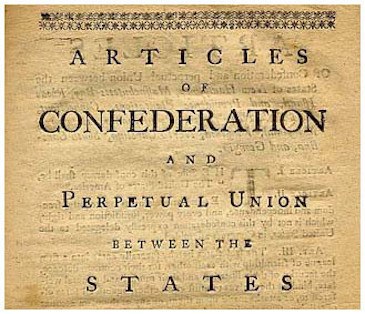
Federalists believed that the Articles of Confederation were a ________ and set up a ________ National Government.
Success, Strong.
Success, Weak.
Failure, Weak.
Failure, Strong.
29
Multiple Choice
The ___________ are NOT for the ratification (approval) of the U.S Constitution.
Anti-Federalists.
Federalists.
Whiggs.
Supreme Court Justices.
30
Multiple Choice
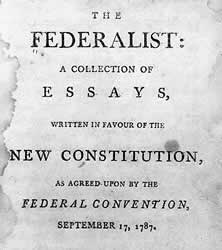
The "Federalist Papers" were written to:
Explain and convince the people into supporting the new U.S Constitution.
spark a new revolution among the American people against their government.
oppose a strong centralized government.
create a new monarchy.
31
Multiple Choice

Anti-Federalists were in favor of:
States Rights and the protection of individual rights.
A strong Central Government.
A Monarchy (King & Queen) to rule over the country.
a powerful National Government
32
Multiple Choice
What was the Anti-Federalists’ greatest concern about ratifying the U.S. Constitution?
The lack of a federal court system
The lack of legislative veto power
The lack of a strong military
The lack of a bill of rights
33
Multiple Choice
34
Multiple Choice
35
Multiple Choice
Which of the following best describes the views of a Federalist?
Federalists wanted a weak national government.
Federalists were afraid a president would act like a king.
Federalists wanted a stronger national government.
Federalists believed a bill of rights was needed in the Constitution.
36
Match

Match the following:
Bill of Rights
Anti Federalists
Federalists
First 10 Amendments to the Constitution
Wanted small local governments
Wanted to have a strong national republic
First 10 Amendments to the Constitution
Wanted small local governments
Wanted to have a strong national republic
37
Multiple Choice
Alexander Hamilton, James Madison, and John Jay wrote 81 essays collectively, in an effort to convince the remaining undecided states that they should ratify the Constitution. Those essays are called the ______ Papers.
Federalists
Anti-federalist
Constitutional
Ratification
38
Multiple Choice
Which group feared that the president might behave like a king?
Federalists
Anti-Federalists
39
Multiple Choice
Which side believed that state governments should have much more power than the national government?
Federalist
Anti-Federalists
An examination of the arguments and ideologies of the Federalists and Anti-Federalists during the formation of the United States Constitution.
Show answer
Auto Play
Slide 1 / 39
SLIDE
Similar Resources on Wayground

30 questions
Civil War
Presentation
•
6th - 8th Grade
35 questions
7 Principles of the Constitution
Presentation
•
6th - 8th Grade
34 questions
Understanding the Preamble to the U.S. Constitution
Presentation
•
6th - 8th Grade
34 questions
8th Amendment Activity
Presentation
•
6th - 9th Grade
32 questions
CE.8a-c Local Government
Presentation
•
7th Grade
32 questions
The Mexican American War
Presentation
•
6th - 8th Grade
37 questions
8.3 The South Secedes
Presentation
•
6th - 8th Grade
Popular Resources on Wayground
10 questions
How much do you know about our Portrait of an Eagle?

Quiz
•
10th Grade
10 questions
Fast Food Slogans
Quiz
•
6th - 8th Grade
21 questions
Continents and Oceans
Quiz
•
6th Grade
20 questions
Parts of Speech
Quiz
•
5th Grade
16 questions
Subject & Predicate
Quiz
•
5th Grade
25 questions
Multiplication Facts
Quiz
•
5th Grade
12 questions
Map Skills
Quiz
•
3rd Grade
22 questions
Continents and Oceans
Quiz
•
5th Grade
Discover more resources for Social Studies
10 questions
Exploring the Age of Exploration: Key Events and Figures

Interactive video
•
6th - 10th Grade
13 questions
13 Colonies Map Quiz
Quiz
•
6th - 8th Grade
20 questions
13 original colonies
Quiz
•
8th Grade
10 questions
Causes of the American Revolution
Quiz
•
8th Grade
19 questions
Unit 3 Spanish Colonial Era
Quiz
•
7th Grade
12 questions
7 Continents and 5 Major Oceans
Quiz
•
6th Grade
10 questions
Pillars of Free Enterprise
Quiz
•
6th - 8th Grade
26 questions
QA 1 Review
Quiz
•
6th - 8th Grade