

Rome Vocabulary

Presentation
•
Other
•
9th Grade
•
Easy

Lonnie Young
Used 1+ times
FREE Resource
19 Slides • 18 Questions
1

Ancient Rome
Unit 06 Rome Vocabulary
2


Alpine Mountains (Alps)
Alps: The Alps are the highest and most extensive mountain range in
south-central Europe. They have a crescent shape across eight modern-day
nations in Europe.
*The Italian peninsula was protected by the arc of the Alps and the sea.
3
Multiple Choice
Which mountains served as a natural border to the north of the Roman Republic?
Alps
Apennines
4


Patricians
Patricians: Noble, wealthy individuals whose families were eligible to hold public
offices. The ruling class of ancient Rome and few in number. (minority)
They ranked below the emperor and his relatives, the Patrician families dominated
Rome and its empire. The word “patrician” come from the Latin “patres” meaning
“fathers,” and these families provided the empire with political, military, and
religious leadership. Only a patrician could become emperor.
5
Multiple Choice
What is the meaning of the word 'patrician'?
Daughters
Sons
Mothers
Fathers
6

Plebeians
Plebeians: Mostly poorer individuals that held many different roles in Rome. The
Plebeians were much larger in number than the Patricians. They made up about
ninety percent of the population (majority).
They could not hold public office. Most were artisan, merchants, or small farmers.
They had very little power.
7
Multiple Choice
Who made up the majority of the population in ancient Rome?
Plebeians
Emperors
Patricians
Senators
8


Representative Democracy
Representative Democracy: The type of democracy in which elected persons
represent (act or speak for) a group of people. It becomes a model for modern
democracy.
9
Multiple Choice
What type of democracy is represented by elected persons speaking for a group of people?
Monarchy
Representative Democracy
Direct Democracy
Oligarchy
10

The Assemblies
The Roman Assemblies: The Assembly was composed of Plebeian citizens of
Rome. They had a right to assemble and vote. They could vote or suggest laws.
They could vote to declare war.
How are assemblies a feature of democracy?
11
Multiple Choice
What was the role of the Roman Assemblies?
To hold public office
To command the army
To wear the toga with the purple stripe
To suggest laws
12


The Senate
Senate: The Roman Senate was an advisory body formed by Patrician men.
The meaning comes from senex, which means “old.” Old men equals wisdom and
experience. Senators usually kept their position for life.
Senators had privileges such as being able to wear the toga with the purple stripe,
a senatorial ring, and special shoes. They got the good seats at games and
events.
13
Multiple Choice
Who formed the advisory body known as the Roman Senate?
Plebeian citizens
Senators
Emperors
Patrician men
14

Consuls: Two by Two
Consuls: Two consuls were elected every year and jointly ruled Rome and its
provinces. It was the highest political office.
They commanded the army, convened and presided over the Senate and
assemblies, negotiated, judged, and made decisions. They also served as
diplomats meeting with foreign leaders.
15
Multiple Choice
What was the highest political office in ancient Rome?
Senators
Consuls
Emperors
Plebeians
16

Twelve Tables
Twelve Tables: Where laws were recorded (written down) in ancient Rome so that all could see
them and abide by them-and treated equally.
Code of law: A collection of laws. So, the Twelve Tables were the codified laws of ancient Rome
The Twelve Tables came about because of difficulties between the upper and lower classes
(Patricians and Plebeians) The Plebeians wanted fair rights for all citizens.
Once there was consensus of laws created by a board of 10 men, they were bronzed and hung
on the wall of the Forum for all to see.
Why do you think it was important for the Plebeians to have a formal law code?
17
Multiple Choice
What were the Twelve Tables in ancient Rome?
A form of currency
A type of aqueduct
A group of senators
A collection of laws
18


Aqueducts and Arches
Aqueducts: Roman aqueducts were man made conduits (channel) for carrying
water.
Arches are an architectural
feature that compress weight
down and outwards while
creating open space. They can
support more weight than a
beam. Used to support a
bridge, wall, tunnel, etc.
19
Multiple Choice
What were Roman aqueducts used for?
Carrying water
Transporting goods
Building bridges
Supporting walls
20


Pantheon
Pantheon: The Pantheon was a Roman temple or sanctuary
From Greek pan (all) and theos (god) comes the word Pantheon is what some
scholars have reasoned for the name that it was constructed for all the gods.
Others have believed it was a sanctuary (place of remembrance).
21
Multiple Choice
What was the purpose of the Pantheon in ancient Rome?
To worship all the gods
To host public meetings
To serve as a sanctuary
To hold gladiatorial combat
22


Colosseum
Colosseum: The Colosseum was an amphitheater in Rome used for gladiatorial
combat and other entertainment/events.
23
Multiple Choice
What was the Colosseum used for in ancient Rome?
Senate meetings
Library services
Gladiatorial combat
Religious ceremonies
24


The Forum
Forum: A meeting place in ancient Rome. The Senate and other public meetings
took place at the Forum.
25
Multiple Choice
Where did the Senate and other public meetings take place in ancient Rome?
The Pantheon
The Aqueducts
The Colosseum
The Forum
26

Romance Languages
Romance Languages: Latin was the language of the Romans. Romance
languages descended from Latin. They are Italian, French, Portuguese, Spanish
and Romanian.
Love
Italian =amore
Spanish and Portuguese=amor
Romanian=dragoste (Rome conquered this area in the 2nd century)
French=l’amore
27
Multiple Choice
Which languages descended from Latin, the language of the Romans?
Italian, French, Portuguese, Spanish
Japanese, Korean, Thai, Vietnamese
Arabic, Persian, Turkish, Urdu
English, German, Russian, Chinese
28

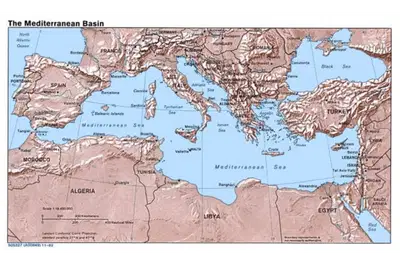

Punic Wars
Punic Wars: A series of wars fought between Rome and Carthage. There were
three Punic Wars. Map #1 is a modern map to see the Basin as a whole. Map #2 shows Carthage and Rome
29
Multiple Choice
What were the Punic Wars?
Wars fought between Rome and Carthage
Wars fought between Rome and Greece
Wars fought between Rome and Egypt
Wars fought between Rome and Persia
30


Hannibal
Hannibal: Hannibal was a general and leader of Carthage that led his army across
the Pyrenees and Alps Mountains into central Italy to attack the Romans in the
Second Punic War. It became of of the most remembered military campaigns in
history.
31
Multiple Choice
Who was Hannibal?
A poet from Egypt
A general and leader of Carthage
An emperor of Rome
A philosopher from Greece
32

Devaluation of Currency and Inflation
Devaluation of currency: The decrease in value of one currency in relation to
another, usually an action of the government.
Effect: The deliberate adjustment makes domestic (home) currency cheaper in
comparison to other currencies. (to help with government debt and boost
exports)
Inflation: A general increase in prices
33
Multiple Choice
What is the devaluation of currency?
An increase in value of one currency
A decrease in value of one currency
A decrease in value of all currencies
An increase in value of all currencies
34


First Triumvirate
First Triumvirate: In ancient Rome, a group of 3 men holding power (Caesar,
Pompey, and Crassus. (An alliance of power of 3 men)
35
Multiple Choice
Julius Caesar, Pompey, and Marcus Licinius Crassus made up:
The Second Triumvirate
The First Triumvirate
The First Trilogy
The First Triumphant
36

Civil Service
Civil Service: Jobs for the government that are neither political or judicial.
In ancient Rome, these were the bureaucrats that ran the day to day business.
❖
Originally created for the fiscal operations ($$$) of the provinces
(taxes and trade) “procuratores of the provinces”
❖
Created more jobs
❖
Later expanded from just financial-related jobs ($$$) to procuratores
of the libraries, entertainment, health and other aspects of Roman
life.
❖
Offered stability (steady, not changing) sometimes even when
emperors were not stable
37
Open Ended
What is a civil service? What in this slide deck reminded you or something in Hampton?
Ancient Rome
Unit 06 Rome Vocabulary
Show answer
Auto Play
Slide 1 / 37
SLIDE
Similar Resources on Wayground

30 questions
Grade 9 Adv - Term 3 Reading Review Unit 8
Presentation
•
9th Grade
30 questions
Symbiosis
Presentation
•
9th Grade
30 questions
3.6 Transformations of Linear Functions Practice_Alg1
Presentation
•
9th Grade
33 questions
Grade 9 General Unit 6 Lesson 6
Presentation
•
9th Grade
30 questions
Vital Signs Presentation.pdf
Presentation
•
9th Grade
28 questions
ESSAY WRITING
Presentation
•
9th Grade
28 questions
Setting Goals and how to properly workout
Presentation
•
9th Grade
30 questions
Test 001
Presentation
•
KG
Popular Resources on Wayground
10 questions
Safety Day 2026 – Student Review

Quiz
•
9th Grade
21 questions
Continents and Oceans
Quiz
•
6th Grade
20 questions
Parts of Speech
Quiz
•
5th Grade
16 questions
Subject & Predicate
Quiz
•
5th Grade
25 questions
Multiplication Facts
Quiz
•
5th Grade
12 questions
Map Skills
Quiz
•
3rd Grade
22 questions
Continents and Oceans
Quiz
•
5th Grade
15 questions
Rounding Decimals
Quiz
•
5th Grade
Discover more resources for Other
10 questions
Safety Day 2026 – Student Review
Quiz
•
9th Grade
20 questions
REGULAR Present tense verbs
Quiz
•
8th - 9th Grade
26 questions
SLIME!!!!!
Quiz
•
KG - 12th Grade
10 questions
Test Your Knowledge on Bullying
Quiz
•
9th Grade
12 questions
Absolute Value Equations
Quiz
•
9th Grade
20 questions
Position vs. Time Graphs
Quiz
•
9th Grade
20 questions
Function or Not a Function
Quiz
•
8th - 9th Grade
10 questions
Exploring Chemical and Physical Changes

Interactive video
•
6th - 10th Grade