

Ecology Unit Key points and practice

Presentation
•
Biology
•
9th Grade
•
Medium
+12
Standards-aligned

Heather Glazebrook
Used 5+ times
FREE Resource
12 Slides • 40 Questions
1

STANDARDS:
SB5. Obtain, evaluate, and communicate information to assess the interdependence of all organisms on one another and their environment.
a. Plan and carry out investigations and analyze data to support explanations about factors affecting biodiversity and populations in ecosystems.
b. Develop and use models to analyze the cycling of matter and flow of energy within ecosystems through the processes of photosynthesis and respiration.
c. Construct an argument to predict the impact of environmental change on the stability of an ecosystem.
d. Design a solution to reduce the impact of a human activity on the environment.
e. Construct explanations that predict an organism’s ability to survive within changing environmental limits.
Unit 1: Ecology
2

Ecosystems are interconnecting systems that include biotic communities and abiotic components. All ecosystems have carrying capacities (limits) on the number of organisms it can support. Organisms have defined niches (roles) in an ecosystem.
Nutrient and energy cycles connect all organisms to biotic and abiotic factors within an ecosystem. Any change (disturbance) can affect the stability of an ecosystem. Disturbances are caused naturally or by human activity and affect the equilibrium of the ecosystem.
3
Match
Match the following
Individual
Group of the same species
Collection of populations interacting with each other
All the biotic and abiotic factors of an area
Group of ecosystems in the same area
Organism
Population
Community
Ecosystem
Biome
Organism
Population
Community
Ecosystem
Biome
4
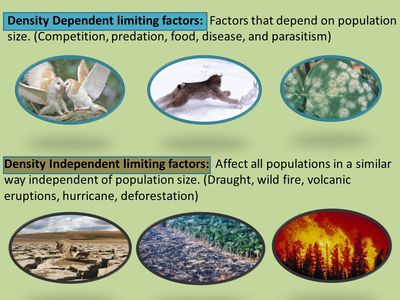
Ecologists describe an ecosystem by its size, density or distribution of resources. Populations are affected by migration, births and deaths.
Populations increase and decrease due to limiting factors. Density dependent limiting factors are biotic factors such as food, predation and disease. Density independent limiting factors are typically abiotic factors that include weather, natural disasters and human activities.
5
Multiple Choice

parasites, disease, predators, are examples of what type of limiting factors?
density dependent
density independent
survivorship
type 1 curve
6
Multiple Choice
An environmental factor such as storms and extreme heat or cold that decrease a population are considered to be.
density- dependent factor
population density
dispersion
density- independent factor
7
Multiple Choice
A lion and a cheetah attempt to occupy the same niche. The more aggressive lion survives; the cheetah does not.
Density-Dependent: Competition
Density-Independent: Competition
Density-Dependent: Predator-Prey
Density-Independent: Predator-Prey
8
Multiple Choice

A group of elephants gets stuck in mud at the edge of the river from a recent mud slide. A lion waits for an elephant to get tired before it attacks. What is the limiting factor to the elephant population?
Predator-Prey Relationships
Natural Disaster
Herbivory Effect
Competition
9
Multiple Choice
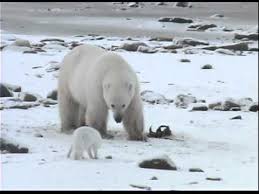
Two arctic fox are fighting with a polar bear for a sea lion carcass. One fox distracts the bear while the other eats. What type of limiting factor is the polar bear?
Predator-Prey Relationships
Competition
Herbivory Effect
Weather
10

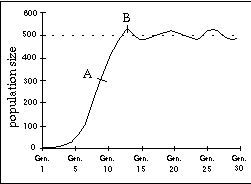
Carrying capacity is the maximum number of organisms that the environment can support. Carrying capacities can change over time due to changes in limiting factors.
11
Multiple Choice

What type of growth is this graph representing
Logistical Growth
Exponential Growth
12
Multiple Choice

What type of growth is this graph representing?
Logistical Growth
Exponential Growth
13
Multiple Choice

In the graph to the right, what is the population of deer at the carrying capacity of the environment?
3
7
70
40
14
Multiple Choice

When a specific population grows past the ecosystem's carrying capacity, what happens to the population?
Density Independent limiting factors start to occur resulting in the population going farther above carrying capacity.
Density Dependent limiting factors start to occur resulting in the population going back below carrying capacity.
The population will go extinct due to lack of resources
The population grows then finds a new carrying capacity
15
Multiple Choice
16
Multiple Choice

17
Multiple Choice
What will happen if all of the frogs in a population die?
The frogs' predators will decrease and the frogs' prey will increase
The frogs' predators will increase and the frogs' prey will decrease
We better all pray because there isn't anymore frogs.
18

Biodiversity is the measure of the different types of life in an ecosystem. The variety of species is essential for ensuring a healthy ecosystem. The more biodiversity, the more resilience.
Fluctuations in one specie's population can impact others within an ecosystem. A keystone species is a species that if removed has a SIGNIFICANT impact on the entire ecosystem.
19
Multiple Choice
Species richness is
a measure of how all of the individual organisms in an ecosystem are balanced between the different species.
the total number of different species found in an ecosystem
20
Multiple Choice
Which island would be the most biodiverse?
Small island far from the mainland
Small island close to the mainland
Large island close to the mainland
Large island far from the mainland
21
Multiple Choice

Why is biodiversity in an ecosystem so important?
Because it can help humans where to determine good places to develop farm land.
Because places that have a healthy biodiversity are unaffected by major disturbances.
Because having a high biodiversity allows ecosystems to withstand major changes.
Because having a high biodiversity allows for fewer opportunities of competition for similar resources.
22
Multiple Choice

What is a keystone species?
A species that helps to hold an ecosystem together
A species that lives in or around rocks
Keys and stones have nothing to do with ecology
A keystone isn't a living thing, it's just a stone
23
Multiple Choice
Why are bees considered a keystone species?
The honey they make supports the bear population
They pollinate flowers that produce fruit which supports the ecosystem
They sting when threatened
They live in hives
24
Multiple Choice

25

All living things need energy for life processes. Energy is constantly flowing through ecosystems through food chains. The sun gives energy to producers (autotrophs) to perform photosynthesis. Consumers (heterotrophs) eat either the producers or other consumers, thus passing energy and matter throughout an ecosystem.
Remember the law of conservation states that matter and energy can not be created or destroyed. So matter and energy is transferred from one form to another though out the ecosystem.
26

The levels in a food chain a re called trophic levels. Arrows link organisms together and show the energy flow. There is a loss of energy at each trophic level. As an organism processes food, heat is lost as a by product.
To access this energy, organisms use a process called respiration. Respiration is a chemical reaction that breaks down food to release stored energy. ALL living tings perform cellular respiration to obtain ATP (energy) necessary for cellular functions.
27
Multiple Choice
28
Multiple Choice

29
Multiple Choice

30
Multiple Choice
31
Multiple Choice

32
Multiple Choice
For an energy pyramid, the 10% rule states that
10% of the energy is transferred from one organism to the next.
10% of the energy is gained.
10% of the animals will starve.
10% of the producers are eaten.
33
Multiple Choice

34

Food webs show the feeding relationships between all organisms in an ecosystem. Each food web is made of multiple food chains.
As you consume food, your body reduces the food to elements and energy. The elements are cycled through the biogeochemical cycles. There are 5 major elements of life. These are Carbon, Hydrogen, Oxygen, Nitrogen and Phosphorus.
35

Carbon and oxygen are found in the atmosphere, rocks and organisms. It is mainly cycled using cellular respiration and photosynthesis. Human activities can affect the levels of carbon dioxide.
Nitrogen enters food chains through plants who fix nitrogen into a usable form. Nitrogen is then used to create proteins and DNA. Animals consume nitrogen by eating. When organisms die, nitrogen is released back into the environment.
Phosphorus enters the food web through plants and enters animals through consumption. Phosphorus is needed to create DNA.
36
Multiple Choice
How does carbon dioxide return to the atmosphere?
Photosynthesis
Combustion and Cellular Respiration
Consumption
Decomposition
37
Multiple Choice
Which one of these is not considered a biological process?
Nitrogen Fixation by bacteria
Consumption by animals
Elimination of Waste by animals
Erosion
38
Multiple Choice
What is the main thing that carries out Nitrogen Fixation?
Lightning
Bacteria
Plants
Humans
39
Multiple Choice
How do non-human living things participate in the nitrogen cycle? (fill in the blank/short answer)
Bacteria decompose organic matter (decomposition)
animals move nitrogen during consumption
Bacteria convert waste into ammonia (ammonification)
All of the above
40
Multiple Select
How do humans negatively affect the nitrogen cycle ?
Use too much fertilizers causing an imbalance in soil.
Combustion- releasing N into the atmosphere
Eating plants
Planting trees
41

Ecological succession is the sequence of changes in an ecosystem over time.
Primary succession occurs after a disturbance leaves bare rock. Examples would be volcanic eruption, pavement or glacier melt.
Secondary succession occurs when there is already soil, but the ecosystem ahs a major disturbance. Examples, fire, tornado, hurricane.
42
43
Match
Primary succession
pioneer species
abiotic factor
secondary sucession
climax community
Primary succession
pioneer species
abiotic factor
secondary sucession
climax community
44
Multiple Choice
What is the main difference between primary and secondary ecological succession?
Primary begins WITHOUT soil; Secondary begins WITH soil
Primary is the first state and secondary is the second stage
Primary builds plant community; secondary builds animal community.
Primary begins WITH soil; Secondary begins WITHOUT soil
45
Multiple Choice
After a volcanic eruption, volcanic rock is present (but no soil). Which of the following states the most likely order of succession that would be seen?
Lichens → Shrubs → Grasses → Trees
Lichens → tree → shrubs→Grasses
Grasses → Lichens → Shrubs → Trees
Lichens → Grasses → Shrubs → Trees
46
Match
Biomass
Species richness
Complexity
Dynamic Equilibrium
Biodiversity
the total amount of living tissue in a trophic level.
All the populations of all the different species that live together in a particular area
the state or quality of being intricate or complicated
a state of balance between continuing processes
the variety of organisms in an area, by species, genes, populations, and communities
the total amount of living tissue in a trophic level.
All the populations of all the different species that live together in a particular area
the state or quality of being intricate or complicated
a state of balance between continuing processes
the variety of organisms in an area, by species, genes, populations, and communities
47
Multiple Choice

48

Many factors affect an organism's ability to survive changes within the environment. Adaptations are part of what assists organisms in surviving their changing environments. However, when an environment changes drastically, the adaptations may no longer keep them alive.
Each species can only tolerate a range of factors, and if the range changes, their population will change. Other conditions that influence survival include temperature, rainfall, sunlight, salinity, acidity and human impacts.
49
Multiple Choice
50
Multiple Choice
How does land use cause a reduction in biodiversity?
51
Multiple Choice
Loggerhead sea turtles are large turtles that live in the ocean and nest on the Florida coast. The female loggerhead sea turtle lays more than 100 eggs in the beach sand. How is laying so many eggs an important adaptation that helps these turtles to survive?
Large nests of eggs help keep the eggs warm enough to allow more turtles to hatch.
If many turtles hatch, they can help defend each other against predators in large numbers.
The more eggs that are laid, the greater the chance that more turtles will live to become adults.
A large number of eggs in one place makes it possible for the mother to lie on the eggs until they hatch.
52
Multiple Choice
Hurricane Andrew caused many animals in the Miami Zoo to become displaced. Two of the animals that lost their homes were the collared lemming which has thick white fur and sharp claws, and the other was a marsh rabbit that has thin brown fur and is a strong swimmer.
If both were thought to have sought refuge in a Florida forest, which one would have a better chance of survival and why?
The marsh rabbit because its ability to swim helps it to scare away predators.
The collared lemming because its sharp claws help it grip the ice when walking.
The collared lemming because its thick, white fur helps it stay warm during the winter months.
The marsh rabbit because its thin, brown fur helps it blend into its environment and stay cool.
STANDARDS:
SB5. Obtain, evaluate, and communicate information to assess the interdependence of all organisms on one another and their environment.
a. Plan and carry out investigations and analyze data to support explanations about factors affecting biodiversity and populations in ecosystems.
b. Develop and use models to analyze the cycling of matter and flow of energy within ecosystems through the processes of photosynthesis and respiration.
c. Construct an argument to predict the impact of environmental change on the stability of an ecosystem.
d. Design a solution to reduce the impact of a human activity on the environment.
e. Construct explanations that predict an organism’s ability to survive within changing environmental limits.
Unit 1: Ecology
Show answer
Auto Play
Slide 1 / 52
SLIDE
Similar Resources on Wayground

48 questions
Characterization
Presentation
•
9th Grade
46 questions
DNA Translation Lesson
Presentation
•
9th Grade
46 questions
Translation of DNA
Presentation
•
9th Grade
46 questions
Feedback Mechanisms in Humans
Presentation
•
9th Grade
47 questions
6B: Biogeochemical Cycles
Presentation
•
9th Grade
45 questions
Ecology Final Review
Presentation
•
9th Grade
48 questions
Body Systems Functions and Interactions
Presentation
•
9th Grade
47 questions
9/10 Cell membrane and transport
Presentation
•
9th Grade
Popular Resources on Wayground
10 questions
Safety Day 2026 – Student Review

Quiz
•
9th Grade
21 questions
Continents and Oceans
Quiz
•
6th Grade
20 questions
Parts of Speech
Quiz
•
5th Grade
16 questions
Subject & Predicate
Quiz
•
5th Grade
25 questions
Multiplication Facts
Quiz
•
5th Grade
12 questions
Map Skills
Quiz
•
3rd Grade
22 questions
Continents and Oceans
Quiz
•
5th Grade
15 questions
Rounding Decimals
Quiz
•
5th Grade
Discover more resources for Biology
20 questions
Cell Transport
Quiz
•
9th - 12th Grade
25 questions
photosynthesis and cellular respiration
Quiz
•
9th Grade
20 questions
Cell Cycle
Quiz
•
9th Grade
8 questions
DNA vs. RNA
Presentation
•
9th - 12th Grade
14 questions
Ecological Succession: Primary and Secondary
Quiz
•
9th Grade
20 questions
Characteristics of Life
Quiz
•
9th - 10th Grade
12 questions
Cell Cycle
Quiz
•
9th Grade
20 questions
Cell Organelles
Quiz
•
9th Grade