Search Header Logo
Day 2 Exam Review: Motion and Force

Day 2 Exam Review: Motion and Force

Assessment

Presentation

Physics

8th Grade

Easy

NGSS
MS-PS2-2, HS-PS2-1, MS-PS3-1

+5

Standards-aligned

Created by

Kim Carroll

Used 10+ times

FREE Resource

22 Slides • 46 Questions

1

Day 2: Position and Motion/Types of forces

media

2

​Position

When discussing position, we have to use reference points. A reference point is the starting point you choose to describe a location, or position, of an object.

​If we describe the distance and direction from the reference point, we then have a position.

media

3

Scalar vs. Vector

The mathematical quantities that are used to describe the motion of objects can be divided into two categories which can be distinguished from one another by their distinct definitions:

  • Scalars are quantities that are fully described by a magnitude* alone.

  • Vectors are quantities that are fully described by both a magnitude and a direction.

*Magnitude only refers to the amount of something. If you have trouble remembering that, skip over the word and read the sentence again - it still makes sense!!

4

Distance

Mass

Time​

Examples of Scalars

media

Density

Volume

Energy​

5

Displacement

Velocity

Momentum

Examples of Vectors

media

Force

Acceleration

Magnetic Field​

6

Match

Label each as a "scalar" or a "vector"

scalar (kg)

scalar (s)

scalar (kg/m^3)

vector (N)

vector (m/s)

mass

time

density

force

velocity

7

Multiple Choice

Distance is

1

Vector

2

Scalar

8

Multiple Choice

Speed is

1

Vector

2

Scalar

9

Multiple Choice

Mass is a

1

Vector

2

Scalar

10

​Displacement

Displacement is the distance between the starting point and ending point of a body that was in motion.

​In the diagram to the right, the green line represents the displacement and the blue line represents the distance traveled by the object.

media

11

Multiple Choice

The distance between the starting point and ending point is called _________________.

1

displacement

2

distance

3

length

4

speed

12

Speed and Velocity

  • Speed is the distance an object moves in a unit of time

  • Constant speed is motion at a steady pace; it's an object moving at the same speed over a certain period of time ("cruise control")

  • Average speed is the total distance traveled by the object divided by the elapsed time to cover the distance

  • Instantaneous speed is an object's speed at a specific moment in time

  • Velocity is the speed and direction of a moving object

  • Speed & Velocity = Distance / Time

13

Multiple Choice

In addition, you can describe the object's speed and direction together. This is called ________.

1

constant speed

2

velocity

3

instantaneous speed

4

average speed

14

Multiple Choice

In addition, you can describe the object's speed and direction together. This is called ________.

1

constant speed

2

velocity

3

instantaneous speed

4

average speed

15

Direction and Acceleration

  • Direction is a line or course along which something is moving

  • Acceleration is a measure of how quickly the velocity of an object changes.

  • Acceleration includes speeding up, slowing down, and changing direction.

media

16

Multiple Choice

Did you know acceleration means more than the increase of an object's speed? It also describes an object that is slowing down or changing __________.

1

force

2

direction

3

motion

4

velocity

17

Reading Motion Graphs (velocity and acceleration)

Position vs time

Velocity vs time

media

18

This graph shows an object is not moving.

The vertical axis shows position. Is the position changing over time? No, the object is in the same position. If there is no change in position, the object is not moving.

media

19

This graph shows an object moving.

The vertical axis shows position. Is the position changing over time? Yes, it is. So this shows a moving object. This line is straight so the rate of change is constant. Every second the object moves the same amount

media

20

Does this graph show an object that is stopped?

No, this object is moving. If you look at the vertical axis it shows velocity, not position. The flat line here shows something is not changing, but it is the velocity that is not changing. The velocity is not zero so the object is moving.

media

21

This graph shows one fast object and one slow object.

The vertical axis shows position. Both lines show a change in position. The red line shows a larger change in position in a shorter period of time. The Green line takes more time to cover a shorter distance.

The red line shows a faster rate of motion than the green line.

media

22

This graph shows one fast object and one slow object also.

The red line shows a constant velocity that is greater then the constant velocity of the green line. A flat line does not alway mean stopped, it means what ever is on the vertical axis is not changing.

media

23

Both of these objects are stopped.

Since the vertical axis shows position, these flat lines show the positions are not changing, they are both stopped. The red line shows an object stopped a greater distance from the reference point than the green line.

media

24

When reading graphs you have to look at the values on both the vertical axis and the horizontal axis.

You cannot just look at the line or lines. Now try to answer some questions about motion graphs.

25

Quick Review!

  • Force=Push or pull

  • Push=Moves things away

  • Pull=Moves things closer or picking something up

  • Balanced Force=Equal and opposite directions. NO MOTION!

  • Unbalanced Force=2 or more forces where one force is stronger. MOTION!

media

26

Multiple Choice

Question image

what is a force?

1

a push or a pull

2

a change in temperature

3

a gain of energy

27

Multiple Choice

Question image

Force in measured in

1

Meltons (m)

2

Watts (w)

3

Newton (s)

28

​Two Major Types of Force

Contact Force - a force directly applied to an object.

Tension force
Spring force

​Friction force

Applied force
Normal force

Buoyancy force

Non-contact Force - a force that does not directly act on an object.

1. Magnetic Force

2. Gravitational Force​
3. Electrical Force

29

media

30

media

31

The mass of the object, and the distance the object is from another object.

In this picture, the arrows show the strength of the gravity. The arrows get longer when mass increases, and smaller when distance increases.

media

​Strength of Gravitational Force

32

Multiple Choice

Question image
As the distance between 2 objects increases, what happens to gravitational force?
1

increases

2

decreases

3

stays the same

33

Multiple Choice

Question image
As mass increases, what happens to gravitational force?
1

increases

2

decreases

3

stays the same

34

Multiple Choice

______ is the force that attracts and object or mass towards the Earth, it "pulls"

1

gravitational

2

friction

3

magnetism

4

push

35

Multiple Choice

True or False: Mass is affected by gravity.

1

True

2

False

36

Quiz Time!

37

Multiple Choice

How far an object has moved?
1
displacement
2
distance
3
motion
4
reference point

38

Multiple Choice

The change in an object's position from the initial position to final position.

1

displacement

2

distance

39

Multiple Choice

Question image
Displacement is distance combined with
1
direction
2
speed
3
velocity
4
magnitude

40

Multiple Choice

Question image
Displacement is distance combined with
1
direction
2
speed
3
velocity
4
magnitude

41

Multiple Choice

What is magnitude?
1
The direction that describes a quantity.
2
A numerical value
3
A unit of force

42

Multiple Choice

A 150N weight hanging DOWN from a rope. Vector or scalar?
1
Scalar
2
Vector

43

Multiple Choice

Momentum is

1

Vector

2

Scalar

44

Multiple Choice

Mass
1
Vector
2
Scalar

45

Multiple Choice

Force is a

1

Vector

2

Scalar

46

Multiple Choice

Acceleration is

1

Vector

2

Scalar

47

Multiple Choice

Velocity is

1

Vector

2

Scalar

48

Multiple Choice

Distance is

1

Vector

2

Scalar

49

Multiple Choice

Speed is

1

Vector

2

Scalar

50

Multiple Choice

Displacement is

1

Vector

2

Scalar

51

Multiple Choice

A train travels 228 kilometers in 2 hours. What is its speed?

1

456 km/h

2

456 km

3

114 km/h

4

114 km

52

Multiple Choice

Which of the following is a unit of speed ?
1
sec
2
mi
3
m/s
4
min

53

Multiple Choice

Question image

Which graph shows a stationary object?

1

A

2

B

3

C

4

D

5

E

54

Multiple Choice

Question image

Which graph shows an object moving at a constant speed?

1

A

2

B

3

C

4

D

5

E

55

Multiple Choice

Question image

Which graph shows an object speeding up at a constant rate?

1

1st graph

2

2nd graph

3

3rd graph

56

Multiple Choice

Question image

Which graph shows an object slowing down at a constant rate?

1

1st graph

2

2nd graph

3

3rd graph

57

Multiple Choice

Question image

Which graph shows an object moving at a constant speed?

1

1st graph

2

2nd graph

3

3rd graph

58

Multiple Choice

Question image

What are the units for acceleration?

1

m/s2

2

m

3

sec

4

s/m

59

Multiple Choice

Question image
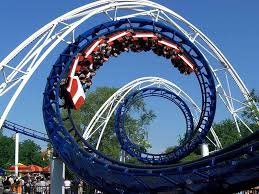
A roller coasters accelerates from an initial velocity of of 6.0 m/s to a final velocity of 70 m/s over 4 seconds.  What's the acceleration?
1
24 m/s2
2
18 m/s2
3
16 m/s2
4
16 m/s

60

Multiple Choice

A dog slides along a waxed floor an initial speed of 7.5 cm/s on a waxed floor. It slides to a stop in 15 seconds. What is the acceleration?

1

-0.5 m/s

2

0.5 m/s2

3

-0.5 cm/s2

4

7.5 cm/s2

61

Multiple Choice

A dog slides along a waxed floor an initial speed of 7.5 cm/s on a waxed floor. It slides to a stop in 15 seconds. What is the acceleration?

1

-0.5 m/s

2

0.5 m/s2

3

-0.5 cm/s2

4

7.5 cm/s2

62

Multiple Select

You undergoing an acceleration in a car when ...? (Check all that apply)

1

it speeds up

2

it slows down

3

it makes turns

4

it is stopped, but about to once the light turns green

63

Multiple Choice

A negative acceleration means that your object is _____. 
1
not accelerating
2
not moving
3
speeding up 
4
slowing down 

64

Multiple Choice

Which of the following graphs shows how the mass of an object affects the amount of force needed to move it?

1
2
3
4

65

Multiple Choice

Question image
What type of force is holding this balloon to the wall?
1
Applied
2
Gravitational
3
Magnetic
4
Electrical

66

Multiple Choice

Two factors effecting the magnitude of the force of gravity between 2 objects are...
1
mass and distance 
2
mass and matter
3
distance and weight 
4
weight and mass

67

Multiple Choice

Force created between two touching forces is ______ force

1

gravitational

2

normal

3

applied

4

friction

68

Multiple Choice

What force is your chair acting upon you right now so you don't fall to the floor?

1

applied

2

normal

3

gravity

4

friction

Day 2: Position and Motion/Types of forces

media

Show answer

Auto Play

Slide 1 / 68

SLIDE