Search Header Logo
Final Exam Review 6th period

Final Exam Review 6th period

Assessment

Presentation

•

Biology

•

12th Grade

•

Hard

Created by

Crysell Holden

Used 1+ times

FREE Resource

13 Slides • 81 Questions

1

​Nervous System
Controls the body

​Circulatory System
Transports oxygen and nutrients throughout the body

​Respiratory System
Exchange oxygen and carbon dioxide

​Digestive System
Breaks down food and absorbs nutrients

media
media
media
media

2

​Excretory System
Filters and removes wastes

​Immune System
Protects the body from disease

Integumentary System
Covers and protects the body; regulates body temperature

Endocrine System
Hormones regulate the body

media
media
media
media

3

Multiple Choice

What is responsible for delivering oxygen and removing carbon dioxide from the body?
1
cell nucleus
2
excretory system
3
nervous tissue
4
respiratory system

4

Multiple Choice

The main purpose of the ____________ system is to break food particles into pieces that can be used.
1
circulatory
2
respiratory
3
digestive
4
skeletal

5

Multiple Choice

Which of the following body systems work together for support, protection, and movement?
1
respiratory and cardiovascular
2
skeletal and muscular
3
skeletal and integumentary
4
digestive and respiratory

6

Multiple Choice

The excretory system gets rid of:

1

Nutrients

2

Cartilage

3

Waste

4

Oxygen

7

Multiple Choice

What is the main product of the endocrine system?

1

Bones

2

Blood

3

White blood cells

4

Hormones

8

Multiple Choice

Which two body systems are primarily responsible for gas exchange between the body and the environment?

1

skeletal and muscular

2

circulatory and respiratory

3

circulatory and digestive

4

respiratory and excretory

9

Multiple Choice

How do the circulatory and excretory systems work together?

1

The circulatory system brings nutrients and oxygen so our cells can produce energy.

2

The circulatory system brings blood to the kidneys to filter and remove waste.

3

The circulatory system bring white blood cells around the body to fight infection and disease.

4

The circulatory system helps the excretory system digest food.

10

Multiple Choice

How does the immune system depend on the circulatory system in order to function?

1

The circulatory system produces antibodies used by the immune system.

2

The circulatory system sends bacteria and viruses to the immune system.

3

The circulatory system transports immune system cells throughout the body.

4

The circulatory system protects the immune system from diseases.

11

Multiple Choice

These systems work together to provide nutrients to the body

1

endocrine system, digestive system

2

muscular system, endocrine system

3

digestive system, circulatory system

4

endocrine system, muscular system

12

Multiple Choice

The organ system that acts as a barrier against infection, injury, UV radiation, and helps to regulate the body's temperature is the... 

1

Endocrine

2

Skeletal

3

Muscular

4

Integumentary

13

media

14

media

15

media

16

media

17

Multiple Choice

Which of the following best illustrates natural selection?

1

An organism with favorable genetic variations will tend to survive and breed successfully.

2

A population monopolizes all of the resources in its habitat, forcing other species to migrate.

3

A community whose members work together utilizing all existing resources and migratory routes.

4

The largest organisms in a species receive the only breeding opportunities.

18

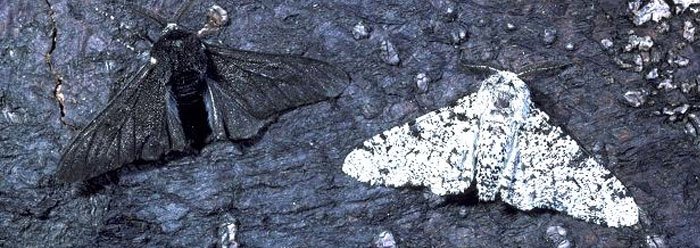
Multiple Choice

Question image

According to natural selection, light colored tree trunks would favor

1

light colored moths

2

dark colored moths

3

red colored moths

4

red and light colored moths

19

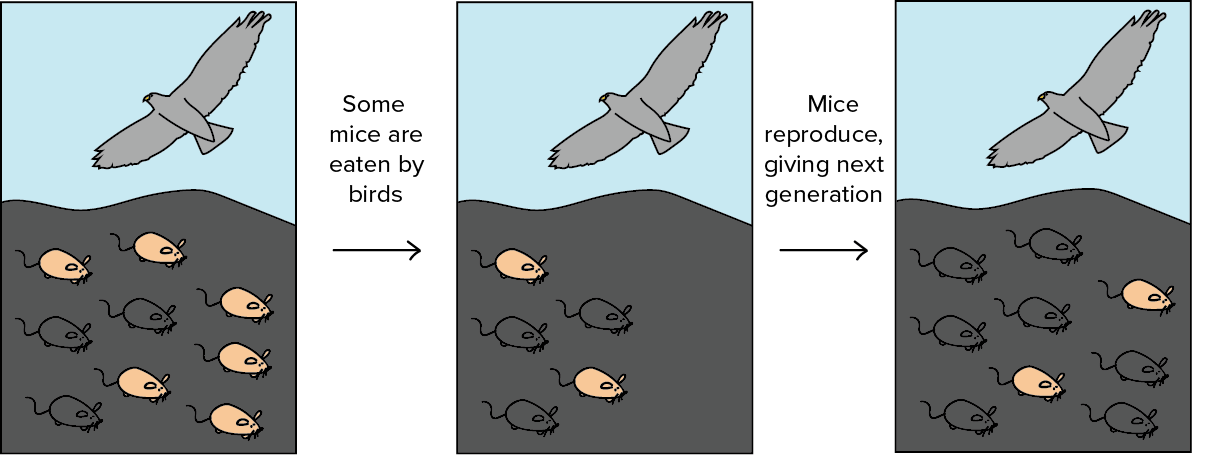
Multiple Choice

Question image
What does the image represent?
1
Founder effect
2
Bottleneck effect
3
Natural Selection
4
Mutations

20

Multiple Choice

Question image

Which of the following statements best describes what will most likely occur to the moth populations in the image above?

1

The light moths will be captured by predators more easily than the dark moths, and the population of dark moths will rise.

2

The light moths will be captured by predators more easily than the dark moths, and the population of light moths will rise.

3

The dark moths will be captured by predators more easily than the light moths, and the dark moths will probably go extinct.

4

The light moths will change their wing color to match that of the dark moths.

21

Multiple Choice

Question image

The pair of population graphs below display the results of two different five-year hunting cycles, one on light trees and one on dark trees. The population of light-colored moths is shown by the light gray dots, and the population of dark moths is shown by the dark gray dots. How do these results demonstrate natural selection?

1

The moth populations shown here demonstrate random fluctuations over time that are not explained by tree color.

2

On light trees, individual moths tried to become lighter in color to match the tree background. On dark trees, individual moths tried to become darker in color.

3

The moths that were the same color as their background were more likely to survive and reproduce. Over time, the populations of these well-adapted moths increased.

4

Small particles of tree bark became embedded in the moth’s wings, causing the moths to become darker on the dark trees and lighter on the light trees. These acquired traits were then passed down to the next generation of moths, causing the populations to change color over time.

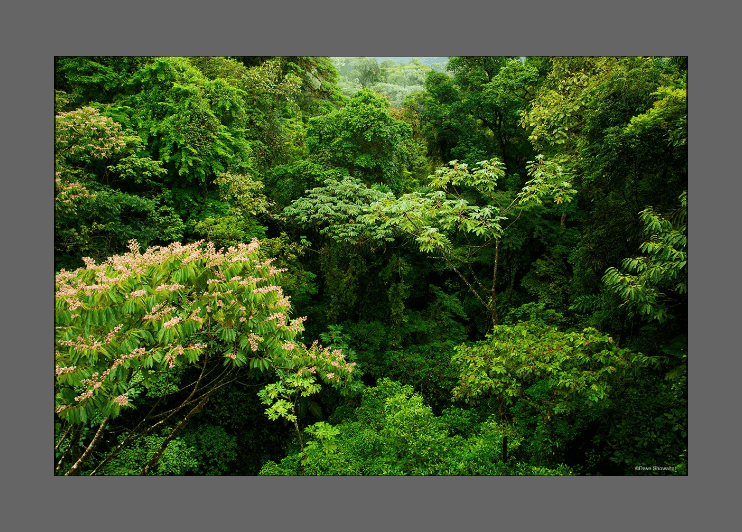
22

Multiple Choice

Suppose a certain species of insect lives in the lush green canopy of the rain forest. Some of the insects are bright green in color, and some are bright yellow. Assume there is a natural predator of the insect in the area. What do you expect to happen to the populations of the green and the yellow insects over time?

1

The green insect population will increase and the yellow insect population will decrease.

2

The green insect population will decrease and the yellow insect population will increase.

3

Both insect populations will remain constant over time.

4

Both insect populations will increase over time.

23

Multiple Choice

Question image
Why is the mouse population changing over time?
1
The light mice can reproduce more successfully than the dark mice
2
The hawks eat more dark mice than light mice because the dark mice taste better
3
The hawks eat more light mice than dark mice because they can see the light mice more easily
4
The hawks eat more dark mice than light mice because they can see the dark mice more easily

24

Multiple Choice

Why are advantageous traits more likely to be passed onto offspring?

1

Because they are more likely to survive and reproduce.

2

Because they come from dominant alleles.

3

Because they come from recessive alleles.

4

Because the organism knew it needed that trait, survives, and passes it on.

25

Multiple Choice

Question image

A yellow morph and green morph of an insect lives in the rainforest canopy. You would expect:

1

the green population to increase and the yellow to decrease

2

both populations should stay the same

3

both populations will increase

4

the green population to decrease and the yellow to increaseThis is a wrong answer

26

Multiple Choice

Why do frogs and other organism reproduce so many eggs or offspring?
1
so that their babies can have friends to play with
2
the more offspring the more likely the offspring will survive
3
the more offspring the less likely offspring will survive 
4
the more offspring the less competition

27

Multiple Choice

Why are some traits more common in some populations?

1

It is random

2

organims choose their traits

3

common traits are usually adaptive and help organisms survive and reproduce

4

organisms traits change all the time

28

Multiple Choice

In recent years "SuperBugs" (bacteria that aren't effected by antibiotics) are becoming more and more common. How could natural selection explain this?
1
Superbugs survive antibiotics and reproduce
2
Antibiotics cause bacteria to become superbugs
3
We have always had the same amount of superbugs; modern media just discusses them more.
4
There is no reliable data on the origin of super bugs.

29

Multiple Choice

Question image
The trees these moths used to live on were white, but have been covered in soot from coal factories. Which moth will be more successful in this environment?
1
Dark moth
2
Light moth
3
Both will be equally successful
4
Neither will be successful

30

Multiple Choice

How do you "win" at natural selection?

1

survive

2

go extinct

3

survive & reproduce

31

media

32

media

33

media

34

Multiple Choice

Question image

Plants curling around a pole or mailbox is an example of:

1

Phototropism

2

Germination

3

Turgor pressure

4

Thigmotropism

35

Multiple Choice

Question image

When plants grow in towards the light, this is called:

1

Phototropism

2

Geotropism

3

Germination

4

Thigmotropism

36

Multiple Choice

If a plant experiences a gravitropism, then it will do what?
1
Grow toward or away from light. 
2
Grow away from light. 
3
Grow toward light.
4
Grow in response to gravity. 

37

Multiple Choice

Question image
What type of tropism response to light? 
1
Gravitropism
2
Thigmotropism
3
Phototropism
4
Hydrotropism

38

Multiple Choice

Question image

What is the phenomenon that is affecting the growth of the bean shoot

1

gravitrophism

2

phototropism

3

thigmotrophism

4

rapid movement

39

Multiple Choice

Phototropism is

1

The plant response to water

2

The plant response to light

3

The plant response to gravity

4

The plant response to soil

40

Multiple Choice

Question image

Venus Flytrap flower reacts to a bug.

1

Thermotropism

2

Negative Geotropism

3

Thigmotropism

4

Hydrotropism

41

Multiple Choice

Through which plant cells does water move by capillary action?

1

phloem cells

2

guard cells

3

mesophyll cells

4

xylem cells

42

Multiple Choice

What does xylem transport?

1

Water and minerals

2

Water only

3

Sugar

4

Food

43

Multiple Choice

Water and minerals move in which direction within the plant

1

Upward

2

Down

44

Multiple Choice

Plant absorbs water through the _________. 
1
stem
2
roots 
3
leaves 
4
all of the above

45

Multiple Choice

Xylem and phloem are examples of _ tissue
1
Spores
2
Nonvascular
3
Seeds
4
Vascular

46

Multiple Choice

In what plant cell organelle does photosynthesis occur?

1

Chloroplasts

2

Mitochondria

3

Nucleus

4

Cell Wall

47

Multiple Choice

Which equation is the photosynthesis equation?

1

C6H12O6 + O2 -----> CO2 + H20

2

C6H12O6 + O2 + CO2 -----> H20 + ATP

3

CO2 + H20 -----> C6H12O6 + O2

4

O2 + CO2 -----> H20 + C6H12O6

48

Multiple Choice

Xylem is

1

another name for roots

2

a vascular tissue that carries water and minerals from the root up to the plants.

3

a vascular tissue that carries food from the leaves to the root.

49

Multiple Choice

Phloem is...

1

a vascular tissue that carries water and nutrients from the roots up to the stem and leaves.

2

a vascular tissue that carries food from leaves to the the roots.

3

another name for leaf.

50

Multiple Choice

The plant tissue that carries food materials DOWNWARD from the leaves to the rest of the pant is the ______.
1
Phloem
2
Stomata
3
Chlorophyll
4
Xylem

51

media

52

Multiple Choice

Question image

What do plants take in through their ROOTS to make food (or carry out photosynthesis)?

1

Carbon Dioxide

2

Water

3

Light

53

Multiple Choice

What is the purpose of photosynthesis?

1

To release energy

2

To create glucose

3

To grow

4

To get oxygen for respiration

54

Multiple Choice

What are the products of photosynthesis?

1

Oxygen and Energy

2

Carbon Dioxide and Glucose

3

Glucose and Oxygen

4

Oxygen and Water

55

Multiple Choice

Which organisms perform Photosynthesis?
1
Only Autotrophs
2
Only Heterotrophs
3
Autotrophs and Heterotrophs

56

Multiple Choice

What is the ultimate ORIGINAL source of energy for living things
1
Sugar
2
Sun
3
Moon
4
Carbon Dioxide

57

Multiple Choice

Plants need ________ for photosynthesis
1
oxygen
2
soil
3
carbon dioxide
4
sugar

58

Multiple Choice

What gas is released by plants during photosynthesis?
1
sulfur
2
carbon dioxide
3
oxygen
4
hydrogen

59

Multiple Choice

What are the reactants (what's needed) for photosynthesis?
1
glucose and oxygen
2
light, water, and carbon dioxide

60

Multiple Choice

In which way are photosynthesis and cellular respiration different?
1
Cellular respiration stores ATP, while photosynthesis releases ATP.
2
Cellular respiration produces oxygen, while photosynthesis uses oxygen.
3
Photosynthesis releases energy, while cellular respiration stores energy.
4
Photosynthesis used carbon dioxide, while cellular respiration produces carbon dioxide.

61

media

62

Multiple Choice

Question image
Barnacles create home sites by attaching themselves to whales. This relationship neither harms nor benefits the whales. 
1
parasitism
2
commensalism
3
mutualism

63

Multiple Choice

Question image
Yucca flowers are pollinated by yucca moths. The moths lay their eggs in the flowers where the larvae hatch and eat some of the developing seeds. Both species benefit. 
1
parasitism
2
commensalism
3
mutualism

64

Multiple Choice

Question image
Mistletoe extracts water and nutrients from a spruce tree. The spruce tree is harmed. 
1
parasitism
2
commensalism
3
mutualism

65

Multiple Choice

Two male Giraffes are fighting over the last green leaf of a tree that is dying.  
1
Competition
2
Mutualsim
3
Predation
4
Commensalism

66

Multiple Choice

Question image
a relationship that occurs when two or more organims of the same species need the same resource at the same time
1
competition
2
symbiosis
3
predation

67

Multiple Choice

Question image
1.  A bee and a flower work together to benefit each other. This is an example of _________________. The bee helps the flower by pollinating it and the flower helps the bee by providing it with nectar. 
1
commensal relationship 
2
parasitic relationship 
3
mutual relationship 

68

Multiple Choice

Question image
Tapeworms live in the intestines of dogs and absorb nutrients from food the dog eats. Which best describes the outcome of this relationship?
1
The dog and tapeworm both become ill. 
2
The dog becomes ill, and the tapeworm benefits. 
3
The tapeworm and dog helpe ach other survive. 
4
The tapeworm helps the dog survive. 

69

Multiple Choice

Question image
Cattle egrets forage (feed) in fields among cattle. The egret gets easy access to flying insects stirred up by the cattle, and the cattle don't care if they are there or not.
1
mutualism
2
commensalism
3
competition
4
parasitism

70

Multiple Choice

Question image
What type of symbiosis?  Skunks often live in burrows that have been dug and abandoned by woodchucks.  
1
commensalism
2
mutualism
3
parasitism
4
predation

71

media

72

media

73

Multiple Choice

Question image
If the grasshopper were to be removed completely from the food web, what organism would be most effected?
1
The squirrel
2
The shrew
3
The deer
4
The rabbit

74

Multiple Choice

Question image
The rabbit in this food web would be considered a:
1
Decomposer
2
Producer
3
Secondary (2nd order) Consumer
4
Primary (1st order) Consumer

75

Multiple Choice

What does a food web show?

1

the flow of food between animals

2

the flow of energy through an ecosystem

3

the flow of water through an ecosystem

4

the flow of food between decomposers

76

Multiple Choice

Which group of living things makes up the bottom level of an energy pyramid?

1

consumers

2

herbivores

3

carnivores

4

producers

77

Multiple Choice

Question image
The largest group of organisms found in a food web would be:
1
Primary Consumers
2
Producers
3
Decomposers
4
Tertiary Consumers

78

Multiple Choice

Question image
What may happen if the snowshoe hare was removed from the food web pictured?
1
The insects in the habitat would increase.
2
The shrew population would decrease due to being only hawk food source.
3
The willow tree population would decrease.
4
Foxes would dies due to no food source. 

79

Multiple Choice

Question image
The shrew provides energy for the _______?
1
cricket
2
grasshopper
3
frog
4
snake

80

Multiple Choice

Question image
Which organism has the most energy and which organism has the least amount of energy? Choose the best answer. 
1
mosquito and grass
2
mouse and grass
3
grass and owl
4
grass and small bird

81

Multiple Choice

Question image
Which of the following is a herbivore?
1
cricket
2
frog
3
hawk
4
shrew

82

Multiple Choice

Question image

If a disease strikes the snakes the hawks will

1

increase

2

decrease

3

not be affected

83

Multiple Choice

Question image

If a disease strikes the snakes the rabbits will

1

increase

2

decrease

3

not be affected

84

Multiple Choice

Question image
If the grasshopper were to be removed completely from the food web, what organism would be most effected?
1
The squirrel
2
The shrew
3
The deer
4
The rabbit

85

Multiple Choice

What percentage of energy is passed on to each tropic level?
1
10%
2
50%
3
90%
4
100%

86

Multiple Choice

What does every food chain start with?
1
producers
2
sun
3
consumer
4
decomposers

87

Multiple Choice

Question image
In the energy pyramid here, how much of the energy in each level gets lost as heat or used by the organism for survival?
1
80%
2
90%
3
10%
4
20%

88

Multiple Choice

Question image
If there is 1000 Kcal available in the producers in trophic level 1, how much energy is available in the herbivores in trophic level 2?
1
10 Kcal
2
1 Kcal
3
100 Kcal
4
1000 Kcal

89

Multiple Choice

Question image
The diagram represents different levels of a marine food pyramid. Between which two levels is the greatest amount of energy transferred
1
R and Q
2
S and R
3
T and S
4
U and T

90

Multiple Choice

Question image

The table contains information about animal diets. Which energy pyramid best represents the data in the table?

1
2
3
4

91

Multiple Choice

Question image

Which correctly shows the role of the Hawk

1

Primary Consumer

2

Primary and Secondary Consumer

3

Secondary & Tertiary Consumer

4

Producer

92

Multiple Choice

Question image

Which correctly shows the role of the rabbit

1

Primary (1st) Consumer

2

Secondary (2nd) Consumer

3

Tertiary (3rd) Consumer

4

Producer

93

Multiple Choice

Question image

What will most likely happen to the hawks and rodents if the insects were removed?

1

There will be more hawks and rodents

2

The rodents will eat more hawks

3

There will be fewer rodents and hawks

4

The hawks will eat more rodents

94

Multiple Choice

Question image

If there is 1500 Kcal available in the producers in trophic level 1, how much energy is available in trophic level 3?

1

15 Kcal

2

1.5 Kcal

3

150 Kcal

4

1500 Kcal

pattern-tertiary

​Nervous System
Controls the body

​Circulatory System
Transports oxygen and nutrients throughout the body

​Respiratory System
Exchange oxygen and carbon dioxide

​Digestive System
Breaks down food and absorbs nutrients

media
media
media
media

Show answer

Auto Play

Slide 1 / 94

SLIDE