
- Resource Library
- Social Studies
- Civics & Government
- Election Vocabulary
- Unit 6 Day 1 The Election Of 1824
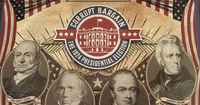
Unit 6 Day 1 - The Election of 1824

Presentation
•
Social Studies
•
8th Grade
•
Practice Problem
•
Medium

Timothy VanOrden
Used 8+ times
FREE Resource
25 Slides • 12 Questions
1
Age of Jackson
1828 - 1836
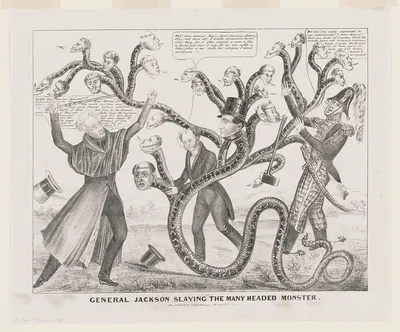
Day 1 - The Election of 1824
2
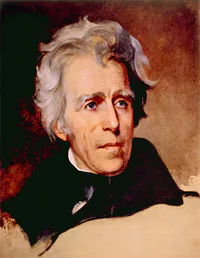
Andrew Jackson
“It is to be regretted that the rich and powerful too often bend the acts of government to their own selfish purposes.”
3
The Election of 1824 Leads to a "Bargain"
There were four candidates for president in 1824. All four were members of the old Republican Party. However, each had support in different parts of the country. John Quincy Adams was strong in New England. Henry Clay and Andrew Jackson had support in the West. William H. Crawford was favored in the South, but became too ill to campaign.
4
Match
Match the candidates with their region of support.
John Quincy Adams
Henry Clay & Andrew Jackson
William H. Crawford
New England
The West
The South
New England
The West
The South
5
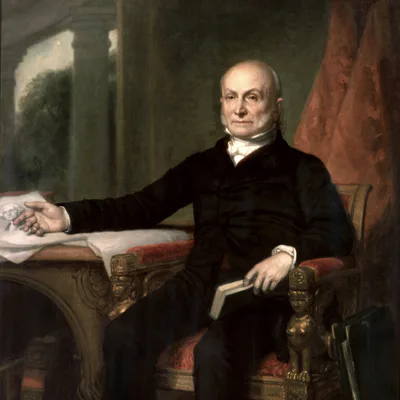
John Quincy Adams of Massachusetts was the son of Abigail and John Adams, the second president. A graduate of Harvard University, the younger Adams had served as Secretary of State and helped end the War of 1812. People admired Adams for his intelligence and high morals. Adams, however, was uncomfortable campaigning among the common people. In fact, to most people he seemed hard and cold.
John Quincy Adams
6
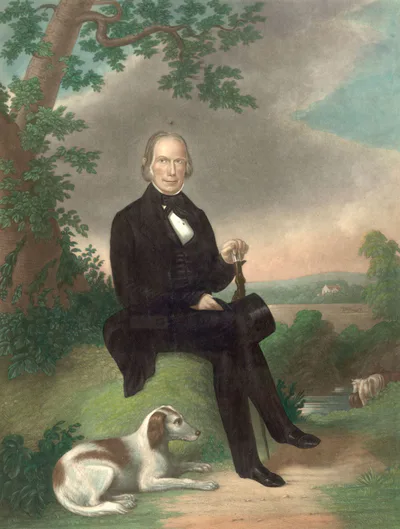
A Kentuckian, Henry Clay was a shrewd politician who became Speaker of the House of Representatives. In Congress, Clay was a skillful negotiator who had worked out several important compromises. Despite his abilities, Clay was less popular than the other candidate from the West, Andrew Jackson.
Henry Clay
7
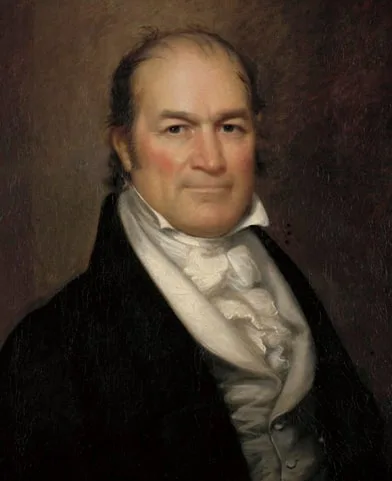
William H. Crawford had served as Treasury Secretary, War Secretary, Ambassador to France after the War of 1812, and as a senator from Georgia. Crawford's support was concentrated in the Southeast.
William H. Crawford
8
Hotspot
This chart shows information about the four candidates in the presidential election of 1824. Which two candidates’ positions were most similar?
9
Old Hickory
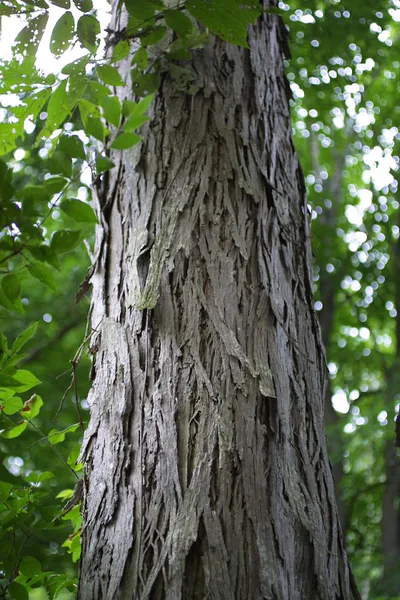
To many Americans, especially on the western frontier, Andrew Jackson was a hero. A general during the War of 1812, he had defeated the British and a group of Creek Indians who were allied with the British. He had gone on to defeat the Seminoles and the Spanish in Florida, gaining that territory for the United States. He was known as the “Hero of New Orleans” for his victory in the War of 1812. He also earned the nickname “Old Hickory” after a soldier said he was “tough as hickory.”
10
Political Popularity
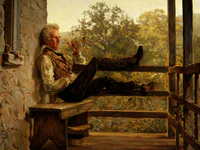
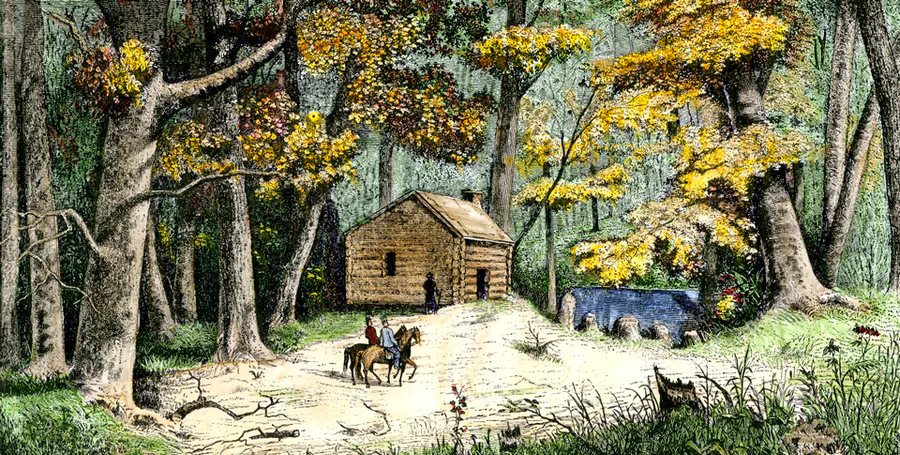
Jackson’s fame as a general helped him launch a political career. Although he was a landowner and a slave owner, many saw him as a man of the people. Jackson had been born in a log cabin, and his parents had been poor farmers. He was admired by small farmers and others who felt left out of the growing economy in the United States. The expansion of the vote to white men without property helped account for Jackson’s political popularity.
11
The "Corrupt Bargain"
No clear winner emerged from the election of 1824. Jackson won the popular vote, but no candidate won a majority, or more than half, of the electoral votes. As a result, under the provisions of the Constitution, the House of Representatives had to choose the president from among the top three candidates. Because he had finished fourth, Clay was out of the running. As Speaker of the House, though, he played an important role in influencing the results and reaching a compromise to settle the conflict.
12
Clay urged members of the House to vote for Adams. Clay’s support was enough for Adams to win the vote in the House. After he became president, Adams named Clay his Secretary of State. In the past, Secretaries of State had gone on to become president. Jackson and his backers
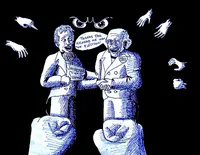
were furious. They accused Adams and Clay of making a “corrupt bargain” and stealing the election from Jackson. In fact, the election was decided based on provisions of the Constitution. Still, the anger of Jackson and his supporters seriously hampered President Adams’s efforts to unify the nation.
13
Multiple Choice
Why did the election of 1824 have to be decided by the House of Representatives?
Jackson had won the popular vote but not the electoral college vote.
No candidate received a majority of electoral college votes.
Henry Clay, one of the candidates, was the Speaker of the House.
There were more than the usual number of candidates.
14
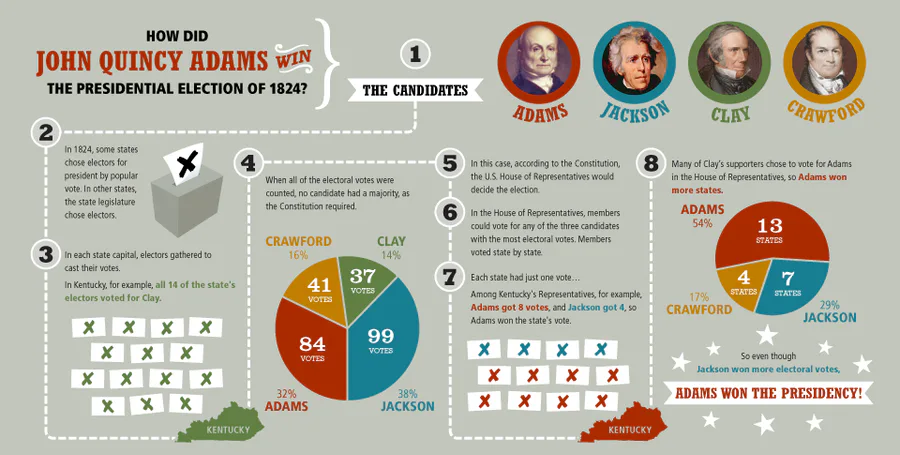
Use this info-graph to answer the question on the next slide.
15
Open Ended
The election of 1824 was decided in the House of Representatives, according to the United States Constitution. How was Adams able to win the vote in the House of Representatives?
16
Open Ended
Do you think it was fair that Adams won the presidency despite not winning the popular vote? Explain your answer.
17
The Election of 1828
18
Like many who admired him, Jackson was born in a log cabin on the frontier. His parents had left Ireland to settle in the Carolinas. Both died before Jackson was 15. Jackson had to grow up quickly.
Although he was lean, he was a strong fighter. A friend who wrestled with him recalled, “I could throw him three times out of four, but he would never stay throwed.”

19
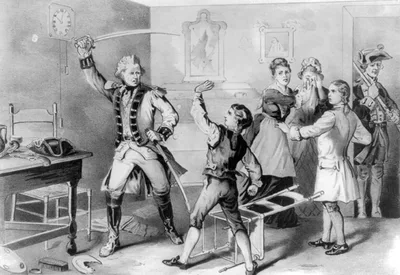
Always determined, Jackson showed his toughness at 13 when he joined the Patriots during the American Revolution. He was captured by the British while carrying messages for the Patriots. When a British officer ordered the young prisoner to clean his boots, Jackson refused. The officer took a sword and slashed the boy’s hand and face.
20
After the Revolution, Jackson studied law in North Carolina. He later moved to Tennessee and set up a successful law practice. Over time he became very wealthy by buying and selling land in Georgia and Alabama. While still in his twenties, he was elected to Congress. He served for just a few years before becoming a judge and a major general in the Tennessee militia.
21
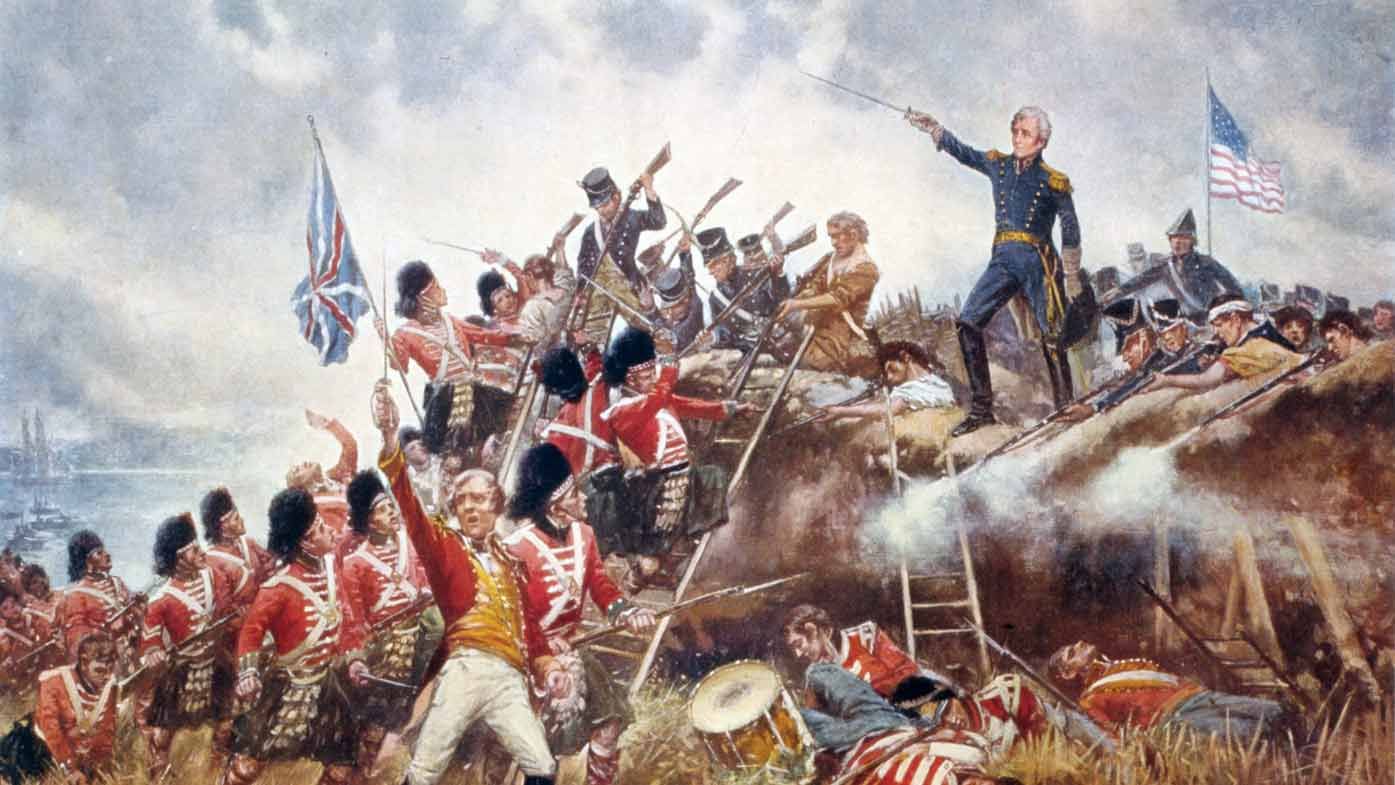
Jackson won national fame for his achievements during the War of 1812. He led American forces to a major victory over the British at the Battle of New Orleans.
22
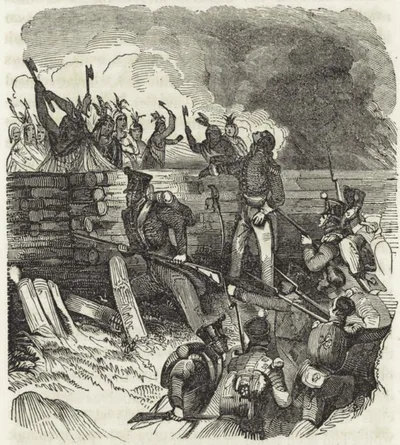
He was also known for his leadership during the Creek War. A group of Creeks, angered in part by white settlers moving onto their land, began to attack settlers. These Creeks massacred at least 250 people, including soldiers and their families, at Fort Mims, in present-day Alabama. Commanding an army sent to stop the attacks, Jackson’s victory at Horseshoe Bend forced the Creeks to give up vast amounts of land in what are now Georgia and Alabama.
23
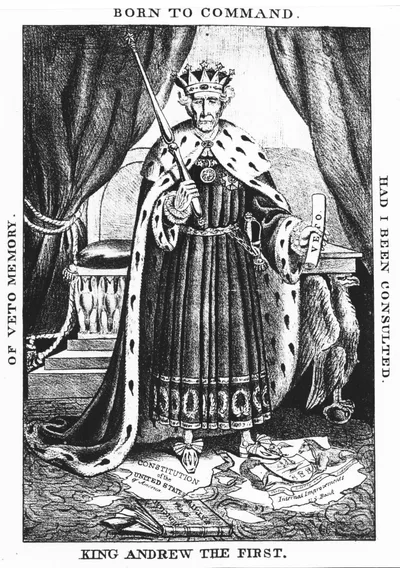
Andrew Jackson was a complex person. He had led a violent and adventurous life. He was quick to lose his temper, and he dealt with his enemies harshly. When he became president, his opponents sarcastically called him “King Andrew.” Jackson intended to be a strong president by expanding the powers of the presidency. At the same time, Jackson’s supporters admired his ability to inspire and lead others. They considered him a man of his word and a champion of the common people.
24
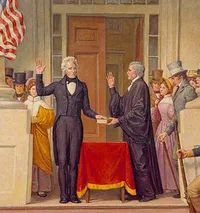
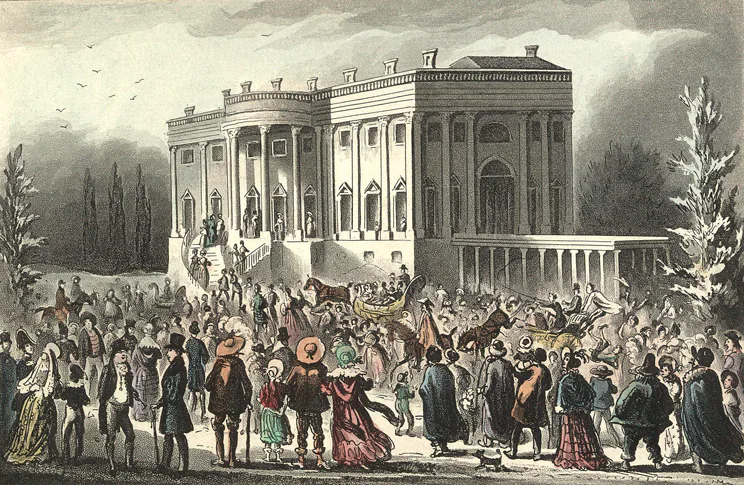
As Jackson traveled to Washington to be inaugurated, large crowds cheered him along the way. For the first time, thousands of ordinary people flooded the capital to watch the President take the oath of office. After Jackson was sworn in, the crowd followed the new president to a reception at the White House. One onlooker described the scene with amazement:
25
"Country men, farmers, gentlemen, mounted and dismounted, boys, women and children, black and white. Carriages, wagons, and carts all pursuing [Jackson] to the President’s house."
—Margaret Bayard Smith, The First Forty Years of Washington Society
26
The crowds were so huge, the observer continued, that the President was “almost suffocated and torn to pieces by the people in their eagerness to shake hands.” Jackson’s critics said the scene showed that “King Mob” was ruling the nation. Amos Kendall, a loyal Jackson supporter, viewed the inauguration celebration in a more positive way: “It was a proud day for the people. General Jackson is their own President.”
27
Multiple Choice
Jackson's supporters and his critics strongly disagreed about the meaning of
the huge, enthusiastic crowds at his inauguration.
his support among ordinary people.
what it meant to be dignified and stately.
the shift of political power to the West.
28
Causes of Jacksonian Democracy
Andrew Jackson was elected in 1828 largely because white men without property could now vote. He drew much of his support from these people. In return, he promised to help less wealthy white men, and especially small farmers on the western frontier. The spread of political power to more people was part of what became known as Jacksonian democracy.
29
Effects of Jacksonian Democracy
Jackson was the first westerner to occupy the White House. His election marked a shift of political power to the West. He was seen as a daring individualist. His image helped shape an American consciousness focused on individual freedom and daring.
30
Another effect of Jacksonian democracy was the growth in political parties and in citizen participation in the political process. It was one thing to make it legal for nearly all white men to vote. It was another thing to convince them to vote.
Jackson’s Democratic Party introduced political campaigns that appealed to common people and their concerns. These campaigns motivated white men to cast their vote for the Democrats.
31
Match
Complete the following with the correct match.
John Q. Adams became the ______ president of the United States.
Adams was accused of winning the election because of a _______________ bargain with Henry Clay.
Andrew Jackson later was able to win the presidency because his campaign portrayed Jackson as a _________________________ that could relate to average Americans.
Andrew Jackson was the _____ president.
6th
corrupt
common man
7th
6th
corrupt
common man
7th
32
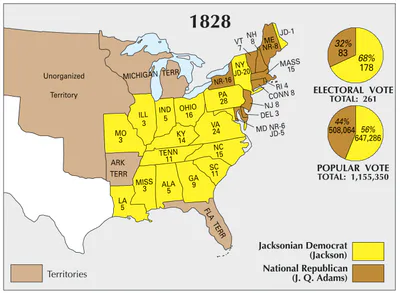
Primary Source:
Electoral College 1828
33
Open Ended
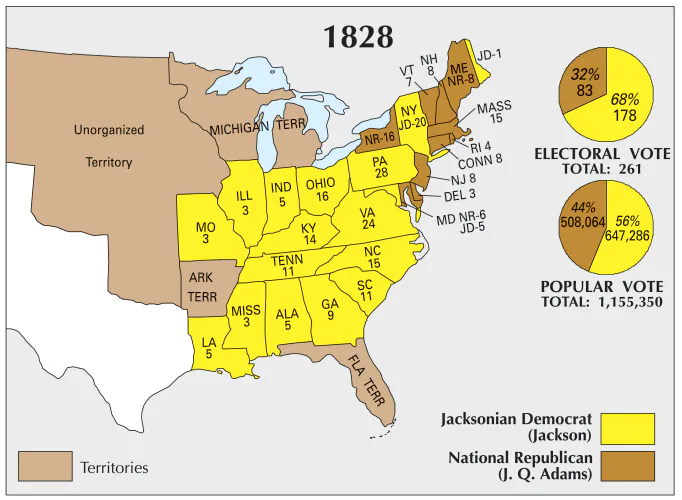
What is this map about?
34
Fill in the Blanks
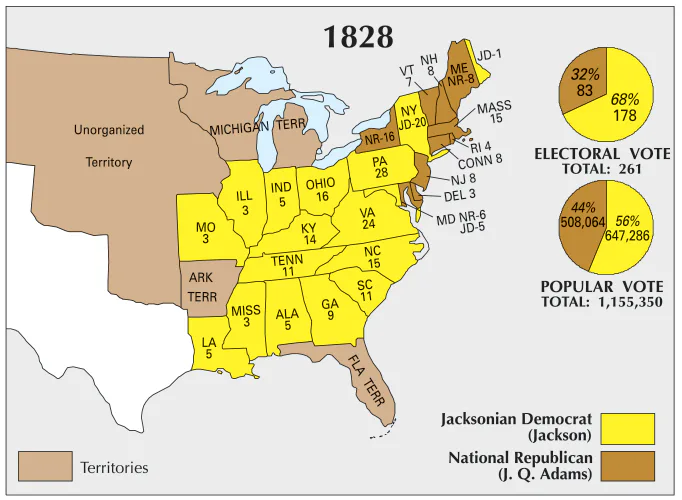
How many electoral votes did Jackson receive?
35
Fill in the Blanks
What percentage of the popular vote did Jackson receive?
36
Fill in the Blanks
How many electoral votes did Jackson get from Ohio?
37
Multiple Select
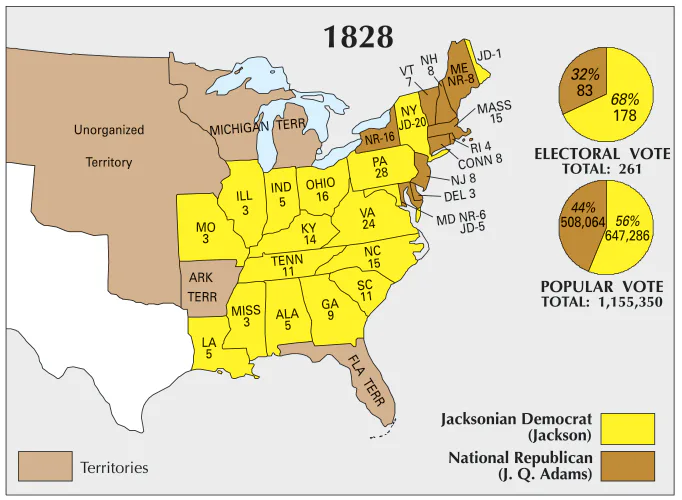
Which part(s) of the country liked Jackson the most?
New England
The West
The South
Age of Jackson
1828 - 1836
Day 1 - The Election of 1824
Show answer
Auto Play
Slide 1 / 37
SLIDE
Similar Resources on Wayground

34 questions
Reconstruction Begins
Presentation
•
8th Grade
32 questions
Preamble
Presentation
•
7th Grade
31 questions
Part 1: Southern Colonies Lesson
Presentation
•
4th Grade
29 questions
Jefferson Becomes President 8.1 (Slides 13 & 14)
Presentation
•
8th Grade
33 questions
Quizizz Recovery: Newton's Laws
Presentation
•
8th Grade
33 questions
Newton's Laws of Motion
Presentation
•
8th Grade
33 questions
Analyzing Functions and Graphs
Presentation
•
8th Grade
28 questions
Exploration & Settlement in GA
Presentation
•
8th Grade
Popular Resources on Wayground
6 questions
PRIDE Always and Everywhere
Presentation
•
12th Grade
20 questions
Lab Safety Quiz

Quiz
•
6th Grade
26 questions
KOR Review Kahoot Questions
Quiz
•
8th Grade
21 questions
Continents and Oceans
Quiz
•
6th Grade
12 questions
Unit Zero lesson 2 cafeteria
Presentation
•
9th - 12th Grade
20 questions
Parts of Speech
Quiz
•
5th Grade
10 questions
Riddles Riddles fun Riddles
Quiz
•
6th - 12th Grade
16 questions
Subject & Predicate
Quiz
•
5th Grade
Discover more resources for Social Studies
17 questions
SS8H1 Quiz
Quiz
•
8th Grade
10 questions
Exploring the Age of Exploration: Key Events and Figures

Interactive video
•
6th - 10th Grade
20 questions
Regions of the 13 Colonies
Quiz
•
8th Grade
17 questions
Primary vs. Secondary Sources
Quiz
•
8th Grade
13 questions
The French and Indian War
Interactive video
•
6th - 8th Grade
20 questions
Georgia Government Quiz
Quiz
•
8th Grade
20 questions
Exploration and Colonization
Quiz
•
8th Grade
45 questions
13 Colonies Review
Quiz
•
8th Grade