
Study Guide

Presentation
•
Science
•
9th - 12th Grade
•
Hard

Daverish Alqueza
Used 9+ times
FREE Resource
10 Slides • 0 Questions
1
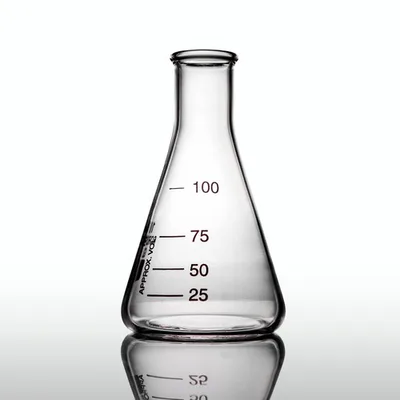
A Erlenmeyer is used for heating liquids, as well as to measure and hold them.
Erlenmeyer
2
CER
CER stands for "Claim-Evidence-Reasoning" and is a technique that is incredibly useful when thinking and writing scientifically.
3
Subjective; based on perception.
Inferences
Objective; based on senses.
Observation
Making Observations
4
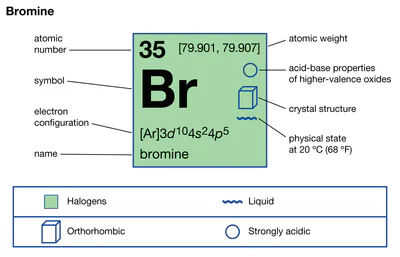
Bromine is a chemical element that is a dark-reddish, fuming, toxic liquid at room temperature. It is a member of the halogen family and has the symbol Br and atomic number 35. Bromine is known for its sharp and pungent smell. It is used in various industries and is obtained from natural brines and ocean water.
Bromine
5
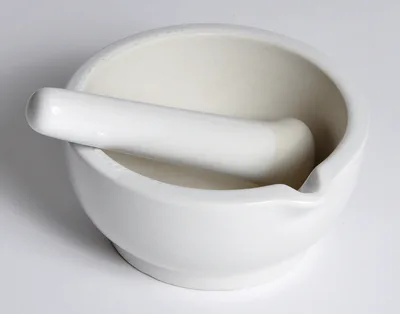
A Mortar and Pestle is used for grinding up solids into powders.
Mortar and Pestle
6
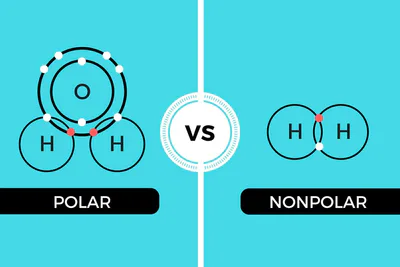
A polar bond is formed when two atoms have close but not the same electronegativity values, resulting in a polar covalent bond.
EX: hydrogen and chlorine form a polar covalent bond due to their different electronegativity values.
Nonpolar:
A nonpolar bond is formed when two atoms have the same electronegativity values, resulting in a pure covalent bond.
EX: two hydrogen atoms form a nonpolar bond.
Polar:
7
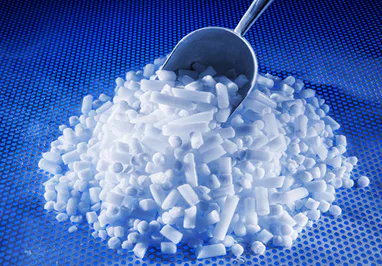
Dry ice colloquially means the solid form of carbon dioxide. It is commonly used for temporary refrigeration as CO₂ does not have a liquid state at normal atmospheric pressure and sublimes directly from the solid state to the gas state.
Dry ice
8
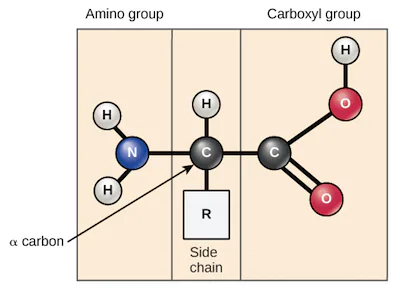
Amino acids are the building blocks of proteins, and they are small organic molecules that consist of an alpha (central) carbon atom linked to an amino group, a carboxyl group, a hydrogen atom, and a variable component called a side chain.
Amino Acids
9
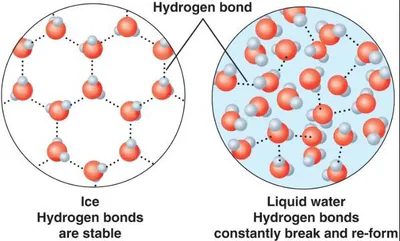
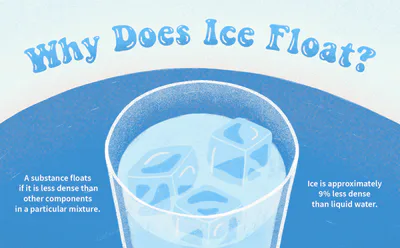
When water freezes into ice, the orientation of hydrogen bonds causes the molecules to push farther apart, which lowers the density of ice compared to liquid water. This is due to the crystal lattice structure of ice, where the molecules arrange themselves in a rigid, ordered fashion and end up being, on average, farther apart from each other than they are in the liquid phase. As a result, ice is less dense than water, which is why ice floats on water. This property is unique to water, as most other substances are denser in their solid form than in their liquid form.
10
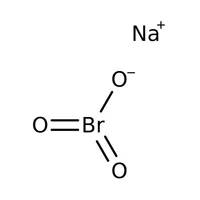
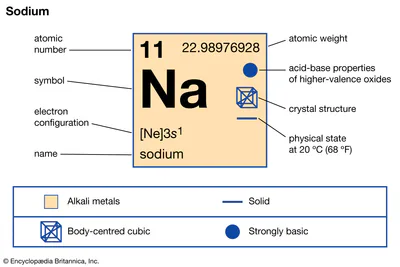
chemical element of the alkali metal group (Group 1) of the periodic table. Sodium is a very soft silvery-white metal. Sodium is the most common alkali metal and the sixth most abundant element on Earth, comprising 2.8 percent of Earth's crust. Sodium is most likely to form a compound with bromine. Sodium bromide is an inorganic compound with the formula NaBr
Sodium
A Erlenmeyer is used for heating liquids, as well as to measure and hold them.
Erlenmeyer
Show answer
Auto Play
Slide 1 / 10
SLIDE
Similar Resources on Wayground

7 questions
Learn OC.10 Vocabulary
Presentation
•
9th - 12th Grade
6 questions
Electron Geometry
Presentation
•
9th - 12th Grade
8 questions
Triangle Congruence Review
Presentation
•
9th - 12th Grade
11 questions
Types of Evolution
Presentation
•
9th - 12th Grade
6 questions
Time of death
Presentation
•
9th - 12th Grade
9 questions
Scientific Investigation
Presentation
•
9th - 12th Grade
7 questions
Ecology 101
Presentation
•
9th - 12th Grade
7 questions
Learn OC.12a Vocabulary
Presentation
•
9th - 12th Grade
Popular Resources on Wayground
10 questions
How much do you know about our Portrait of an Eagle?

Quiz
•
10th Grade
10 questions
Fast Food Slogans
Quiz
•
6th - 8th Grade
21 questions
Continents and Oceans
Quiz
•
6th Grade
20 questions
Parts of Speech
Quiz
•
5th Grade
16 questions
Subject & Predicate
Quiz
•
5th Grade
25 questions
Multiplication Facts
Quiz
•
5th Grade
12 questions
Map Skills
Quiz
•
3rd Grade
22 questions
Continents and Oceans
Quiz
•
5th Grade
Discover more resources for Science
10 questions
Exploring Chemical and Physical Changes

Interactive video
•
6th - 10th Grade
20 questions
Atomic Structure
Quiz
•
9th Grade
10 questions
Decoding the Periodic Table of Elements
Interactive video
•
6th - 10th Grade
10 questions
Exploring the Periodic Table
Interactive video
•
6th - 10th Grade
14 questions
Physical and Chemical Changes
Quiz
•
10th Grade
22 questions
Periodic Table Review
Quiz
•
9th - 12th Grade
20 questions
Observation vs. Inference
Quiz
•
7th - 9th Grade
14 questions
Periodic Trends
Interactive video
•
11th Grade