

Friday Forest session

Presentation
•
Science
•
•
Practice Problem
•
Medium

Alfred Allen
Used 6+ times
FREE Resource
28 Slides • 5 Questions
1


Human Impact
Forestry
Think of the Organutan in the Forests of
south America is there anything that we
do to effect it’s life
2
Open Ended
How do you think we effect the forests in South America?
3


Human Impact
Forestry
4

5


Standard
SEV4. Obtain, evaluate, and communicate
information to analyze human impact on
natural resources.
a. Construct and revise a claim based on
evidence on the effects of human activities
on natural resources.
Human Activities
Natural Resources
Agriculture
Forestry
Ranching
Mining
Urbanization
Fishing
Water use
Pollution
Desalination
Wastewater treatment
Land
Water
Air
Organisms
b. Design, evaluate, and refine solutions
to reduce human impact on the
environment including, but not limited to,
smog, ozone depletion, urbanization, and
ocean acidification.
6


Learning Target
I can explain how forestry affects land,
water, air, and other organisms.
I can show some solutions to these
problems.
7

Supporting Our Population
●Agriculture
○Fertilizer
○Eutrophication
○Monoculture
●Forestry
○Deforestation
○Logging
○Wildfire (Wildland fire)
●Ranching
○Livestock
○Pasture
○Overgrazing
●Fishing
○Wild Fishery
○Overfishing
○Bycatch
○Aquaculture
8

Why are trees and plants an
important part of the urban
environment?
Habitat for migrating species like
birds and butterflies.
Plants absorb water and reduce
flooding.
Plants remove air pollution and
give us clean air (very important in
cities where there is a lot of vehicles)
The beauty of nature reduces
stress, improves attention, and puts
humans in better moods.
We can grow food on rooftops and
out of windows.
Trees cool down cities in the
summer and protect against wind and
cold in the winter.
9

Did you
remember
these?
None
Some
10


Here are some of the reasons we need trees!
11


How does transpiration
occur in plants?
Transpiration occurs when
guard cells become turgid due
to the diffusion of water
molecules through the
accessory cells. Stomata open
as a result, and water
evaporates through them,
exiting the plant.
12


Let's do one together
●transpiration is the term
●Where do we put the term?
●What is the definition?
●Do you know any examples?
●What would a characteristic
be?.
13
Labelling
transpiration cheese maze: starting with the term, definition, characterisitcs, and example
supports cloud development
forest has a mist in the morning
Plants release water vapor into the air
transpiration
14
Labelling
Put the terms in the best spot.
ocean acidification
sut
eutriphication
bacterial illness like cholera
smog
15


Our Forests
16


Forests
The importance of forests cannot be underestimated. We
depend on forests for our survival, from the air we
breathe to the wood we use. Besides providing habitats
for animals and livelihoods for humans, forests also offer
watershed protection, prevent soil erosion and mitigate
climate change. Yet, despite our dependence on forests,
we are still allowing them to disappear.
Change from 1990 - 2015.
17


Forests
Why do we need them?
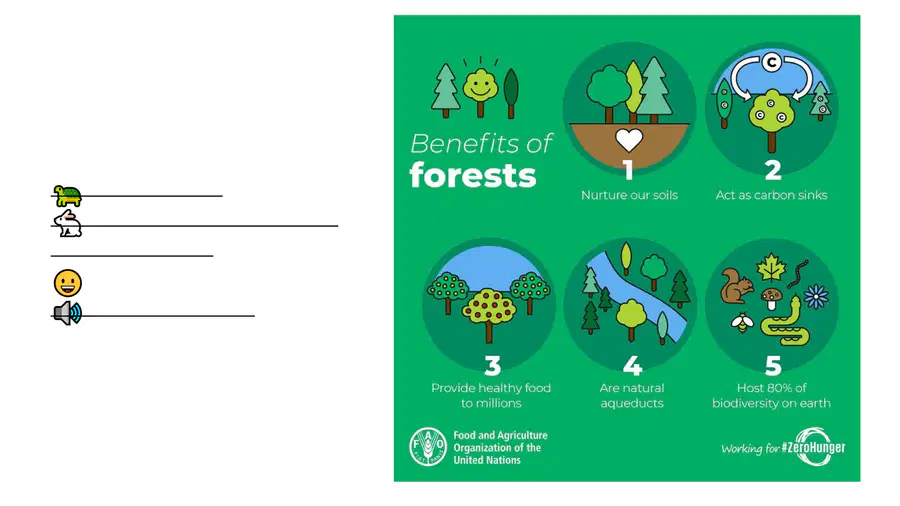
Here are some of the benefits of
forests.
Link to picture
18


Fire Management
When we see a wildfire, our first response is to put it out. For
decades, the Forest Service has done just that when it came to
wildland fires. But science has changed the way we think about
wildland fire and the way we manage it. We still suppress fires,
especially if they threaten people and communities, but we
understand that fire has a role in nature – one that can lead to
healthy ecosystems. So we look for ways to manage it to play its
role, for instance, by igniting prescribed fires (controlled burn).
19

Human Impact
Forestry
What happens after an ecological
disturbance occurred that left no
soil behind?
secondary succession
primary succession
climax community
pioneer species
20
Multiple Choice
What happens after an ecological
disturbance occurred that left no
soil behind?
primary succession
secondary succession
eutriphication
global warming
21

What happens after a
disturbance occurred that
left no soil behind?
secondary succession
primary succession
climax community
pioneer species
22


Prescribed Burns -
Choose one to
watch
23


Fire Behavior under historical (top) and current (bottom) conditions.
24


Why do we see more stand-replacement fires in forests today?
25
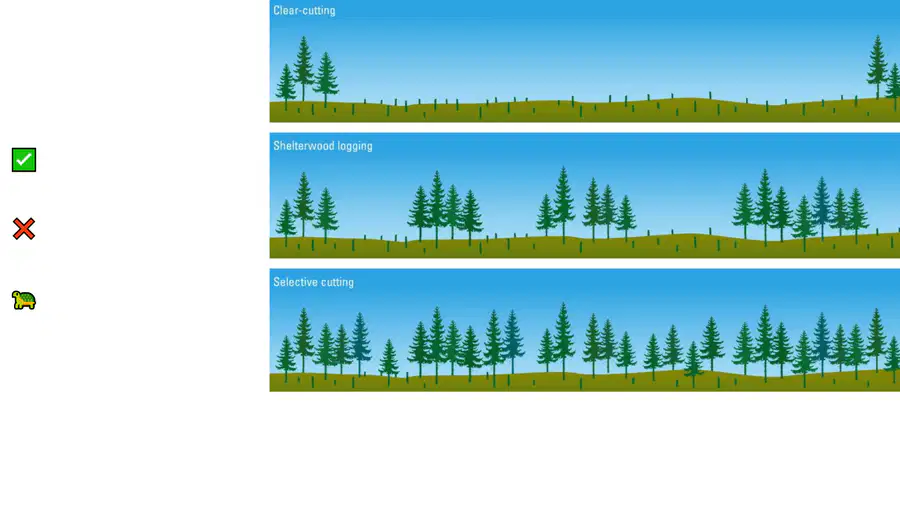
These are the three
most common
methods of
harvesting trees.
Clearcutting
removes all the trees.
Shelterwood logging
removes trees in strips.
Selective cutting
only remove specific
trees and is the most
labor intensive method.
Which model for
harvesting is best?
What are the pros and cons of
each type of harvesting?
26


Deforestation - A byproduct of transforming
ecosystems into cities/farms/grazing lands.
Deforestation is the clearing, destroying,
or otherwise removal of trees through
deliberate, natural or accidental means. It
can occur in any area densely populated
by trees and other plant life, but the
majority of it is currently happening in the
Amazon rainforest.
The loss of trees and other vegetation
can cause climate change, desertification,
soil erosion, fewer crops, flooding,
increased greenhouse gases in the
atmosphere, and a host of problems for
indigenous people.
27


What is Agroforestry?
Agroforestry combines agriculture and forestry technologies to
create more integrated, diverse, productive, profitable, healthy and
sustainable land-use systems.
Practices are focused on meeting the economic, environmental and
social needs of people on their private lands.The forestry
profession encompasses the science and practice of establishing,
managing, using, and conserving forests, trees and associated
resources in a sustainable manner to meet desired goals, needs,
and values.
What do we need from our forests?
How can we harvest those resources
sustainably?
28

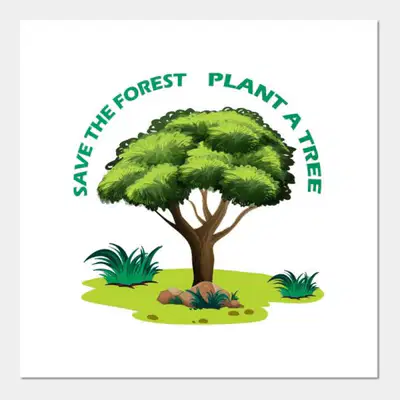
What can you do?
❏Use less/buy less stuff
❏Plant trees
❏Print less, if you must print use both sides
❏Use bamboo paper products
❏Read digital books and use the library
❏Read magazines online
❏Reuse gift bags and send e-cards
❏Use reusable containers and cutlery
❏Buy paper towels made from recycled paper
❏Recycle paper as much as possible (Can all paper be
recycled?)
❏Share this list with others!
29

Which is not a function of forest?
Water cycle
Balancing oxygen and carbon dioxide
Formation of soil
Wildlife habitat
30
Multiple Choice
Which is not a
function of forest?
supporting cloud development in the water cycle
Keeping soil from erosion
producing new soil from rocks
prodcuing oxygen through photosynthesis
31
Which is not a
function of forest?
Water cycle
Balancing oxygen and
carbon dioxide
Formation of soil
Wildlife habitat
32
Impacts that destroy forests
Why are forests important?
How much of the world is made of these vital ecosystems?
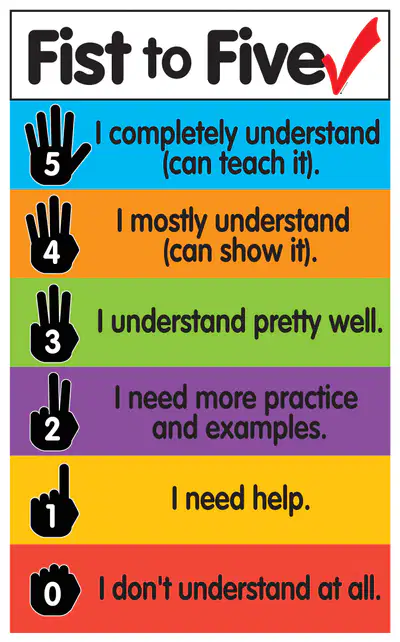
Fist to five
33

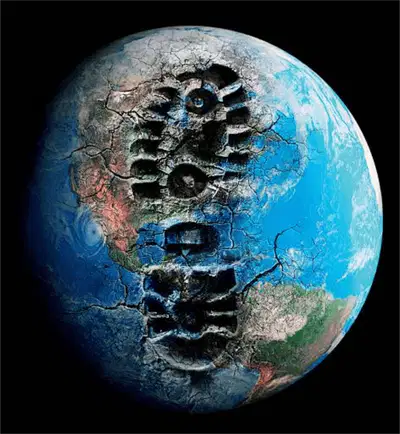
Keeping Track of
Human Impact
Human Impact
A Georgia success Story
Human Impact
Forestry
Think of the Organutan in the Forests of
south America is there anything that we
do to effect it’s life
Show answer
Auto Play
Slide 1 / 33
SLIDE
Similar Resources on Wayground

26 questions
#1-25 Final F/E, A/S,C/H Study Guide for Test
Presentation
•
6th Grade
26 questions
1.2.3 Moving Cellular Material
Presentation
•
6th - 8th Grade
26 questions
Lab Safety
Presentation
•
6th - 8th Grade
26 questions
Layers of the Atmosphere S6E4 A Review
Presentation
•
6th Grade
26 questions
DNA Basics
Presentation
•
9th Grade
26 questions
Ecology Review
Presentation
•
8th Grade
26 questions
Rock Cycle
Presentation
•
6th Grade
26 questions
Ionic Bonds
Presentation
•
9th Grade
Popular Resources on Wayground
28 questions
US History Regents Review

Quiz
•
11th Grade
36 questions
Biology Regents Review
Quiz
•
9th - 10th Grade
20 questions
Math Review
Quiz
•
3rd Grade
38 questions
Regents Life Science General Review
Quiz
•
9th Grade
20 questions
Math Review
Quiz
•
6th Grade
21 questions
EOY Grade 6 Benchmark Assessment - Content Skills
Quiz
•
6th Grade
20 questions
Inferences
Quiz
•
4th Grade
20 questions
Figurative Language Review
Quiz
•
6th Grade
Discover more resources for Science
59 questions
SS Final Exam Review
Quiz
•
KG - University
19 questions
Disney Movies
Quiz
•
KG - 8th Grade
23 questions
super heros
Quiz
•
KG - Professional Dev...
15 questions
Music 2016
Quiz
•
KG - 12th Grade
63 questions
Sight Words
Quiz
•
KG
41 questions
End of the YEAR Trivia FUN!
Quiz
•
KG - 3rd Grade
20 questions
Place Value
Quiz
•
KG - 3rd Grade