

Chapter 5

Presentation
•
Biology
•
University
•
Practice Problem
•
Medium

Ria Mohan
Used 1+ times
FREE Resource
19 Slides • 7 Questions
1

2
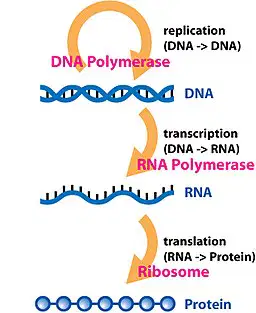
Central Dogma
●Flow of genetic material (DNA is transcribed → RNA →
Translated → Protein)
●DNA- information storage
●RNA - temporary message
●Proteins - functional units
3
Multiple Choice
What process transforms DNA into RNA?
translation
transcription
production
mitosis
4
What is DNA made up of?
Nucleotide has 3 parts:
1. Sugar
2. Phosphate
- sugar-phosphate backbone covalently linked to base
3. Base
- AKA nitrogenous base
- Adenine
- Thymine
- Guanine
- Cytosine
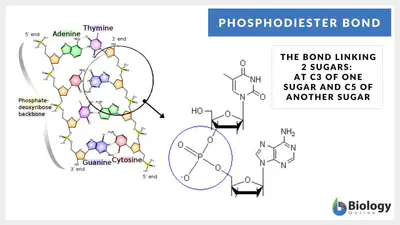
●Nucleotides are linked together covalently → DNA strand produced
Nucleotides are covalently linked by phosphodiester linkage to form polynucleotide chains (DNA strands) repeating sugar-phosphate-sugar-phosphate
5
Multiple Choice
What links the two sugars together?
Ionic bond
Glycosidic bond
Phosphodiester bond
Phosphate bond
6

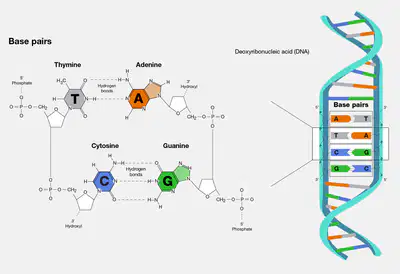
●Between A & T: 2 bonds
●Between G & C: 3 bond
●Having more bonds essentially means that it’s harder to pull apart C&G
7

Chromosomes Contain our Genes
●Genes contain info for our cell to read
●Functional units of hereditary
●Genes make proteins and those proteins interact w/ each other
●Responsible for specifying a single protein or RNA molecule
●Contains large regions of noncoding DNA - referred as junk DNA but not the
case
8

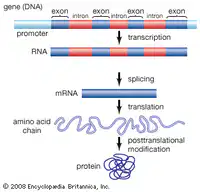
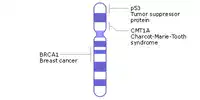
Organization of genes on a human chromosome
- Regulatory DNA sequences are involved in turning the gene on and off. They contain the code to say when this gene should be transcribed and how much.
●Introns are removed during RNA processing.
●Exons contain the sequence for the gene.
9
Multiple Choice
Exons are removed from the mRNA transcript
True
False
10

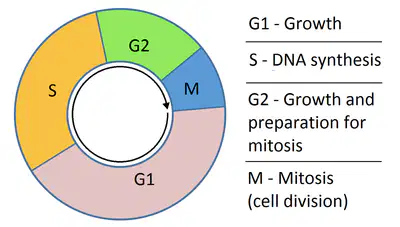
Cell Cycle
G1 phase: cell grows in size
S phase: DNA replication
G2 phase: organelles and proteins needed for cell division are produced
M phase: prophase, metaphase, anaphase, telophase
11
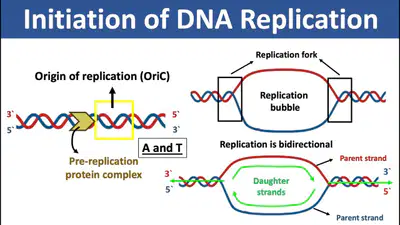
Origins of Replication
In S phase, when DNA is being replicated, DNA helicase unzips the double helix at origins of replication (rich in A-T)
12

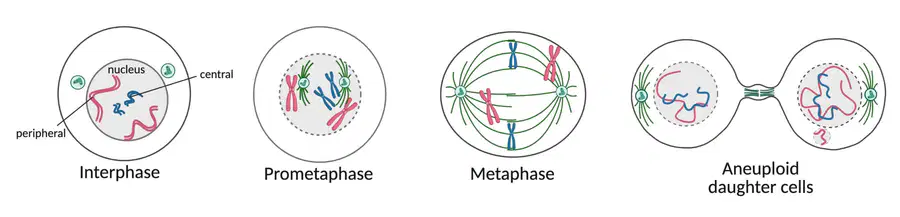
Interphase
Long, thin, tangled threads of DNA
Less compact than mitotic chromosomes (allowing access for protein expression & replication)
all
13
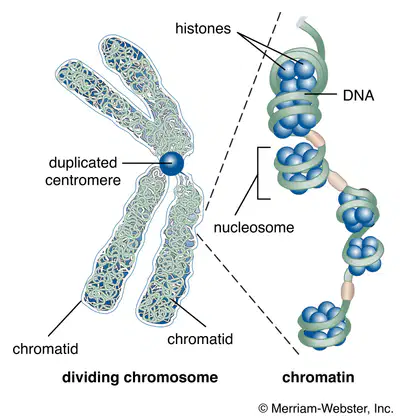
Mitotic Chromosome
- DNA is dense & compact
- Easily visualized
- Chromatids joined at center via centromere
- Telomeres at ends of chromatid
all
14
Fill in the Blanks
Type in the complementary strand: ATGCTAGTCGATCAGTTCTAG
15

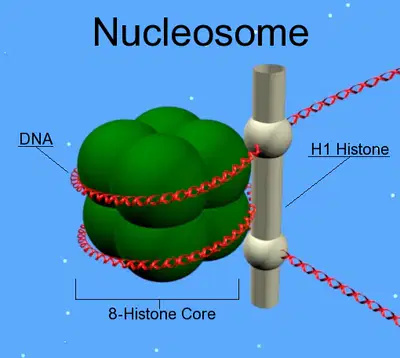
Nucleosomes
Chromatin: complex of DNA & protein
DNA is wrapped around histones
Nucleosome - Beadlike
structural unit composed of
a short length of DNA
wrapped around a core of
histone protein to form
chromatinNucleosome - DNA wrapped
around a protein core of 8
histone molecules
16

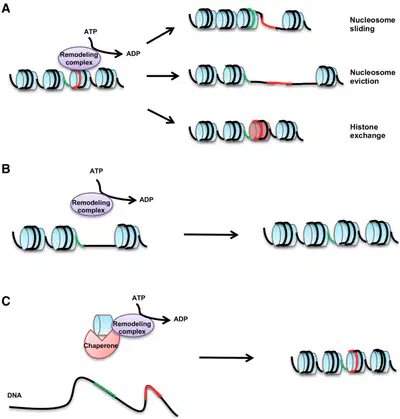
Chromatin Remodeling Complex
Protein complex that uses energy of ATP hydrolysis to change position of DNA wrapped around nucleosomes to condense & de-condense DNA (alters DNA accessibility to proteins)
-Repeated cycles of ATP hydrolysis allow the chromatin remodeling complex to loosen the nucleosomal DNA by pushing it along the histone core, exposing DNA to DNA-
binding proteins
-Can also condense DNA
17
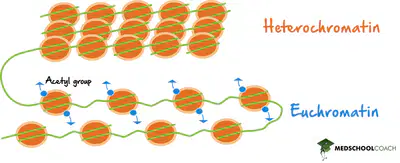
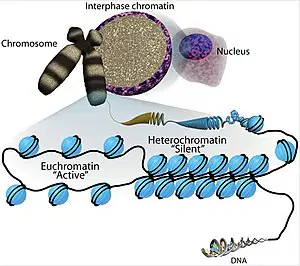
Heterochromatin
Closed
- mostly highly condensed form of interphase chromatin
-10% of interphase chromosome
-concentrated near centromere and in telomeres at ends of chromosome
-most regions do not contain genes
18
Euchromatin
Open
- more extended state
19
Different set of “histone tail modifications” establish and maintain chromatin structures
Covalent modifications
• Acetyl
• Methyl
• Phosphate
– Affect ability to recruit certain proteins
– Affect access to DNA by condensing or
decondensing chromatin
Combinations of acetylation, methylation, and phosphorylation of histones alter gene expression - Implications not only for transcription but also for DNA replication and repair and any other process requiring proteins access to DNA
20

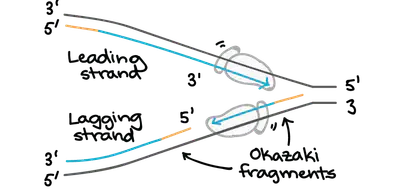
DNA polymerase (Enzyme that does
Replication)
Adds nucleotides to template strand to create new daughter cell using parental strand as template
●Only synthesizes in the 5’ to 3’ direction
●Meaning it can only add nucleotides on 3’ end !!!!!
●DNA polymerase cannot add on to 5’ end
●Okazaki fragments- DNA will be added in short segments
●Leading strand= 3’ open end , continuously replicated
●Lagging strand will have okazaki fragments due to rna primer being put down
21
Multiple Select
What is the difference between the leading and lagging strand?
5' 3' directionality is in opposite directions
Leading has fragments and lagging doesn't
Lagging has Okazaki fragments and leading doesn't
DNA ligase glues the fragments together on the lagging strand NOT the leading
22

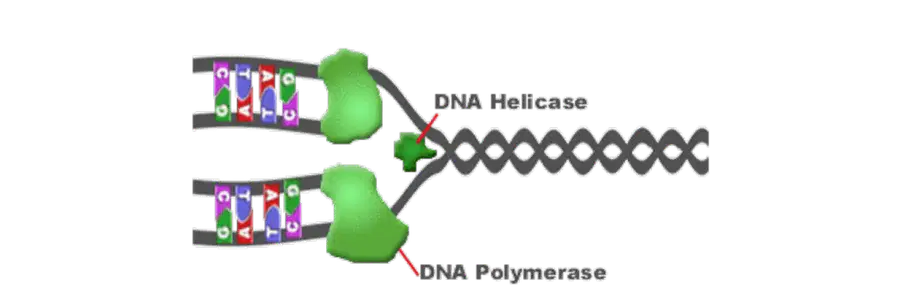
In order to start replication (s phase of cell cycle) , initiator proteins pry apart DNA and
opens it so DNA helicase can UNZIP the DNA at BOTH REPLICATION FORKS at either
side of bubble. REQUIRES ATP TO UNZIP DNA
23
Multiple Choice
What kind of bonds is DNA helicase breaking?
Phosphodiester
Ionic
Non-covalent
Hydrogen
24

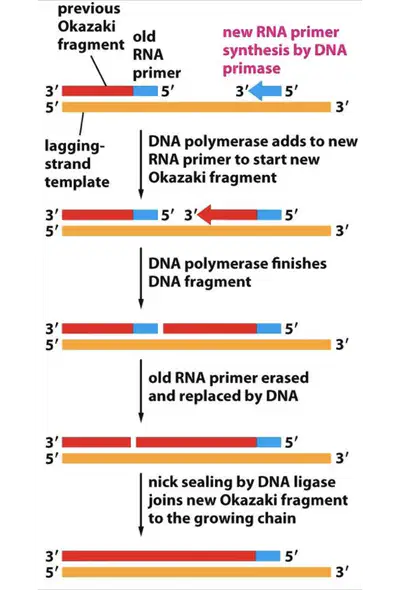
RNA primer synthesis by DNA primase 5’3
→ DNA Polymerase adds to new RNA
primer to start new okazaki fragment →
DNA polymerase finishes DNA fragment →
old RNA primer is replaced (RNA→DNA) → the nick is sealed by DNA ligase and joins new okazaki fragment to the growing chain
25
Multiple Choice
Why does DNA ligase need to glue together the fragments on the lagging strand?
DNA polymerase makes mistakes and leaves gaps between the fragments so DNA ligase fills in the gaps
Some bases can be missing and DNA ligase brings in the missing bases to fill in the gaps
Okazaki fragments are made rather than a continuous strand because the lagging strand runs in the opposite direction so DNA polymerase can't continually add bases
Okazaki fragments are produced in the leading direction. The lagging strand does not contain these fragments.
26
DNA Synthesis
Name
Description
Origins of replication/Replication origins/Ori’s
Site at which DNA is first opened and where DNA synthesis begins.
There are hundreds of these on every chromosome (eukaryotes).
Initiator proteins
Recognize specific DNA sequence at origins of replication. Break H
bonds to pry two strands apart. A-T rich region (WHY?).
Replication forks (Y-shaped junctions)
Move away in opposite directions from multiple origins of
replication in eukaryotic chromosomes.
Replisome
The replication machine! Big collection of proteins copying DNA.
Goes lightning fast (Ending with “ome” signifies its a big thing.)
Show answer
Auto Play
Slide 1 / 26
SLIDE
Similar Resources on Wayground

23 questions
La PCR
Presentation
•
University
17 questions
Sentence Fragment Oct 21
Presentation
•
University
22 questions
Biotecnologia - revisão Unidade I
Presentation
•
University
21 questions
Gene Cloning
Presentation
•
12th Grade
23 questions
ciclo celular
Presentation
•
KG - Professional Dev...
17 questions
Species and Speciation-Wk6-12ASP-Oct2022
Presentation
•
12th Grade
23 questions
1010 Intro Day & Meta
Presentation
•
University
15 questions
Unidade 1 - Micro-imuno
Presentation
•
University
Popular Resources on Wayground
10 questions
Safety Day 2026 – Student Review

Quiz
•
9th Grade
21 questions
Continents and Oceans
Quiz
•
6th Grade
20 questions
Parts of Speech
Quiz
•
5th Grade
16 questions
Subject & Predicate
Quiz
•
5th Grade
25 questions
Multiplication Facts
Quiz
•
5th Grade
12 questions
Map Skills
Quiz
•
3rd Grade
22 questions
Continents and Oceans
Quiz
•
5th Grade
15 questions
Rounding Decimals
Quiz
•
5th Grade