Unit 4B Pt2
Presentation
•
Biology
•
9th - 12th Grade
•
Medium
+3
Standards-aligned
Jennifer Alber
Used 6+ times
FREE Resource
25 Slides • 20 Questions
1
Unit 4B Pt2
Dichotomous Keys,
Phylogenetic Trees & Cladograms
Standards: HS-LS2-1, 2, 6, & 7)
2
Multiple Choice
3
Multiple Choice
4
Multiple Choice
5
Multiple Choice
6
Multiple Choice
7
8
9
10
11
12
13
14
15
16
17
Multiple Choice
This diagram shows a phylogenetic tree of six species based on amino acid similarities.
Which two species are the least closely related?
V and VI
III and IV
I and VI
II and III
18
Multiple Choice
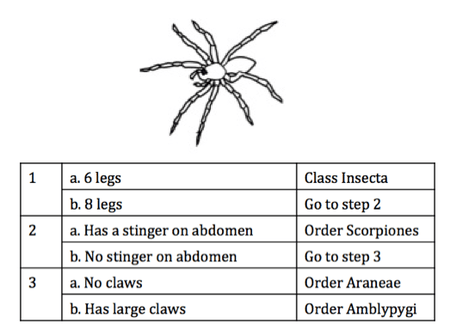
A scientist sees the organism shown to the right in an aquarium and uses a key to help classify the species.Based on the key what species did the scientist observe?
Aulostomus
Gymnothorax
Bothus
Aetobatus
19
Multiple Choice
What is the purpose of using a dichotomous key?
to identify organism
to determine the evolutionary relationship between two organisms
to locate the environment for each species
to create a new kingdom
20
21
22
23
24
Multiple Choice
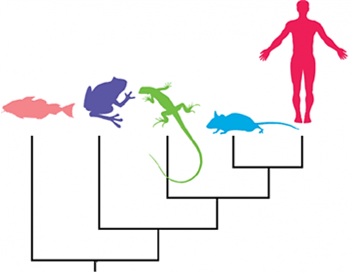
According to this phylogenetic tree, which creature is the least related out of all pictured?
Fish
Frog
Salamander
Human
25
Multiple Choice
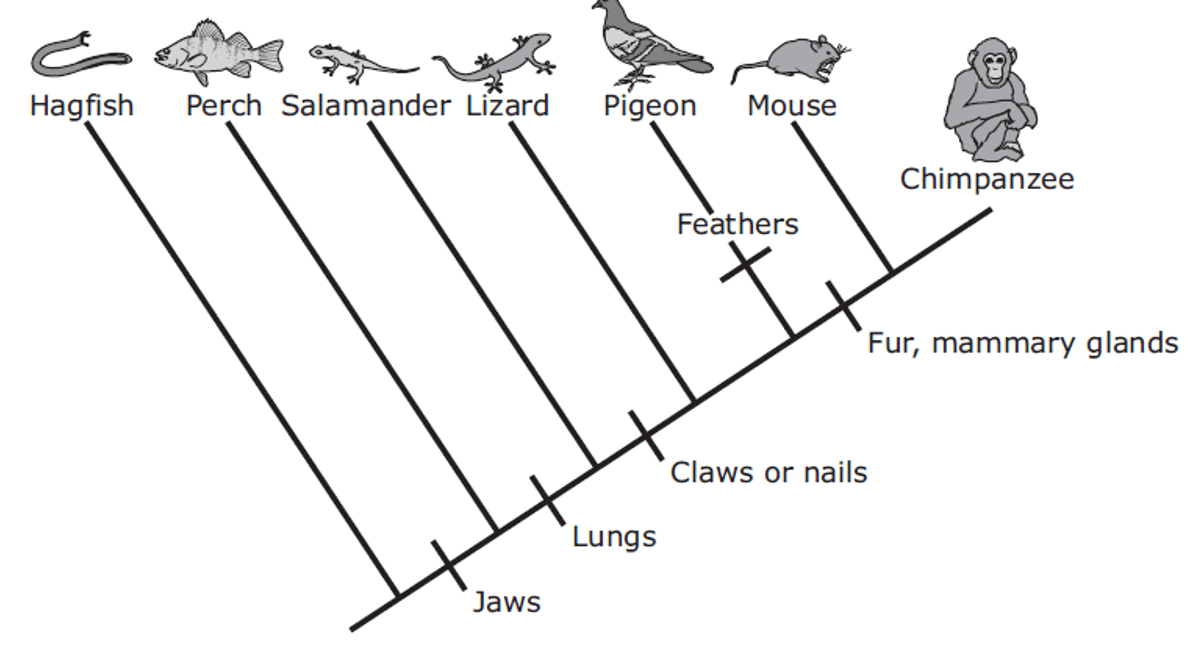
All the animals to the right of the salamander would have the common characteristic of...
Fur
Claws or nails
Lungs
Jaws
26
Multiple Choice
27
28
29
30
Multiple Choice
Which group of animals on this tree are most closely related to birds?
Saurischian dinosaurs
Ornithischian dinosaurs
Crocodiles
None of these are related to birds
31
Multiple Choice
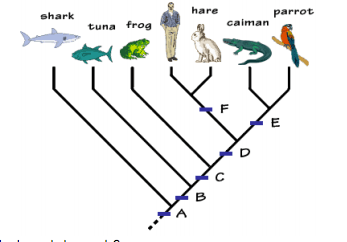
On the cladogram, which organism is the closest relative of the parrot?
Frog
Hare
Caiman
Parrot
32
Multiple Choice
Which organisms from this cladogram are more closely related lizard and salamander OR Lizard and Mouse?
Lizard and Salamander
Lizard and Mouse
33
Multiple Choice
34
Multiple Choice
35
36
37
38
Multiple Choice
According to the cladogram, which of the following is NOT a derived characteristic?
light bones
Allosaurus
down feathers
3-toed foot; wishbone
39
40
41
42
Multiple Choice
Which two groups of organisms have the MOST genetic DIFFERENCES?
rotifers and nematodes
mollusks and annelids
mollusks and arthropods
echinoderms and chordates
43
Multiple Choice
The diagram shows a cladogram of six species based on amino acid similarities. Which two species are MOST CLOSELY related.
I and II
II and IV
I and V
V and VI
44
Multiple Choice
What is a dichotomous key used for in science?
To organize biomes
Classify organisms
Identify bacteria only
None of these
45
Let's give our podium winners a round of applause!
Unit 4B Pt2
Dichotomous Keys,
Phylogenetic Trees & Cladograms
Standards: HS-LS2-1, 2, 6, & 7)
Show answer
Auto Play
Slide 1 / 45
SLIDE

Similar Resources on Wayground
43 questions
5D viruses
Presentation
•
9th - 12th Grade
40 questions
Genetics
Presentation
•
9th - 12th Grade
37 questions
Structure and Function of DNA
Presentation
•
9th - 12th Grade
39 questions
Transportation
Presentation
•
10th - 12th Grade
40 questions
Evolution Vocabulary
Presentation
•
9th - 12th Grade
42 questions
Category 2 STAAR
Presentation
•
9th - 12th Grade
39 questions
Bird gizzard
Presentation
•
9th - 12th Grade
40 questions
Introduction to Environmental Science Lesson
Presentation
•
9th - 12th Grade
Popular Resources on Wayground
6 questions
Secondary Safety Quiz
Presentation
•
9th - 12th Grade
10 questions
Afterschool Activities & Sports
Quiz
•
6th - 8th Grade
19 questions
ROAR Week 2026
Quiz
•
9th - 12th Grade
20 questions
Lab Safety Quiz
Quiz
•
6th Grade
15 questions
Cool Tool:Chromebook
Quiz
•
6th - 8th Grade
22 questions
would you rather
Quiz
•
3rd - 11th Grade
21 questions
Continents and Oceans
Quiz
•
6th Grade
20 questions
Parts of Speech
Quiz
•
5th Grade
Discover more resources for Biology
12 questions
Lab Safety Quizizz
Quiz
•
9th Grade
20 questions
Characteristics of Life
Quiz
•
9th - 10th Grade
20 questions
Lab Equipment
Quiz
•
10th Grade
10 questions
Exploring the 4 Major Macromolecules and Their Functions
Interactive video
•
9th - 12th Grade
44 questions
Biology Pretest
Quiz
•
9th - 12th Grade
12 questions
Characteristics of Life Review
Quiz
•
9th Grade
37 questions
Unit 1: Macromolecules & Cells
Quiz
•
9th Grade
20 questions
Characteristics of Life
Quiz
•
7th - 10th Grade