

JM3 textbook chapter 2

Presentation
•
English
•
6th - 8th Grade
•
Practice Problem
•
Hard

Cher Han Tee
FREE Resource
12 Slides • 1 Question
1

Unit 2:
Computers
http://www.free-powerpoint-templates-design.com
2

Search answer for these questions:
List one benefit of computer.
01
02
04
03
05
Who is the founder of first computer?
What is the meaning of the word ‘computer’?
Which year did Microsoft Corporation founded?
Why was the first laptop not user friendly?
3

Reading
4

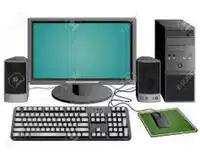


Reading
Read the following passage
The question “Who invented the computer?” is not a
simple one. As a computer consists of many parts, each part can
be considered a separate invention. Therefore, many inventors
have contributed to the invention of the computer.
The root word of ‘computer’ is ‘compute’. The word ‘compute’
comes from the Latin word ‘computᾶre’ which means ‘to count’.
Therefore, ‘compute’ means ‘to count’ and ‘computer’ means ‘a person
who counts’ or ‘ a calculation device’. Many people consider the
abacus, first used by the Chinese about 1000 years ago, to be the first
computer in the world.
Later, the first automatic calculator was invented in 1642 by a French
mathematician, Blaise Pascal. It was considered the first true
computing machine. In 1939, the first digital computer was created by
an American mathematician and physicist, John V. Atanasoff. After that,
better computer models were made.
5
Multiple Choice
What is an abacus?
6


It was not until the early 1960s
that engineers were able to build high
speed computers with large
memories because of the
development of the integrated circuit.
This eventually led to smaller
computers being made in the early
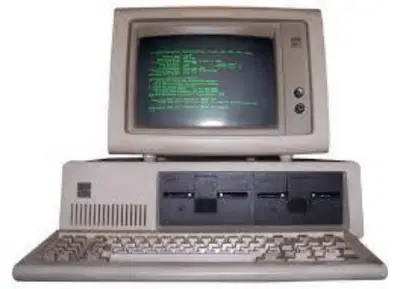
1970s. The personal computers were
only introduced in 1975, the same
year Miscosoft Corporation was
founded. At first, the sales of these
personal computers were not
encouraging. Six years later, the
sales skyrocketed when IBM
introduced its personal computers
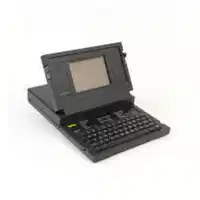
called ‘PC’. In 1981, the first
commercial laptop was introduced,
but it was not user-friendly because it
did not have battery.
7



Some significant inventions were also
made to complement the computer. For
example, the computer mouse was invented
in 1962. It was called ‘the mouse’ because
the wire that comes out from the mouse
resembles the tail of a mouse. The year 1969
saw the birth of the original Internet. The
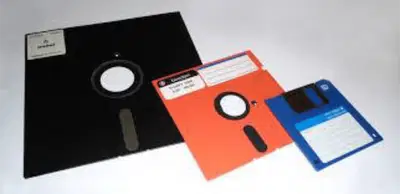
original 8-inch floppy disc was invented in
1969 with limited storage capacity, but,
smaller diskettes were produced after that. In
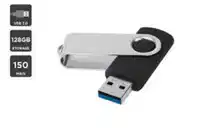
1996, the USB flash drive with higher storage
capacity was invented. It is also known as
the ‘thumb drive’ because its size is similar to
the size of a human thumb.
Today, the computers we see have
actually undergone a tremendous evolution.
Along with it, many computer peripherals
were also invented. One thing for sure is that
better and improved computers will be
created in the future to revolutionise and
make our life easier.
8

Conclusion
1642
1962
1975
1939
1969
Same year the
8-inch floppy disc
was invented
The birth of original
internet
The mouse was
invented
Blaise Pascal
First automatic
calculator was
invented
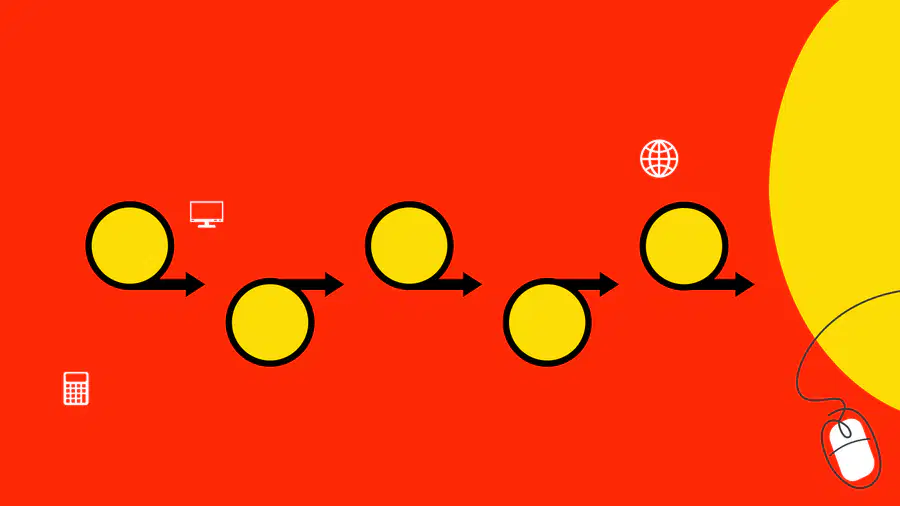
Timeline of the evolution of computer and its accessories.
John V. Atanasoff.
First digital
computer
Same year Microsoft
Corporation was
founded
Smaller with
memories personal
computers were
introduced
9

Exercises
http://www.free-powerpoint-templates-design.com
10

Vocabulary
1. inventors
2. integrated
3. skyrocketed
4. commercial
5. user-friendly
6. significant
7. complement
8. resembles
9. tremendous
10. evolution
11. peripherals
12. revolutionise
Check dictionary for the meaning of the
following words
11

B. Find the word in the passage.
Column A
Column B
1.
Combined
:
2.
increased suddenly:
3.
important
:
4.
match
:
5.
gadgets
:
6.
change
:
C. Fill in the blanks with the correct words from the exercise above.
1.
Franks’s work has shown a
improvement.
2.
the computer shop was broken into yesterday. Many computers
were stolen.
3.
the newly-invented machine will
the way cars are made.
4.
the sales of the new car model
due to the low price offered.
5.
Most of the residents are happy with the
public transport system.
6.
The colour of the sofa set must
the colour of the walls in the living room.
12

D. Circle the best answer from the options provided.
1.
Which of the following is NOT the meaning of the word ‘compute’?
A.
to count
B.
to calculate
C.
to solve a sum
D.
to solve a problem
2.
What is the similarity between the first automatic calculator and the first digital
computer?
A.
They had the same functions
B.
They were invented by mathematicians.
C.
They were invented in America.
D.
They were invented at the same time.
3.
When was Microsoft Corporation established?
A.
1939
B.
1962
C.
1969
D.
1975
13

4.
Why was the first commercial laptop considered not user-friendly?
A.
It came with a limited battery.
B.
It came with a limited warranty.
C.
It required external power supply.
D.
It required a lot of batteries.
5.
Which of the following computer peripherals were made to compliment the computer?
A.
The mouse
B.
The laptop
C.
The floppy disc
D.
The USB flash drive
6.
Why is the computer mouse called ‘the mouse’?
A.
The wire that comes out from it looks like the tail of a mouse.
B.
The size of the computer mouse looks like the size of a mouse.
C.
The colour of the computer mouse looks like the colour of a mouse.
D.
The inventor had the inspiration to create the computer mouse after he saw
a mouse.
Unit 2:
Computers
http://www.free-powerpoint-templates-design.com
Show answer
Auto Play
Slide 1 / 13
SLIDE
Similar Resources on Wayground

10 questions
Present perfect with FOR and SINCE
Presentation
•
6th - 8th Grade
10 questions
Summary
Presentation
•
7th Grade
10 questions
Informative Writing-The Conclusion
Presentation
•
7th Grade
9 questions
parts of speech
Presentation
•
6th - 8th Grade
11 questions
Sentence Structures
Presentation
•
6th - 8th Grade
12 questions
Commas with Multiple Adjectives
Presentation
•
6th - 8th Grade
12 questions
Subordinating Conjunctions
Presentation
•
6th - 8th Grade
12 questions
Hatchet Pre-Read
Presentation
•
6th - 8th Grade
Popular Resources on Wayground
10 questions
Safety Day 2026 – Student Review

Quiz
•
9th Grade
21 questions
Continents and Oceans
Quiz
•
6th Grade
20 questions
Parts of Speech
Quiz
•
5th Grade
16 questions
Subject & Predicate
Quiz
•
5th Grade
25 questions
Multiplication Facts
Quiz
•
5th Grade
12 questions
Map Skills
Quiz
•
3rd Grade
22 questions
Continents and Oceans
Quiz
•
5th Grade
15 questions
Rounding Decimals
Quiz
•
5th Grade
Discover more resources for English
20 questions
Context Clues
Quiz
•
6th Grade
10 questions
Inference and Textual Evidence
Quiz
•
7th Grade
25 questions
Making Inferences
Quiz
•
6th - 8th Grade
20 questions
Figurative Language Review
Quiz
•
6th Grade
15 questions
Plot Elements
Quiz
•
6th Grade
10 questions
Figurative Language
Quiz
•
7th Grade
20 questions
Figurative Language Review
Quiz
•
8th Grade
10 questions
Main Idea and Supporting Details
Quiz
•
3rd - 6th Grade