Search Header Logo
Chemistry Unit 5 Review

Chemistry Unit 5 Review

Assessment

Presentation

Chemistry

9th - 12th Grade

Medium

NGSS
HS-PS1-5, HS-PS3-4, HS-PS3-1

+6

Standards-aligned

Created by

Subha Vidyadharan

Used 8+ times

FREE Resource

9 Slides • 33 Questions

1

Multiple Choice

The specific heat of aluminum is 0.900 J/goC . How much heat is required to

raise the temperature of a 30.0 g block of aluminum from 25.0°C to 75.0°C?

1

1670 J

2

1.50 J

3

0.540 J

4

1350 J

2

Collision theory-

Rate constant k=Zfp

  • k = rate constant (how fast the reaction occurs)

  • Z = collision frequency (how often molecules collide)

  • f = fraction of collisions with enough energy to react (activation energy requirement)

  • p = probability that molecules collide in the correct orientation

  • Collide with each other

  • Collide with enough energy

  • Collide in the correct orientation

For Reactions to happen, particles must

3

Multiple Choice

What is the rate of reaction?

1

The time it takes for a reaction to occur.

2

How much energy is needed for a reaction to occur.

3

The energy required to break a bond.

4

Collision Theory

4

media

5

Multiple Choice

A 10.0 L sealed container holds 3.00 moles of H2, 4.00 moles of He, 3.00 moles of CO2

The total pressure of the gases in the container is 2.50 atm

Find: partial pressure of CO₂.

1

10 atm

2

0.30 atm

3

0.75 atm

4

3.0 atm

6

Multiple Choice

Question image

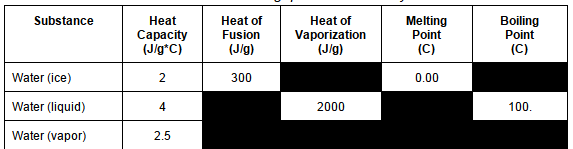
How many Joules of energy are required to change 10 gram of ice at -2 C to water at 20 C?

1

440 J

2

880 J

3

3840 J

4

66,000 J

7

Multiple Choice

Question image
How much liquid water can you change 20 C if you apply 20,000 J?
1
500 g
2
100,000 g
3
250 g
4
350 g

8

Multiple Choice

Question image
What line segment represents only the solid state?
1
A-B
2
B-C
3
C-D
4
D-E

9

Multiple Choice

What pressure, in atm, is exerted by 2.50 L of gas containing 1.35 mol at 320 K?
PV=nRT
1
14.19 atm
2
16.53 atm
3
18.42 atm
4
22.54 atm

10

Multiple Choice

Question image
When 0.250 moles of a gas is placed in a container at 25 °C, it exerts a pressure of 700 mm Hg. What is the volume of the container?
1
0.557 Liters
2
6.57 Liters
3
8.74 Liters
4
0.0087 Liters

11

Multiple Choice

A gas tank carrying 55L of Cl2 has a pressure of 2.6atm and a temperature of 289K. How many moles of chlorine gas are in the tank?

1

6.03 mol

2

0.55 mol

3

1.45 mol

4

0.75 mol

12

Multiple Choice

Question image

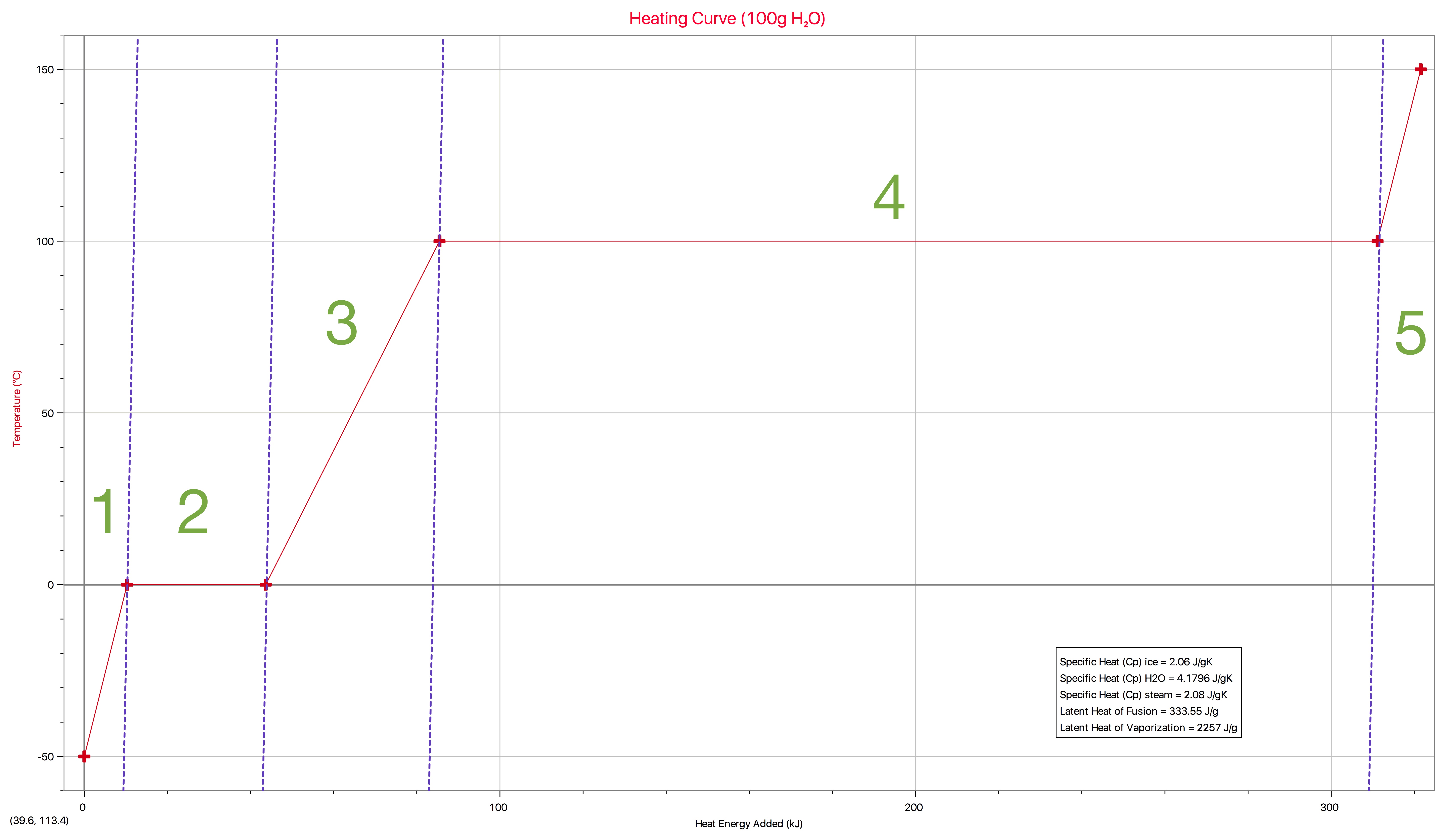
The phase change identified in the image as #2 is called _____ and is _____.

1

evaporating, endothermic

2

condensing, exothermic

3

melting, endothermic

4

melting, exothermic

13

Multiple Choice

Question image
What change occurs from F to E?
1
sublimation
2
deposition
3
melting
4
condensation

14

Multiple Choice

Question image
In which region(s) does temperature remain constant?
1
Region 1, 3, & 5
2
Region 2 & 4
3
Region 1 only
4
Region 1 & 2

15

Multiple Choice

Question image
Copper, Stainless Steel, Carbon Steel, and Zinc were all heated using the same thermal energy.  What material would be the coolest after being heated?
1
Copper
2
Carbon Steel
3
Zinc
4
Stainless Steel

16

Some text here about the topic of discussion

media

17

Multiple Choice

Question image

Which container will have lower pressure?

1

First container

2

second container

18

media

19

Multiple Choice

Charles' Law States...

1

As Volume goes up temperature goes up 

2

As Pressure goes down volume goes down 

3

As Pressure goes up volume goes down

4

As Pressure goes up temperature goes up

20

media

21

Multiple Choice

The Ideal Gas Law is understood as: PV=nRT. How does the Ideal Gas Law explain how a hot air balloon rises in the sky?

1

P is a constant. So as T increases as the air is heated at constant n, volume of the balloon increases causing it to rise.

2

P and V are kept constant, so as T increases, n must decrease causing the balloon to rise.

3

V is constant, so as T increases at a constant n, pressure increases causing the balloon to rise.

4

None of these

22

Multiple Choice

How many moles of helium are contained in a 5.00L canister at 101kPa and 30.0oC?

1

2.02 moles

2

0.201 moles

3

0.494 moles

4

4.99 moles

23

Multiple Choice

If I have 5.6 liters of gas in a piston at a pressure of 1.5 atm and compress the gas until its volume is 4.8 L, what will the new pressure inside the piston be?

1

6.3 ATM

2

2.4 ATM

3

1.8 ATM

4

8.6 ATM

24

Multiple Choice

2SO2(g)+O2(g)⇌2SO3(g)
Removing O2(g) will
1
shift equilibrium right
2
shift equilibrium left
3
decrease temperature
4
have no change

25

Multiple Choice

Question image
Which of the two graphs reaches equilibrium?
1
The left one.
2
The right one.
3
Both of them.
4
Neither.

26

Multiple Choice

During equilibrium, the amount of the products and the amount of the reactants are __________.

1

equal

2

constant (unchanging)

3

constantly increasing

4

constantly decreasing

27

Multiple Choice

Use the following reaction to answer the following questions.

Reaction: N2(g) + 3H2(g) ⇌  2NH3(g)

What will be the result if the volume of the reaction vessel is decreased (aka increase in pressure) for the reaction above?

1

The equilibrium shifts to the left.

2

The equilibrium shifts to the right.

3

The equilibrium does not change.

4

The equilibrium constant changes.

28

Multiple Choice

CO(g) + H2O(g) ⇌ CO2(g) + H2(g)  

This is the expression for the equilibrium constant for the reaction shown above.

1
2
3
4

29

Multiple Choice

What is the energy required to get the reaction started?

1

Inhibitor Energy

2

Catalyst Energy

3

Activation Energy

4

Surface Energy

30

media

31

media

32

Multiple Choice

Question image
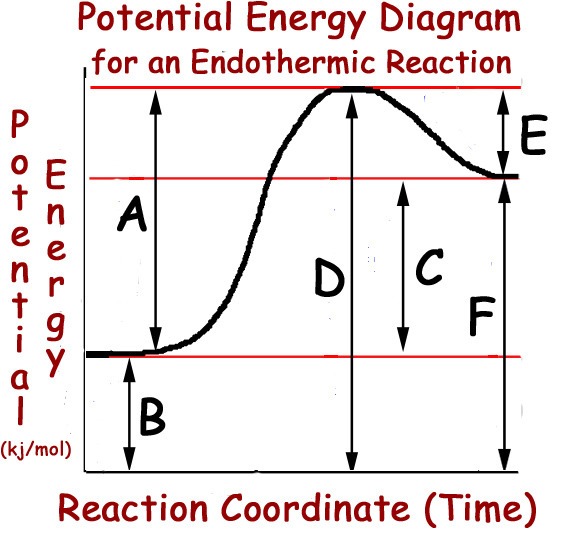
What letter represents the activation energy?
1

A

2

B

3

C

4

D

33

media

34

media

35

Multiple Choice

What factors effect rate of reaction?

1

Temperature, Concentration, Pressure and Energy

2

Surface Area, Concentration, Energy and Pressure

3

Temperature, Pressure, Concentration and Surface area

4

Pressure, Surface area, Density and Energy

36

Multiple Choice

Increase in temperature of the reactants can do one of the following
1

Slow collision frequency

2

Allow less effective collision between the particles

3

Cause particles to lose speed

4

Increase collision between the particles thus increasing the rate.

37

Multiple Choice

Why does a higher concentration increase the rate of reaction?
1

it increases the amount of reactants

2

it lowers the activation energy

3

it increases the energy of particle collisions

4

it increases the frequency of particle collisions because there are more collision sites

38

Multiple Choice

How does a catalyst work in speeding up a reaction?

1

By lowering the activation energy or reaction

2

by giving them more energy

3

by making them more available

39

Multiple Choice

Question image
This symbol indicates that a reaction is ____________
1
reversible
2
irreversible

40

Multiple Choice

When the rate of the forward reaction is equal to the rate of backward reaction, the system is said to be in
1
Chemical Equilibrium
2
Chemical Balance
3
Chemical Constant
4
Chemical Reaction

41

Multiple Choice

Which of the following is NOT true at equilibrium?
1
The forward and reverse reactions proceed at the same rate.
2
The concentrations of reactants and products do not change.
3
The concentration of the reactants is equal to the concentration of the products.
4
The forward and reverse reactions continue to occur.

42

Multiple Choice

For the reaction...
N2 (g) +  3 H2 (g) <=> 2 NH3 (g)

If the pressure in the system is increased,  which substance(s) will increase in concentration?
1
N (as 2 mol gas  → 4 mol gas)
2
H2 (as 2 mol gas  → 4 mol gas)
3
N2 and H(as 2 mol gas  → 4 mol gas)
4
NH3 (as 4 mol gas  → 2 mol gas)

The specific heat of aluminum is 0.900 J/goC . How much heat is required to

raise the temperature of a 30.0 g block of aluminum from 25.0°C to 75.0°C?

1

1670 J

2

1.50 J

3

0.540 J

4

1350 J

Show answer

Auto Play

Slide 1 / 42

MULTIPLE CHOICE