Search Header Logo
4th-9 4W Review of before Revolutionary War

4th-9 4W Review of before Revolutionary War

Assessment

Presentation

Life Skills

5th - 12th Grade

Easy

Created by

Kevan Graves

Used 4+ times

FREE Resource

20 Slides • 27 Questions

1

media
media

2

media

3

What were the views of the Patriots, the Loyalists and the British

4

Poll

Question image

Are you a Patriot or a Loyalist?

Patriot ( They want their independence)

Loyalist ( They want to be ruled by the King that taxed all their coins)

5

New Taxes

Read page 202

Key points

  • French and Indian war victory came at a great cost

  • The king surrounded himself with advisors to take a firm hand

  • Sugar act was passed in 1764

6

Multiple Choice

Question image

The French and Indian war victory did what to Britain's debt?

1

Double the debt

2

Erased the debt

3

Nothing

4

Reduced Britain's debt by half

7

Multiple Choice

Question image

The King's advisors told him to rule with a..

1

Firm hand

2

Soft touch

3

Forgiveness

4

Open heart

8

Multiple Choice

Question image

Sugar act of 1764 put a tax on

1

All sugar products

2

A tax on all imported textiles

3

A tax on all imported spices

4

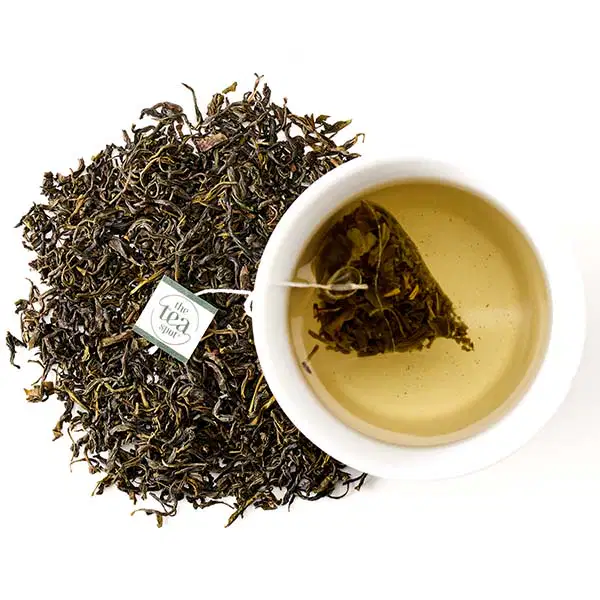
A tax on all imported tea

9

New Taxes

Read page 204

Key Points

  • Stamp Act

  • Tax on all printed products

  • including everyday products such as letters, newspapers, cards, etc

  • Colonists complained about imposed taxes with consent

10

media

11

Poll

Question image

Should the Colonist's help pay some of the debt of the French and Indian war?

Yes, they should pay all of the debt

No, the Colonists should not pay any of the debt of the French and Indian war.

The French and Indian war was not the Colonists' responsibility, so they should not have to pay any of the debt.

The Colonists should not be expected to pay any of the debt of the French and Indian war as they were not involved in the conflict.

Yes, but they shouldn't have to pay all the debt

12

Multiple Choice

Question image

What does "imposing" mean?

1

Putting in place by a government order

2

Unattractive

3

Not noticeable

4

Unimportant

13

Key points

  • Colonists were still British citizens

  • Before, only Colonial legislature taxed colonists

  • Sons of Liberty

Read page 205 - 207

The Colonies Respond

14

Multiple Choice

Question image

Colonists were still...?

1

British citizens

2

French citizens

3

Native American citizens

15

Multiple Choice

Question image

Before Parliament's tax laws...?

1

Only colonial legislature had passed taxes

2

Private citizens were able to collect taxes from each other.

3

Taxes were not imposed on the general population.

16

Multiple Choice

Question image

Colonists created a group to protest the Stamp Act, the group was called?

1

The Sons of Liberty

2

The American Patriots

3

The Continental Congress

4

The Declaration of Independence

17

Multiple Choice

Question image

What fraction of colonists were loyal to the King?

1

1/3

2

2/5

3

4/7

4

3/4

18

Multiple Choice

Question image

What is a "boycott"?

1

Refusing to do business with person, group, or country

2

An organized demonstration of public disapproval

3

A small bed for a boy

4

A legal agreement between two parties

19

Multiple Choice

Question image

What did the "Daughters of Liberty" do?

1

They made "homespun" goods to replace British goods

2

They protested by refusing to eat

3

They attacked British soldiers

4

They formed a militia to fight against the British army

20

Multiple Choice

Question image

Because of the boycott, Parliament in 1766 voted to...?

1

Cancel the Stamp Act

2

Repeal the gas tax

3

Abolish the Navigation Acts

4

Increase taxes on the colonies

21

The Townshend Acts

Read pages 208

Key points

  • Repealed the Stamp Act

  • New tax on British goods

  • Britain sends troops to Boston

22

Multiple Choice

What does "repealed" mean?

1

Cancelation or withdrawal

2

Replaced

3

Reworked

4

Reinstated

23

Multiple Choice

Question image

What did the Townshend Act tax do?

1

Taxed factory-made goods imported from Britain

2

Tea grown in the colonies

3

Farm animals bred in the colonies

4

Property owned by colonists

24

25

media

​Read page 210

The Boston Massacre

26

media

Read Page 212

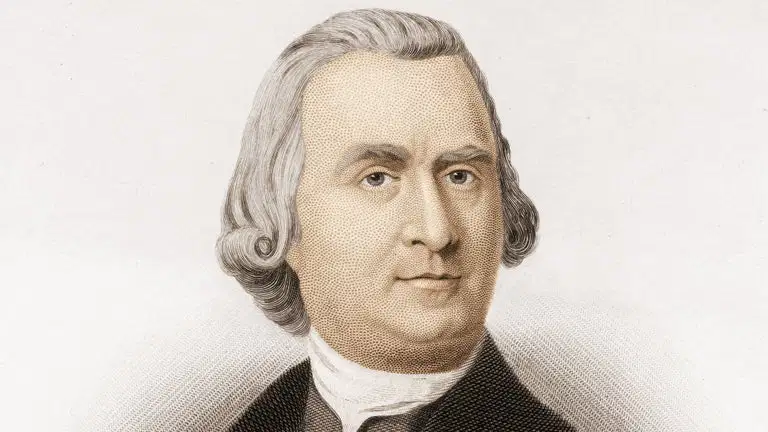
Samuel Adams

27

Multiple Choice

Question image

Who was Samuel Adams?

1

A political leader and key figure in the colonists' quest for freedom

2
A professional athlete who won multiple Olympic gold medals
3
A renowned scientist who discovered electricity
4
A famous actor in the 19th century

28

media

Read page 213

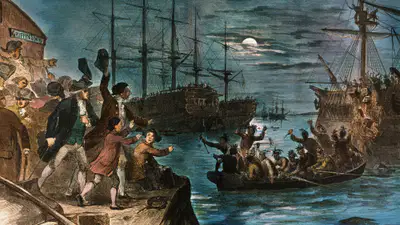
The Boston Tea Party

29

Multiple Choice

Question image

What was the Boston Tea Party

1
A political protest in Boston, Massachusetts
2
A military parade in Boston
3
A religious ceremony in Boston
4
A celebration of tea in Boston

30

media

Read Page 214 - 215

The First Continental Congress

31

Multiple Choice

The tea act was....

1

passed in response to the Boston Tea Party.

2

a popular play in Boston.

3

a tax the British forced the colonists to pay on tea.

4

created by colonial governments to make money.

32

Multiple Choice

Who was the monarch in charge of Great Britain during this time?

1

King George III

2

King Charles X

3

King Henry IV

4

King James I

33

Multiple Choice

On March 5, 1770, 5 colonists were killed.

1

Boston Tea Party

2

Boston Massacre

3

Massachusetts Massacre

4

Massachusetts Tea Party

34

The American Revolution

Read pages 222 - 225

media

35

Multiple Choice

Question image

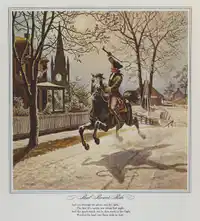
Who was Paul Revere?

1

A Patriot that rode from Boston to Lexington to warn of a British attack

2

The King of England that wanted peace

3

A southern farmer who sold cash crops

36

Read pages 226-227

37

Multiple Choice

Question image

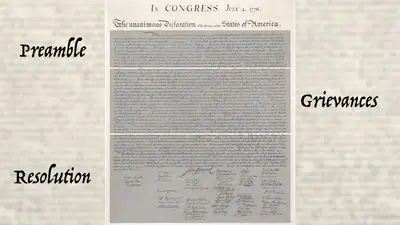
Who was the first to sign the Declaration of Independence?

1

Peter Salem

2

Mercy Otis Warren

3

Haym Salomon

4

John Hancock

38

Multiple Choice

Question image

Who was a famous African American soldier in the American Revolution?

1

John Hancock

2

George Washington

3

Peter Salem

4

Arron Burr

39

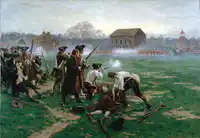
The Battles of Lexington and Concord

Read pages 228

media

40

Reorder

Question image

Reorder the following from earliest to latest

French and Indian War

Stamp Act

Boston Tea Party

Paul Revere's Ride

1
2
3
4

41

The First Shots and Arriving in Concord

Read pages 230-231

media

42

media

Right: something that is owed all people

Natural Rights

Turn and Talk

What rights do you believe all people are owed from birth?​

43

media

Natural Rights

  • a revolutionary new idea

  • all people are:

    • born equal

    • owed basic rights​:

​life

liberty

pursuit of happiness​

media

44

Ideas About Government

Revolutionary ideas:​

  • Governments rule with permission of the people​

  • Governments are formed to secure natural rights

  • Fails to protect rights = right of the people to fix or rebuild

media

45

Multiple Choice

Question image

What do we call the rights all humans are born with?

1

Government

2

The People

3

Natural Rights

4

Independence

46

Multiple Choice

Question image

According to the Declaration of Independence, who gives consent to govern?

1

Government

2

The People

3

Natural Rights

4

Independence

47

Multiple Select

Question image

Select all of the principles of the Declaration of Independence.

1

People give their consent (permission) to the government

2

A government's job is to secure natural rights

3

All humans are born equal

4

Everyone has the right to life, liberty and the pursuit of happiness

media
media

Show answer

Auto Play

Slide 1 / 47

SLIDE