

RW D12 LESSON 1

Presentation
•
English
•
2nd Grade
•
Practice Problem
•
Hard
Standards-aligned

Torrie Taylor
FREE Resource
26 Slides • 0 Questions
1

Read Write
Up, Up, and Away: The Age of Aviation
Domain 12 Lesson 1
May 20, 2024
SWBAT describe the history of aviation and early aviators, such as
the Montgolfier brothers, the Wright brothers, Aída de Acosta, and
Amelia Earhart.
2

11
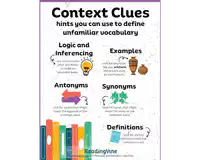
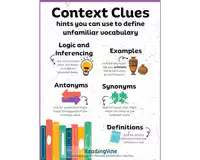
LO:SWBAT use context (clues) within and beyond a
sentence to determine the meaning of unfamiliar words.
DOL: SW correctly use context within and beyond a
sentence to determine the meaning of unfamiliar words
in at least 2 of 3 questions.
TEKS
2.3B Use context within and beyond a sentence to determine the meaning of unfamiliar words.
H.O.T. Question:
How would you compile/gather the facts for aviation?
3

12
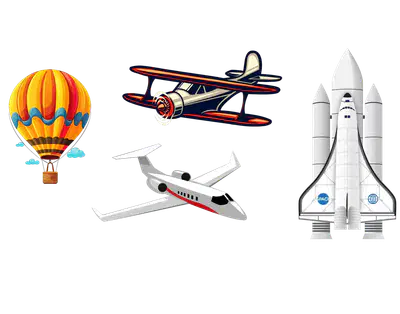
Aviation
●We are starting a new domain about
the dream of flying.
●People have been interested in flight
for as long as they have been around,
including civilizations from thousands
of years ago like the ancient Greek
civilizations.
●People have always wanted to explore
new frontiers.
●Think about the Westward Expansion
domain. Just like the pioneers who
dreamed about exploring the West,
they will learn about the pioneers of
aviation and their dream of exploring
the sky.
●The word aviation.Aviation can have
many meanings, but in this domain
you will learn about how it relates to
the flying of aircraft or flying
machines and the designing and
making of aircraft.
4
13
“Find a Word’s Meaning” from HMH Into Readingadapted and usedwith permission © Houghton Mifflin Harcourt Publishing Company
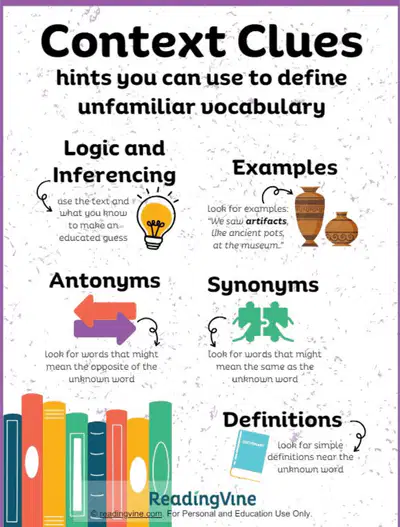
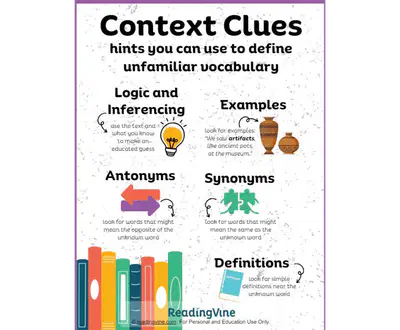
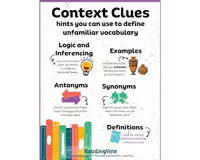
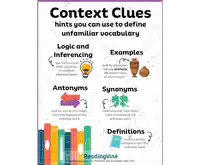
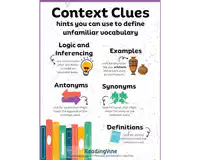
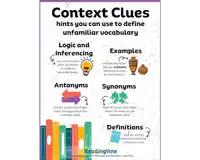
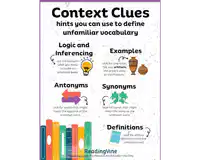
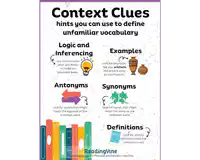
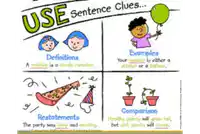
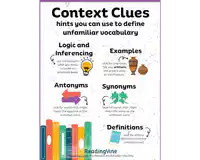
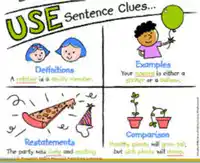
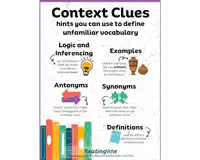
Sometimes the author does not always state
the meaning of words directly as we have
been practicing. We have to use the clues to
make an inference about the meaning of the
word based on what we know. Use text clues
and picture clues.
5
17
Have you ever wished you could fly? Think
about all the things you could do. You could visit
the birds roosting in the top of a tree. You could
say hello to the window washer on the side of a
skyscraper. You could see whole towns
stretched out below you, just like looking at a
map.
People have dreamed of flight for as long as we
have been around. Many myths and legends, or
imaginary stories people tell about the past,
feature people who learn to fly. In Greece, there
was the story of Daedalus [/DAY-dah-luss/].
Daedalus was an inventor who created a set of
wings to escape from a wicked king who had
trapped him in a tower. Daedalus created two
sets of wings made of wax, one for himself and
one for his son Icarus [/IH-cah-russ/]. Daedalus
escaped, but Icarus was not so lucky. He flew
too high, and the heat of the sun melted his
wings. Even in ancient times, people knew flying
was not easy.
6
18
I Do/context clues
Many myths and legends, or imaginary stories
people tell about the past, feature people who learn
to fly.
Definition
https://creativecommons.org/licenses/by-nc-sa/4.0/
Myths and legends are imaginary stories people tell
about the past.
7

19
The myth of Daedalus shows us that
people knew birds’ wings had
something to do with flying. What they
may not have known is why. Birds fly
because of something called lift. A
wing is shaped like a curve. Lift
happens when air moves quickly over
the curve of a bird’s wing, which
causes the air beneath the wing to
push upward. It is easy for birds,
because they are born with wings.
8

21
We Do/Context Clues
Birds fly because of something called lift. A wing is shaped like
a curve. Lift happens when air moves quickly over the curve of
a bird’s wing, which causes the air beneath the wing to push
upward.
Definition
https://creativecommons.org/licenses/by-nc-sa/4.0/
Lift is the upward push of air.
9


22
Birds fly because of something called lift. A
wing is shaped like a curve.
Definition
https://creativecommons.org/licenses/by-nc-sa/4.0/
Curve is a rounded shape.
10

23
11

25
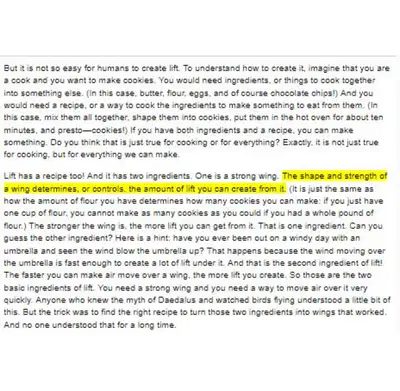
The shape and strength of a wing determines,
or controls, the amount of lift you can create
from it.
Definition
https://creativecommons.org/licenses/by-nc-sa/4.0/
Determines means to control.
12

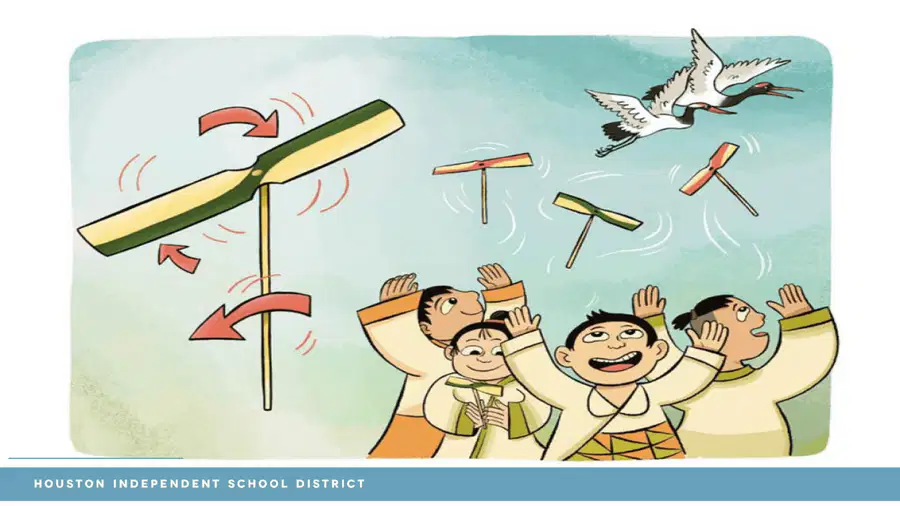
26
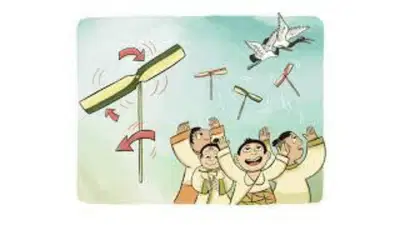
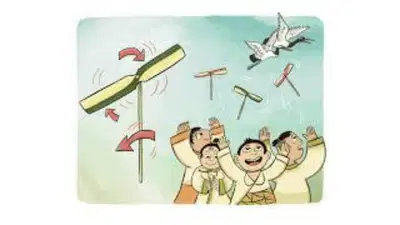
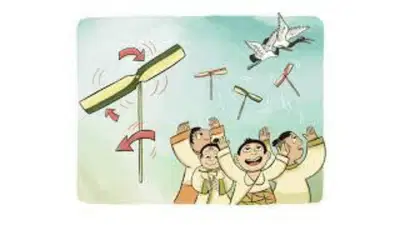
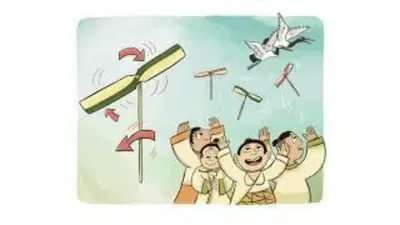
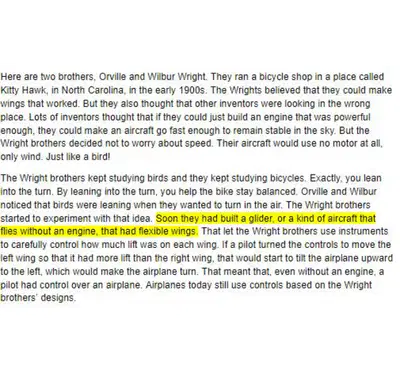
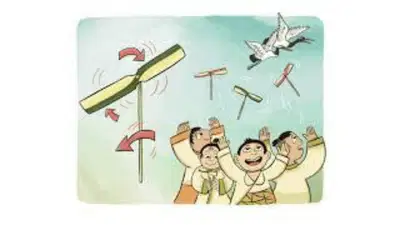
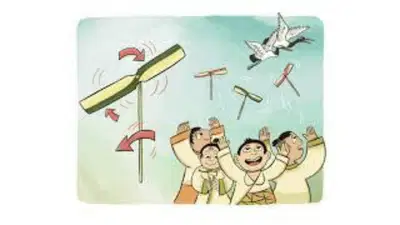
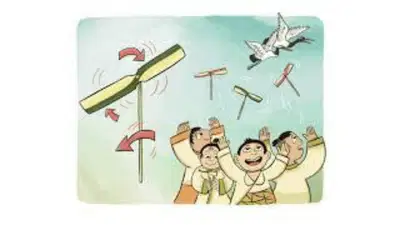
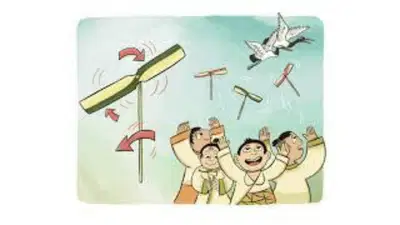
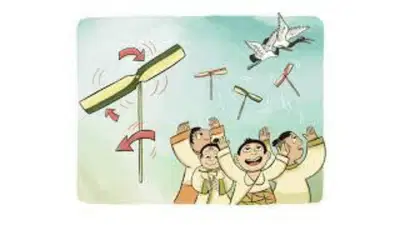
One of the first working wings appeared in
China around the year 320 CE—over 1,700
years ago. And surprisingly, it was a toy! Here
is a bamboo helicopter, or a bamboo-copter. It
has two long blades attached to a stick. When
you twirl the stick of a bamboo-copter, it
moves air over the blades. Take a look at the
shape of the blades. ? It is the same shape as
a bird’s wing! By twirling a bamboo-copter, you
are moving air over the blades and you are
creating lift. It is not a huge amount of lift—just
as much as your hands can create. But the
bamboo-copter is small, so it does not need
much lift to send it soaring. It is literally child’s
play.
13
27
https://creativecommons.org/licenses/by-nc-sa/4.0/
14

28
But a bamboo-copter was not strong enough to carry a person up
into the air. Instead, people tried other experiments. Maybe, they
reasoned, there was a way to fly without using wings at all. This
man, Joseph Montgolfier [moan-GOLFee-ay], was an inventor
who lived in France inthe 1700s, about three hundred years after
Leonardo da Vinci. One day, while he was watching small pieces
of paper floating in a fireplace, he observed, or noticed, that the
sheets closest to the fire were blowing upward from hot air. If the
heat was making the sheet pull itself into the air, was there a way
to pull other things into the air too? Joseph kept trying his ideas in
bigger and bigger ways, carefully experimenting, until he and his
brother hit on the idea of shaping the sheets into a cloth balloon
and heating the air beneath it. They tested their theory by building
a massive cloth balloon. When they lit the burner to heat the air,
though, the balloon flew away without them! As they watched it
slowly disappear in the distance, the brothers knew they were
onto something. The brothers attached baskets strong enough to
carry people to the bottom of their balloons, and more and more
people were flying every day. Soon, hot-air balloons filled the
skies above France.
15

30
What is the meaning of observed as used in the
text?
One day, while he was watching small pieces of paper floating
in a fireplace, he observed, or noticed, that the sheets closest
to the fire were blowing upward from hot air.
✔
✖
https://creativecommons.org/licenses/by-nc-sa/4.0/
The word observed means noticed.
16

31
But balloons could only take you so high and so far.
Because of this, many serious inventors kept trying to find
wings that worked. As they continued working on the
problem for years—in the end, over a hundred years after
the Montgolfiers—technology, or the kinds of machines
and tools people have to help solve problems, kept getting
better. Faster air and stronger wings! As technology got
better, people slowly realized that they could probably
make vehicles for flying, or aircraft, that would go fast
enough and be strong enough to fly. Inventors started
building flying machines that could go very high and very
fast. But they ran into a problem. Think back to
Montgolfier’s hot-air balloon and to the bamboocopter.
Both of them could fly, but both of them flew away. That
was fine when someone wasn’t riding in them. But people
were starting to realize that the problem wasn’t just
creating lift. You also had to be able to steer.
17

33
18

34
But balloons could only take you so high and so far.
Because of this, many serious inventors kept trying to find
wings that worked. As they continued working on the
problem for years—in the end, over a hundred years after
the Montgolfiers—technology, or the kinds of machines
and tools people have to help solve problems, kept getting
better. Faster air and stronger wings! As technology got
better, people slowly realized that they could probably
make vehicles for flying, or aircraft, that would go fast
enough and be strong enough to fly. Inventors started
building flying machines that could go very high and very
fast. But they ran into a problem. Think back to
Montgolfier’s hot-air balloon and to the bamboocopter.
Both of them could fly, but both of them flew away. That
was fine when someone wasn’t riding in them. But people
were starting to realize that the problem wasn’t just
creating lift. You also had to be able to steer.
19
36
Soon they had built a glider, or a kind of aircraft
that flies without an engine, that had flexible
wings.
Definition
https://creativecommons.org/licenses/by-nc-sa/4.0/
A glider is a kind of aircraft that flies without
and engine and has flexible wings.
20

37
What is the meaning of inventors in this text?
Lots of inventors thought that if they could just build an engine
that was powerful enough, they could make an aircraft go fast
enough to remain stable in the sky.
a. people who fly airplanes
b. people who create new ideas
c. people who study the sky
d. people who work on engines
✔
✖
https://creativecommons.org/licenses/by-nc-sa/4.0/
21

38
But balloons could only take you so high and so far.
Because of this, many serious inventors kept trying to find
wings that worked. As they continued working on the
problem for years—in the end, over a hundred years after
the Montgolfiers—technology, or the kinds of machines
and tools people have to help solve problems, kept getting
better. Faster air and stronger wings! As technology got
better, people slowly realized that they could probably
make vehicles for flying, or aircraft, that would go fast
enough and be strong enough to fly. Inventors started
building flying machines that could go very high and very
fast. But they ran into a problem. Think back to
Montgolfier’s hot-air balloon and to the bamboocopter.
Both of them could fly, but both of them flew away. That
was fine when someone wasn’t riding in them. But people
were starting to realize that the problem wasn’t just
creating lift. You also had to be able to steer.
22

39
But balloons could only take you so high and so far.
Because of this, many serious inventors kept trying to find
wings that worked. As they continued working on the
problem for years—in the end, over a hundred years after
the Montgolfiers—technology, or the kinds of machines
and tools people have to help solve problems, kept getting
better. Faster air and stronger wings! As technology got
better, people slowly realized that they could probably
make vehicles for flying, or aircraft, that would go fast
enough and be strong enough to fly. Inventors started
building flying machines that could go very high and very
fast. But they ran into a problem. Think back to
Montgolfier’s hot-air balloon and to the bamboocopter.
Both of them could fly, but both of them flew away. That
was fine when someone wasn’t riding in them. But people
were starting to realize that the problem wasn’t just
creating lift. You also had to be able to steer.
23

40
We have learned a lot from birds, and people
use aircraft to fly all over the world. Jet engines
let us fly farther and faster than ever across
oceans, over mountains, and far above the
clouds. With rockets we can even fly into
space! But we are still dreaming of flying
higher. People are still asking just how far and
how high we can go. It is the same question the
Wright brothers asked, and the Montgolfiers,
and the children playing with bamboo-copters,
and the unknown author of the myth of
Daedalus. All of us still dream of wings that
work.
24

42
Which word helps the reader understand the
meaning of aircraft in this text?
We have learned a lot from birds, and people use aircraft to fly
all over the world.
a. birds
b. world
c. fly
d. people
✔
✖
https://creativecommons.org/licenses/by-nc-sa/4.0/
25
43
H.O.T Question:
How would you compile/gather the facts
for aviation?
26


45
DOL: SW correctly use context within and beyond a sentence to
determine the meaning of unfamiliar words in at least 2 of 3
questions.
Read Write
Up, Up, and Away: The Age of Aviation
Domain 12 Lesson 1
May 20, 2024
SWBAT describe the history of aviation and early aviators, such as
the Montgolfier brothers, the Wright brothers, Aída de Acosta, and
Amelia Earhart.
Show answer
Auto Play
Slide 1 / 26
SLIDE
Similar Resources on Wayground

21 questions
Grammar - Present Simple and Present Continuous
Presentation
•
1st - 3rd Grade
20 questions
OPINION
Presentation
•
2nd Grade
19 questions
Capitalization and Punctuation
Presentation
•
2nd Grade
20 questions
Sequencing
Presentation
•
2nd - 3rd Grade
21 questions
Oro A1 Entrance Test
Presentation
•
KG
19 questions
Phonics Long o
Presentation
•
1st - 2nd Grade
23 questions
/au/ /aw/ Spelling words
Presentation
•
2nd Grade
21 questions
Wonders Grammar Unit 5 Week 5
Presentation
•
3rd Grade
Popular Resources on Wayground
16 questions
Grade 3 Simulation Assessment 2

Quiz
•
3rd Grade
19 questions
HCS Grade 5 Simulation Assessment_1 2526sy
Quiz
•
5th Grade
10 questions
Cinco de Mayo Trivia Questions

Interactive video
•
3rd - 5th Grade
17 questions
HCS Grade 4 Simulation Assessment_2 2526sy
Quiz
•
4th Grade
24 questions
HCS Grade 5 Simulation Assessment_2 2526sy
Quiz
•
5th Grade
13 questions
Cinco de mayo
Interactive video
•
6th - 8th Grade
20 questions
Math Review
Quiz
•
3rd Grade
30 questions
GVMS House Trivia 2026
Quiz
•
6th - 8th Grade
Discover more resources for English
20 questions
Reading Review Quiz
Quiz
•
2nd Grade
19 questions
Subject-Verb Agreement
Quiz
•
2nd - 5th Grade
50 questions
NWEA Reading RIT 181-200
Quiz
•
2nd - 5th Grade
20 questions
nouns verbs adjectives test
Quiz
•
2nd Grade
45 questions
CHA 2nd Grade Spring NWEA Reading Prep Game
Quiz
•
2nd Grade
14 questions
Contractions
Quiz
•
2nd Grade
12 questions
Synonym and Antonym Practice
Quiz
•
2nd - 3rd Grade
78 questions
SC Ready Reading Assessment Vocabulary
Quiz
•
1st - 5th Grade