

2º TRI | Língua Inglesa | 2º Ano AP | Aula 26

Presentation
•
English
•
2nd Grade
•
Practice Problem
•
Hard

DIANA LAZARETI
Used 2+ times
FREE Resource
17 Slides • 2 Questions
1

LÍNGUA INGLESA
2ª SÉRIE
ESCREVENDO UMA CARTA DE AGRADECIMENTO
Nível 4 - Unidade 5
Lição 4 - Atividades 1, 2, 3 e 4
Aula 26
2

3
Multiple Choice
Texto I
What to Include in a Thank-You Letter
No matter what form you use to send your thank-you note, there are certain components you should always include.
Address the person appropriately. At the start of the letter, address the person with a proper salutation, such as “Dear Mr. Lastname.” or “Dear Firstname.” If you know the person well, use the person’s first name. Otherwise, address him or her as Mr., Ms., or another appropriate title.
Say thank you. Get to the point of your note quickly. Say the words “thank you” in the first sentence or two, so the person knows why you are writing. If you are sending an email, include the phrase “Thank You” in the subject line as well.
Give (some) specifics. Make sure you specify what you are thanking the individual for. Go into a bit of detail, so the person understands exactly what you appreciate. For example, if you are saying thank you to someone who gave you job advice, explain what you found to be most helpful. If you are saying thank you after a job interview, remind the person of a particular moment from the interview (or remind them why you are a good fit for the job).
Fonte: https://www.thebalancemoney.com/general-thank-you-letter-sample-2063961
Texto II
Dear Ms. Angela Cloud,
Thank you so much for your lovely card. I appreciate your thoughtfulness at this time of sadness in my life. I will contact you again once things change for the better.
With Love,
Anne Collin
1) Em relação aos textos I e II, pode-se afirmar que
a) o texto I fala mostra um exemplo de carta de agradecimento e o texto II tem como objetivo mostrar o que evitar nesse tipo de texto.
b) o texto II mostra formas diferentes de fazer agradecimentos e o texto I fala sobre a necessidade e sermos gratos.
c) o texto I mostra um exemplo de carta de agradecimento e o texto II contém o que incluir nesse tipo de texto.
d) o texto II mostra um exemplo de carta de agradecimento e o texto I contém o que incluir nesse tipo de texto.
4
Multiple Choice
2) No texto II, o trecho que contém uma menção do motivo do agradecimento é
a) “...I appreciate your thoughtfulness at this time of sadness in my life…” (linha 2)
b) “...I will contact you again once things change for the better…” (linha 3)
c) “Thank you so much for your lovely card...” (linha 2)
d) “Dear Ms. Angela Cloud,...” (linha 1)
5

OBJETIVO DESTA AULA
❑
Compreender processos contemporâneos de produção e recepção de
discursos em ILF, com estratégias de remidiação, multimídia e transmídia.
❑
Descritores: D01 - Localizar informações explícitas em um texto.
❑
D15 - Estabelecer relações lógico-discursivas presentes no texto, marcadas
por conjunções, advérbios, etc.
❑
D19 - Reconhecer o efeito de sentido decorrente da exploração de
recursos ortográficos e/ou morfossintáticos.
❑
D21 - Reconhecer posições distintas entre duas ou mais opiniões
relativas ao mesmo fato ou ao mesmo tema.
Importante: você está preparado para a Prova Paraná? O conteúdo desta aula aborda
os descritores que serão avaliados!!! Fique ligado!
6

❑ O
que
significam
as
expressões “hope to” e “hope
that”?
❑ Como você falaria sobre uma
atividade divertida em inglês?
READING
3 min
7

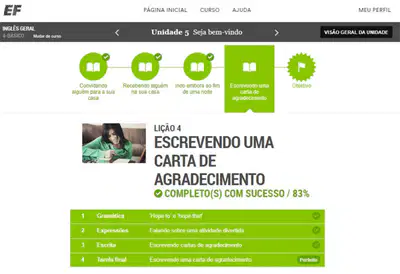



✔ Acesse a plataforma:
Inglês Paraná | Escola
Digital - Professor>>
Digite seu login e senha >>
Nível 4 - Básico >>
Unidade 5 >> Lição 4 >>
Gramática: “Hope to” e
“hope that” >> Começar.
Começar
8

Nível 4 - Unidade 5 - Lição 4 - Atividade 1 - Gramática
❏ Watch the video and read the explanation about how to use “hope
to” and “hope that”.
❏ Did you already know these
expressions?
9

Nível 4 - Unidade 5 - Lição 4 - Atividade 1 - Gramática
❏ Group the sentences according
to their structures: whether
they are formed by “hope to”
or “hope that”.
❏ Identify
and
select
the
correct words to complete
each sentence.
5 min
10

Nível 4 - Unidade 5 - Lição 4 - Atividade 1 - Gramática
❏ Watch the video and pay
attention to the examples of
how we can use “hope to” and
“hope that” in the daily life.
Com as tecnologias digitais
influenciaram a forma como os
discursos
são
produzidos
e
recebidos hoje em dia?
11

Nível 4 - Unidade 5 - Lição 4 - Atividade 2 - Expressões
❏ Watch the video and pay attention to the dialogue.
❏ In pairs, discuss and answer: what are they talking about? Do they
have the same opinion?
2 min
❏ Give an example of a
different opinion.
❏
D21 - Reconhecer posições
distintas entre duas ou mais
opiniões
relativas
ao
mesmo fato ou ao mesmo
tema.
12

Nível 4 - Unidade 5 - Lição 4 - Atividade 2 - Expressões
❏ You can use the following
expressions to talk about a
fun activity.
❏ Listen to the dialogue between a
host and his guest and select the
three phrases used to express
feelings.
13

Nível 4 - Unidade 5 - Lição 4 - Atividade 2 - Expressões
❏ Move
the
words
and
expressions to their respective
places to complete the dialogue
between Jim and Betsy.
❏ Record the examples trying
to be as close as possible to
the examples.
14

Nível 4 - Unidade 5 - Lição 4 - Atividade 3 - Escrita
❏ Pay attention to the vocabulary used to say “thanks” for something.
❏ Do they have the same opinion?
❏
D21 - Reconhecer posições distintas entre duas ou mais opiniões relativas
ao mesmo fato ou ao mesmo tema.
15

Nível 4 - Unidade 5 - Lição 4 - Atividade 3 - Escrita
❏ A “thank-you” letter must follow some steps. Let's learn them.
* In a “thank-you” letter,
we should use expressions
like “you” or “your(s)” to
refer to who we are
writing to.
*
*
*
*
16

5 min
Nível 4 - Unidade 5 - Lição 4 - Atividade 3 - Escrita
❏
Read the “thank-you” letter and answer.
❏
Why did Kris write this letter?
❏
When does Kris want to see Sally again?
❏
Where did they eat?
❏
Complete the “thank-you”
letter from the previous
exercise by moving the
words to the correct places.
17

Nível 4 - Unidade 5 - Lição 4 - Atividade 4 - Tarefa final
❏
What
is
the
objective
of
a
“thank-you” letter?
❏
Inspired by the vocabulary learned
during this class, write a “thank-you”
letter to your (supposed) friend, Clay.
❏
Your text must be 30-50 words long.
❏
If you need extra help, go to “mostrar
modelo de resposta”.
18

Professor, caso tenha alguma sugestão ou elogio para esta aula, acesse:
https://forms.gle/ZuC8G4UPYMEdztJy5
O QUE APRENDEMOS NESTA AULA?
❑
Hoje, na aula, aprendemos a usar “hope to” e “hope that”, a falar
sobre uma atividade divertida e a escrever uma carta de
agradecimento em Inglês.
19

REFERENCES
Inglês Paraná
https://br.freepik.com/fotos-gratis/amigos-felizes-tirando-selfie
_29651849.htm#fromView=search&page=1&position=50&uuid=
f28ba327-a43a-42df-bff8-2e3045b44e2e
LÍNGUA INGLESA
2ª SÉRIE
ESCREVENDO UMA CARTA DE AGRADECIMENTO
Nível 4 - Unidade 5
Lição 4 - Atividades 1, 2, 3 e 4
Aula 26
Show answer
Auto Play
Slide 1 / 19
SLIDE
Similar Resources on Wayground

23 questions
REVISA 1ºBIM HIST 3ºANO AULA 1
Presentation
•
3rd Grade
14 questions
OS SOLOS E SUA IMPORTÂNCIA
Presentation
•
1st Grade
17 questions
Aula 45 - Tipos de formação profissional: bacharelado, tecnólogo
Presentation
•
1st Grade
10 questions
Cidades
Presentation
•
1st Grade
19 questions
2º TRI | Língua Inglesa | 2º Ano AP | Aula N7
Presentation
•
2nd Grade
20 questions
2º TRI | Língua Inglesa | 2º Ano AP | Aula 27
Presentation
•
2nd Grade
18 questions
gchghgh
Presentation
•
2nd Grade
21 questions
2º TRI | Língua Inglesa | 2º Ano AP | Aula 31
Presentation
•
2nd Grade
Popular Resources on Wayground
6 questions
Secondary Safety Quiz
Presentation
•
9th - 12th Grade
10 questions
MyPath Diagnostic Overview
Presentation
•
6th - 8th Grade
20 questions
Lab Safety Quiz

Quiz
•
6th Grade
21 questions
Continents and Oceans
Quiz
•
6th Grade
20 questions
Adding and Subtracting Decimals
Quiz
•
5th Grade
20 questions
Parts of Speech
Quiz
•
5th Grade
16 questions
Subject & Predicate
Quiz
•
5th Grade
21 questions
Lab Safety
Quiz
•
10th Grade
Discover more resources for English
20 questions
Sentence Fragments and Complete Sentences
Quiz
•
2nd - 4th Grade
20 questions
nouns verbs adjectives test
Quiz
•
2nd Grade
24 questions
Grammar 2.1- Task Cards: Common & Proper Nouns
Presentation
•
2nd - 4th Grade
22 questions
Capitalization
Quiz
•
2nd Grade
16 questions
Subjects and Predicates
Quiz
•
2nd Grade
7 questions
Parts of Speech
Presentation
•
1st - 12th Grade
6 questions
types of sentences
Presentation
•
1st - 3rd Grade
12 questions
Author's Purpose
Quiz
•
2nd - 5th Grade