

M6 Chem 1stSem Final Rxn of Alcohol,Amines,aldehyde and ketone

Presentation
•
Chemistry
•
12th Grade
•
Easy

Lady Alias
Used 5+ times
FREE Resource
32 Slides • 18 Questions
1
Characteristic Reactions of Alcohols
The acidity of alcohols, their dehydration to alkenes, and their oxidation to aldehydes, ketones, and carboxylic acids.
2
A. Acid-Catalyzed Dehydration of Alcohols
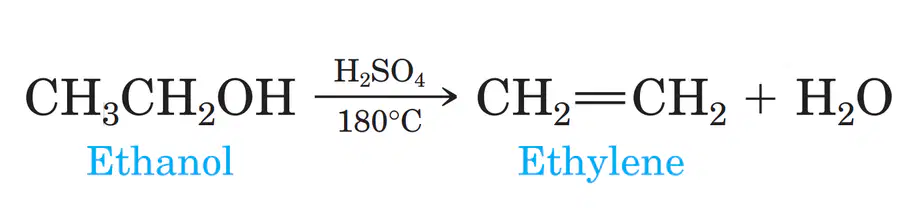
Alcohols can be converted to alkenes through dehydration, where a water molecule is removed from adjacent carbon atoms. This reaction is typically done by heating the alcohol with 85% phosphoric acid or concentrated sulfuric acid. Primary alcohols require the highest temperatures (up to 180°C), secondary alcohols dehydrate at lower temperatures, and tertiary alcohols dehydrate at temperatures just above room temperature.
3
B. Oxidation of Alcohols
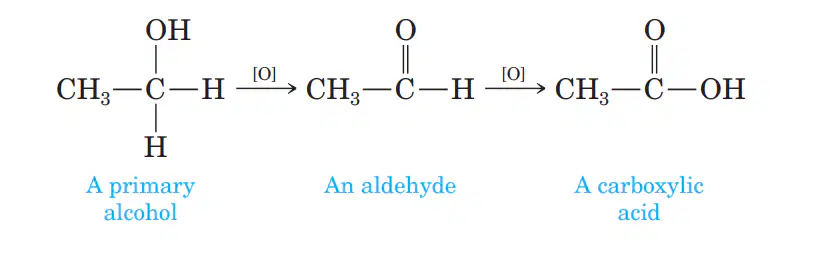
A primary alcohol can be oxidized to an aldehyde or to a carboxylic acid, depending on the experimental conditions. Following is a series of transformations in which a primary alcohol is oxidized first to an aldehyde and then to a carboxylic acid. The letter O in brackets over the reaction arrow indicates that each transformation involves oxidation.
4
Characteristic Reactions of Amines
5
The Solubility of Drugs in Body Fluids
Many drugs include "HCl" or another acid in their chemical formula because they are insoluble amines. To be absorbed and carried by body fluids, these drugs are converted into water-soluble ammonium salts by treating them with acid. For example, methadone is marketed as a hydrochloride salt, and Novocain is the hydrochloride salt of procaine.

Amine drugs are often prepared as salts not only for increased water solubility but also because salts are less prone to oxidation and decomposition, allowing the drugs to remain effective for longer.
6
Characteristic Reactions of Aldehydes and Ketones
Low-molecular-weight aldehydes and ketones are more water-soluble than nonpolar compounds due to the hydrogen bond-accepting oxygen atom in their carbonyl group. Formaldehyde, acetaldehyde, and acetone are fully water-soluble. As the hydrocarbon portion increases, solubility decreases. Aldehydes and ketones generally have strong odors; ketones often have pleasant scents used in perfumes, while aldehydes vary, with some, like formaldehyde, having an unpleasant smell, though others are used in fragrances.
7
A. Oxidation
Aldehydes are easily oxidized to carboxylic acids by air, so they must be stored in nitrogen-sealed containers. Ketones, however, resist oxidation by most agents. This difference allows for simple chemical tests: if a compound is oxidized by a mild agent, it's an aldehyde; if not, it's a ketone.
8
B. Reduction
The reduction of a C=O double bond under these conditions is slower than the reduction of a C=C double bond. Thus, if the same molecule contains both C=O and C=C double bonds, the C=C double bond is reduced first.
9
C. Addition of Alcohols
The addition of a molecule of alcohol to the carbonyl group of an aldehyde or a ketone forms a hemiacetal (a half-acetal). The functional group of a hemiacetal is a carbon bonded to one -OH group and one iOR group. In forming a hemiacetal, the H of the alcohol adds to the carbonyl oxygen and the OR group of the alcohol adds to the carbonyl carbon.
10
Characteristic Reactions of Carboxylic Acids
11
A. Acidity

Electronegative atoms on the carbon adjacent to a carboxyl group increase acidity because they pull electron density away from the O-H bond, thereby facilitating ionization of the carboxyl group and making it a stronger acid. One final point about carboxylic acids: When a carboxylic acid is dissolved in an aqueous solution, the form of the carboxylic acid present depends on the pH of the solution in which it is dissolved.
-Carboxylic acids are weak acids.
-Bases accepts H+
-Acid donates H+
12
B. Reaction with Bases
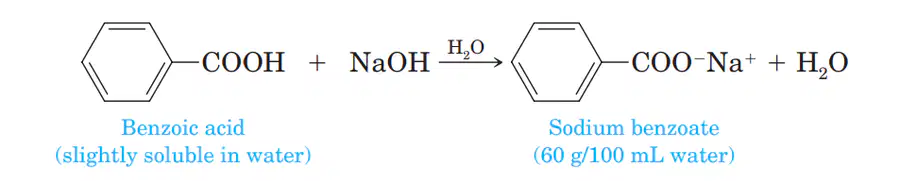
All carboxylic acids, whether soluble or insoluble in water, react with NaOH, KOH, and other strong bases to form water-soluble salts.
-Bases accepts H+
-Acid donates H+
13
C. Reduction
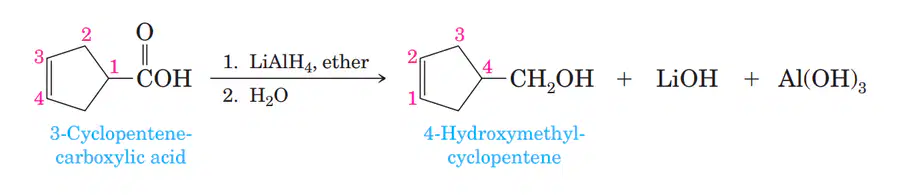
To reduce a carboxylic acid to a 1° alcohol, lithium aluminum hydride (LiAlH4) is commonly used. This process involves converting the carboxyl group into an aluminum alkoxide, which is then treated with water to produce the primary alcohol, with the byproducts removed through filtration.
The carboxyl group is highly resistant to reduction, unaffected by catalytic reduction or sodium borohydride.
14
D. Fischer Esterification
Fischer esterification is the process of forming an ester by refluxing a carboxylic acid and an alcohol in the presence of an acid catalyst, commonly sulfuric acid.
Ester is compound in which the -OH of a carboxyl group, RCOOH, is replaced with an alkoxy (-OR) or aryloxy (-OAr) group
15
D. Fischer Esterification
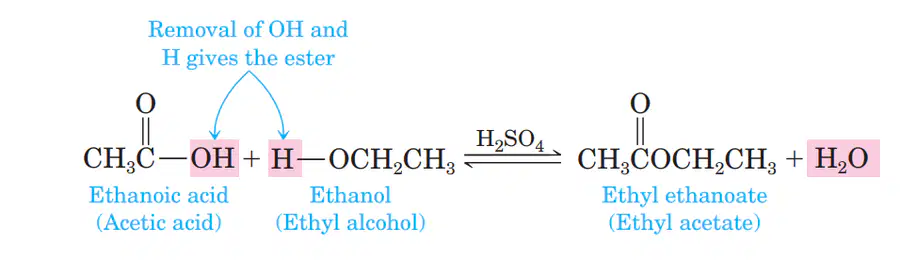
Treatment of a carboxylic acid with an alcohol in the presence of an acid catalyst—most commonly, concentrated sulfuric acid—gives an ester. This method of forming an ester is given the special name Fischer esterification, after the German chemist Emil Fischer (1852–1919).
As an example of Fischer esterification, treating acetic acid with ethanol in the presence of concentrated sulfuric acid gives ethyl acetate and water:
16
D. Fischer Esterification
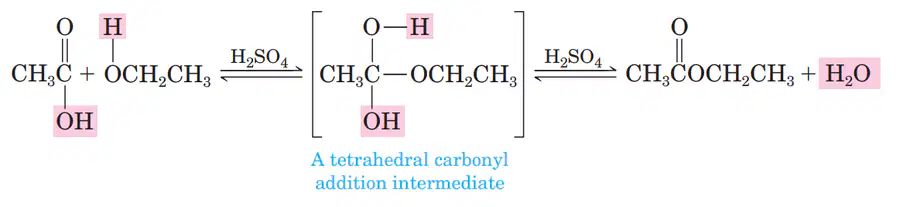
Treatment of a carboxylic acid with an alcohol in the presence of an acid catalyst—most commonly, concentrated sulfuric acid—gives an ester. This method of forming an ester is given the special name Fischer esterification, after the German chemist Emil Fischer (1852–1919).
Acid-catalyzed esterification is reversible, but high yields of esters can be achieved by manipulating conditions. Using an excess of alcohol or removing water as it's formed can push the reaction toward producing more ester.
17
E. Decarboxylation
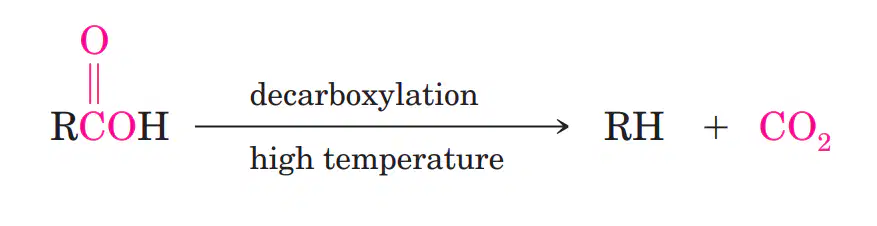
Decarboxylation is the loss of CO2 from a carboxyl group. Almost any carboxylic acid, when heated to a very high temperature, undergoes thermal decarboxylation:
18
E. Decarboxylation
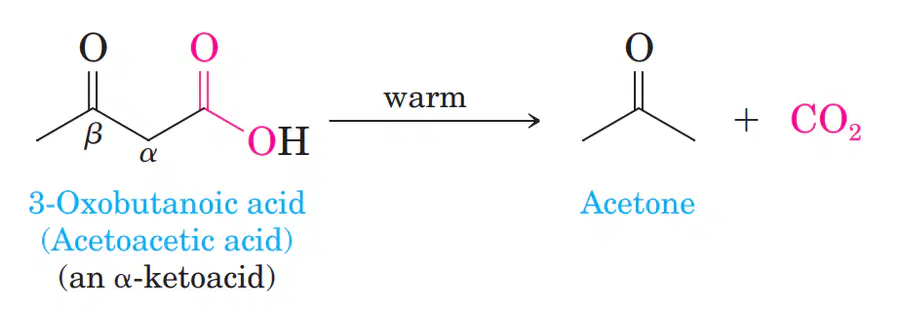
Most carboxylic acids resist decarboxylation under moderate heat, except those with a carbonyl group near the carboxyl group. These acids, like 3-oxobutanoic acid, readily undergo decarboxylation when mildly heated, producing acetone and carbon dioxide.
19
Multiple Choice
Carboxylic acids are strong acids.
False
True
Maybe
Can't Determine
20
Multiple Choice
Bases donates H+
False
True
Maybe
Can't Determine
21
Multiple Choice
Acids donates H+
False
True
Maybe
Can't Determine
22
Multiple Choice
When a carboxylic acid is dissolved in an aqueous solution, the form of the carboxylic acid present depends on the pH of the solution in which it is dissolved.
False
True
Maybe
Can't Determine
23
Multiple Choice
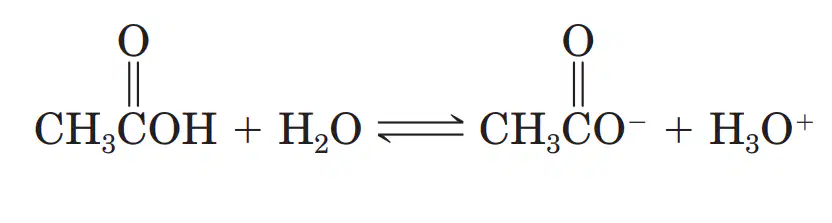
What characteristic of reaction for carboxylic acid is shown?
Acidity
Reaction with Bases
Reduction
Fisher Esterification
24
Multiple Choice
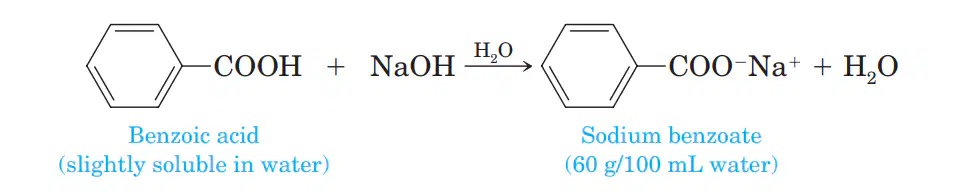
What characteristic of reaction for carboxylic acid is shown?
Acidity
Reaction with Bases
Reduction
Fisher Esterification
25
Multiple Choice
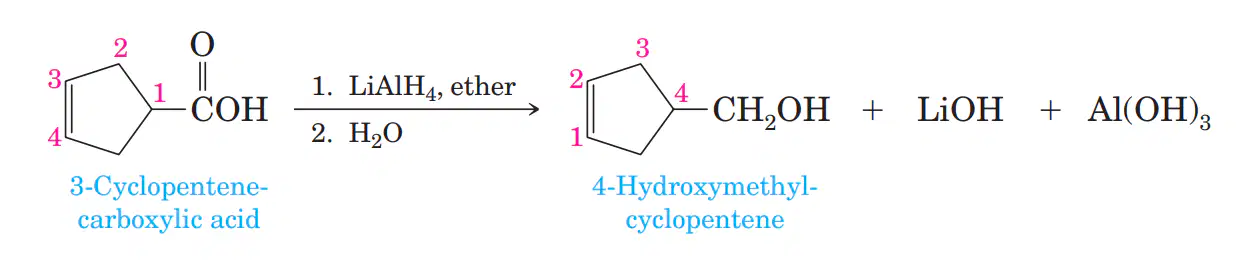
What characteristic of reaction for carboxylic acid is shown?
Acidity
Reaction with Bases
Reduction
Fisher Esterification
26
Multiple Choice
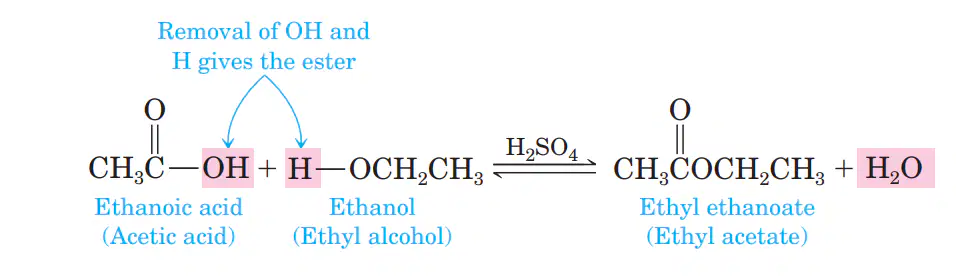
What characteristic of reaction for carboxylic acid is shown?
Decarboxylation
Reaction with Bases
Reduction
Fisher Esterification
27
Multiple Choice
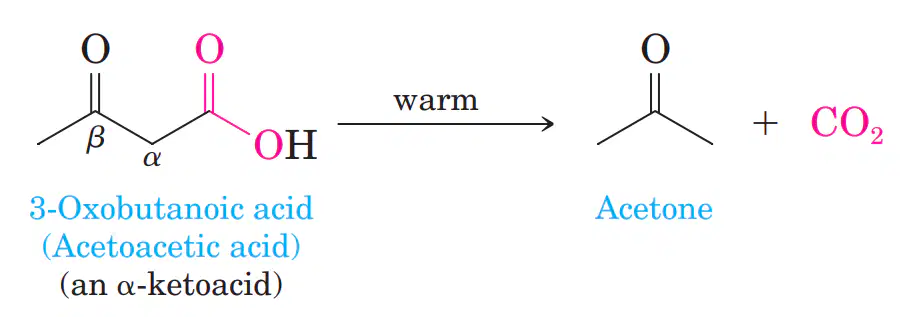
What characteristic of reaction for carboxylic acid is shown?
Decarboxylation
Reaction with Bases
Reduction
Fisher Esterification
28
Multiple Choice
It is the process of forming an ester by refluxing a carboxylic acid and an alcohol in the presence of an acid catalyst, commonly sulfuric acid.
Decarboxylation
Reaction with Bases
Reduction
Fisher Esterification
29
Characteristic Reactions of Esters and Amides
30
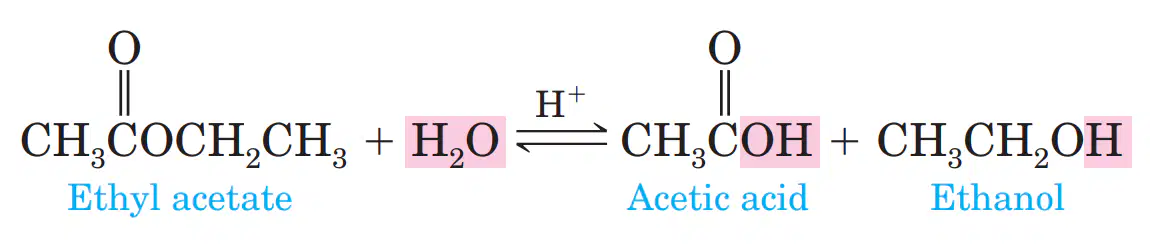
A. Reaction with Water: Hydrolysis
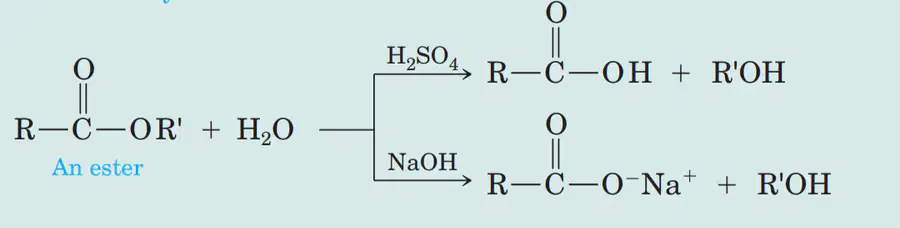
Esters
General Formula:
31
A. Reaction with Water: Hydrolysis
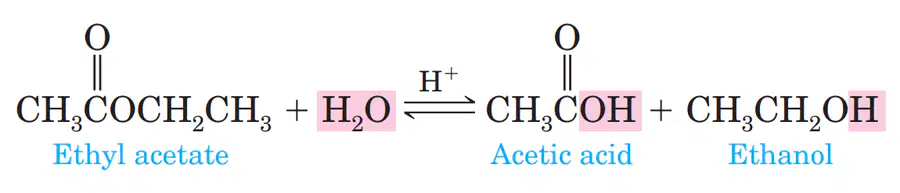
Esters hydrolyze slowly in boiling water but much faster when heated in aqueous acid or base. Acid-catalyzed hydrolysis is the reverse of Fischer esterification and is also an equilibrium reaction. Using a large excess of water shifts the equilibrium toward producing carboxylic acid and alcohol.
Esters
32
A. Reaction with Water: Hydrolysis
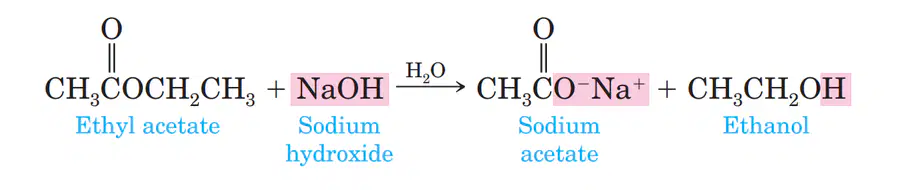
Hydrolysis of an ester can also be carried out using a hot aqueous base, such as aqueous NaOH. This reaction is often called saponification, a reference to its use in the manufacture of soaps. The carboxylic acid formed in the hydrolysis reacts with hydroxide ion to form a carboxylate anion. Thus, each mole of ester hydrolyzed requires one mole of base, as shown in the following balanced equation:
Esters
33
A. Reaction with Water: Hydrolysis
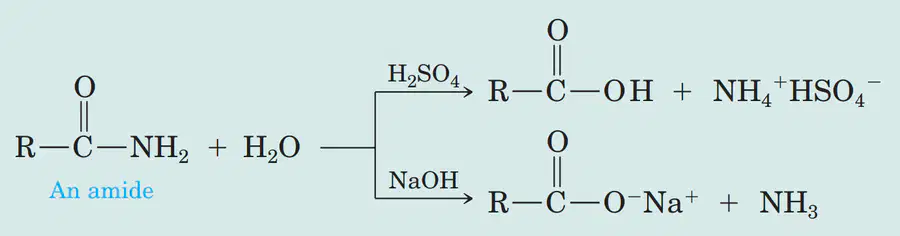
Amides
General Formula:
34
A. Reaction with Water: Hydrolysis

Amides need stronger conditions than esters to break down. In hot acid, they break down into a carboxylic acid and an ammonium ion. The reaction finishes because the ammonium ion forms, using one mole of acid for each mole of amide.
Amides
35
A. Reaction with Water: Hydrolysis
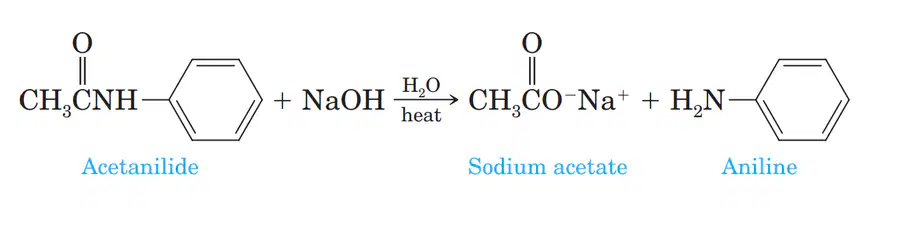
The products of amide hydrolysis in aqueous base are a carboxylic acid salt and ammonia or an amine. The acid–base reaction between the carboxylic acid and base to form a carboxylate salt drives this hydrolysis to completion. Thus, complete hydrolysis of an amide requires one mole of base per mole of amide.
Amides
36
B. Reaction with Alcohols
Esters
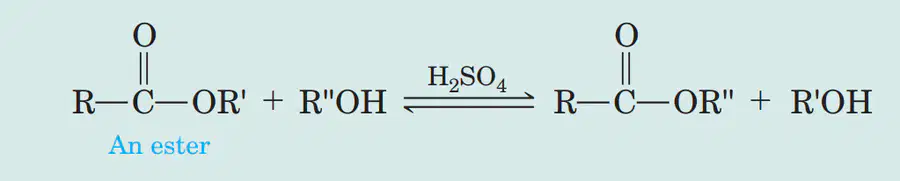
General Formula:
37
B. Reaction with Alcohols
Esters
Esters react with alcohols in an acid-catalyzed reaction called transesterification. For example, it is possible to convert a methyl ester to a butyl ester by heating the methyl ester with 1-butanol in the presence of an acid catalyst.

Transesterification is an equilibrium reaction that can be driven in either direction by control of the experimental conditions.
38
B. Reaction with Alcohols
Amides
General Formula:

39
C. Reaction with Ammonia and Amines
Esters
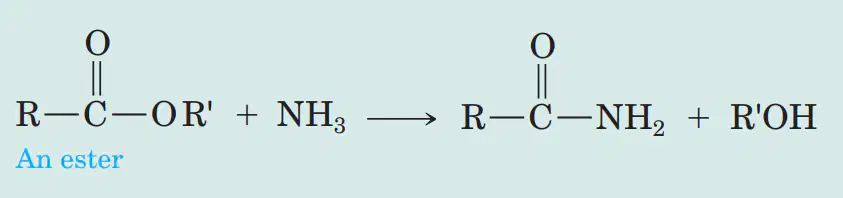
General Formula:
40
C. Reaction with Ammonia and Amines
Esters

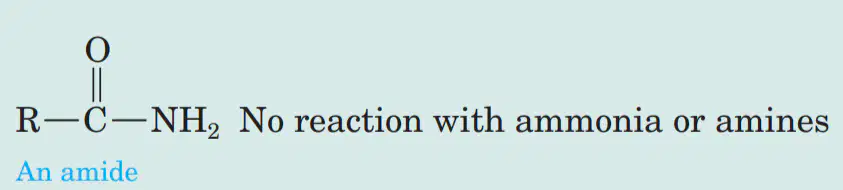
Esters react with ammonia and with 1° and 2° amines to form amides.
41
C. Reaction with Ammonia and Amines
Amides
General Formula:
42
Multiple Choice
What characteristic of reaction for ester is shown?
Reaction with Water
Reaction with Alcohol
Reaction with Ammonia and Amines
No reaction
43
Multiple Choice

What characteristic of reaction for amide is shown?
Reaction with Water
Reaction with Alcohol
Reaction with Ammonia and Amines
No reaction
44
Multiple Choice

What characteristic of reaction for ester is shown?
Reaction with Water
Reaction with Alcohol
Reaction with Ammonia and Amines
No reaction
45
Multiple Choice
Amides react with alcohols.
True
False
Maybe
Can't determine
46
Multiple Choice

What characteristic of reaction for ester is shown?
Reaction with Water
Reaction with Alcohol
Reaction with Ammonia and Amines
No reaction
47
Multiple Choice
Amides has NO REACTION with Ammonia and Amines.
True
False
Maybe
Can't determine
48
Multiple Choice
Hydrolysis of an ester can also be carried out using a hot aqueous base, such as aqueous NaOH. This reaction is often called _____________, a reference to its use in the manufacture of soaps.
saponification
transesterification
Fisher Esterification
Can't determine
49
Multiple Choice
Esters react with alcohols in an acid-catalyzed reaction called _____________.
saponification
transesterification
Fisher Esterification
Can't determine
50
Write your answers in your notebook.
1-5. List the characteristic reactions for Carboxylic acids.
6-8. List the characteristic reactions for Esters and Amides.
9-10 (Give the product of the given reaction written on the whiteboard).[HINT: Identify first what functional group is present in the reactant side to help you in writing the product.]
Characteristic Reactions of Alcohols
The acidity of alcohols, their dehydration to alkenes, and their oxidation to aldehydes, ketones, and carboxylic acids.
Show answer
Auto Play
Slide 1 / 50
SLIDE
Similar Resources on Wayground

46 questions
Pharm
Presentation
•
12th Grade
45 questions
Unit 4 Review - Hormones/Endocrine System
Presentation
•
12th Grade - University
46 questions
APB - Unit 2 - Cell Structure and Function 4.0
Presentation
•
11th - 12th Grade
40 questions
PR Diagrams
Presentation
•
11th - 12th Grade
43 questions
Genomics Midterm Practice Quiz
Presentation
•
KG - University
42 questions
Lesson: Radioactivity
Presentation
•
11th Grade
46 questions
Supply
Presentation
•
12th Grade
Popular Resources on Wayground
10 questions
HCS SCI 03 Summer School Assessment 1

Quiz
•
3rd Grade
15 questions
HCS SCI 05 Summer School Assessment 1 Review
Quiz
•
5th Grade
22 questions
Day 9 Equations and Inequalities Review
Quiz
•
9th Grade
10 questions
Writing and Identifying Ratios Practice
Quiz
•
5th - 6th Grade
7 questions
PYRAMID PERSPECTIVES part 1
Presentation
•
9th - 12th Grade
12 questions
Understanding the Fourth of July
Quiz
•
9th Grade
15 questions
Soccer World Cup Quiz Questions
Quiz
•
7th Grade