

SES1 Universe and Solar System

Presentation
•
Science
•
9th - 12th Grade
•
Medium
+26
Standards-aligned

Zena Johnston
Used 1+ times
FREE Resource
43 Slides • 25 Questions
1
SES1. Obtain, evaluate, and communicate information to investigate the composition and formation of Earth systems, including the Earth’s place in the solar system.
a. Construct an explanation of the origins of the solar system from scientific evidence including the composition, distribution and motion of solar system objects.
(Clarification statement: The nebular hypothesis should be included in this element.)
b. Ask questions to evaluate evidence for the development and composition of Earth’s early systems, including the geosphere (crust, mantle and core), hydrosphere and atmosphere.
(Clarification statement: The differentiation by density of Earth into crust, mantle and core should be included in this element.)
c. Develop a model of the physical composition of Earth’s layers using multiple types of evidence (e.g., Earth’s magnetic field, composition of meteorites and seismic waves).
(Clarification statement: Earth’s layers should include crust, mantle, inner core and outer core.)
2


3

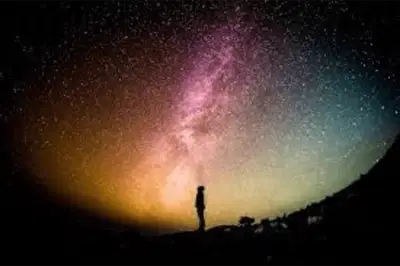
What is the Universe
The universe is everything;
planets, stars, galaxies, space,
and even time! We used to
think the universe was infinite.
Now most scientists agree that
it does have an end and does
not go on forever.
The universe is made up of
nebulae.
4


In 1929, astronomer Edwin Hubble observed the redshift of the
galaxies, and knowing about the Doppler Effect, inferred that
galaxies are moving away from each other. Because of this
observation, he concluded that the universe must be expanding.
5
Multiple Choice

Galaxies that are REDSHIFTED are:
actually BLUE
really NEAR earth
invisible or not visible
moving AWAY from us.
6


Big Bang Theory
If the universe is expanding that means it was
smaller. The Big Bang theory is the most widely accepted cosmological explanation of how the universe formed. According to the Big Bang theory, the universe began about 13.8 billion years ago. Everything that is now in the universe was squeezed into a very small volume and exploded in a big bang which caused the universe to start expanding rapidly. All the matter and energy in the
universe, and even space itself, came out of this explosion.
7
Multiple Choice
Which description is considered most accurate regarding what actually happened during the Big Bang?
Two galaxies collided causing an immense explosion as stars crashed into one another
All of what would become the universe was concentrated in a single small point, or singularity, which rapidly expanded into what is now stars, planets, galaxies, matter, and energy.
All matter emerged from a massive black hole at the center of the universe.
Parts of the sun were ripped off by massive internal explosions and were thrown into space where they cooled to become other things, like plants, comets, and other galaxies.
8


Big Bang Evidence - Cosmic Microwave Background Radiation
The beginning of the universe would have been
very hot and would have cooled down as it
expanded. In the 1940’s astronomers thought
there would be leftover radiation from that
expansion. This was found out by accident in
19654 as engineers were trying to find gas from
the Milky Way Galaxy. The found a lot of
background noise like static. It turns out this
static is everywhere in the universe and that
leftover “heat” is leftover from the Big Bang.
This is a whole sky Planck space telescope
image of the cosmic microwave background
(CMB), the relic radiation from the Big Bang.
9
Multiple Select
Which of the following are primary sources of evidence in support of the Big Bang Theory?
The idea that the universe is 13.7 billion years old.
The existence of the cosmic microwave background.
Hydrogen being the most common material in the universe
The red shift of the light from distant galaxies
10


11


Nebular Hypothesis
Formation of Solar Systems
1.
A nebula begins to collapse and
heat up under its own gravity.
2.
The collapsing cloud begins to
spin. Then it flattens into a rotating
disk.
3.
As the material gathers in the
center, it becomes dense,
compresses, and heats up.
4.
The material grows to form a
protostar. A protostar isn’t dense
enough for nuclear fusion to start.
12
Multiple Choice
The Nebular Hypothesis is the scientific explanation for the formation of __________.
the universe.
meteor showers.
our solar system.
clouds.
13

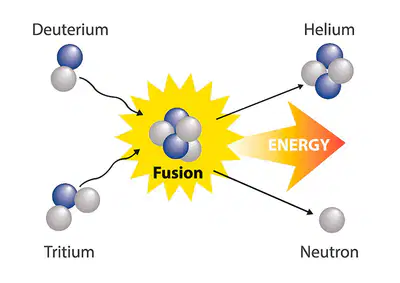
Protostar becomes a star
The protostar continues to gather mater from the
surrounding disk and grow. When the protostar
becomes massive enough, dense enough, and hot
enough the process of nuclear fusion begins.
This process is what causes all stars to glow and
produce energy. Once nuclear fusion begins a solar
wind is created that drives remaining gas and dust to
the outer parts of the disk. This is where comets come
from. The young star stops gathering material.
14
Multiple Choice
Heat and pressure in our protostar reached limits needed for the process of _______, in which hydrogen atoms smash together to form helium.
fission
engine
fusion
matter transport
15

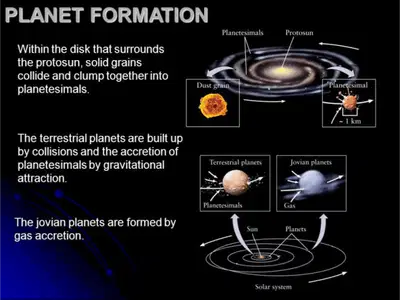
Step 5: Accretion
Since even the smallest particles
attract each other due to
gravitation the gas and dust in the
spinning nebula will attract each
other and form clumps called
planetesimals. These are larger
masses and have a larger
gravitational field which makes
them grow larger to form planets
and moons.
16
Multiple Choice
As the solar system continued to evolve, material in the disk collided with other material and grew into planetesimals, then protoplanets, and then planets. This process of growth by collision created a lot of heat, melting the early Earth. Growth by collision is called ___.
differentiation
accretion
adsorption
kinetic molecular theory
17

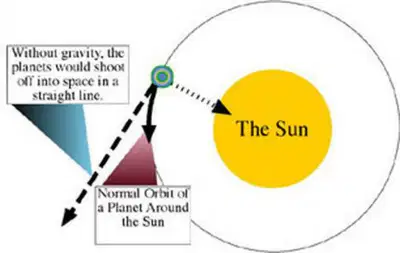
Do you remember the spin that gets
everything going? That turns out to be very
important. The spin is working to
accelerate the material off into space while
gravity is pulling material inward. If the
balance is just right, some of the material
will stay in orbit and form planets. This is
the current hypothesis but it’s kind of hard
to test. Astronomers are looking for
information in other galaxies.
Because Gravity
18
Multiple Choice
What two things determine the gravity of an object?
mass & weight
mass & distance
density & mass
volume & distance
19

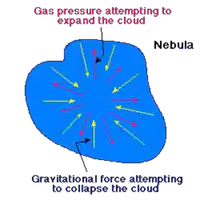
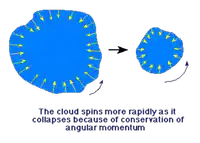
Evidence for the Nebular Hypothesis
The nebular hypothesis was designed to
explain some of the basic features of the solar
system:
•The orbits of the planets lie in nearly the same
plane with the Sun at the center
•The planets revolve in the same direction
•The planets mostly rotate in the same direction
•The axes of rotation of the planets are mostly
nearly perpendicular to the orbital plane
•The oldest moon rocks are 4.5 billion years
In the Nebular Hypothesis, a cloud of gas and
dust collapsed by gravity begins to spin faster
because of angular momentum conservation
20
Multiple Choice
The SUN is born, fusion begins in the core. Then what?
Planetesimals (small rock or icy bodies) begin to form. Rocky pieces in the outer rings and icy pieces in the inner rings.
A protostar forms in the center of the nebula.
About 4.5 billion years ago pieces of rock and ice accumulate more material until they grow into planets and moons.
21
Multiple Select
What evidence is there that supports the Nebular Hypothesis?
(Choose all that apply.)
The orbits of the planets lie in nearly the same plane with the Sun at the center
The planets mostly rotate in the same direction
The axes of rotation of the planets are mostly nearly perpendicular to the orbital plane
The oldest moon rocks are 3.8 billion years old
22


Scientists can look at the light from stars and can determine what elements are on the star’s surface.
The dark line’s in a star’s spectrum indicate what energy levels are being
absorbed by the elements of that star. That tells us what elements the star is made of (hydrogen, helium, etc).
23
Multiple Select
Choose all that apply. A star's spectra tells us what about a star.
composition of that star (what elements make up that star)
movement of a star (red shift or blue shift)
brightness of a star
temperatures of a star
24
Multiple Choice

Which elements are in the mixture?
A only
D only
Z only
A and D
D and Z
25

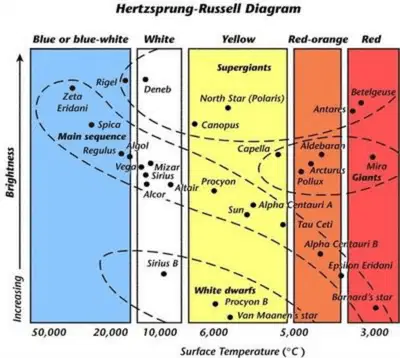

Hertzsprung-Russell Diagram
26
Multiple Choice

27


The Sun is in the Center
In 1543, Polish astronomer Nicolaus
Copernicus declared that the Sun was
the center of the solar system. Unlike
the old, Earth-centered (geocentric)
model, Copernicus' new Sun-centered
(heliocentric) model was much simpler.
The planets moved about the Sun in
predictable, simple paths.
Our solar system includes everything
that revolves around our Sun. It includes
8 planets, 5 dwarf planets, 170 moons,
over a million asteroids, and thousands
of comets.
28
Multiple Choice

Models of the solar system with Sun at the center are called _____________________ models.
geocentric
heliocentric
terrestrial
none of the above
29


30
Multiple Choice
What are the Terrestrial Planets
Jupiter, Saturn, Earth, Mars
Jupiter, Saturn, Uranus, Neptune
Mercury, Venus, Uranus, Neptune
Mercury, Venus, Earth, Mars
31


What was the decision
These are the three things that
scientists decided an object must
meet to be a planet:
1.
It must orbit the sun.
2.
It must be massive enough for
gravity to compress it into a
round shape and small enough
that it isn’t a star.
3.
It must have cleared the area
surrounding its orbit.
32

Dwarf Planets
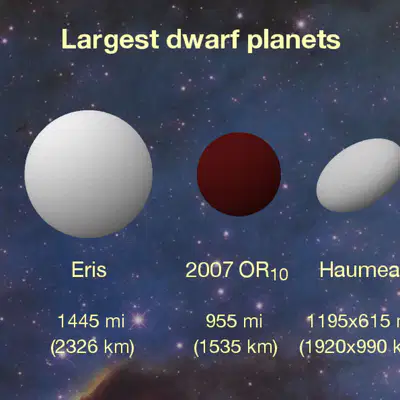
The dwarf planets of our solar system are exciting proof of how much we are learning about our solar system. With the discovery of many new objects in our solar system, astronomers refined the definition of a dwarf planet in 2006.
According to the IAU, a dwarf planet must:
●Orbit a star.
●Have enough mass to be nearly spherical.
●Not have cleared the area around its orbit of
smaller objects.
●Not be a moon.
33
Multiple Select
Which of the following are criteria for a planet?
orbit a star
have cleared the area of its orbit of the smaller objects
be big enough that its own gravity causes it to be shaped as a sphere
not be a moon
not have cleared the area around its orbit of smaller objects
34


Planet Distances
The solar system is big. You
and I are tiny compared to
even the smallest planet, but
the planets are very small
compared to the huge
distances between them.
1 kilometer (km) = 0.621371
miles
35

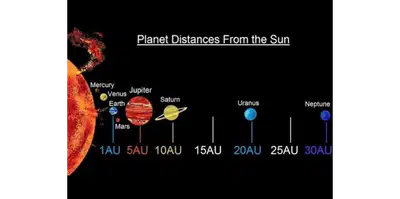
A Vast Solar System
To help us understand these
great expanses of space, it's
convenient to use a
measurement called the
astronomical unit, or AU for
short. An AU is the average
distance between the Earth and
the Sun—about 150 million
kilometers (93 million miles).
36
37
Multiple Choice

Why are the gas and ice giants so far from the sun?
ice giants would melt and gas giants would not have formed
they are too big to be by the sun
the gravitational pull would have sucked them in
they pulled away from the sun because they are so big
38

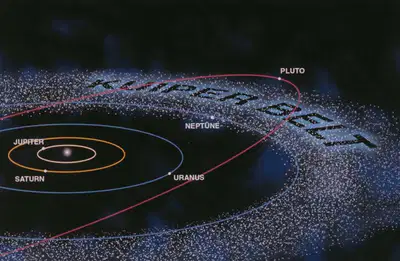
Orbits
The eight planets that compose our solar system today all revolve around the sun (more or less) in the same plane. As material was pulled inward towards the sun, it started spinning, the same way that water spins around a drain. If you were to look down on the north pole of the sun, all of the planets would be moving in a counterclockwise direction.
39
Multiple Select
Check all that apply. Which of these are part of our Solar System?
Sun
Planets
Dwarf Planets
Moons
Asteroids
40

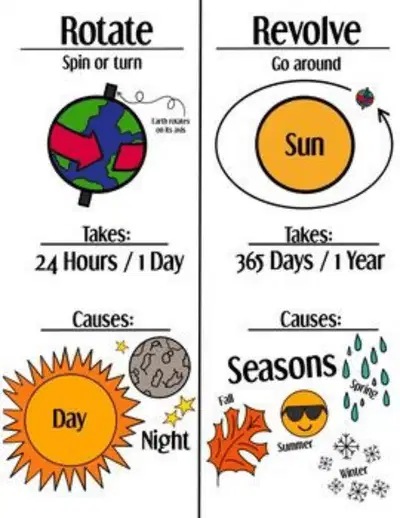
Planet Movement
The planets in our solar system revolve around the sun
and they rotate on their axis. The rotational period of a
planet determines the length of its day (Earth takes 23.9
hours to complete one spin on its axis), and its period of
revolution determines the length of a year on the planet.
Earth makes 365.25 rotations during a complete
revolution around the sun; every four years, those
quarter days are accounted for by adding an extra day
to the month of February, and we celebrate a "leap
year". The gas giants spin on their axes faster than the
inner, rocky planets, and have shorter days.
41


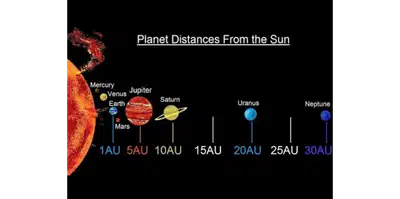
Our Planets
Make sure you understand the differences between the
inner and outer planets.
42

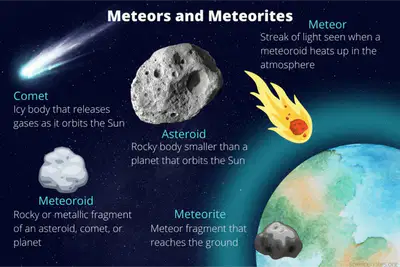
Asteroids, Comets, and Moons
Moons orbit planets. Venus and Mercury are the only planets in our solar system that don’t have at least one moon.
Asteroids are small and rocky. They are in the Kuiper Belt and between Mars and Jupiter.
Comets have orbits that carry them from far out of the solar system to close to the sun. They are rock and ice. They have tails of reflective material when they are near the sun.
43

Asteroids
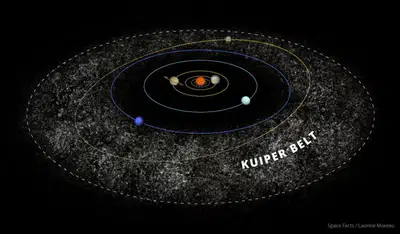
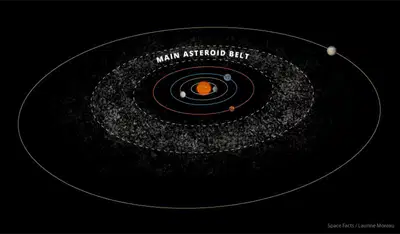
The Kuiper Belt circles the outer solar
system beyond the orbit of the eighth planet from the sun, Neptune.
It is similar to the main asteroid belt, found between Mars and Jupiter since its objects are comprised of material leftover from the formation of the solar system around 4.6 billion years ago.
The Kuiper Belt is far larger than the main asteroid belt, up to 20 times as wide and 20 to 100 times its mass.
44
Multiple Choice
Which planets are the asteroid belt in between?
Venus & Earth
Earth & Mars
Mars & Jupiter
Jupiter & Saturn
Saturn & Uranus
45

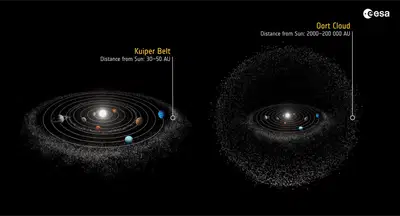

Where do comets come from?
Comets are frozen leftovers from the
formation of the solar system composed of dust, rock, and ices. They range from a few miles to tens of miles wide, but as they orbit closer to the Sun, they heat up and spew gases and dust into a glowing head that can be larger than a planet. This material forms a tail that stretches millions of miles away from the Sun.
Nearby stars disrupt objects in the Kuiper Belt and Oort Cloud to produce comets.
46

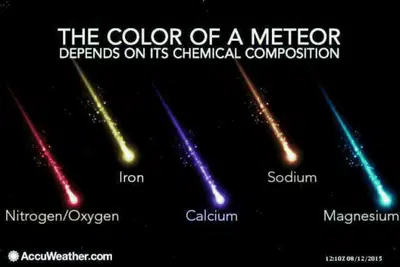
When a piece of space rock hits the earth's atmosphere, it is called a meteor. The meteor begins to burn and melt by the heat of friction in the earth's atmosphere and leaves a trail across the sky.
47
Multiple Choice

The streak of light that is seen when a space rock enters the planet's atmosphere.
48
49

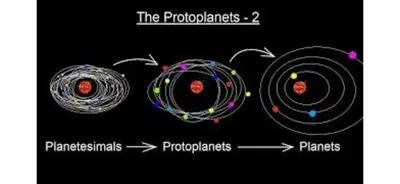
Protoplanets
As the protoplanets grew through
accretion, the materials that
composed them were heated due to
the energy transmitted by collisions,
as well as the gravitational forces
acting on the material at the center of the planets. The early planets would have become molten masses of melted material, which would have allowed gravity to pull the planets into spheres.
50

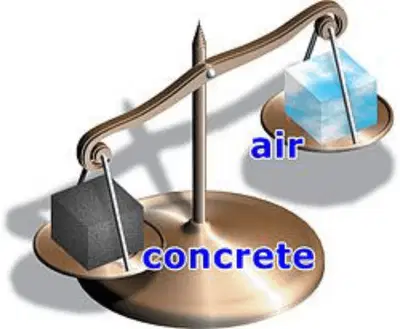
Density
Density is different than mass. A
comparison of densities is a comparison of the weights of two substances of identical sizes. A brick weighs more than a glass marble. But if you compared a piece of brick that had been carved into a sphere the same size as the glass marble, you would find that the marble weighs more than the sphere made of brick. The marble is denser than the brick.
51

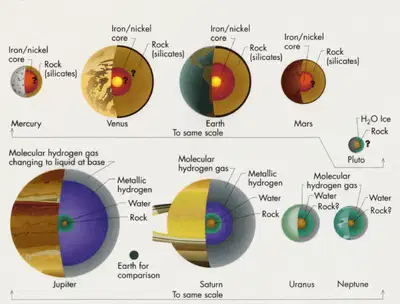
Gravity
Gravity pulls on objects based on their mass, denser objects experience a greater
gravitational pull than objects of lower
densities. In an environment where all of these substances were liquid, like the early planets, the denser substances would have sunk towards the center of the planet, while less dense substances would have been displaced towards the surface. As the planet cooled and began to solidify, these layers would have been "frozen" in place.
52
Multiple Choice
Since the early Earth was molten, the most dense material sank to the center forming the core. Less dense material rose towards the surface, forming the crust. This process is known as ___.
differentiation
accretion
adsorption
kinetic molecular theory
53

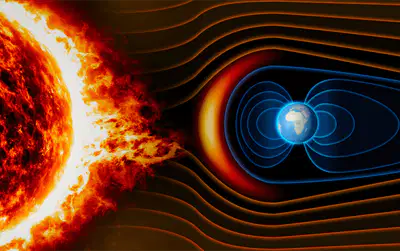
Our Sun
When our sun grew large enough to
undergo nuclear fusion, the energy it released blew away much of the
atmospheres around the first four
planets - their small masses did not
have enough gravity to keep the
lighter elements. Hydrogen and
helium blew away from these planets, leaving only heavier elements, nitrogen, oxygen, argon, etc. There were also a few compounds such as carbon dioxide and water left behind.
54


Early earth was a molten sphere
While the Earth was molten, many of
the materials that make up its mass
rearranged themselves according to
density, the denser elements and
compounds sank towards the center
of the Earth and the less dense
materials floated to the surface,
where they cooled and hardened.
55
Multiple Choice
56


Earth’s Layers
These layers can be
described based on chemical properties, the elements in the layers. It can also be described in physical terms which describes changes in
those elements due to
pressure and heat. The
elements alternate between solid, liquid, and semi-liquid or plastic.
57

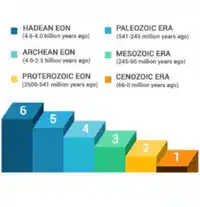
Early Earth
4,567,000,000 years ago, Earth was covered in
molten lava. Earth was completely unrecognizable.
In its earliest stage of formation, it was uninhabitable as it clumped from a cloud of dust.
About 1,000,000,000 years ago, Earth had its first
signs of life. Single-celled organisms consumed the
sun’s energy. As a waste product, these
cyanobacteria eventually filled the oceans and
atmosphere with oxygen.
58
Multiple Choice
59

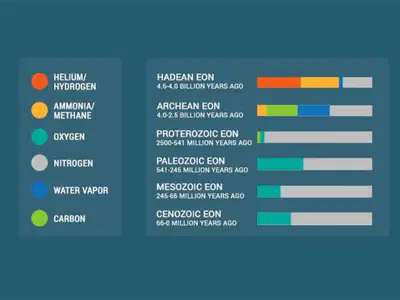
Atmospheric Oxygen
Around 2 billion years ago - 1.5 billion years after
photosynthetic organisms first appeared on Earth -
oxygen began to leave the oceans and move into the atmosphere. Much of this oxygen was immediately consumed in chemical reactions with the elements in the Earth's crust (Mars underwent a similar rusting event in its past, which explains its red surface color), and some of it reacted higher up in the atmosphere to form ozone.
The buildup of atmospheric oxygen enabled life to leave the oceans and move onto land
60
Multiple Select
Which conditions necessary for life?
presence of liquid water
oxygen in the atmosphere
electricity and buildings
sunlight and moderate temperature
61


The Atmosphere
Gases are the least dense of all of
the phases of matter which is why the atmosphere is the outermost layer.
The proto-planets that were forming before the sun ignited looked very different compared to today's planets.
Remember that the entire solar
system formed from the same source of materials so early planets would have had much larger and thicker atmospheres, mainly composed of hydrogen and helium.
62


Think how close
the Terrestrial
Planets are to the
sun. This is why
they have
(relatively) little to
no atmosphere,
while the gas
giants still
maintain the
atmospheres that
formed before the
sun ignited.
63


64
Multiple Choice
Q: What gases entered Earth’s early atmosphere due to the outgassing of volcanoes?
Oxygen, Hydrogen, and Helium
Water vapor, carbon dioxide and nitrogen
Carbon dioxide, oxygen, and hydrogen
Nitrogen, oxygen, and water vapor
65



Radioactive dating
The revolution in early Earth studies comes largely from rocks in western Australia. The rocks are three billion years old, but they contain zircons that are older. Zircons are extremely hard and durable and can survive conditions that erode, melt or otherwise transform the rock around them.
The zircons also contain enough uranium that they can be precisely dated by the decay of that
uranium. Australian zircons formed during the
Hadean period as long ago as 4.4 billion years
were later embedded in the younger,
3-billion-year-old rocks.
66
Multiple Choice

When a sample has only 30% of the carbon it initially had, it is how old?
10,000 years
20,000 years
30,000 years
40,000years
67


Hydrosphere
Earth is the only planet
whose temperature range allows all three phases of water to exist on its surface. What are those phases?
This water could have
come from comets or
from volcanic eruptions.
68

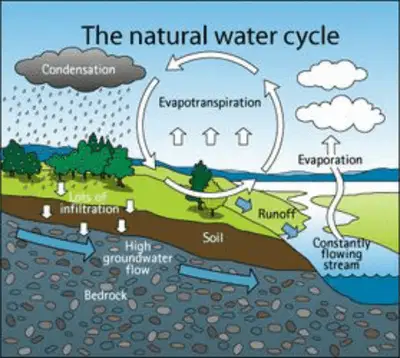
The result
Even though we don’t know
for sure where the water on
earth originated from we know that the water cycle brought rain upon the barren rocks over and over, dissolving minerals and carrying them into rivers and then the ocean where the salts made the ocean salty.
SES1. Obtain, evaluate, and communicate information to investigate the composition and formation of Earth systems, including the Earth’s place in the solar system.
a. Construct an explanation of the origins of the solar system from scientific evidence including the composition, distribution and motion of solar system objects.
(Clarification statement: The nebular hypothesis should be included in this element.)
b. Ask questions to evaluate evidence for the development and composition of Earth’s early systems, including the geosphere (crust, mantle and core), hydrosphere and atmosphere.
(Clarification statement: The differentiation by density of Earth into crust, mantle and core should be included in this element.)
c. Develop a model of the physical composition of Earth’s layers using multiple types of evidence (e.g., Earth’s magnetic field, composition of meteorites and seismic waves).
(Clarification statement: Earth’s layers should include crust, mantle, inner core and outer core.)
Show answer
Auto Play
Slide 1 / 68
SLIDE
Similar Resources on Wayground

66 questions
Deason Unit 1 Chemistry of Life
Presentation
•
9th Grade - University
63 questions
The Carrying Capacity of Ecosystems Lesson
Presentation
•
9th - 12th Grade
61 questions
Intro to Oceanography
Presentation
•
9th - 12th Grade
63 questions
5th Six Weeks Test Review
Presentation
•
9th - 12th Grade
59 questions
Stars Lesson
Presentation
•
9th - 12th Grade
59 questions
Understanding Populations
Presentation
•
9th - 12th Grade
67 questions
Unit 1 Lessons (Forces, Equilibrium, Inertia)
Presentation
•
9th - 12th Grade
Popular Resources on Wayground
10 questions
HCS SCI 03 Summer School Assessment 1

Quiz
•
3rd Grade
15 questions
HCS SCI 05 Summer School Assessment 1 Review
Quiz
•
5th Grade
22 questions
Day 9 Equations and Inequalities Review
Quiz
•
9th Grade
10 questions
Writing and Identifying Ratios Practice
Quiz
•
5th - 6th Grade
7 questions
PYRAMID PERSPECTIVES part 1
Presentation
•
9th - 12th Grade
12 questions
Understanding the Fourth of July
Quiz
•
9th Grade
15 questions
Soccer World Cup Quiz Questions
Quiz
•
7th Grade