Understanding Populations
Presentation
•
Science, Biology
•
9th - 12th Grade
•
Medium
+3
Standards-aligned
David Blankenship
Used 1+ times
FREE Resource
26 Slides • 33 Questions
1
Unit 5 Population and Wildlife Conservation
Understanding Populations
2
3
4
5
6
7
8
9
10
Multiple Select
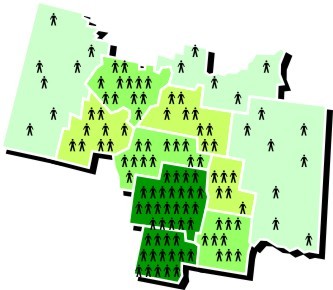
What are the three types of population distribution?
There are three types of population distribution: __________, _________, and ______________.
Uniform
Random
clumped
mitigated
11
Multiple Choice
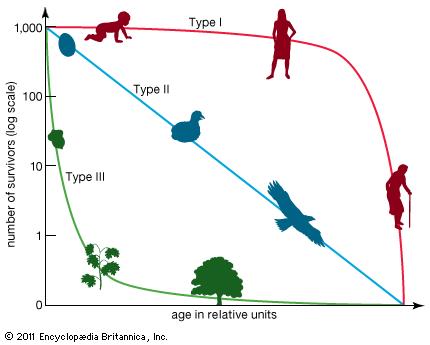
The mortality rate of organisms following a type I survivorship curve is __________.
fairly constant throughout life
higher in post-reproductive years
lower after the organisms become established
unrelated to age
12
Multiple Choice
Describes how the organisms are spread out from one another.
Denisty
Volume
Distribution
Population pattern
13
Multiple Choice
14
15
16
17
18
Multiple Choice
The spread of disease increases with physical contact, we call this form of death
Density-Dependent
Density-Independent
Density-Loose
Population Vigor
19
Multiple Choice
The relationship between acacia ants and acacia trees is known as...
Commensalism
Parasitism
Mutualism
Predation
20
Multiple Choice
A bird that feeds at NIGHT and a bird that feeds during the DAY from the same flower is an example of
direct competition
mutualism
indirect competition
indirect commensalism
21
22
23
24
25
Multiple Choice
26
Multiple Choice
27
Multiple Choice
28
29
Multiple Choice
30
31
32
Multiple Choice
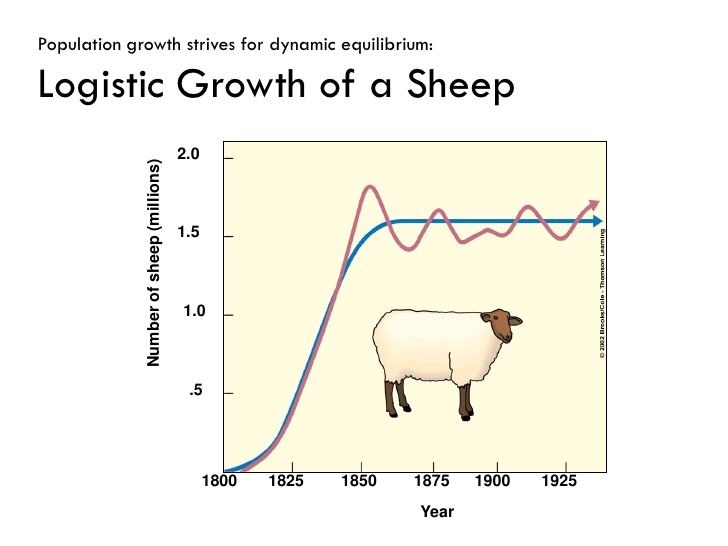
This graph shows ....
When one population increases, the other decreases.
When one population decreases, the other increases.
When one population increases, the other increases instantly.
When one population increases, it causes the other to increases shortly after.
33
Multiple Select
Which of the following are examples of a density independent factors?
forest fire
seasonal cycles
storms
disease
34
Multiple Select
Which of the following are density dependent factors?
competition for resources
predation
disease
natural disasters
35
Multiple Choice
36
Multiple Choice
37
Multiple Choice
38
Multiple Choice
39
Multiple Choice
40
Multiple Choice
41
42
Multiple Choice
43
Multiple Choice
44
Multiple Choice
In which type of interaction between species does ONE species BENEFIT by HARMING ANOTHER species but not killing it?
predation
parasitism
mutualism
commensalism
45
Multiple Choice
46
47
48
49
50
Multiple Select
Select all the correct answers.
The current human population is reaching nearly eight billion people and will continue to grow. Which are the consequences of population growth?
increase in population density
decrease in birth rates
limited resources
decrease in diseases
51
Multiple Choice
What pattern of migration do whales follow?
one return journey
one direction only
multiple return journeys
daily movements
52
Multiple Choice
What term describes the spacing of organisms relative to each other?
Density
Dispersion
Size
Population
53
Multiple Choice
What are two ways do decrease a population's growth rate?
Mortality and Natality
Mortality and Emigration
Natality and Immigration
Immigration and Emigration
54
Multiple Choice
What are two ways to add to a population's growth rate?
Mortality and Emigration
Mortality and Natality
Immigration and Emigration
Natality and Immigration
55
Multiple Choice
What are the abiotic factors in the environment that affect populations called?
Density-Independent Factors
Density-Dependent Factors
Carrying Capacity
Non-Living Things
56
Multiple Choice
What are the biotic factors in the environment that have an effect on populations called?
Density-Independent Factors
Density-Dependent Factors
Carrying Capacity
Living Things
57
Multiple Choice
What is the movement of individuals out of a population called?
Immigration
Emigration
Migration
Capacity
58
Multiple Choice
What is the movement of individuals into a population called?
Immigration
Emigration
Migration
Capacity
59
Unit 5 Population and Wildlife Conservation
Understanding Populations
Show answer
Auto Play
Slide 1 / 59
SLIDE

Similar Resources on Wayground
53 questions
Cells
Presentation
•
9th - 12th Grade
53 questions
Nuclear Fusion
Presentation
•
9th - 12th Grade
53 questions
DNA Structure and Replication
Presentation
•
9th - 12th Grade
56 questions
Cell Cycle
Presentation
•
9th - 12th Grade
51 questions
Human Impact on Earth
Presentation
•
9th - 12th Grade
55 questions
PS4.2 Wave Interactions
Presentation
•
8th Grade - University
51 questions
Science Knowledge Survey
Presentation
•
9th - 12th Grade
56 questions
Lesson 5- Constitutional Convention & Compromises
Presentation
•
9th - 12th Grade
Popular Resources on Wayground
10 questions
5.P.1.3 Distance/Time Graphs
Quiz
•
5th Grade
10 questions
Fire Drill
Quiz
•
2nd - 5th Grade
20 questions
Equivalent Fractions
Quiz
•
3rd Grade
22 questions
School Wide Vocab Group 1 Master
Quiz
•
6th - 8th Grade
20 questions
Main Idea and Details
Quiz
•
5th Grade
20 questions
Context Clues
Quiz
•
6th Grade
20 questions
Inferences
Quiz
•
4th Grade
12 questions
What makes Nebraska's government unique?
Quiz
•
4th - 5th Grade
Discover more resources for Science
10 questions
Exploring the Layers of the Earth
Interactive video
•
6th - 10th Grade
25 questions
Naming Ionic and Covalent Compounds
Quiz
•
9th Grade
20 questions
Balancing Chemical Equations
Quiz
•
9th Grade
15 questions
Protein synthesis
Quiz
•
9th Grade
20 questions
Human Impact on the Environment Review #2
Quiz
•
9th Grade
20 questions
Newton's Laws of Motion
Quiz
•
9th Grade
20 questions
Mendelian Genetics Review
Quiz
•
9th Grade
16 questions
Balancing Chemical Equations and Types of Reactions
Quiz
•
9th - 10th Grade