

Homework Session 1 Power Generation

Presentation
•
Instructional Technology
•
Professional Development
•
Medium

Darren Harvey
Used 4+ times
FREE Resource
21 Slides • 8 Questions
1

E.ON
QSQ Level 3
Electrical Installation
2

LCL Awards
Level 3 Certificate in Installing Testing and Ensuring Compliance of Electrical installations in Dwellings
Homework Session 1
Unit
Learning Outcome (LO)
3006
1.1
By the end of this session you should:
Understand how power is generated using both fossil and renewable sources
3

Power
Generation
4

Electricity Supply
Electricity is a relatively new source of energy.
In 1831 Michael Faraday discovered how
to convert mechanical power into electrical
energy.
The first practical application was a lighthouse in 1856.
It was not until the 1880’s that power was produced commercially.
At the turn of the 20th century the full benefits to industry were realised.
In 1916 the power stations were linked together and the national grid came into being.
Electrical power in the UK is produced from five
main sources.
5
Multiple Select
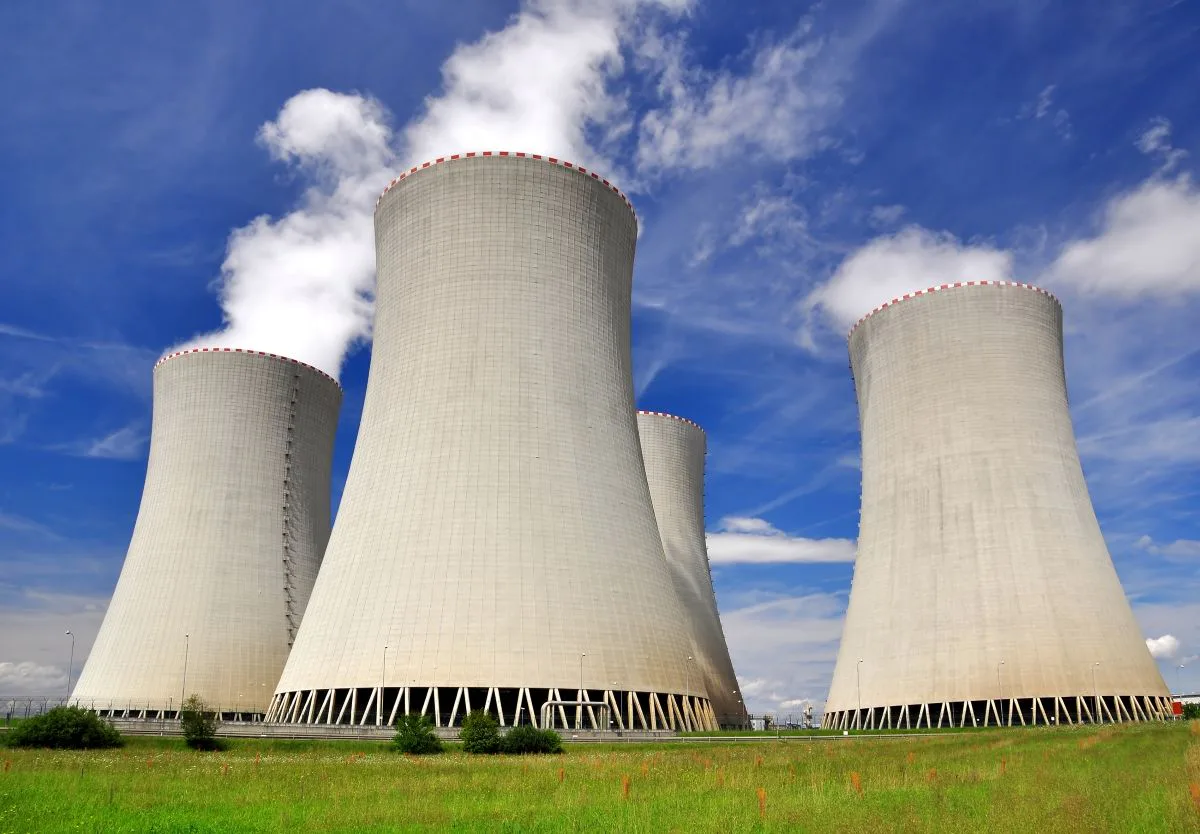
What are the main sources of electricity generation in the uk?
Natural Gas
Nuclear
Hydroelectric
Wind
Solar
6

UK Power Sources
The UK used the following fuels in energy production in 2023:
Coal - 1.2%
Gas - 27.5%
Solar - 5%
Wind - 32%
Hydroelectric - 1.4%
Nuclear - 14.95
Biomass - 6.7%
The uk also imports and exports energy to neighbouring countrys but the total percentage of import is 13.3% and export is 1.9%
7
Other Power Sources
Electricity can be produced with other sources of power.
Geothermal uses the heat from the
earth to provide a supplement to heating water. This source of power is used in Iceland and New Zealand
We can also use methane that is produced from rubbish in land fills. Syphoning off the methane gas produced can contribute to the production of energy.
8


Producing Power
Coal, oil, nuclear and bio-mas energy all
heat water up until it is high pressure
steam.
This steam then drives turbines, which
drive generators, that produce the
electricity.
Turbines are the mechanical way of
converting steam into rotational energy.
Generators convert rotational energy into
electrical energy.
These types of generation is by
means of a Thermal Power Plant
13
9

Turbines are the mechanical way of converting steam into rotational energy
Generators convert rotational energy into electrical energy
Boiler
Steam
(High
pressure)
Condensate (water)
Mechanical
power
Heat & mechanical
losses
Heat
losses
Mechanical and
electrical losses
Electrical
power
(Coal etc)
Energy input
Water
Turbine
Generator
Reservoir
Block diagram of electrical
power production
10


Coal fired power station
11

16
Nuclear Power plant
Watch this video before moving on.
12
Multiple Choice
A generating station in which nuclear energy is converted into electrical energy is known as
A nuclear power station
A thermal Power station
A Hydro power station
None
13
Multiple Choice
Which of the following element is used as a fuel for Nuclear power plant?
Boran
Cadmium
Uranium
Graphite
14
Multiple Choice
Which of the following is disadvantage of a nuclear power plant?
Carbon emission is Zero
Uses less fuel
less space required
highly Radio active
15
Multiple Choice
The process of Splitting up the uranium into 2 Atoms is known as
Nuclear fission
Nuclear fusion
condensation
emission
16
Multiple Choice

What part of the nuclear reactor is pictured?
Turbine
Fuel rods
Generator
Transmission lines
17
Multiple Choice
Which of the following element used as coolant?
Sodium
Water
Petrol
Carbon dioxide
18
Multiple Select
The advantage of a nuclear power plant is?
Higher efficiency than solar power plant
The fuel is cheap
The fuel source can be easily obtained
The fuel is radioactive
19

Producing Power
Gas turbine generators work
much like a jet engine on an
airplane.
The combustion of natural gas
within a chamber produces a
thrust which turns a turbine that is connected to a generator via a shaft.
There is no need for a cooling
tower as we don’t need to cool
water vapor as we do in a thermal power plant and therefore can be smaller.
17
20

Gas
Gas is heated up and driven
through the turbines to produce
the electricity
They are popular for three reasons
• They can be built smaller
• They can be run up to full power
quicker than a thermal power
plant.
• The exhaust gasses can be utilised
in a secondary cycle to produce
more electricity.
21

Hydroelectric Power
Hydroelectric power plants are
found in areas of high rainfall, they
are placed beside rivers or within
dams.
The large head of water is
released into the penstock which
flows through the turbine, out the
draft tube and onwards continuing
through its natural water flow
down river.
The turbine rotates the generator
via a shaft and electricity is
produced.
Hydro-electric is not a sustainable
source of electricity as when the
head of water is depleted it needs
time to re-fill.
It also requires areas of land to be flooded and can cause variance in river flows.
19
22

Pumped Storage Generation
The water passes through the turbines in the same
way but the water is stored in a lake further down the
mountain, when there is less demand the water is
pumped back to the top.
It is expensive and is only used when the demand for power
is excessive
23

Wind Generation
Wind is fast becoming the
prominent energy generator
here in the UK.
The past year showed that
the majority of electrical
energy (32%) was produced
by wind.
This figure is set to rise as
more wind farms are
commissioned reducing the
need to rely on fossil fuels.
21
24
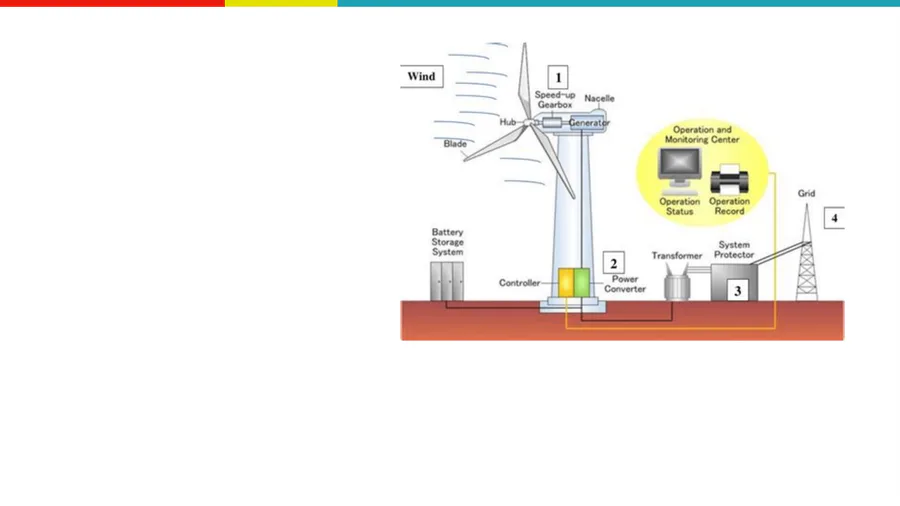
Wind Generation
How it works
22
Wind hits the blade of the
propeller (aerofoil in shape) which causes the
propeller to rotate.
The propeller rotates about a shaft.
The shaft turns the
generator via a shaft and
gearbox setup (to speed up the rotation)
The generator
produces the electricity.
25


Solar Generation
Solar unlike all other power
generation does not rely on the
rotation of a generator.
Solar generation relies on the
sun alone and is therefore most
optimal at the middle of the
day.
23
26
13

Solar panels are made from silicone or other semi-conductor materials within a metal frame and usually a glass front.
Within sunlight there are pockets of energy called photons, when these little pockets of energy hit the solar panel, the semi-conductor material it releases electrons and produces and electric charge.
This electric charge is Direct Current (DC)
and needs to be converted into AC for ease of transmission and use via an inverter.
Solar Generation
27

National Grid
The link on the next page takes you to a website where you can view the statistics from the national grid and shows you the power generation currently and sources of generation.
28

National Grid: Live Home
You can open this webpage in a new tab.
29

The
End
E.ON
QSQ Level 3
Electrical Installation
Show answer
Auto Play
Slide 1 / 29
SLIDE
Similar Resources on Wayground

21 questions
Best Method: Solving Systems of Equations
Presentation
•
7th - 10th Grade
21 questions
Cold War Intro
Presentation
•
KG
23 questions
Chapter 1
Presentation
•
Professional Development
21 questions
military time
Presentation
•
Professional Development
19 questions
SIMPLE PAST TENSE
Presentation
•
Professional Development
20 questions
Would You Rather?
Presentation
•
KG
24 questions
Instructional Technology & Professional Development
Presentation
•
University - Professi...
21 questions
Activity
Presentation
•
University
Popular Resources on Wayground
24 questions
PBIS-HGMS Day 10

Quiz
•
6th - 8th Grade
10 questions
HCS SCI 03 Summer School Review 3
Quiz
•
3rd Grade
11 questions
Home Scope
Quiz
•
7th - 8th Grade
15 questions
HCS SCI 05 Summer School Assessment 3 Review
Quiz
•
5th Grade
35 questions
Lufkin Road Middle School Student Handbook & Policies Assessment
Quiz
•
7th Grade
18 questions
Geo 11.3 Area of Circles and Sectors
Quiz
•
9th - 11th Grade