

Training principles and FIIT

Presentation
•
Physical Ed
•
University
•
Practice Problem
•
Easy

ormond heather
Used 7+ times
FREE Resource
19 Slides • 14 Questions
1
Training principles and variables of training
2
Next week = Practical observation
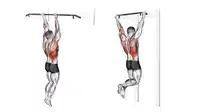
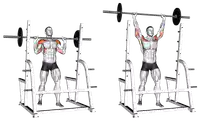
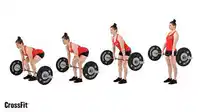
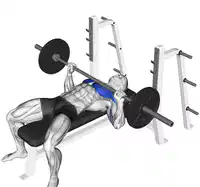
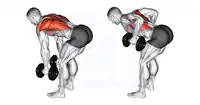
Demonstrate correct technique for 6 barbell exercises

3
Open Ended

What is cool teacher?
4
Open Ended

What is good teacher?
5
Poll

Can a teacher be both?
Yes
No
Not in my experience
6
Feedback based on Assessment 1
7
ESSA Form
Goals
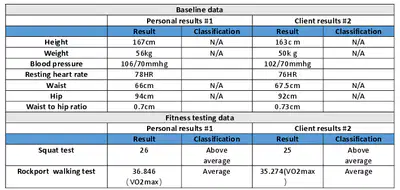
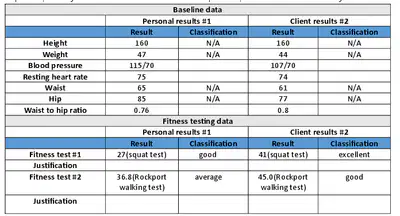
Fitness testing table
Feedback
References

8
Multiple Choice
S in SMART goals means specific. Which of the ones below best describes specific?
Specific means challenging but possible
Specific means describe the goal and give numbers
Specific means how will i measure my progress
9
Multiple Choice
Which of the below is the best example specific?
I want to get stronger
I want to be fitter for a marathon. Currently I can't run a marathon
I want to do 25 push ups in one minute. Currently I can do 20
10
Multiple Choice
Which best describes attainable?
Challenging to achieve but possible
Easy to achieve or each
11
Multiple Choice
Which best describes attainable?
Challenging to achieve but possible
Easy to achieve or each
12
13
References
1. No references
2. Wrong references format
3. Missing intext citations
Use APA guidelines
14
In-text vs Reference list
1. Intext = Short version as you write.
2. Reference list = Long version at the end to find the article
15
Poll

What type of reference is this?
Intext
Reference list
16
Poll

What type of reference is this?
Intext
Reference list
17
Purpose of today is to give you the principles to make a training program.
今天的目的是给你制定训练计划的原则
18
What are the principles of training?
Why are they important?
How do we apply them?
Variables of training
Why are they important?
How do we apply them?
Learning objectives

19
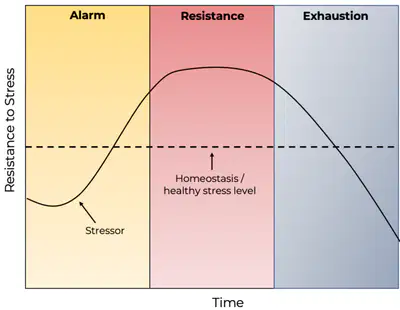
Alarm, resistance, and exhaustion are stages your body goes through when you train:
Alarm: This is when your body first reacts to the new stress of training, and you feel tired or sore.
Resistance: Your body gets used to the training and becomes stronger or fitter.
Exhaustion: If you train too hard for too long without rest, your body gets too tired and can get weaker or injured.
Training adaptations
20
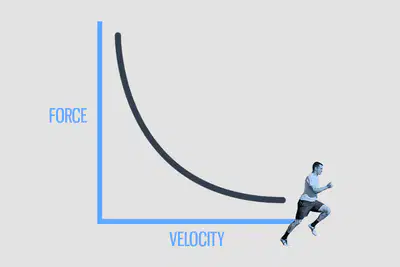
Specificity = should train for what you want to get better at. For example, if you want to run faster, practice running. If you want to lift heavier
weights, practice lifting weights.Application = Make sure training is similar to the goal
Lifting weights for muscle builidng
Explosive movements for speed
Lifting heavy weights to get stronger
Training principles
21
Multiple Choice

Which is the form of exercise to improve in this activity?
Sprinting
Push ups
Yoga
Stretching
22
Multiple Choice

Which is the form of exercise to improve in this activity?
Lifting weights
Jumping
Running
Swimming
23
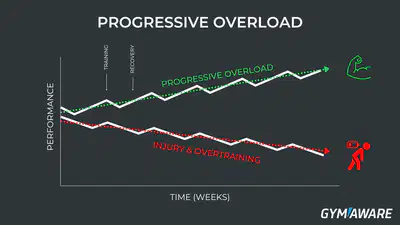
Progressive overload = means slowly making your workouts harder to get stronger. For example, lift more weight or run longer distances over time.
Application = Make it harder each week
More intensity (heavier)
Less rest
More repetitions or sets
Training principles
24
Multiple Choice
How would I apply "progressive overload" if this week I ran 10k?
25
Multiple Choice
How would I apply "progressive overload" if this week I lifted 80kg?
26
Reversibility = If you don't use it, you lose it!
Application = If stop training your progress will subside
Training principles

27
Variation = Consistently change things to keep it interesting
Application = Change something every 2 weeks
Change exercises
Change repetitions
Change equipment
Training principles

28
Multiple Select
What 3 ways could I apply "variation"?
Change the exercise
Change the equipment
Change the weight
Make it similar to the activity
29
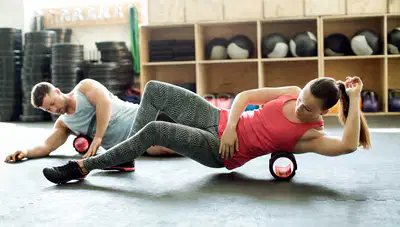
Rest and recovery = Regularly take breaks to avoid injury
Application = Aim for 48-72 hours rest between training sessions
Training principles
30
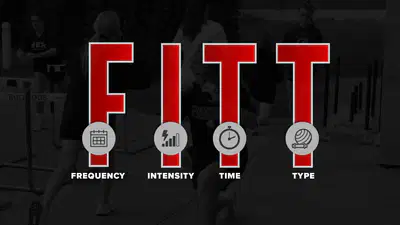
To make a training plan for an individual we use the FIIT principles
How often they want to train
How hard we should train
How much time they have for each session
What type of training would be best
FIIT principles
31
Incorrect programming
Sessions too long
Sessions too hard
Training too many times per week
Risk of no FIIT principles

32
Frequency: 每周训练多少次。
例如: 每周训练3次。Intensity: 训练的努力程度。
例如: 做挑战性的练习与做简单的练习。Time: 每次训练的持续时间。
例如: 跑步30分钟。Type: 你进行的训练类型。
例如: 举重与有氧运动。
FIIT principles
33
Head online to Tutorial task for todays lecture
Training principles and variables of training
Show answer
Auto Play
Slide 1 / 33
SLIDE
Similar Resources on Wayground

26 questions
Sentence Analysis
Presentation
•
University
24 questions
Adjectives – gradable and non-gradable
Presentation
•
University
27 questions
Microbiology Survey
Presentation
•
University
24 questions
Factoring polynomials: special cases
Presentation
•
University
23 questions
PRESENT PERFECT OR PAST SIMPLE?
Presentation
•
University
25 questions
Physical and Chemical Changes Review
Presentation
•
8th Grade
25 questions
01 Python Basics
Presentation
•
University
27 questions
Muscular Endurance
Presentation
•
University
Popular Resources on Wayground
15 questions
Grade 3 Simulation Assessment 1

Quiz
•
3rd Grade
22 questions
HCS Grade 4 Simulation Assessment_1 2526sy
Quiz
•
4th Grade
16 questions
Grade 3 Simulation Assessment 2
Quiz
•
3rd Grade
19 questions
HCS Grade 5 Simulation Assessment_1 2526sy
Quiz
•
5th Grade
17 questions
HCS Grade 4 Simulation Assessment_2 2526sy
Quiz
•
4th Grade
20 questions
Equivalent Fractions
Quiz
•
3rd Grade
24 questions
HCS Grade 5 Simulation Assessment_2 2526sy
Quiz
•
5th Grade
20 questions
Math Review
Quiz
•
3rd Grade
Discover more resources for Physical Ed
36 questions
8th Grade US History STAAR Review
Quiz
•
KG - University
25 questions
Spanish future tense
Quiz
•
10th Grade - University
55 questions
Post Malone Addtion (Tres)
Quiz
•
12th Grade - University
15 questions
Quotation Marks vs. Italics for MLA
Quiz
•
9th Grade - University
20 questions
Disney Trivia
Quiz
•
University
50 questions
AP Biology Exam Review 2017
Quiz
•
11th Grade - University
215 questions
8th Physical Science GA Milestones Review
Quiz
•
KG - University
20 questions
Ch15_review_TEACHER
Quiz
•
University