

biomolecule review

Presentation
•
Biology
•
9th Grade
•
Hard

Sarahi Ontiveros
FREE Resource
10 Slides • 25 Questions
1
Biomolecule and Enzyme Interventions
1. I can compare the structure of the 4 main biomolecules and justify my classification.
2. I can discuss the function of each of the main groups of biomolecules.
3. I can describe the role of enzymes and their purpose.
4. I can examine the conditions that affect enzyme activity.
Success Criteria
5A-I can relate the functions of different types of biomolecules, including carbohydrates, lipids, proteins, and nucleic acids, to the structure and function of a cell.
11B-I can investigate and explain the role of enzymes in facilitating cellular processes.
Learning Intentions
2
3
4
Vocabulary List
Carbon
Monomer
Polymer
Carbohydrate
Lipid
Protein
Nucleic Acid

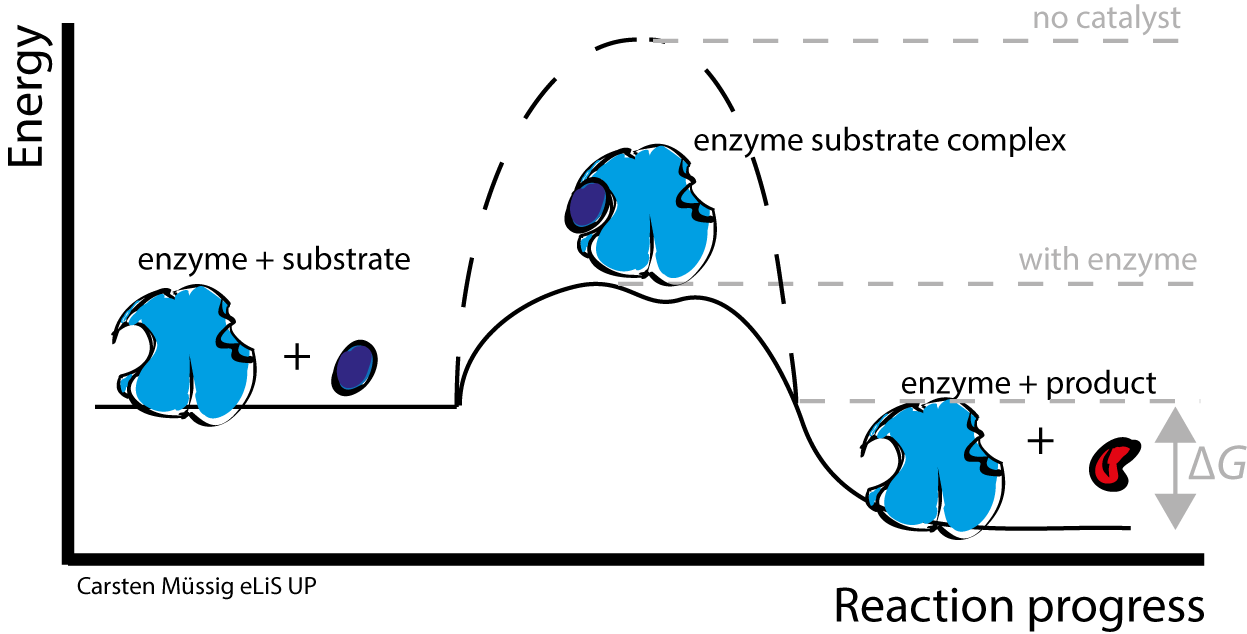
5
Hotspot
Which image shows an example of the genetic material of all living things?
6
Categorize


7
Match
Builds muscle
Makes up the cell membrane.
Stores genetic information.
Short term energy
Proteins
Protein
Lipid
Nucleic Acid
Carbohydrates
Speeds up chemical reactions
Protein
Lipid
Nucleic Acid
Carbohydrates
Speeds up chemical reactions
8
Carb Facts
Monomer : Monosaccharides
Polymer : Polysaccharides
Function : Short term energy
Example : Glucose, Lactose, Starch
Elements : C, H, O

9
Multiple Select
Carbohydrates contain which of the following elements?
Carbon
Hydrogen
Oxygen
Nitrogen
Phosphorus
10
Lipid
Fats, Oils, Waxes, Hormones, Steroid

11
Lipid Facts
Monomer : Fatty Acid & Glycerol
Polymer : Triglyceride, Steroid
Function : Long term energy
Example : Phospholipid, wax, butter, olive oil
Elements : C, H, O (sometimes P)

12
Multiple Choice
What is the function of Lipids?
Hold genetic information
Short term energy
Long term energy
Transport
13
Multiple Select
Lipids contain which of the following elements?
Carbon
Hydrogen
Oxygen
Nitrogen
Phosphorus
14
Protein Facts
Monomer : Amino Acid
Polymer : Polypeptide
Function : EVERYTHING; structure, reactions, support, transport
Example: Keratin (hair/nails), Lactase, Hemoglobin
Elements : C, H, O, N

15
Multiple Select
Proteins contain which of the following elements?
Carbon
Hydrogen
Oxygen
Nitrogen
Phosphorus
16
Multiple Choice
The monomer of a protein is called?
Amino Acid
Monosaccharide
Lipid
Nucleotide
17
Nucleic Acid
DNA & RNA

18
Nucleic Acid Facts
Monomer : Nucleotide
Polymer : Nucleic Acid
Function : Carry genetic info
Example : DNA & RNA
Elements : C, H, O, N, P

19
Multiple Choice
What is the function of Nucleic Acids?
Hold genetic information
Short term energy
Long term energy
Everything
20
Multiple Select
Nucleic Acids contain which of the following elements?
Carbon
Hydrogen
Oxygen
Nitrogen
Phosphorus
21
Multiple Choice
Which of the following is the monomer of nucleic acids?
Amino Acids
Lipids
Monosaccharides
Nucleotide
22
Multiple Choice
Your friend is really irritable while sitting in class. He feels lightheaded and dizzy. He is also feeling a bit of confusion and brain fog.
What inferences are most realistic to make about the biomolecules in your friend's body?
He is running low on fast sources of energy
Proteins are being broken down or reshaped
The coding information in the cell is incorrect or incomplete
There is not enough insulation or energy storage
23
Multiple Choice
Dystrophin is a molecule that holds muscle fibers together. In people with muscular dystrophy, a genetic disease that causes people to lose the ability to walk at a young age, dystrophin molecules never develop.
What biomolecule is this person missing?
Carbohydrates
Lipids
Proteins
Nucleic Acids
24
Multiple Choice
Bowhead whales can have a specialized layer of blubber up to 30 cm’s thick. This acts as a special insulation that traps the heat their muscles create from movement.
What biomolecule is the blubber primarily made of?
Carbohydrates
Lipids
Proteins
Nucleic Acids
25
Multiple Choice
Helicase is an example of a biomolecule that can destroy bonds between DNA strands during DNA replication.
What biomolecule is helicase?
Carbohydrate
Lipid
Protein
Nucleic Acid
26
Multiple Choice
There is a person with Albinism. This individual does not produce melanin. Melanin allows for people to be protected from the sun. Since Albinos do not produce this protein they are prone to getting sunburns.
What biomolecule results in the individual having albinism?
Carbohydrates
Lipids
Proteins
Nucleic Acids
27
Labelling
Label the parts of the enzyme model
Products
Substrate
Active site
Enzyme
28
Hotspot
Click on the temperature that this enzyme is having optimum activity.
29
Multiple Choice

30
Multiple Choice
31
Multiple Choice
32
Multiple Choice
What is the purpose of an enzyme?
control how many reactions occur
raise activation energy
give permission for the reaction
speed up chemical reactions
33
Dropdown
34
Match
Match the following Macromolecules to its structure
Carbohydrate
Lipid
Nucleic Acids
Protein
Carbohydrate
Lipid
Nucleic Acids
Protein
35
Open Ended
Using 3-4 complete sentences and the CER method explain why biomolecules are essential for life.
Biomolecule and Enzyme Interventions
1. I can compare the structure of the 4 main biomolecules and justify my classification.
2. I can discuss the function of each of the main groups of biomolecules.
3. I can describe the role of enzymes and their purpose.
4. I can examine the conditions that affect enzyme activity.
Success Criteria
5A-I can relate the functions of different types of biomolecules, including carbohydrates, lipids, proteins, and nucleic acids, to the structure and function of a cell.
11B-I can investigate and explain the role of enzymes in facilitating cellular processes.
Learning Intentions
Show answer
Auto Play
Slide 1 / 35
SLIDE
Similar Resources on Wayground

25 questions
Mutations
Presentation
•
9th - 10th Grade
29 questions
Pedigree Lesson 2022
Presentation
•
7th - 10th Grade
28 questions
DNA - RNA
Presentation
•
9th Grade
27 questions
Valence and Lewis Dot Diagrams
Presentation
•
9th Grade
30 questions
Atomic Structure and Periodic Table
Presentation
•
9th Grade
29 questions
Review BIODIVERSITY
Presentation
•
9th Grade
26 questions
Mitosis
Presentation
•
9th Grade
30 questions
photosynthesis
Presentation
•
9th - 10th Grade
Popular Resources on Wayground
20 questions
STAAR Review Quiz #3

Quiz
•
8th Grade
20 questions
Equivalent Fractions
Quiz
•
3rd Grade
6 questions
Marshmallow Farm Quiz
Quiz
•
2nd - 5th Grade
20 questions
Main Idea and Details
Quiz
•
5th Grade
20 questions
Context Clues
Quiz
•
6th Grade
20 questions
Inferences
Quiz
•
4th Grade
19 questions
Classifying Quadrilaterals
Quiz
•
3rd Grade
12 questions
What makes Nebraska's government unique?
Quiz
•
4th - 5th Grade
Discover more resources for Biology
14 questions
Ecological Succession: Primary and Secondary
Quiz
•
9th Grade
20 questions
Structure & DNA Replication Quiz
Quiz
•
9th Grade
50 questions
Biology EOC Review
Quiz
•
9th Grade
33 questions
Module C - Virus vs Cells, Biomolecules & Enzymes
Quiz
•
9th Grade
25 questions
photosynthesis and cellular respiration
Quiz
•
9th Grade
25 questions
STAAR Evolution Vocabulary
Quiz
•
9th Grade
20 questions
Food Chains and Food Webs
Quiz
•
7th - 12th Grade
22 questions
Human Body Systems Overview
Quiz
•
9th Grade