

Untitled Lesson

Presentation
•
Instructional Technology
•
1st Grade
•
Hard

Laura Dye
FREE Resource
86 Slides • 0 Questions
1

SAC 1 revision
2

1. Slides
2. Quizzi sac
3. Mark Laura’s practice SAC
4. Actual prac sac ( sac conditions)
5. Check understanding of checklist
6. Go home and relax
7. Go into SAC happy and ready
3

Outline one physiological change that is caused by the
Parasympathetic NS
●Heart rate doesn’t just ‘go back to normal’ (both systems are
counterbalancing each other)
●Slows heart rate to return back to a state of homeostasis
●In order to regulate blood flow around the body at a steady state.
●Stimulates digestion in order to replenish energy and resources now that
there is no longer a threat present (emergency functions are no longer
needed)
4

How to explain the fight, flight, freeze response
you should not use the words of the questions in your answer for
example if i asked you to explain the physiological response that
occurs when you encounter a lion in the wild.
You should not state the flight, fright, freeze response. Instead
explain what you mean. For example ‘confront a threat’ and ‘run
away to escape a threat’ and go undetected. (vcca advice)
Edrolo advice, 3 pieces of information needed 1. How is it
activated 2. What does it do? 3. Why
5

What is the flight, fright, freeze response and what
function does it serve?
6

Fight, flight, freeze
Edrolo advice, 3 pieces of information needed 1. How is it
activated 2. What does it do? 3. Why
The fight-flight-freeze response is initiated by the sympathetic
division of the autonomic nervous system. (1 mark)
This response prepares the body when under threat, in order to
increase chance of survival (1 mark)
Individuals will either fight (confront the threat), flight (run away
from the threat) or freeze (go unnoticed) (1 mark)
7

Neurons
8

A waiter brings sam some coffee in a glass. She touches
the glass and quickly pulls away her hand when she
realises the cup is too hot to hold. Explain the role of
the three types of neurons in this scenario (3marks)
9

The three neurons
Sensory
Inter
Motor
10

Answer. Always use the person’s name, always refer back to
relevant information in the question always re-read the question +
your answer
Sensory- Sarah’s sensory neurons would have picked up the sensory
stimuli (the cup being too hot) and sent it up the afferent pathways to the
spinal cord where there are interneurons. (1 mark)
Inter- From there a neural impulse in sent up to the brain where the brain
processes the information. A motor response is transmitted down the spinal
cord via interneurons (1 mark)
Motor- This message is then sent to the motor neurons in Sarah’s hand to
make the hand move and put down the hot cup. (1 mark)
11

Voluntary VS spinal reflex
12

Back to sam for a moment - conscious decision
A waiter brings sam some coffee in a glass. She
touches the glass and quickly pullsaway her
hand when she realises the cup is too hot to hold.
Explain the role of the three types of neurons in
this scenario (3marks)
Voluntary or
involuntary?
Voluntary or
involuntary?
13

What do you think?
Tony was making his wife Linda a cup of tea at breakfast.
Whilst pouring the hot water into the cup he sloshed some
water over the side and burnt his hand. He immediately
pulled his hand away and dropped the cup. Outline the
sequence of events in Tony’s response. (5 marks)
14

What do you think?
A waiter brings Samantha some coffee in a glass. She touches
the glass and quickly pulls away her hand when she realises
the cup is too hot to hold.
15

What do you think?
Serena was sitting in the garden and playing when she felt something crawl
onto her leg. She saw that it was a bee and brushed it away. Shortly after, she
involuntarily kicked out her leg and then felt a stinging sensation that made her
scream loudly in pain. She realised that she had been stung by a bee.
In terms of nervous system functioning, name and explain Serena’s response
when she kicked out her leg. (3 marks)
16

Reflex arch or spinal reflex
Purpose - enables a faster reaction time in order to minimise harm.
Initiated- by interneurons in the spinal cord.
‘ before the brain has a chance to process’
5 steps, name and explain them
1.
2.
3.
4.
5.
17

What do you think?- Unconscious decision: Spinal
Reflex
Tony was making his wife Linda a cup of tea at breakfast.
Whilst pouring the hot water into the cup he sloshed some
water over the side and burnt his hand. He immediately
pulled his hand away and dropped the cup. Outline the
sequence of events in Tony’s response. (5 marks)
18

5 marks - 5 steps - 5 dot points
●Sensory neurons carry messages along an afferent pathway to interneurons in the
spinal cord.
●Interneurons in the spinal cord process and relay the message to motor neurons.
●Motor neurons carry the message along an efferent pathway to hand muscles,
causing an automatic/unconscious motor response. The cup is released by Tony
before the brain perceives the pain.
●While the spinal reflex occurs, interneurons are also carrying the sensory message
further up the spinal cord to the brain.
●The message is received in the area of the brain that processes this type of sensory
information & interprets it as pain in the hand.
19

1.
Miss D was cooking dinner when she touched the mental part of a hot saucepan
she immediately withdraws her hand from the saucepan 2. Later that night miss D
picked up a glass of water to have a drink.
Explain the neuron communication in scenario
1
1.Her sensory neurons ( somatic neurons) in
her hand sent a message via the afferent
pathways to the CNS ( interneurons in her
spinal cord)
2.The interneurons in her spinal cord
processed the information
3.And sent a message to the motor neurons
using the efferent pathway in the somatic
NS to Miss d’s hand BEFORE the brain has
a chance to process the information
Explain the neuron communication in scenario
2
1.Her sensory neurons ( somatic NS) in her
hand sent a message up the afferent tract
to the CNS ( spinal cord, interneurons)
2.The interneurons in her spinal cord sent
the message to her brain ( also
interneurons)
3.The brain processes the information
And sent a message to the motor neurons (
efferent pathways in the somatic NS) to
make Miss D’s hand move.
20

I can 100% say that there will be a question on either the sac or exam so having a
good grasp on this concept is important !!!!!!
21

Describe the process of the transmission of neural
information within neurons referencing the parts of the
neuron, and the electrical nature of the transmission 4
marks
22

●
Dendrites on the postsynaptic neuron receive neural information in
the form of neurotransmitters.
●
This information is passed onto the Soma. If the response is
excitatory the Soma will generate an electrical neural impulse which
●
Will travel down along the axon towards the axon terminals . Myelin
sheath insulates the axon, a fatty tissue ,that speeds up neural
transmission.
●
The axon terminals release neurotransmitters (chemicals) across
the synaptic gap onto the postsynaptic neuron's dendrites.
23

Distinguish between excitatory and inhibitory effects of a neurotransmitter.
24

●Excitatory neurotransmitters increase the likelihood of an action potential/neural impulse being generated within the
postsynaptic neuron and the message continuing.
●Excitatory neurotransmitters make it more likely that a postsynaptic neuron will fire an action potential, continuing
the message.
●Inhibitory neurotransmitters decrease the likelihood of an action potential/neural impulse being generated within the
postsynaptic neuron and therefore the message stops.
Many ways to say it.
Must say- postsynaptic neuron, more or less likely or increase/decrease
1.Excitatory = Glutamate
2.Inhibitory = GABA
These are the primary excitatory and inhibitory neurotransmitters of the CNS.
25

26

What causes Parkinson's?
Low levels of Dopamine X
Degeneration of Dopamine releasing neurons (needed)
In the Substantia Nigra (needed)
Which then leads to low levels of Dopamine
27


28


29

Discuss in detail how neurons communicate with each other
30

●Neurual Communication is an electrochemical process. The terminal button of the
pre-synaptic neuron releases a chemical (between neurons) called neurotransmitters
across the synaptic gap.
●This is received by the specific receptor sites on the dendrite of the postsynaptic
neuron.
●If the neurotransmitter is excitatory an action potential (electrical impulse) will fire
down the axon of the neuron (within the neuron) and the process will repeat again
with the next neuron.
●If the neurotransmitter is inhibitory the post-synaptic neuron will not fire an action
potential and the message stops there.
31


32


33

Poorly answered
prac sac
questions
34

GBA
35

Bidirectional communication link between the gut and the brain
The link is between the brain and the endocrine system, the gut brain axis can
effect, mood, emotional arousal and motivation.
36

1. Gut
The gut or the GI tract has three main functions
1.Digestion
2.
Immune system
3.
Produces neurotransmitters and neurohormones
37

2. Macrobiotic
Good and bad bacteria
Produces three neurotransmitters GABA, serotonin and dopamine that enter the
bloodstream and communicate with the brain and other organs.
38

3. Vagus nerve
39

4. The brain
40


41


42


43


44

45


46


47

48

DOT POINT 6
●
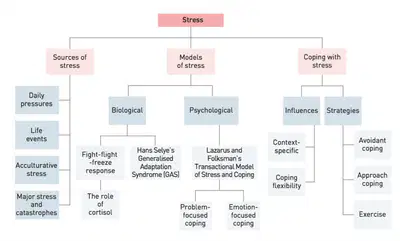
Causes of stress eg. Acculturative Stress
●
Eustress and Distress
49

DOT POINT 7
● The HPA Axis
● The role of Adrenaline and Cortisol in the stress response
● Selye’s General Adaptation Syndrome of alarm reaction
(shock/counter shock), resistance and exhaustion
● The role of the sympathetic (Fight/Flight or Freeze) and
parasympathetic nervous systems in the stress response
● Strengths and Limitations of Selye’s General Adaptation
Syndrome
50

DOT POINT 8
●Physiological and Psychological Behavioural, (Emotional (Affective), Cognitive Responses to Stress
●Lazarus and Folkman's Transactional Model of stress and coping: Primary and Secondary Appraisal
●Problem focussed and Emotion focused coping strategies
●Strengths and Limitations of Lazarus and Folkman's Transactional Model of stress and coping
51


52


53

My good friend Tayla
My good friend Tayla, when she gets stressed she ………………….
Include a physiological, behavioural, emotional and cognitive sign of stress.
My example: My good friend Tayla when she gets stressed she gets terrible
headaches (physiological), struggles to concentrate (psychological/C) in class,
feels anxious (Psychological/E) and eats all the time (psychological/B)!
54

List the 5 sources of stress
Define each source of stress
1.
2.
55

1.
Daily pressures
2.
Life events
3.
Acculturative stress
4.
Major stress
5.
Catastrophes
6.Acculturative stress: refers to the stress people experience in trying to adapt to a new culture when
living in it for a considerable period of time.
7.Major Stressor: An event that is extraordinarily stressful or disturbing for almost everyone who
experiences it.
8.Catastrophes: A stressor can disrupt and affect an entire community all at once (catastrophe).
9.Life Events: Involves change that forces us to adapt to new circumstances
Daily Pressures: Troubles or concerns that arise in day-to-day living
56

In your work books
Define stress
Activity 2
A. List three keywords that you need include in a
definition of distress and write an example
B. List three keywords that you need to include in a
definition of Eustress
C. What NS is activated when experiencing Eustress
and distress
D. What are three physiological responses you will
experience and why?
57

What happens when we perceive a stressor - FFF
Our body perceives the stressor as a threat
The sympathetic NS is activated
Bodily arousal increases ( e.g heart rate increases) … how?
Stress hormones are released ( adrenaline and noradrenaline = faster heart
rate, increased breathing
Cortisol then comes in buy how…. HPA axis
Why ? to continue arousal as a long term thing
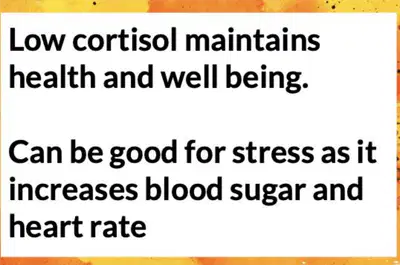
Cortisol GOOD in small amounts (regulates inflammation, HR, Blood sugar )
Cortisol is BAD in big amounts (lowers immune system, strain on heart and
blood sugar levels
58

Stress hormones
Hormone
Released by
Actions
Adrenaline
Sympathetic NS
Quick
Noradrenaline
Sympathetic NS
Quick
Cortisol
HPA Axis
Longer lasting
59


HPA axis
Activated when Cortisol needs to be released
A process in the body that releases cortisol (stress
hormones)
Hypothalamus
Pituitary gland
Adrenal cortex
A process that releases cortisol.
Step 1. Hypothalamus sends a message to the pituitary gland
Step 2. Pituitary gland releases ACTH into bloodstream
Step 3. ACTH stimulate adrenal cortex to release cortisol
60

HPA axis
Activated when Cortisol needs to be released
A process in the body that releases cortisol (stress hormones)
61

Hypothalamus
Pituitary gland
Adrenal cortex
62

All it is ……
A process that releases cortisol.
Step 1. Hypothalamus sends a message to the pituitary gland
Step 2. Pituitary gland releases ACTH into bloodstream
Step 3. ACTH stimulate adrenal cortex to release cortisol
63

How
cute
64


Cortisol
HPA axis is activated - cortisol is produced
Produced in the adrenal glands at times of
chronic stress
It is a stress hormone
It helps our body cope with stress
How?
By increasing blood sugar
Increasing heart rate
Increasing blood pressure
65

Cortisol
Is a vital hormone released to influence and regulate the body’s response to stress.
Cortisol is responsible for regulating the following
-Inflammation
-Blood glucose levels
-Immune function
-Blood pressure
-Heart rate
66

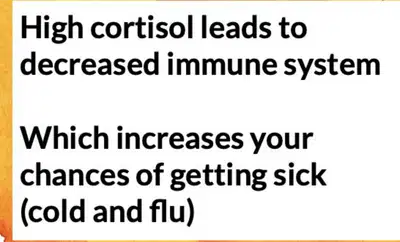
Cortisol + immune function
The direct link between cortisol and the immune system.
Cortisol = suppresses the immune system functioning
= decreased immune function
= suppressing the activity of the immune system
High levels of cortisol = lower immune system = you get sick ( cold, flu)
67

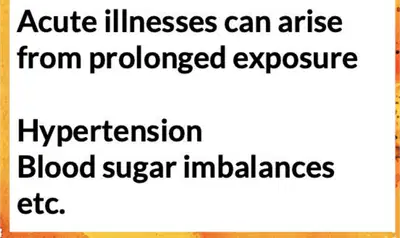
Cortisol prolonged stress
Hypertension - high blood pressure
Blood sugar imbalance
Diabetes
Cardiovascular disease
68

69

I LOVE A QUESTION
Lisa has been overloaded at work and is feeling very stressed. A few weeks go by
and Lisa has found herself with the flu.
Explain why an illness such as the flu is experienced by Lisa when she is under such
stress.
70

Explain why an illness such as the flu is experienced by Lisa when she is under such
stress.
●In response to the stressor, the HPA axis is activated and cortisol is released.
●Cortisol remains high for a prolonged period of time and cortisol decreases the immune
system.
This is makes Lisa more susceptible to illnesses and why she is sick.
71

72

●During the resistance stage, the HPA axis is activated and cortisol is released in
response to the stressor.
●Cortisol remains high for a prolonged period of time and cortisol decreases the
immune system.
●This is makes Tasha more susceptible to illnesses and why she is sick.
73


74

75


76

GAS Model
Is my favourite
part of this unit
77

Activity 1: On your summary page Draw and label the GAS graph (no cheating!)
Activity 2: On your summary page Draw in the HPA Axis flow diagram
78

79

Stage
Physiological changes
Effects on body
Alarm Reaction
Shock - temp drops, blood pressure drops
Countershock - Sympathetic NS activates
Adrenaline and noradrenaline
Cortisol initially release (small)
Increased HR
Increased Blood pressure
FFF
Stress hormones
Resistance
Sustained levels of cortisol are released
Immune system suppressed
Cold and flus can be likely
Exhaustion
Resources depleted (cortisol, sugar)
Resistance drops
Sympathetic NS is still activated and body
still in a state or arousal
Acute illness such as diabetes
can occur from prolonged cortisol
in blood stream
Can lead to heart stress etc.
80

Alarm reaction - cortisol only initially released in small amounts
Resistance - sustained levels of cortisol = lower immune system = cold and flus likely
Exhaustion - Sympathetic NS still activated which results in depleted resources and can
lead to acute illness
Bodies resistance to stress returns to normal ONLY when stressor is no longer present
81


82


83

Dot Point 7 Activities: Key Concepts FFF/HPA +
Cortisol/GAS
Activity 1: On your summary poster Draw and label the GAS graph (no cheating!)
Activity 2: On your summary poster Draw in the HPA Axis flow diagram
Activity 3: In your book
Activity 5: In your book summarise the functions of cortisol
84

1.
In your book: Practice Question: Miss Wiles was walking to school, and noticed that
there were a lot of snails on the footpath. List 5 problem focussed coping strategies and
5 emotion focussed coping strategies Miss Wiles could use.
2.
In your book draw the Lazarus and Folkman Flow Diagram
In your book: Practice Question: Tim and Matthew are identical twins. They both turn 18
next month and are already booked in for their driving tests. Tim is very anxious about doing
his test. He is worried that if he fails, he will be embarrassed and will withdraw from social
activities. Matthew is much more relaxed about doing the test and knows that if he does not
pass it the first time, there will be more times to do the test. Explain the different reactions of
Tim and Matthew to sitting their driving test with reference to the Lazarus and Folkman
transactional model of stress and coping. 6 marks
85

●Avoidance strategies involve Avoiding dealing with the stress by protecting
oneself from psychological distress. Activity is focused away from the stressor
and there is no attempt to actively confront the stressor and its causes.
Procrastinate and go on FB instead of studying for SAC
Whereas approach strategies involve behaviours that attempt to decrease the
stress by alleviating the problem e.g commence study for SAC early on and create
a study timetable.
86

Good luck
SAC 1 revision
Show answer
Auto Play
Slide 1 / 86
SLIDE
Similar Resources on Wayground

82 questions
embrio parte 1
Presentation
•
KG
77 questions
Unit 2A Review
Presentation
•
KG
85 questions
Evaluating presentations
Presentation
•
KG
80 questions
Pharmacology Ch. 2-History of Medicinal Drugs
Presentation
•
2nd Grade
79 questions
Molecular genetics
Presentation
•
KG
81 questions
Agile - Slides
Presentation
•
1st Grade
79 questions
La familia basic / la casa / colores y números
Presentation
•
1st Grade
Popular Resources on Wayground
11 questions
Hallway & Bathroom Expectations

Quiz
•
6th - 8th Grade
10 questions
HCS SCI 03 Summer School Assessment 2
Quiz
•
3rd Grade
11 questions
Home Scope
Quiz
•
7th - 8th Grade
12 questions
2026 TAP Technology in the Classroom
Presentation
•
Professional Development
15 questions
HCS SCI 05 Summer School Assessment 2 Review
Quiz
•
5th Grade
15 questions
HCS SCI 04 Summer School Review 2
Quiz
•
4th Grade
59 questions
Geometry Unit 3 Review
Quiz
•
9th - 12th Grade
14 questions
FAST ELA READING SMAPLE TEST MATERIALS

Passage
•
3rd Grade