

(B) HS Unit 3: Ethical and Legal Obligations (informed consent)

Presentation
•
Science
•
9th - 12th Grade
•
Medium
+3
Standards-aligned

Stacy King
Used 4+ times
FREE Resource
7 Slides • 5 Questions
1

Ethics and Legal Obligations
Informed Consent
2
Open Ended
Imagine what it would feel like if you were in a hospital, and
someone in scrubs came into your room and just grabbed your arm to draw
blood.
3
2) Informed Consent
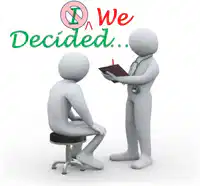
Informed consent is the process in which a health care provider educates a patient about the risks, benefits, and alternatives of a given procedure or intervention.
Patient's Rights
4
Multiple Select
Why does patient need to sign a consent form?
The patient received all the relevant information about his/her procedure from your healthcare provider.
The patient does not understand this information.
5
Verbal "Explicit" consent: A verbal consent is where a patient states their consent to a procedure verbally but does not sign any written form. This is adequate for routine treatment such for diagnostic procedures and prophylaxis, provided that full records are documented.
Written consent: A written consent is necessary in case of extensive intervention involving risks where anesthesia or sedation is used, restorative procedures, any invasive or surgical procedures, administering of medications with known high risks, and so on.
Patient's Rights
6
Written Requirement:
Most surgeries, even when they are not done in the hospital.
Other advanced or complex medical tests and procedures. Examples are an endoscopy (placing a tube down your throat to look at the inside of your stomach) or a needle biopsy of the liver.
Radiation or chemotherapy to treat cancer.
Most vaccines.
Some blood tests, such as HIV testing (need for written consent varies by countries)
Informed Consent Document
7
Multiple Choice
The general consent is required for
Each emergency room visit and for each hospital admission and is valid for the duration of the patient’s hospital stay.
For Outpatient visits, a signed consent to treat will suffice for all subsequent visits annually.
All of the above
8
Requirements:
1) All consents require a witness that is 21 years of age or older.
2) Must be signed in ink
3) Consents can be given over the telephone in certain situations
these consents require two people to listen at the same time.
Informed Consent Document
9
Individuals who cannot give informed consent include:
Minors (unless emancipated)
Mentally disabled or disturbed
Anyone under the influence
Someone who speaks a foreign language and lacks an interpreting service
Informed Consent Document
10
Multiple Choice
When is it acceptable to not have full informed consent due to a patient's lack of decision-making capacity?
When the patient is a minor
When the patient has dementia
When the patient is asleep
When the patient is traveling
11
Disclosure: Explaining risks, benefits, alternatives.
Comprehension: Ensuring the patient understands.
Voluntariness: The patient's decision must be free of coercion.
Capacity: Ensuring the patient has the capacity to make the decision.
Informed Consent Document
Key components of informed consent
12
Multiple Choice
Which element involves considering other options besides the proposed intervention?
Nature of the decision or procedure
Reasonable alternatives to the proposed intervention
The relevant risks, benefits, and uncertainties related to each alternative
Assessment of patient understanding
Ethics and Legal Obligations
Informed Consent
Show answer
Auto Play
Slide 1 / 12
SLIDE
Similar Resources on Wayground

8 questions
Clouds and Global Warming
Presentation
•
9th - 12th Grade
9 questions
Ch. 4.2 - The Structure of the Nuclear Atom
Presentation
•
9th - 11th Grade
9 questions
Pathologies, burns and more
Presentation
•
9th - 12th Grade
11 questions
Origin of Life - Scientific Contributions
Presentation
•
9th - 12th Grade
11 questions
Unit 9 - Complex Circuits
Presentation
•
9th - 12th Grade
10 questions
L2 Matter, Energy and Change
Presentation
•
10th - 12th Grade
8 questions
Classifying & Activity Series Lesson
Presentation
•
9th - 12th Grade
8 questions
The Vernier Caliper
Presentation
•
9th - 12th Grade
Popular Resources on Wayground
28 questions
US History Regents Review

Quiz
•
11th Grade
36 questions
Biology Regents Review
Quiz
•
9th - 10th Grade
20 questions
Math Review
Quiz
•
3rd Grade
38 questions
Regents Life Science General Review
Quiz
•
9th Grade
20 questions
Math Review
Quiz
•
6th Grade
21 questions
EOY Grade 6 Benchmark Assessment - Content Skills
Quiz
•
6th Grade
20 questions
Inferences
Quiz
•
4th Grade
20 questions
Figurative Language Review
Quiz
•
6th Grade
Discover more resources for Science
38 questions
Regents Life Science General Review
Quiz
•
9th Grade
45 questions
Earth and Space Science Regents: Exam Cram
Presentation
•
7th - 12th Grade
50 questions
Earth Science Regents Review
Quiz
•
10th Grade
20 questions
Explore Human Impact on Climate and Sustainability
Quiz
•
9th - 12th Grade
135 questions
Biology Final Review.
Quiz
•
9th Grade
23 questions
Explore Adaptations and Natural Selection
Quiz
•
9th - 12th Grade
23 questions
2024 2nd semester 1/3
Quiz
•
9th Grade
51 questions
Aug 2022 Chemistry Regents
Quiz
•
12th Grade