

Untitled Lesson

Presentation
•
Other
•
12th Grade
•
Practice Problem
•
Hard

Akhmad Zamroni
FREE Resource
17 Slides • 0 Questions
1


Skip to main content
chrome_reader_modeEnter Reader Mode
1.
2.
Search Search
3.
1.Sign in
2.
Contents
1. Home
2. Campus Bookshelves
3. University of Pittsburgh
4. Environmental Science (Whittinghill)
5. 6: Geology
6. 6.5: Geologic Resources
7. 6.5.1: Mineral Resources
Expand/collapse global location
6.5.1: Mineral Resources
1.
2


2.
o6.5: Geologic Resources
o6.5.2: Mining
3.picture_as_pdf
Downloads
Submit Adoption ReportPeer ReviewDonate
•
•Chris Johnson, Matthew D. Affolter, Paul Inkenbrandt, & Cam Mosher
•Salt Lake Community College via OpenGeology
Figure 6.5.1.16.5.1.1: Gold-bearing quartz vein
from California.
Mineral resources, while principally nonrenewable, are generally placed in two main
categories: metallic (containing metals) or nonmetallic (containing other useful materials). Metallic
minerals are those from which valuable metals (e.g. iron, copper) can be extracted for commercial
use. Metals that are considered geochemically abundant occur at crustal abundances of 0.1 percent
or more (e.g. iron, aluminum, manganese, magnesium, titanium). Metals that are considered
geochemically scarce occur at crustal abundances of less than 0.1 percent (e.g. nickel, copper, zinc,
platinum metals). Some important metallic minerals are: hematite (a source of iron), bauxite (a
source of aluminum), sphalerite (a source of zinc) and galena (a source of lead). Metallic minerals
occasionally but rarely occur as a single element (e.g. native gold or copper). Most mining is focused
on metallic minerals. A significant part of the advancement of human society has been developing
the knowledge and technologies that yielded metal from the Earth and allowed the machines,
buildings, and monetary systems that dominate our world today. The location and recovery of these
metals have been a key facet of the study of geology since its inception.
3


If the material can be mined at a profit, the body constitutes an ore deposit. Typically, the term ore is
used for only metal-bearing minerals, though the concept of ore as a non-renewable resource can be
applied to valuable concentrations of fossil fuels, building stones, and other non-metal deposits,
even groundwater. Mineral ores are found in just a relatively few areas, because it takes a special set
of circumstances to create them. Therefore, the signs of a mineral deposit are often small and
difficult to recognize. Locating deposits requires experience and knowledge. Geologists can search
for years before finding an economic mineral deposit. Deposit size, its mineral content, extracting
efficiency, processing costs and market value of the processed minerals are all factors that determine
if a mineral deposit can be profitably developed. For example, when the market price of copper
increased significantly in the 1970s, some marginal or low-grade copper deposits suddenly became
profitable ore bodies.
Magmatic Deposits
Magmatic mineral deposits are formed when processes such as partial melting and fractional
crystallization occur during the melting and cooling of rocks. Layeredintrusion (typically ultramafic
to mafic) can be host to deposits that contain copper, nickel, platinum-palladium-rhodium, and
chromium. The Stillwater Complex in Montana is an example of an economic layered mafic intrusion
[30]. Associated deposit types can contain chromium or titanium-vanadium. The largest magmatic
deposits in the world are the chromite deposits in the Bushveld Igneous Complex in South Africa [31]
(Figure 6.5.1.36.5.1.3). Rocks of the Bushveld Igneous Complex have an areal extent larger than the
state of Utah. The chromite occurs in layers, which resemble sedimentary layers, except this occurred
within a crystallizing magma chamber.
Figure 6.5.1.36.5.1.3: Layered intrusion of dark
chromium-bearing minerals, Bushveld Complex, South Africa
Water and other volatiles that are not incorporated into mineral crystals while a magma crystallizes
become concentrated around the margins of these crystallizing magmas. Ions in these hot fluids are
very mobile and can form exceptionally large crystals. Once crystallized, masses of these large
crystals are called pegmatites that form from the concentration of magma fluids near the end of
crystallization when nearly the entire magma body has crystallized (Figure 6.5.1.46.5.1.4). In addition
to minerals that are predominant in the main igneous mass, such as quartz, feldspar, and mica,
pegmatite bodies may also contain very large crystals of unusual minerals that contain rare elements
like beryllium, lithium, tantalum, niobium, and tin, as well as native elements like gold [32]. Such
pegmatites are ores of these metals.
4


While receiving much less attention, nonmetallic mineral resources (also known as industrial
minerals) are just as vital to ancient and modern society as metallic minerals. Nonmetallic minerals
are valuable, not for the metals they contain, but for their properties as chemical compounds.
Because they are commonly used in industry, they are also often referred to as industrial minerals.
They are classified according to their use. The most basic of these is building stone. Limestone,
travertine, granite, slate, and marble are common building stones and have been quarried for
centuries (Figure 6.5.1.26.5.1.2). Some industrial minerals are also used for building materials (e.g.
gypsum for plaster and kaolin for bricks). Some industrial minerals are used as sources of important
chemicals (e.g. halite for sodium chloride and borax for borates). For everything made out of
concrete or asphalt, we need sand and gravel. To make the cement that holds concrete together, we
also need limestone. Others are used for making fertilizers (e.g. apatite for phosphate and sylvite for
potassium). Still others are used as abrasives (e.g. diamond and corrundum). For the glass in our
computer screens and for glass-sided buildings, we need silica sand plus sodium oxide (Na2O),
sodium carbonate (Na2CO3), and calcium oxide (CaO). For a wide range of applications (e.g., ceramics
and many industrial processes), we also need various types of clay. Some nonmetallic mineral
resources are not mineral specific; nearly any rock or mineral can be used. This is generally called
aggregate and is used in concrete, roads, and foundations. Gravel is one of the more common
aggregates. Quarried rock is also used in some applications where rounded gravel isn’t suitable, such
as the ballast (road bed) for railways, where crushed angular rock is needed.
Figure 6.5.1.26.5.1.2: Carrara marble quarry in Italy, source to
famous sculptures like Michelangelo’s David.
Mineral Deposits
Minerals are everywhere around us. For example, the ocean is estimated to contain more than 70
million tons of gold. Yet, it would be much too expensive to recover that gold because of its very low
concentration in the water. Minerals must be concentrated into deposits to make their collection
economically feasible. A mineral deposit containing one or more minerals that can be extracted
profitably is called an ore. Many minerals are commonly found together (e.g. quartz and gold;
molybdenum, tin and tungsten; copper, lead and zinc; platinum and palladium). Because various
geologic processes can create local enrichments of minerals, mineral deposits can be classified
according to the concentration process that formed them. The five basic types of mineral deposits
are: hydrothermal, magmatic, sedimentary, placer and residual.
5


Figure 6.5.1.46.5.1.4: This pegmatite from Brazil
contains lithium-rich green elbaite (a tourmaline) and purple lepidolite (a mica).
Figure 6.5.1.56.5.1.5: Schematic diagram of a kimberlite pipe.
An unusual magmatic process is a kimberlite pipe, which is a volcanic conduit that transports
ultramafic magma from depths in the mantle to the surface (Figure 6.5.1.56.5.1.5). Diamonds, which
are formed at great temperature and depth, are transported this way to locations where they can be
6


mined. The process that emplaced these kimberlite (ultramafic) rocks is no longer common on Earth,
and most of the known deposits are Archean [33].
Hydrothermal Deposits
Hydrothermal mineral deposits are formed when minerals are deposited by hot, aqueous solutions
flowing through fractures and pore spaces of crustal rock (Figure 6.5.1.66.5.1.6). Many famous ore
bodies have resulted from hydrothermal deposition, including the tin mines in Cornwall, England and
the copper mines in Arizona and Utah.
Figure 6.5.1.66.5.1.6: The complex chemistry around mid-ocean ridges.
7

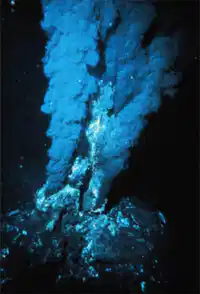
Figure 6.5.1.76.5.1.7: Black Smoker A billowing discharge of superheated mineral-rich water at an
oceanic ridge, in the Atlantic Ocean. Black “smoke” is actually from metallic sulfide minerals that
form modern ore deposits. Source: P. Rona of U.S. National Oceanic and Atmospheric Administration
via Wikimedia Commons
The most active hydrothermal process today produces volcanogenic massive sulfide (VMS) deposits,
which form from black smoker activity (Figure 6.5.1.76.5.1.7) near mid-ocean ridges all over the
world, and commonly contain copper, zinc, lead, gold, and silver when found on the surface [34]. The
largest of these deposits occur in Precambrian age rocks. The Jerome deposit in central Arizona is a
good example.
Another type of deposit which draws on heated water from magma is a porphyry deposit
(Figure 6.5.1.86.5.1.8). This is not to be confused with the igneous texture porphyritic, although the
name is derived from the porphyritic texture that is nearly always present in the igneous rocks in a
porphyry deposit. Several types of porphyry deposits exist: porphyry copper, porphyry molybdenum,
and porphyry tin. They are characterized by the presence of low-grade disseminated ore minerals
closely associated with intermediate and felsic intrusive rocks over a very large area [35]. Porphyry
deposits are typically the largest mines on Earth. One of the largest, richest, and possibly best-
studied mines in the world is Utah’s Bingham Canyon open-pit mine, which has had over 100 years of
high production of several elements including copper, gold, molybdenum, and silver. Associated
underground carbonate replacement deposits have produced lead, zinc, gold, silver, and copper [36].
8


Past open pit production at this mine was dominated by copper and gold from chalcopyrite and
bornite. Gold occurs in minor quantities in the copper-bearing mineral, but the large scale of
production makes Bingham Canyon one of the largest gold mines in the U.S. Future production may
be more copper and molybdenum (molybdenite) from deeper underground mines.
Figure 6.5.1.86.5.1.8: USGS schematic of a Porphyry copper deposit.
The majority of porphyry copper deposits owe their economic value to concentration by weathering
processes occurring millions of years after the hosting intrusion called supergene
enrichment (Figure 6.5.1.96.5.1.9). These occur once the hydrothermal event has ceased and the ore
body has been uplifted, eroded, and exposed to oxidation [37]. When the upper pyrite-rich portion
of the deposit is exposed to rain, pyrite in the oxidizing zone creates an extremely acid condition
which dissolves copper out of copper minerals such as chalcopyrite, converting the chalcopyrite to
iron oxides like hematite or goethite. The copper is carried downward in the solution until it arrives
at the groundwater table and a reducing environment where the copper precipitates, converting
primary copper minerals into secondary higher-copper content minerals. Chalcopyrite (35% Cu) is
converted to bornite (63% Cu) and ultimately chalcocite (80% Cu). Without this enriched zone (2 to 5
times higher in copper content than the main deposit) most porphyry copper deposits would not be
economic.
Figure 6.5.1.96.5.1.9: The Morenci porphyry is
oxidized toward its top (as seen as red rocks in the wall of the mine), creating supergene enrichment.
If limestone or other calcareous sedimentary rocks are present adjacent to the magmatic body, then
another type of ore deposit called a skarn deposit can form (Figure 6.5.1.106.5.1.10). These
9


metamorphic rocks form as magma-derived, highly saline metalliferous fluids react with carbonate
rocks, creating calcium-magnesium-silicate minerals like pyroxene, amphibole, and garnet, as well as
high-grade zones of iron, copper, and zinc minerals and gold [38]. Intrusions that are genetically
related to the intrusion that made the Bingham Canyon deposit have also produced copper-gold
skarns that were mined by the early European settlers in Utah [39; 40]. Metamorphism of iron
and/or sulfide deposits commonly results in an increase in grain size that makes separation of gangue
from the desired sulfide or oxide minerals much easier.
Figure 6.5.1.106.5.1.10: Garnet-augite skarn from
Italy.
Sediment-hosted disseminated gold deposits consist of low concentrations of microscopic gold as
inclusions and disseminated atoms in pyrite crystals (Figure 6.5.1.116.5.1.11). These are formed via
low-level hydrothermal reactions (generally in the realm of diagenesis) that occur in certain rock
types, namely muddy carbonates and limey mudstones. This hydrothermal alteration is generally far-
removed from a magma source but can be found in extended rocks with a high geothermal gradient.
The earliest locally mined deposit of this type was the Mercur deposit in the Oquirrh Mountains of
Utah where almost one million ounces of gold were recovered between 1890 and 1917. In the 1960s
a metallurgical process using cyanide was developed for these types of low-grade ores. These
deposits are also called Carlin-type deposits because the disseminated deposit near Carlin, Nevada is
where the new technology was first applied and because the first definitive scientific studies were
conducted there [41]. Gold was introduced by hydrothermal fluids which reacted with silty
calcareous rocks, removing carbonate, creating additional permeability, and adding silica and gold-
bearing pyrite in the pore space between grains. The Betze-Post mine and the Gold Quarry mine on
the “Carlin Trend” are two of the largest of the disseminated gold deposits in Nevada. Similar
deposits, but not as large, have been found in China, Iran, and Macedonia [42].
10


Figure 6.5.1.116.5.1.11: In this rock, a pyrite cube
has dissolved (as seen with the negative “corner” impression in the rock), leaving behind small
specks of gold.
Deposits from Sedimentary and Weathering Processes
Figure 6.5.1.126.5.1.12: Underground uranium
mine near Moab, Utah.
Geochemical processes that occur at or near the surface without the aid of magma also concentrate
metals, but to a lesser degree than hydrothermal processes. One of the main reactions
is redox (short for reduction/oxidation) chemistry, which has to do with the amount of available
oxygen in a system. Places where oxygen is plentiful, as in the atmosphere today, are considered
oxidizing environments, while oxygen-poor environments are considered reducing. Uranium
deposition is an example of redox mobilization. Uranium is soluble in oxidizing groundwater
environments and precipitates as uraninite when reducing conditions are encountered. Many of the
deposits across the Colorado Plateau (e.g. Moab, Utah) were formed by this method [43].
Redox reactions were also responsible for the creation of banded iron formations (BIFs),which are
interbedded layers of iron oxide (hematite and magnetite), chert, and shale beds
(Figure 6.5.1.136.5.1.13). These deposits formed early in the Earth’s history as the atmosphere was
becoming oxygenated. Cyclic oxygenation of iron-rich waters initiated the precipitation of the iron
beds. Because BIFs are generally Precambrian in age, they are only found in some of the older
exposed rocks in the United States, in the upper peninsula of Michigan and northeastern Minnesota
[44].
11

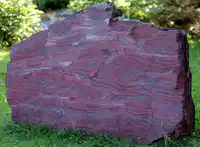
Figure 6.5.1.136.5.1.13: Banded iron formation from an unknown location in North America on
display at a museum in Germany. The rock is about 2 m across. The dark grey layers are magnetite
and the red layers are hematite. Chert is also present.
[https://upload.wikimedia.org/wikiped...%28aka%29.jpg]
Deep, saline, connate fluids (trapped in the pore spaces), within sedimentary basins may be highly
metalliferous. When expelled outward and upward during basin compaction, these fluids may form
lead and zinc deposits in limestone by replacement or by filling open spaces (caves, faults) and in
sandstone by filling pore spaces. The most famous of these are called Mississippi Valley-
type deposits [44] (Figure 6.5.1.146.5.1.14). Also known as carbonate-hosted replacement deposits,
they are large deposits of galena and sphalerite (lead and zinc ores) which form from fluids in the
temperature range of 100 to 200°C. Although they are named for occurrences along the Mississippi
River Valley in the United States, they are found worldwide.
12



Figure 6.5.1.146.5.1.14: Map of Mississippi-Valley type ore deposits.
Sediment-hosted copper deposits occurring in sandstones, shales, and marls are enormous in size
and their contained resources are comparable to porphyry copper deposits. These were most-likely
formed diagenetically by groundwater fluids in highly-permeable rocks [45]. Well-known examples
are the Kupferschiefer in Europe, which has an areal coverage of >500,000 Km2, and the Zambian
Copper Belt in Africa.
Figure 6.5.1.156.5.1.15: Apatite from Mexico.
Phosphorus is an essential element that occurs in the mineral apatite, which is found in trace
amounts in common igneous rocks (Figure 6.5.1.156.5.1.15). Phosphorite rock, which is formed in
sedimentary environments in the ocean [50], contains abundant apatite and is mined to make
fertilizer. Without phosphorus, life as we know it is not possible. Phosphorous is a major component
of bone and a key component of DNA. Bone ash and guano are natural sources of phosphorus.
13


Figure 6.5.1.166.5.1.16: A sample of bauxite. Note
the unweathered igneous rock in the center.
Residual mineral deposits can form when weathering processes remove water soluble minerals from
an area, leaving a concentration of less soluble minerals. The aluminum ore, bauxite, was originally
formed in this manner under tropical weathering conditions [46] (Figure 6.5.1.166.5.1.16). The best
known bauxite deposit in the United States occurs in Arkansas. Aluminum concentrates in soils as
feldspar and ferromagnesian minerals in igneous and metamorphic rocks undergo chemical
weathering processes. Weathering of ultramafic rocks results in the formation of nickel-rich soils and
weathering of magnetite and hematite in banded iron formation results in the formation of goethite,
a friable mineral that is easily mined for its iron content.
At the earth’s surface, the physical process of mass wasting or fluid movement concentrates high-
density minerals by hydraulic sorting. When these minerals are concentrated in streams, rivers, and
beaches, they are called placer deposits, whether in modern sands or ancient lithified rocks [47]
(Figure 6.5.1.176.5.1.17). Native gold, native platinum, zircon, ilmenite, rutile, magnetite, diamonds,
and other gemstones can be found in placers. Humans have mimicked this natural process to recover
gold manually by gold panning and by mechanized means such as dredging.
Figure 6.5.1.176.5.1.17: Lithified heavy mineral
sand (dark layers) from a beach deposit in India.
The best types of aggregate (sand and gravel) resources are those that have been sorted by streams,
and in Canada the most abundant and accessible fluvial deposits are associated with glaciation
(Figure 6.5.1.186.5.1.18). That doesn’t include till of course, because it has too much silt and clay, but
it does include glaciofluvial outwash, which is present in thick deposits in many parts of the country,
similar to the one shown in Figure 20.15. In a typical gravel pit, these materials are graded on-site
according to size and then used in a wide range of applications from constructing huge concrete
dams to filling children’s sandboxes. Sand is also used to make glass, but for most types of glass, it
has to be at least 95% quartz (which the sandy layers shown in Figure 20.15 are definitely not), and
14


for high-purity glass and the silicon wafers used for electronics, the source sand has to be over 98%
quartz.
Figure 6.5.1.186.5.1.18: Sand and gravel in an aggregate pit near Nanaimo, BC. [SE]
Evaporite deposits form in restricted basins, such as the Great Salt Lake or the Dead Sea, where
evaporation of water exceeds the recharge of water into the basin [49] (Figure 6.5.1.196.5.1.19). As
the waters evaporate, soluble minerals are concentrated and become supersaturated, at which point
they precipitate from the now highly-saline waters. If these conditions persist for long stretches of
time, thick deposits of rock salt and rock gypsum and other minerals can accumulate.
Figure 6.5.1.196.5.1.19: Salt-covered plain known
as the Bonneville Salt Flats, Utah.
Evaporite minerals like halite are used in our food as common table salt. Salt was a vitally important
economic resource prior to refrigeration as a food preservative. While still used in food, now it is
mainly mined as a chemical agent, water softener, or a de-icer for roads. The largest salt mine in the
world is at Goderich, Ontario, where salt is recovered from the 100 m thick Silurian Salina Formation.
Gypsum (CaSO4.2H20) is a common nonmetallic mineral used as a building material, being the main
component of drywall. It is also used as a fertilizer. Other evaporites include sylvite (potassium
chloride) and bischofite (magnesium chloride), both of which are used in agriculture, medicine, food
processing, and other applications. Potash, a group of highly soluble potassium-bearing evaporite
minerals, is used as a fertilizer. In hyperarid locations, even rarer and more complex evaporites, like
15

borax, trona, ulexite, and hanksite, are found and mined. They can be found in such localities as
Searles Dry Lake and Death Valley, California, and in ancient evaporite deposits of the Green River
Formation of Utah and Wyoming.
References
30. Boudreau, A. E. The Stillwater Complex, Montana – Overview and the significance of
volatiles. Mineralogical Magazine80, 585–637 (2016).
31. Willemse, J. The geology of the Bushveld Igneous Complex, the largest repository of magmatic
ore deposits in the world. Economic Geology Monograph4, 1–22 (1969).
32. London, D. & Kontak, D. J. Granitic Pegmatites: Scientific Wonders and Economic
Bonanzas. Elements8, 257–261 (2012).
33. Arndt, N. T. Chapter 1 Archean Komatiites. in Developments in Precambrian Geology (ed. K.C.
Condie) 11, 11–44 (Elsevier, 1994).
34. Barrie, C. T. Volcanic — associated massive sulfide deposits: processes and examples in modern
and ancient settings. (1999). Available at:
https://www.researchgate.net/profile/Michael_Perfit/publication/241276560_Geologic_petrologic_
and_geochemical_relationships_between_magmatism_and_massive_sulfide_mineralization_along_t
he_eastern_Galapagos_Spreading_Center/links/02e7e51c8707bbfe9c000000.pdf. (Accessed: 2nd
July 2016)
35. Richards, J. P. Tectono-Magmatic Precursors for Porphyry Cu-(Mo-Au) Deposit Formation. Econ.
Geol.98, 1515–1533 (2003).
36. Hawley, C. C. A Kennecott Story: Three Mines, Four Men, and One Hundred Years, 1887-1997.
(University of Utah Press, 2014).
37. Ague, J. J. & Brimhall, G. H. Geochemical modeling of steady state fluid flow and chemical
reaction during supergene enrichment of porphyry copper deposits. Econ. Geol.84, 506–528 (1989).
38. Einaudi, M. T. & Burt, D. M. Introduction; terminology, classification, and composition of skarn
deposits. Econ. Geol.77, 745–754 (1982).
39. Bromfield, C. S., Erickson, A. J., Haddadin, M. A. & Mehnert, H. H. Potassium-argon ages of
intrusion, extrusion, and associated ore deposits, Park City mining district, Utah. Econ. Geol.72, 837–
848 (1977).
40. James, L. P. Geology, ore deposits, and history of the Big Cottonwood Mining District, Salt Lake
County, Utah. (Utah Geological and Mineral Survey, Utah Department of Natural Resources, 1979).
41. Hofstra, A. H. & Cline, J. S. Characteristics and models for Carlin-type gold deposits. Reviews in
Economic Geology13, 163–220 (2000).
42. Rui-Zhong, H., Wen-Chao, S., Xian-Wu, B., Guang-Zhi, T. & Hofstra, A. H. Geology and
geochemistry of Carlin-type gold deposits in China. Miner. Deposita37, 378–392 (2002).
43. Lehmann, I. P’, Publ. Bur. Centr. Seism. Internat. Serie A14, 87–115 (1936).
44. Klein, C. Some Precambrian banded iron-formations (BIFs) from around the world: Their age,
geologic setting, mineralogy, metamorphism, geochemistry, and origins. Am. Mineral.90, 1473–1499
(2005).
16

45. Hitzman, M., Kirkham, R., Broughton, D., Thorson, J. & Selley, D. The Sediment-Hosted Stratiform
Copper Ore System. Econ. Geol.100th, (2005).
46. Bárdossy, G. & Aleva, G. J. J. Lateritic bauxites. 27, (Elsevier Science Ltd, 1990).
47. Cabri, L. J., Harris, D. C. & Weiser, T. W. Mineralogy and distribution of platinum-group mineral
(PGM) placer deposits of the world. Explor. Min. Geol.2, 73–167 (1996).
48. Nuss, P. & Eckelman, M. J. Life cycle assessment of metals: a scientific synthesis. PLoS One9,
e101298 (2014).
49. Gordon, W. A. Distribution by latitude of Phanerozoic evaporite deposits. J. Geol.83, 671–684
(1975).
50. Delaney, M. L. Phosphorus accumulation in marine sediments and the oceanic phosphorus
cycle. Global Biogeochem. Cycles12, 563–572 (1998).
Contributors and Attributions
Modified by Kyle Whittinghill from the following sources
•Metal Deposits and Industrial Minerals from Physical Geology by Steven Earle (licensed
under a Creative Commons Attribution 4.0 International License)
•Minerals from AP Environmental Science by University of California College Prep
•Non-Renewable Resources from Environmental Science: A Canadian Perspective by Bill
Freedman (Creative Commons Attribution NonCommercial)
•Mineral Resources and Mining from An Introduction to Geology by Chris Johnson, Matthew
D. Affolter, Paul Inkenbrandt, & Cam Mosher (Geology Faculty at Salt Lake Community
College), download free from OpenGeology
•Mineral Resources: Formation, Mining, Environmental Impact from Sustainability: A
Comprehensive Foundation by Tom Theis and Jonathan Tomkin
This page titled 6.5.1: Mineral Resources is shared under a CC BY-NC-SA license and was authored,
remixed, and/or curated by Chris Johnson, Matthew D. Affolter, Paul Inkenbrandt, & Cam
Mosher (OpenGeology) .
1.Back to top
2.
o6.5: Geologic Resources
o6.5.2: Mining
•Was this article helpful?
•Yes
•No
17

•
?
The LibreTexts libraries are Powered by NICE CXone Expert and are supported by the Department of
Education Open Textbook Pilot Project, the UC Davis Office of the Provost, the UC Davis Library, the
California State University Affordable Learning Solutions Program, and Merlot. We also acknowledge
previous National Science Foundation support under grant numbers 1246120, 1525057, and
1413739. Legal. Accessibility Statement For more information contact us at info@libretexts.org.
contentsreadabilityresourcestools
Complete your gift to make an impact
Skip to main content
chrome_reader_modeEnter Reader Mode
1.
2.
Search Search
3.
1.Sign in
2.
Contents
1. Home
2. Campus Bookshelves
3. University of Pittsburgh
4. Environmental Science (Whittinghill)
5. 6: Geology
6. 6.5: Geologic Resources
7. 6.5.1: Mineral Resources
Expand/collapse global location
6.5.1: Mineral Resources
1.
Show answer
Auto Play
Slide 1 / 17
SLIDE
Similar Resources on Wayground

13 questions
Essay Bootcamp
Presentation
•
12th Grade
15 questions
Misplaced Modifiers
Presentation
•
12th Grade
11 questions
Untitled Lesson
Presentation
•
KG
12 questions
Personal Financial Planning
Presentation
•
12th Grade
14 questions
Teens and Relationships
Presentation
•
11th - 12th Grade
12 questions
Prepositions
Presentation
•
3rd Grade
12 questions
Supreme Court Cases
Presentation
•
12th Grade
17 questions
health and safety
Presentation
•
12th Grade
Popular Resources on Wayground
10 questions
Safety Day 2026 – Student Review

Quiz
•
9th Grade
21 questions
Continents and Oceans
Quiz
•
6th Grade
20 questions
Parts of Speech
Quiz
•
5th Grade
16 questions
Subject & Predicate
Quiz
•
5th Grade
25 questions
Multiplication Facts
Quiz
•
5th Grade
12 questions
Map Skills
Quiz
•
3rd Grade
22 questions
Continents and Oceans
Quiz
•
5th Grade
15 questions
Rounding Decimals
Quiz
•
5th Grade
Discover more resources for Other
26 questions
SLIME!!!!!
Quiz
•
KG - 12th Grade
21 questions
Los paises hispanohablantes y sus capitales
Quiz
•
12th Grade
20 questions
Cell Transport
Quiz
•
9th - 12th Grade
20 questions
Budgeting
Quiz
•
9th - 12th Grade
20 questions
Investing
Quiz
•
9th - 12th Grade
8 questions
DNA vs. RNA
Presentation
•
9th - 12th Grade
12 questions
Identify Rigid Transformations
Quiz
•
8th - 12th Grade
10 questions
Complementary, Supplementary, Vertical, and Linear Pairs
Quiz
•
9th - 12th Grade