Search Header Logo
  1. Resource Library
  2. Science
  3. Biology
  4. Joints
  5. Movement Of Synovial Joints
Movement of Synovial Joints

Movement of Synovial Joints

Assessment

Presentation

Science

9th - 12th Grade

Hard

NGSS
MS-ESS1-1, MS-PS2-1, K-ESS3-1

+14

Standards-aligned

Created by

Whitney Ratliff

FREE Resource

29 Slides • 48 Questions

1

media

2

media

3

media

4

media

5

Multiple Choice

Question image

Name the motion occurring at the fingers.

1

abduction

2

adduction

3

circumduction

4

extension

5

flexion

6

Multiple Choice

Question image

Name the motion occurring at the hip.

1

abduction

2

circumduction

3

extension

4

flexion

5

rotation

7

Multiple Choice

Question image

Name the motion occurring at the knee.

1

adduction

2

circumduction

3

extension

4

flexion

5

rotation

8

Multiple Choice

Question image

Name this movement

1

adduction

2

abduction

3

flexion

4

extension

9

media

10

media

11

media

12

media

13

Multiple Choice

extension that is greater than 180 degrees and is beyond anatomical position

1

flexion

2

extension

3

hyperextension

4

abduction

14

Multiple Choice

lifting the foot closer to your shin (up)

1

dorsiflexion

2

plantarflexion

3

eversion

4

inversion

15

Multiple Choice

pointing foot toward the ground

1

dorsiflexion

2

plantarflexion

3

inversion

4

eversion

16

Multiple Choice

Question image
What movement is occurring here?
1
Eversion
2
Flexion
3
Dorsiflexion
4
Plantarflexion

17

Multiple Choice

Question image
Identify the joint action being performed.
1
Inversion
2
Eversion
3
Plantarflexion
4
Dorsiflexion

18

Multiple Choice

Question image
Identify the joint action being performed.
1
Inversion
2
Eversion
3
Plantarflexion
4
Dorsiflexion

19

media

20

media

21

media

22

media

23

media

24

Multiple Choice

Question image
Identify the joint action being performed.
1
Extension
2
Flexion
3
Abduction
4
Adduction

25

Multiple Choice

Question image
Identify the joint action being performed.
1
Extension
2
Flexion
3
Abduction
4
Adduction

26

Multiple Choice

Question image
Identify the joint action being performed.
1
Circumduction
2
Lateral Rotation
3
Medial Rotation
4
Eversion

27

Explanation Slide...

if the angle of the joint is neutral (at rest) and the movement bring the limb toward away from the body midline, then it is a abduction/adduction movement

media

28

Multiple Choice

Question image

What is movement A?

1

Adduction

2

Abduction

3

Extension

4

flexion

29

Multiple Choice

Question image

What is this movement ?

1

adduction

2

rotation

3

extension

4

circumduction

5

supination

30

Explanation Slide...

Flexion is decreasing the angle of a specific joint. Extension is bringing the angle of the joint to the resting position. Some joints allow for hyperextension where the joint can go beyond the angle of "rest". The hip and should allows this. The elbow does not.

media

31

Match

Question image

Match the following movements

flexion

extension

hyperextension

A

B1

B2

32

media

33

media

34

media

35

media

36

Multiple Choice

Question image
Identify the joint action being performed.
1
Circumduction
2
Lateral Rotation
3
Medial Rotation
4
Eversion

37

Multiple Choice

Which movement is NOT permitted in a saddle joint such as the thumb?

1

circumduction

2

flexion

3

abduction

4

rotation

5

extension

38

Multiple Choice

Which type of motion is ONLY allowed at a pivot joint?

1

rotation

2

circumduction

3

gliding

4

flexion

39

Multiple Choice

What type of joint movement involves a turning or rotational movement of a limb or body part?

1

Extension

2

Rotation

3

Circumduction

4

Adduction

40

media

41

media

42

media

43

media

44

media

45

media

46

media

47

media

48

media

49

media

50

Multiple Choice

Question image

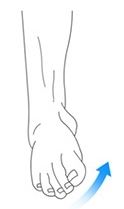
Which action turns the foot medially?

1

Inversion

2

Eversion

3

Dorsiflexion

4

Plantar flexion

51

Multiple Choice

Question image

Which action turns the foot laterally?

1

Inversion

2

Eversion

3

Dorsiflexion

4

Plantar flexion

52

Multiple Choice

Question image

Which action rotates the forearm laterally so that the palm faces anteriorly?

1

Supination

2

Pronation

3

Adduction

4

Abduction

53

Multiple Choice

Question image

Which action rotates the forearm medially so that the palm faces posteriorly?

1

Supination

2

Pronation

3

Adduction

4

Abduction

54

Match

Match the following

inversion

eversion

dorsiflexion

plantar flexion

circumduction

55

Multiple Choice

Question image
Identify the joint action being performed.
1
Inversion
2
Eversion
3
Plantarflexion
4
Dorsiflexion

56

Multiple Choice

Supination

1
2

57

Multiple Choice

Adduction means

1

Increase the angle of a joint

2

Decrease the angle of a joint

3

Take a limb away from the body

4

Return a limb towards the body

58

Multiple Choice

Question image
Identify the joint action being performed.
1
Inversion
2
Eversion
3
Plantarflexion
4
Dorsiflexion

59

Multiple Choice

Identify elevation.

1
2
3
4

60

Multiple Choice

Question image

The movement shown is a person moving his leg outward. This movement is known as:

1

abduction

2

adduction

3

rotation

4

flexion

61

Multiple Choice

Question image
Moving a part forward (thrusting the head forward).
1
protraction
2
retraction
3
elevation
4
supination

62

Multiple Choice

Question image
Turning the hand so that the palm is upward or facing anteriorly (in anatomical position).
1
supination
2
pronation
3
flexion
4
dorsiflexion

63

Multiple Choice

Question image
Identify the joint action being performed.
1
Circumduction
2
Lateral Rotation
3
Medial Rotation
4
Eversion

64

Multiple Choice

Head Flexion

1
2

65

Multiple Choice

Head Extension

1
2

66

Multiple Choice

Hip Extension

1
2

67

Multiple Choice

Hip Flexion

1
2

68

Multiple Choice

Abduction

1
2

69

Multiple Choice

Planterflexion

1
2

70

Multiple Choice

Retraction

1
2

71

Multiple Choice

Protraction

1
2

72

Multiple Choice

Question image
Turning the foot so the plantar surfaces faces medially.
1
plantar flexion
2
eversion
3
inversion
4
dorsiflexion

73

Multiple Choice

Question image

Which movement is shown?

1

Elbow Flexion

2

Elbow Extension

3

Medial Rotation of Shoulder

4

Shoulder Abduction

5

Shoulder Flexion

74

Multiple Choice

Question image

Which movement is shown?

1

Elbow Flexion

2

Elbow Extension

3

Medial Rotation of Shoulder

4

Shoulder Abduction

5

Shoulder Flexion

75

Multiple Choice

Question image

Which movement is shown?

1

Shoulder Extension

2

Elbow Extension

3

Medial Rotation of Shoulder

4

Shoulder Abduction

5

Shoulder Flexion

76

Multiple Choice

Question image

Which movement is shown?

1

Hip Extension

2

Plantar Flexion

3

Knee Flexion

4

Knee Extension

5

Hip Flexion

77

Multiple Choice

Question image

Which movement is shown?

1

Hip Extension

2

Plantar Flexion

3

Knee Flexion

4

Knee Extension

5

Hip Flexion

media

Show answer

Auto Play

Slide 1 / 77

SLIDE