

Outer Planets Direct Teach

Presentation
•
Science
•
5th Grade
•
Practice Problem
•
Medium
+5
Standards-aligned

Denise Sanchez
Used 67+ times
FREE Resource
9 Slides • 5 Questions
1

The Solar System:
Outer Planets
Gas Giants
Jovian Planets
2

Big Idea Question: Why are they called gas giants? What are
some key characteristics?
The outer solar system is made up of four gas giants. They are Jupiter,
Saturn, Uranus, and Neptune. Since they are so far away from the Sun,
they are able to hold onto their gas atmospheres and are made up
mostly of gas but have solid rocky cores. Because they are so massive,
they have a greater gravity than the terrestrial planets. They are also
much colder than the terrestrial planets since they are so far away
from the Sun. They also all have rings, and many planetary satellites.
3

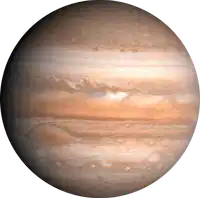
Jupiter:
●
Largest planet in our solar system. Its mass
is twice as much as the other seven planets
combined. Now that’s massive!
●
It is made up mostly of hydrogen gas, and it
is known for its massive storm—which is
more like a hurricane that is the size of
three Earths put together.
●
Since it is made up of mostly gas, it is able
to spin around pretty quickly. In one Earth
day, Jupiter will have had three days. Now
that’s fast!
●
It also has the most planetary satellites
(moons). To date, the number is at 67. It has
the most gravity of all the planets.
4
Open Ended
If you were standing on Jupiter, what would you experience differently than on Earth (consider the surface, objects in its visible sky, and rotation)? Explain your reasoning.
5
Multiple Choice

A student records the following information about a planet. Which planet is the student studying?
Turn and Talk - Explain how you identified the planet the student is studying. Refer to the diagram in your discussion.
Mars
Earth
Jupiter
Saturn
6

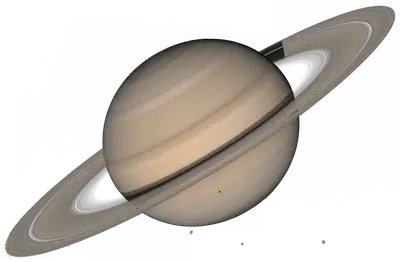
Saturn:
●
●
●
●
Saturn is the sixth planet from the Sun and is known for its beautiful rings. It is the second-largest planet in our solar system, after Jupiter. Saturn is classified as a gas giant, meaning it is mostly made of gases, including hydrogen and helium. Unlike Earth, Saturn does not have a solid surface. Instead, it has a thick atmosphere with powerful winds that can reach speeds of over 1,000 miles per hour!
One of Saturn's most remarkable features is its rings. They are made up of countless ice and rock particles that vary in size from tiny grains to large boulders. Scientists believe that the rings were formed from the remains of moons or comets that broke apart due to Saturn’s strong gravitational pull.
Saturn has at least 82 known moons, with Titan being the largest. Titan is unique because it has a thick atmosphere and lakes made of liquid methane. This makes Titan one of the most interesting places in our solar system for scientists studying the potential for life beyond Earth.
7
Multiple Choice
Why is Saturn less dense than water?
The state of matter it is composed of
It has a large solid core
It has the least amount of volume in comparison to other planets
It has more moons than other planets
8
Multiple Choice
If you were to travel to Saturn, what challenges might you face due to its atmosphere?
You would have plenty of oxygen to breathe.
The atmosphere would be very cold and gaseous
You would find a solid surface to walk on.
There would be no gravity at all.
9

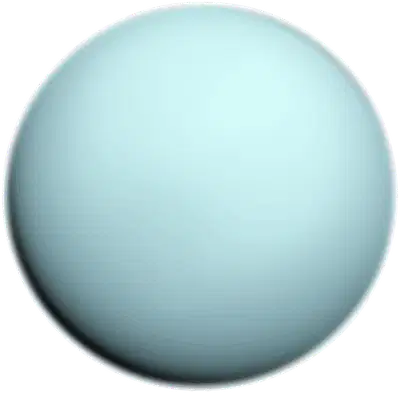
Uranus:
●This planet does not reflect much light
since it is so far from the sun. We know
about it from our space probes that we
sent out into space.
●The methane gas in its atmosphere is
what gives it its greenish color. The
rotation of Uranus is unique because it
is so tilted it actually spins on its side.
●Its poles would be found in the same
location as our equator, weird. This
rotation causes one pole to be in
complete darkness for half of its
revolution. Could you imagine having
night last half a year and a day lasting
the other half?
10
11

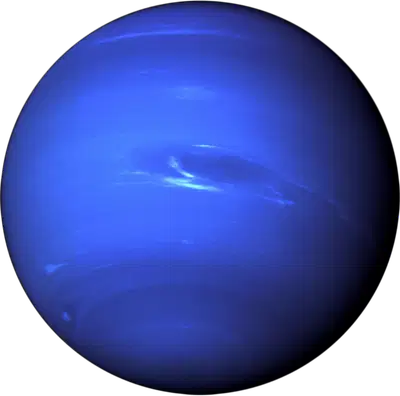
Neptune:
● The outermost planet in the
solar system. Its blue color is
caused by its methane gas in
its atmosphere.
● There is a hurricane-like
storm that is the size of
Earth.
● It has the fastest winds of
any of the planets moving at
more than 1,000 km/h (a
high wind on Earth is
considered 100km/hr).
12
Multiple Choice
Ian is working on an outer planets project for science class. Part of his project requires him to put the outer planets in order from last to first. Here is the list he turns in to his teacher:
Saturn
Jupiter
Uranus
Neptune
What should Ian do to correct his list of outer planets
Switch Uranus and Neptune
Keep it the same
Switch Jupiter and Saturn
Add Mars to his list
13


14

The Solar System:
Outer Planets
Gas Giants
Jovian Planets
Show answer
Auto Play
Slide 1 / 14
SLIDE
Similar Resources on Wayground

10 questions
Speed and Velocity
Presentation
•
5th Grade
12 questions
Weather vs. Climate
Presentation
•
5th Grade
12 questions
Salt water concentration
Presentation
•
5th Grade
10 questions
Forms of Energy
Presentation
•
4th - 5th Grade
9 questions
Control Groups
Presentation
•
5th Grade
11 questions
Rapid Changes
Presentation
•
5th Grade
12 questions
Science - Unit 8B - Inherited Traits and Learned Behaviors - L2
Presentation
•
5th Grade
7 questions
Nervous System
Presentation
•
5th Grade
Popular Resources on Wayground
10 questions
How much do you know about our Portrait of an Eagle?

Quiz
•
10th Grade
10 questions
Fast Food Slogans
Quiz
•
6th - 8th Grade
21 questions
Continents and Oceans
Quiz
•
6th Grade
20 questions
Parts of Speech
Quiz
•
5th Grade
16 questions
Subject & Predicate
Quiz
•
5th Grade
25 questions
Multiplication Facts
Quiz
•
5th Grade
12 questions
Map Skills
Quiz
•
3rd Grade
22 questions
Continents and Oceans
Quiz
•
5th Grade
Discover more resources for Science
9 questions
Properties of matter and Mixtures
Quiz
•
5th Grade
20 questions
Mixtures and Solutions Practice
Quiz
•
5th Grade
20 questions
Food Chains and Food Webs Review
Quiz
•
5th Grade
11 questions
Understanding Light Review 4
Quiz
•
5th Grade
15 questions
Force and Motion
Presentation
•
5th Grade
20 questions
Food Chains & Food Webs
Quiz
•
5th - 7th Grade
20 questions
Weathering, Erosion, & Deposition
Quiz
•
5th Grade
16 questions
Mixture or Solution?
Quiz
•
5th Grade