

Newton’s Laws & Forces

Presentation
•
Science
•
7th Grade
•
Practice Problem
•
Easy
+5
Standards-aligned

Katherine Johnston
Used 9+ times
FREE Resource
34 Slides • 30 Questions
1



Newton’s Laws & Forces
Key Topics:
●
History of Sir Isaac Newton & gravity
●
Newton’s 3 Laws
●
Unbalanced/balanced forces,
●
Inertia
●
Types of forces
2
Open Ended
So far, we have been talking about objects moving
●But we haven’t talked about why they move yet
●Something must make an object move
What do you think causes something to move? Give an
example.
3

Think About it Video
What is a force- asking around town:
https://www.youtube.com/watch?v=GmlMV7bA0TM
4


Sir Isaac Newton
● Most have heard of Isaac Newton and his laws, but you might not
know what they say
● You may have heard about him being hit by an apple and
discovering gravity, but he did a lot more than that!
● Fun Fact: He invented Calculus!
5


It all starts with an apple…
● One beautiful spring day in 1655, a man named Isaac
Newton was sitting under an apple tree in his garden,
enjoying a glass of tea.
● Suddenly, one of the apples fell and crashed on his
head.
Disclaimer: Most believe that the apple did not actually hit
Newton on the head, but rather fell nearby and caught
his attention.
6


A STORY ABOUT AN APPLE
● That got Newton thinking (once the bump had
gone down of course).
● “Why did the apple fall towards the Earth?”
● “Why did it not “shoot upwards'' when it came
away from the branch?”
● And, “why did I plant that apple tree anyway?!!''
7


A STORY ABOUT AN APPLE
■ Newton knew that unbalanced forces are
necessary to move or change the motion of
objects.
■So, he came up with the idea that the Earth must
attract the apple towards it with some “unseen
force''.
■He named this force gravity.
8


WHAT IS A FORCE?
●A force is a push or a pull, that one object exerts on
another
●Forces make things move
●Force is a VECTOR, which means the direction is
important!
●Units🡪 Newtons
9

Forces
● A force is defined as any pushor pullthat is exerted on an object
○ Forces cause objects to speed up, slow down, or change direction
○ This means: forces cause objects to accelerate
● The direction of a force tells you what direction an object accelerates in
Push a box right,
it moves right
Push a box left,
it moves left
10
Open Ended
Force is measured in what units:
11

BALANCED & UNBALANCED
FORCES
●What did Newton mean that unbalanced forces are
necessary to move or change the motion of objects?
●In the last example, the rope was pulling up an object.
The force of the rope would need to be larger than the
force of gravity to make the object move, and the
forces would be unbalanced
●Balanced Forces = NO acceleration
●Unbalanced Forces= Acceleration
●This leads to Newton’s 1st Law…
12

BALANCED FORCES
●Do not change motion
●Cancel each other
●Combine to produce a net
force of zero
13

UNBALANCED FORCES
●Do not have the same
strength (size)
●Cause acceleration
14


Balanced and Unbalanced
Forces
● What would happen if two players hit each other and they both push with a
force of 200 N?
200N
200N
15
Open Ended
What would happen??
16


Balanced and Unbalanced
Forces
● What would happen if the left team pulled with 100 N and the right team
pulled with 150N?
● What would be the total force? What direction?
100N
150N
17
Open Ended
What would happen??
18

Balanced and Unbalanced
Forces
● When forces don’t cancel out, they are called unbalanced forces
● The net force is whatever is left over after they cancel out
19

HOW MANY TYPES OF FORCES DO YOU THINK
THERE ARE?
●There are 5 main ones that we will
focus on!
○Applied Force
○Tension Force
○Normal Force
○Force of Friction
○Force of Gravity
20

Common Forces
● Applied Force (Fa): any force you are applying to an object
● Force of Gravity (Fg): force that pulls an object towards
the center of Earth
● Force of Friction (Ff): A force that tries to slow objects down
○ It opposes motion
● Normal Force (FN): A force that acts perpendicular to a
surface
○ It cancels out gravity
● Tension Force (FT): A force that is exerted on a rope or
string
21

NET FORCE
●When two or more forces act on an object at the same
time, the forces combine to form the net force.
» The combination of all forces on an object
●Example: If an object is tied to a rope and is being
pulled up, the net forces would be the combination of
the force of gravity trying to push it down and the force
of the rope pulling the object up.
22
Open Ended
Net Force is the force:
23


Think About it Video
Newton’s 1st Law- Football: https://www.youtube.com/watch?v=08BFCZJDn9w
24

NEWTON’S 1ST LAW
● Newton’s First Law:An object at rest will stay at
rest, and an object in motion will stay in motion
(with constant velocity), until some unbalanced
force acts on it.
- This means the VELOCITY of an object will
not change unless a force acts on it. So
the
direction or the speed won’t change.
25
Open Ended
Fill in the blank: Newton’s 1st Law states an object will stay at rest/motion unless:
26


Newton’s 1st Law
● When you hit the ball,
it takes off.
● According to this law,
it will continue to move
forever until another
force acts on it
● But this isn’t what happens. Why does the ball eventually come to a stop?
○ Friction is an unbalanced force that slows it down!
27

Inertia
● Newton’s 1st Law is sometimes called the Law of Inertia
● Inertia is an object’s tendency to not change its velocity (speed or direction)
● Have you ever been in a car that speeds up/slows down suddenly and you
are thrown back/forward?
○ Inertia!
28

Newton’s 1st Law is also known as the Law of:
29
Open Ended
Newton’s 1st Law is also known as the Law of:
30
Think About it Video
Newton’s 2nd Law- Football:
31

NEWTON’S 2ND LAW
●The relationship between force, mass, and
acceleration:
○ Force= mass x acceleration
●Which is an equation you may have seen before
:
F=ma
●Force and acceleration are BOTH vectors. They
will always be in the same direction as each
other
32

Newton’s 2nd Law
● Newton’s 2nd Law: An object will accelerate in the direction of an
unbalanced force acting on it
● F= Force
● m= mass
● a= acceleration
The SI unit for force
is the Newton (N)
F=ma
33

F=MA UNITS
●Force🡪 Newtons (N)
●Mass🡪 kilograms (kg)
●Acceleration🡪 meters/second/second
(m/s2)
●Do not use this equation until all units are
accurate, convert if needed! *If mass if
given in grams, convert to kg*
34
Open Ended
F=ma
An object with a mass of 4 kg is pushed
and accelerates at 3 m/s2right. Find the
force required in order to have pushed it.
35
Open Ended
F=ma
If I push on a 2kg book with a
force of 10N, how much will it accelerate?
36
Open Ended
F=ma
If a force of 15 N pushes an
object to accelerate at 3 m/s2.
Find the mass of the object.
37

Think About it Video
Newton’s 3rd Law- Football:
38

NEWTON’S 3RD LAW
●For every action there is an opposite and
equal reaction force
●The size of the forces on the first
object equals the size of the force on the second
object.
●The direction of the force on the first object
is opposite to the direction of the force on the
second object.
●Forces always come in pairs - equal and
opposite action-reaction force pairs.
39


Rocket Science is just Newton’s 3rd
Law!
● When a rocket is taking off, a bunch of
reactions create hot gas inside the engine
● The gas escapes at the bottom and
pushes down. The force down also pushes
up!
● This makes the rocket move upwards!
40

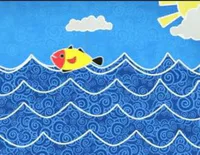
N3L EXAMPLE:
PROPULSION OF A FISH
●A fish uses its fins to push water backwards. But
a push on the water will only serve to accelerate
the water, the water must also be pushing the fish
forwards, propelling the fish through the water.
● The size of the force on the water = the size of
the force on the fish
●The direction of the force on the water
(backwards) is opposite the direction of the force
on the fish (forwards)
41


N3L EXAMPLE: BIRD FLYING
● A bird flies by use of its wings. The wings of a
bird push air downwards. Since forces result from
mutual interactions, the air must also be pushing
the bird upwards.
●The size of the force on the air = the size of the
force on the bird
●The direction of the force on the air (downwards)
is opposite the direction of the force on the bird
(upwards)
42


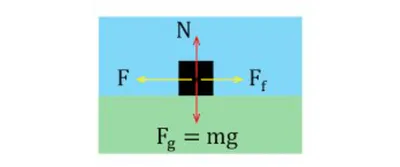
FREE BODY DIAGRAMS
● Free body diagrams use vectors to show all the forces acting on an
object.
● Rules of Drawing Free Body Diagrams:
1)Identify the object you will draw a diagram for. (If there are multiple objects of
interest, you will need to draw multiple diagrams.)
2)Identify all the forces acting directly on the object.
3)Draw a dot to represent the object of interest.
4)Draw a vector to represent each force. Draw it in the direction the force is being
exerted, and label it
The vectors should be drawn somewhat to scale. If the force applied on an object is
300 Newtons, and the force of friction is 10 Newtons… Then the 300 Newtons vector
should be much longer than the 10 Newtons vector
43

Force Game
-Working with your table partner, if they are done with their quiz!!
-Create a team name
-Use only 1 laptop to answer the questions
-Write your team name when you answer each question, so you get points
if you get it right!
-We will keep the score up on the board
44
Open Ended
What direction is the force of gravity?
45
Open Ended
What direction is the normal force?
46
Open Ended
What is a free body diagram?
47
Open Ended
What force always exists in all situations on earth?
48
Open Ended
List the 5 types of forces:
49
Open Ended
F= ma
If I push on a 2kg book with a force
of 10N, how much will it accelerate?
50


Balanced and Unbalanced
Forces
● What would happen if the left team pulled with 100 N and the right team
pulled with 150N?
● What would be the total force? What direction?
100N
150N
51
Open Ended
What direction would the total force be in?
52
Open Ended
Fill in the blank: Newton’s 1st Law states an object will stay at rest/motion unless:
53
Open Ended
At what rate does gravity acceleration? “g”
54
Open Ended
Balanced or Unbalanced: A box sitting on the
ground.
55
Open Ended
Net Force is the force:
56
Open Ended
If a 2 kg object is not moving and just sitting on a table, what is the normal force?
57
Open Ended
When is the net force 0 Newtons?
58
Open Ended
If a rope is pulling up with a force of 20 Newtons
and gravity is pushing down 4 Newtons, what is the net force?
59
Open Ended
If an object is pushed with a force of 40 Newtons
right across a rough floor with a friction force of 8 Newtons. What is the net force?
60
Open Ended
If an object is pushed with a force of 25 Newtons
right across a rough floor with a friction force of 6 Newtons. What is the net force?
61
Open Ended
What is the difference between force of gravity and weight?
62
Open Ended
Force is measured in what units:
63
Open Ended
Balanced or unbalanced: a ball being kicked to the right
64
Open Ended
F= ma
Newton’s Laws & Forces
Key Topics:
●
History of Sir Isaac Newton & gravity
●
Newton’s 3 Laws
●
Unbalanced/balanced forces,
●
Inertia
●
Types of forces
Show answer
Auto Play
Slide 1 / 64
SLIDE
Similar Resources on Wayground

56 questions
Unit 4 Lesson 2 - Plate Tectonics
Presentation
•
6th Grade
56 questions
Study Guide Review
Presentation
•
7th Grade
56 questions
Marine life
Presentation
•
8th Grade
60 questions
Unit 3 Energy Test Review
Presentation
•
7th Grade
56 questions
Genetics Make-up Session
Presentation
•
7th Grade
54 questions
U0: The Nature and Practice of Science
Presentation
•
7th Grade
60 questions
Week 1_Lesson 1_Q4
Presentation
•
7th Grade
59 questions
Chapter 10
Presentation
•
7th Grade
Popular Resources on Wayground
20 questions
"What is the question asking??" Grades 3-5

Quiz
•
1st - 5th Grade
20 questions
“What is the question asking??” Grades 6-8
Quiz
•
6th - 8th Grade
10 questions
Fire Safety Quiz
Quiz
•
12th Grade
20 questions
Equivalent Fractions
Quiz
•
3rd Grade
34 questions
STAAR Review 6th - 8th grade Reading Part 1
Quiz
•
6th - 8th Grade
20 questions
“What is the question asking??” English I-II
Quiz
•
9th - 12th Grade
20 questions
Main Idea and Details
Quiz
•
5th Grade
47 questions
8th Grade Reading STAAR Ultimate Review!
Quiz
•
8th Grade
Discover more resources for Science
19 questions
Introduction to Properties of Waves
Presentation
•
6th - 8th Grade
16 questions
Interactions within Ecosystems
Presentation
•
6th - 8th Grade
20 questions
genetics, punnett squares, heredity
Quiz
•
7th Grade
16 questions
Photosynthesis and Cellular Respiration Review
Quiz
•
7th Grade
20 questions
Abiotic & Biotic Factors
Quiz
•
7th Grade
18 questions
Conduction Convection Radiation
Quiz
•
7th Grade
20 questions
Asexual/Sexual Reproduction
Quiz
•
7th Grade
5 questions
Natural Selection

Interactive video
•
7th Grade