

Midterm 2 semester 1 24-25

Presentation
•
Biology
•
9th Grade
•
Easy

ERICA VEGA
Used 10+ times
FREE Resource
26 Slides • 34 Questions
1


Protein
Synthesis
2


Proteins
●Proteins are polypeptides made up of amino acids
●Amino acids are linked by peptide bonds
●Gene expression: the process by which DNA
directs the synthesis of proteins
●Includes two stages: transcription and translation
●Occur in all organisms
3
Multiple Choice
Which property is shared by the cells of all living things?
The cells contain DNA composed of adenine, thymine, guanine, and cytosine.
The cells are surrounded by a phospholipid bilayer and a cell wall made of cellulose.
The cells have chromosomes that are located inside a membrane-bound nucleus.
The cells rely on mitochondria to carry out aerobic cellular respiration.
4

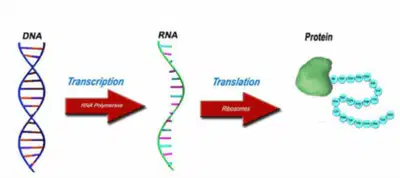
Protein Synthesis
●The process where DNA gets transcribed and translated into a protein
●“Synthesis” means to make something; protein synthesis=to make proteins
●Proteins are involved in transport, structure, acting as enzymes, and coding for traits
●Proteins are made by ribosomes
●Making proteins are essential for life
5
Multiple Choice
What is the correct order to make a protein?
Protein, DNA, RNA
RNA, DNA, Protein
DNA, RNA, Protein
Protein, RNA, DNA
6


Protein Synthesis
7
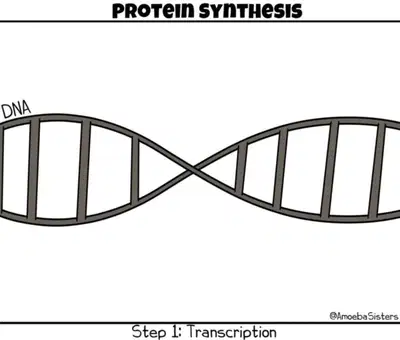
Protein synthesis
occurs in two major
steps
1.
Transcription
2.
Translation
8
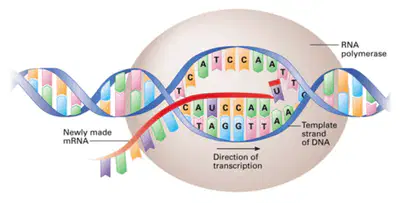
1. Transcription
●Transcription is where a section of DNA
(genes) are transcribed “made” into
mRNA
Transcription steps:
1.RNA polymerase connects
complementary RNA bases to DNA
2.
RNA bases are bonded together to form
mRNA (messenger RNA)
●This process occurs in the NUCLEUS of
cells
9
Multiple Choice
10
Multiple Choice
What enzyme does transcription use?
DNA polymerase
ligase
RNA polymerase
helicase
11
Multiple Choice

12

13

Types of RNA
1.mRNA- Messenger RNA
●Carries the “message” RNA complementary bases to DNA original strand
2.
rRNA- Ribosomal RNA
●Attaches to mRNA and helps with the pairing to tRNA (transfer amino acids)
3.
tRNA- Transfer RNA
●Pairs with mRNA message and transfers the amino acid it carries
14
Match
Match the following
mRNA
tRNA
rRNA
Messenger RNA
Tranfer RNA
Ribsomoal RNA
Messenger RNA
Tranfer RNA
Ribsomoal RNA
15

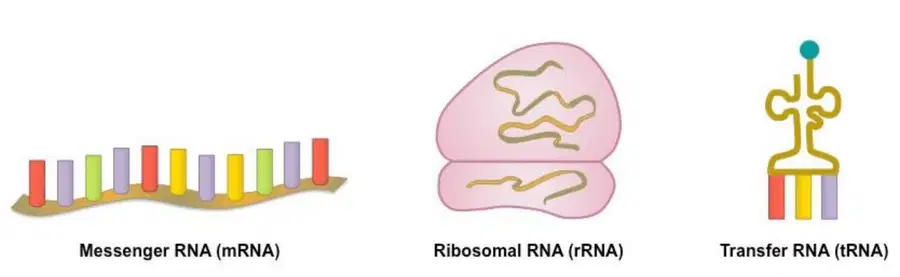
Types of RNA
3 bases-Codons
3 bases-Anticodon
16
Multiple Choice
Which RNA carries the message?
mRNA
rRNA
tRNA
17

DNA Replication
●
DNA Synthesis= Making more DNA
●
In eukaryotic cells, occurs in the nucleus
●
In prokaryotic cells, occurs in the cytoplasm
●
DNA replication occurs BEFORE a cell divides(mitosis)
●
DNA replication occurs in S PHASE (interphase)
●*New (daughter) DNA strand is HALF of the original (parent)
strand
18

Where is DNA found in
Prokaryotes vs Eukaryotes?
19
Multiple Choice
20

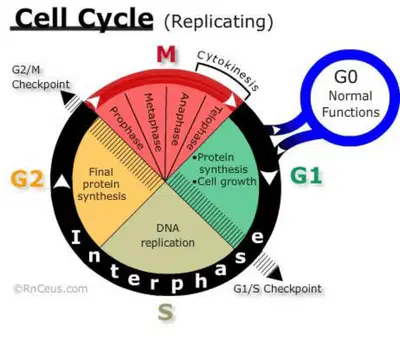
The Cell Cycle: Part 1
1. Interphase (NON-dividing)
❏
G1 Phase
❏
S Phase
❏
G2 Phase
21
Match
What are the components of Interphase, and what happens in each phase?
G2 Phase
S Phase
G1 Phase
Cell grows more and prepares to divide
DNA replication takes place
Cell grows; prepares for DNA replication
Cell grows more and prepares to divide
DNA replication takes place
Cell grows; prepares for DNA replication
22

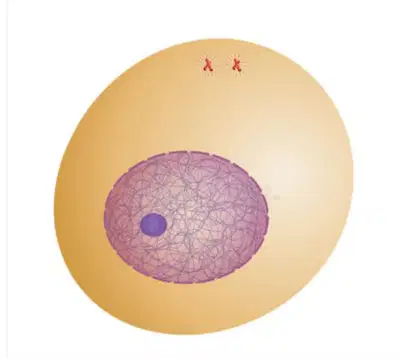
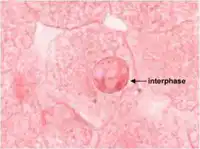
Interphase:(G1, S, G2)
●
Cell cycle STARTS here !!!
●
DNA is in its “normal” state
●
Longest phase of the cell cycle
●
Cell spends most of its life here
(resting phase).
●
Ensures DNA is replicated
properly before cell division
begins
23
Multiple Choice
If one strand of DNA has the sequence TTACCG, the sequence of complementary strand of the same molecule will be
24

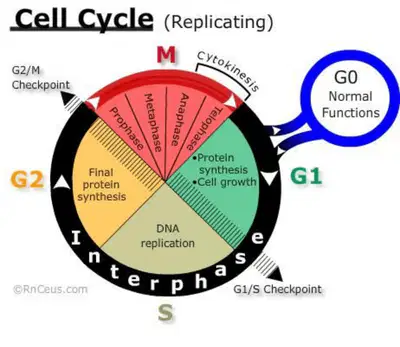
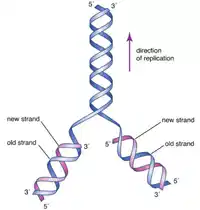
Interphase: S Phase
●
DNA replicates (makes a copy of itself)
●
DNA Synthesis
25
Multiple Choice
DNA is replicated during ______ of the cell cycle.
G1 Phase
S Phase
G2 Phase
G0 Phase
26

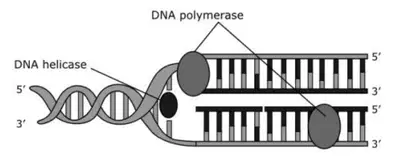
Interphase: S Phase
Semi-conservative model of dna replication during the s
phase
Notice it looks like a zipper unzipping!
27

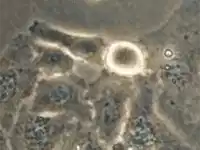
Cancer
● Cancer is…a disruption/failure of the cell cycle,
causing uncontrolled/unregulated cell growth
● Cells are…supposed to go to G0, but they don’t
● They instead replicate with damaged DNA
● Cancer cells grow more unevenly than healthy cells
○ Clump to form tumors
28
Multiple Choice
Uncontrolled cell division which usually leads to tumors and disease is called:
Metaphase
Cytokinesis
Cancer
Diabetes
29
Multiple Select
Which of the following are characteristics of Cancer? select all that apply
It divides uncontrollably
It needs a host to reproduce
It forms tumors
It is a failure of the cell cycle
30

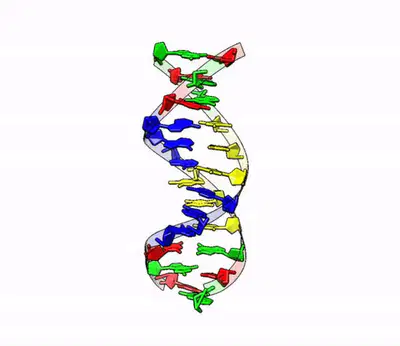
Components of
DNA
31
Multiple Choice
In Texas Longhorn cattle, coat coloration is an inherited trait. What is the genetic basis of
coat-color variation in Texas Longhorn cattle?
Differences in the nucleotide sequences of genes
Differences in the numbers of chromosomes in cells
Differences in the diets of individual cattle
Differences in the environmental conditions of different geographic areas
32
Multiple Choice
Which statements best compare the function of an ATP molecule to a DNA molecule?
ATP carries and transmits the genetic information of organisms.
DNA serves as a biological catalyst that speeds up the rate of chemical reactions
ATP provides energy for chemical reactions in the cell.
DNA carries and transmits the genetic information of organisms
ATP serves as a biological catalyst that speeds up the rate of chemical reactions.
DNA acts as a structural sugar in the cell walls of plants.
ATP acts as a structural sugar in the cell walls of plants.
DNA provides energy for chemical reactions in the cell.
33


DNA (Deoxyribose Nucleic Acid)
●DNA is the blueprint for the traits of an organism
●DNA is found in the nucleus of cells (eukaryotes) or floating around in the
cytoplasm (prokaryotes)
●DNA has a double helix structure/shape
(looks like a twisted ladder)
●DNA is doublestranded
●DNA is a nucleic acid
●DNA’s monomer: nucleotide
●Elements present in DNA carbon, hydrogen, oxygen, nitrogen,
phosphorus/phosphate
34
Multiple Choice
DNA is shaped in a:
double helix
tightly packed swirl
twisted ladder
nucleotide
35
Multiple Choice
DNA stands for
Deoxyribose Nucleic Acid
Dunder Nucleic Acid
Dopamine Nucleic Acid
Deciduous Nucleic Acid
36

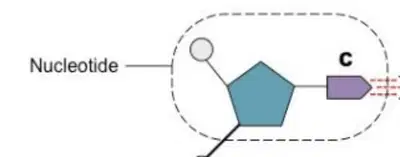
DNA (Deoxyribose Nucleic Acid)
●DNA monomer: Nucleotide
●Many nucleotides make a strand of
DNA
Parts of a DNA nucleotide
1.
Deoxyribose (sugar)
2.
Phosphate
3.
Nitrogen base (Adenine, Thymine, Guanine,
cytosine)
***THE SEQUENCE/ORDER OF
NUCLEOTIDES/BASES DETERMINES SPECIFIC
TRAITS (proteins/polypeptides)
37
Multiple Choice

What is this a picture of?
nucleotide
DNA strand
chromosome
gene
38
Multiple Choice
What are the parts of a nucleotide?
phosphate, sugar, base
A, T, G, C
Nucleic Acids
two base pairs connected
39
Multiple Choice
The order of the nitrogenous bases in DNA determines:
the genetic code
the presence of polarity
the presence of a hydrogen bond
if there is a fifth nitrogen base
40

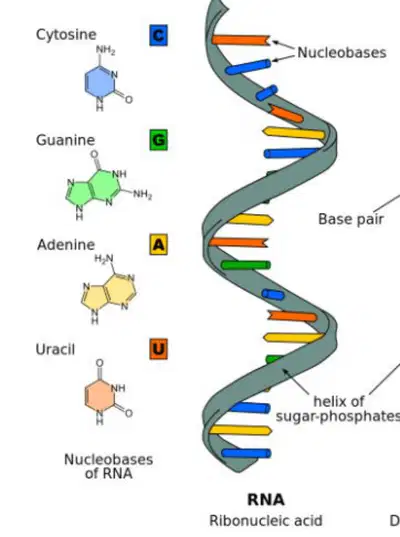
RNA (Ribonucleic acid)
●RNA nucleotide is the building block for RNA
●RNA is Single stranded
RNA nucleotide
1.
Ribose (sugar)
2.
Phosphate
3.
Nitrogen base (Adenine, Guanine, Cytosine,
URACIL)
41
Multiple Choice

42
Multiple Choice
RNA has what base that is instead of thymine?
guanine
adenine
thymine
uracil
43

44

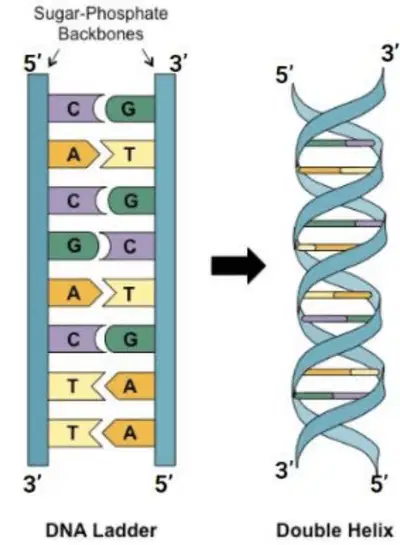
Sugar-Phosphate Backbone
● Deoxyribose (sugar) and
phosphate make the backbone
of the DNA molecules
● “Sides of the ladder”
45
Multiple Choice
The 'backbone' or 'sides of the ladder' of the DNA strand is made of:
phosphate and sugar
phosphate only
phosphate and base
sugar and base
46

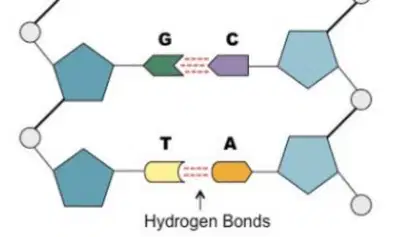
Nitrogenous Bases
●Complementary nitrogenous bases
●Bases are attached to the sugars !!
●Adenine goes with Thymine (A-T)
●Guanine goes with Cytosine (G-C)
●(in RNA Adenine goes with Uracil (A-U)
●Hydrogen bonds hold these bases together
*THE SEQUENCE/ORDER OF THE NITROGENOUS
BASES/NUCLEOTIDES DETERMINES SPECIFIC TRAITS
(PROTEINS/POLYPEPTIDES) OF AN ORGANISM
47
Multiple Choice
Hydrogen bonds occur:
on the ribbon (between the sugar)
between the bases
only between A & T
only between G & C
48
Multiple Choice

Which of these identifies the part of the DNA segment labeled X?
Nucleotide
Phosphate Group
Hydrogen Bond
Deoxyribose
49
Multiple Choice
50

DNA Replication
●Template (original)strand is used to make a COMPLEMENTARY (new) strand
●(A goes with T), (G goes with C)
●Template strand (original): Goes from 5’ to 3’
●New (complementary) strand: Goes from 3’ to 5’
Template (original) strand:
5’-A T G C A A C T G C G T A C T G A C C T A G T T A G-3’
| | | | | | | | | | | | | | | | | | | | | | | | | |
3’ T A C G T T G A C G C A T G A C T G G A T C A A T C-5’
New (complementary) strand
51
Multiple Choice
Which shows the correct complementary base pairing for DNA?
C-A, T-G
A-G, C-T
C-G, U-A
A-T, G-C
52
Multiple Choice
CAT TCA CTG
53


54
Multiple Select
What two things are the product (end result) of photosynthesis?
chloroplast
glucose
oxygen
carbon dioxide
55
Multiple Choice
Where do plants get the energy for photosynthesis to take place?
nutrients in the soil
the sun
chlorophyll
bee pollination
56
Multiple Choice
57
Multiple Choice
58
Multiple Choice
•The organelle responsible for photosynthesis:
Vacuole
Chloroplast
nuclear membrane
mitochondria
Cytoplasm
59


60
Multiple Choice
What is the correct equation for cellular respiration?
oxygen + sugar -> carbon dioxide + water + Energy
carbon dioxide + sugar + Energy -> carbon dioxide + water
carbon dioxide + water -> oxygen + sugar + Energy
carbon dioxide + water + Energy -> oxygen + sugar
Protein
Synthesis
Show answer
Auto Play
Slide 1 / 60
SLIDE
Similar Resources on Wayground

53 questions
INGGRIS
Presentation
•
9th Grade
53 questions
Photosynthesis
Presentation
•
10th Grade
54 questions
Review Friday: day 1-day 8
Presentation
•
9th - 10th Grade
52 questions
RNA and Protein Production
Presentation
•
9th Grade
52 questions
Proteins and Enzymes
Presentation
•
9th Grade
56 questions
Fossils
Presentation
•
8th Grade
51 questions
SHS BIOLOGY SNAPSHOT 2 REVIEW VTREVINO
Presentation
•
9th Grade
53 questions
Ocean Zones
Presentation
•
8th Grade
Popular Resources on Wayground
10 questions
Safety Day 2026 – Student Review

Quiz
•
9th Grade
21 questions
Continents and Oceans
Quiz
•
6th Grade
20 questions
Parts of Speech
Quiz
•
5th Grade
16 questions
Subject & Predicate
Quiz
•
5th Grade
25 questions
Multiplication Facts
Quiz
•
5th Grade
12 questions
Map Skills
Quiz
•
3rd Grade
22 questions
Continents and Oceans
Quiz
•
5th Grade
15 questions
Rounding Decimals
Quiz
•
5th Grade
Discover more resources for Biology
20 questions
Cell Transport
Quiz
•
9th - 12th Grade
25 questions
photosynthesis and cellular respiration
Quiz
•
9th Grade
20 questions
Cell Cycle
Quiz
•
9th Grade
8 questions
DNA vs. RNA
Presentation
•
9th - 12th Grade
14 questions
Ecological Succession: Primary and Secondary
Quiz
•
9th Grade
20 questions
Characteristics of Life
Quiz
•
9th - 10th Grade
12 questions
Cell Cycle
Quiz
•
9th Grade
20 questions
Cell Organelles
Quiz
•
9th Grade