Search Header Logo
2ndSem M5 Physics Sound Waves

2ndSem M5 Physics Sound Waves

Assessment

Presentation

Physics

9th - 12th Grade

Practice Problem

Medium

Created by

Lady Alias

Used 8+ times

FREE Resource

44 Slides • 76 Questions

1

Learning Objectives:​

  • Explain how sound waves are produced.

  • Relate frequency to pitch.

  • Compare the speed of sound in various media.

  • Relate plane waves to spherical waves.

  • Recognize the Doppler effect, and determine the direction of a frequency shift when there is relative motion between a source and an observer.

​Sound Waves

2

media

3

media

4

media

5

media

6

media

7

media

8

media

9

media

10

media

11

media

12

media

13

media
media

14

media
media

Medium for sound transmission

15

Multiple Choice

A classification of wave that are capable of transferring energy through a vacuum.

1

Mechanical Wave

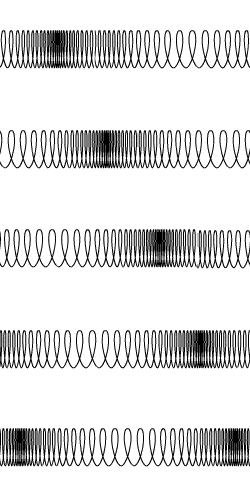
2

Electromagnetic Wave

3

Wave

16

Multiple Choice

A classification of wave that can only travel through a medium.

1

Mechanical Wave

2

Electromagnetic Wave

3

Wave

17

Multiple Choice

It is the MATTER through which a wave travels through.

1

Mechanical Wave

2

Electromagnetic Wave

3

Medium

18

Multiple Choice

Choose an example of Electromagnetic Wave.

1

Light wave

2

Sound wave

3

Medium

19

Multiple Choice

Choose an example of Mechanical Wave.

1

Light wave

2

Sound wave

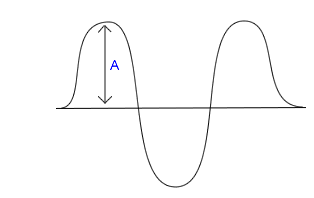
3

Medium

20

Multiple Choice

What are the two types of waves?

1

Transverse and Longitudinal

2

Sound wave and light waves

3

water waves

21

Multiple Choice

It is a type of wave where in particle motion is perpendicular to the wave motion.

1

Longitudinal Wave

2

Transverse Wave

3

Sound Waves

22

Multiple Choice

It is a type of wave where in particle motion is parallel to the wave motion.

1

Longitudinal Wave

2

Transverse Wave

3

Sound Waves

23

Multiple Choice

Do sound waves travel through a medium?

1

YES

2

NO

24

Multiple Choice

What are two parts of traverse waves?

1

Crest and Trough

2

Compression and Rarefaction

3

Longitunal and tranverse

25

Multiple Choice

What are two parts of longitudinal waves?

1

Crest and Trough

2

Compression and Rarefaction

3

Longitunal and tranverse

26

Multiple Choice

Question image

Name the part of the transverse wave shown in the picture?

1

Crest

2

Rarefaction

3

Trough

4

Compression

27

Multiple Choice

Question image

Name the part of the transverse wave shown in the picture?

1

Crest

2

Rarefaction

3

Trough

4

Compression

28

Multiple Choice

A part of longitudinal wave where in particles are pushed together.

1

Crest

2

Compression

3

Rarefaction

4

Trough

29

Multiple Choice

Question image

Name the part of the longitudinal wave shown in the picture?

1

Crest

2

Rarefaction

3

Trough

4

Compression

30

Multiple Choice

A part of longitudinal wave where in particles are spread apart.

1

Crest

2

Compression

3

Rarefaction

4

Trough

31

Multiple Choice

Question image

Name the part of the longitudinal wave shown in the picture?

1

Crest

2

Rarefaction

3

Trough

4

Compression

32

Multiple Choice

It is the distance between one point on a wave.

1

Period (T)

2

Amplitude

3

Wavelength (λ)

4

Frequency (f)

33

Multiple Choice

It is the amount of time it takes one wavelength to pass point.

1

Period (T)

2

Amplitude

3

Wavelength (λ)

4

Frequency (f)

34

Multiple Choice

It is the number of waves that pass a given point in one second.

1

Period (T)

2

Amplitude

3

Wavelength (λ)

4

Frequency (f)

35

Multiple Choice

It is the speed at which the wave moves.

1

Period (T)

2

Wave Speed (ư)

3

Wavelength (λ)

4

Frequency (f)

36

Multiple Choice

What is the symbol used for Period ?

1

(T)

2

(ư)

3

(λ)

4

(f)

37

Multiple Choice

What is the symbol used for Wave Speed?

1

(T)

2

(ư)

3

(λ)

4

(f)

38

Multiple Choice

What is the symbol used for Wavelength?

1

(T)

2

(ư)

3

(λ)

4

(f)

39

Multiple Choice

What is the symbol used for Frequency?

1

(T)

2

(ư)

3

(λ)

4

(f)

40

Multiple Choice

What is the unit used for Period (T)?

1

s

2

m/s

3

m

4

Hz

41

Multiple Choice

What is the unit used for Wave Speed ( (ư))?

1

s

2

m/s

3

m

4

Hz

42

Multiple Choice

What is the unit used for Wavelength(λ)?

1

s

2

m/s

3

m

4

Hz

43

Multiple Choice

What is the unit used for Frequency(Hz)?

1

s

2

m/s

3

m

4

Hz

44

Multiple Choice

Question image

In General, sound waves travel the fastest in __________

1
solid
2
liquid
3
Gas
4
plasma

45

Multiple Choice

Question image

In General, sound waves travel the slowest in __________

1
solid
2
liquid
3
Gas
4
Plasma

46

Multiple Choice

Question image

Which transverse wave has the highest frequency?

1

1

2

2

3

3

4

4

47

Multiple Choice

Which diagram shows the wavelength of a wave?

1
2
3

48

Multiple Choice

The matter (solid, liquid, or gas) through which waves can travel
1

Medium

2

Object

3

Transverse Wave

4

Wavelength

49

Multiple Choice

What does a wave carry from place to place?

1

energy

2

matter

3

people

50

Multiple Choice

The highest point on a transverse wave is the

1

compression

2

crest

3

rest position

4

trough

51

Multiple Choice

The lowest point on a transverse wave is the

1

compression

2

crest

3

rest position

4

trough

52

Multiple Choice

If the wavelength of a wave increased, what would happen to the frequency?

1

decrease

2

increase

3

stay the same

53

Multiple Choice

A wave that can travel through matter and empty space is a:

1

electromagnetic wave

2

longitudinal wavy

3

transverse wave

4

mechanical

54

Multiple Choice

Question image

What type of wave is this?

1

Longitudinal

2

Transverse

3

Electromagnetic

4

x ray

55

Multiple Choice

Question image
Which of the following is NOT a mechanical wave?
1

sound

2

light

3

ocean

4

seismic

56

Multiple Choice

Question image
How would a person measure the wavelength on this sound wave?
1

dense to less dense

2

trough to crest

3

compression to compression

4

beginning of illustration to the end

57

Multiple Choice

Question image

You can't hear sounds in outer space because there is no _________.

1

medium

2

light

3

energy

4

heat

58

media

59

media

60

media
media

61

media
media

63

Open Ended

64

media

Characteristics of a Sound Waves

media

65

media

Characteristics of a Sound Waves

media

66

media
media

67

media
media

In an instrument, shorter bar vibrate faster make high pitch sound. Longer bar vibrate slower make low pitch sound.

69

media

Characteristics of a Sound Waves

media

70

media

Characteristics of a Sound Waves

media

71

media

Characteristics of a Sound Waves

media

72

media

Characteristics of a Sound Waves

media

73

Multiple Choice

Sound waves travel as ________ waves.

1

Transverse

2

Longitudinal

3

Surface

74

Multiple Choice

A high amplitude sound means _____ sound, and a low amplitude sound means _____ sound.

1

softer, louder

2

louder, softer

3

louder, louder

4

softer, softer

75

Multiple Choice

Sound is made when a source of energy forces the matter around it to __________.

1

Vibrate

2

Amplitude

3

Stay still

4

Pitch

76

Multiple Choice

Sound is a form of energy. How is it produced?

1

by waiting

2

by vibrating objects

77

Multiple Choice

Question image
What is changed in the second picture?
1
Someone is talking louder in picture 2
2
Someone is talking softer in picture 2
3
Someone is talking lower pitch in picture 2
4
Someone is talking higher pitch in picture 2

78

Multiple Choice

It is the highness or lowness of sound or a musical note.

1

Timbre

2

Loudness

3

Pitch

79

Multiple Choice

It determines the loudness or volume of a sound wave.

1

frequency

2

amplitude

3

pitch

4

loudness

80

Multiple Choice

The term for how high or low a sound is:
1
pitch
2
volume
3
sound
4
medium

81

Multiple Choice

It is the unit used for frequency.

1

Hertz (Hz)

2

decibel (dB)

3

Meter (m)

4

Second (s)

82

Multiple Choice

A _____ frequency sound has a higher pitch. A lower frequency sound has a _____ pitch.

1

higher, higher

2

lower, higher

3

higher, lower

4

lower, lower

83

Multiple Choice

Question image

Which wave produced the loudest sound?

1

high Amplitude

2

low Amplitude

84

Multiple Choice

Question image
Which wavelength would have the highest pitch like a flute or whistle?
1
High Frequency Wavelength
2
Low frequency Wavelength

85

Multiple Choice

Question image
High frequency = _______ Pitch
1
High
2
Low

86

Multiple Choice

Question image
Low frequency = _______ Pitch
1
Low
2
High

87

Multiple Choice

Question image
Low Amplitude = ______________
1
Quieter Sounds
2
Louder sounds

88

Multiple Choice

Question image
High Amplitude =__________________
1
Louder sounds
2
Quieter Sounds

89

Multiple Choice

High frequency sounds have _______ pitch

1

High

2

Low

90

Multiple Choice

Sound waves CANNOT travel through which of these:

1

Paper

2

Milk

3

Outer space

91

Multiple Choice

The highness or lowness of a sound is its ____________.

1

pitch

2

volume

3

amplitude

4

frequency

92

Multiple Choice

Question image
What is changed in the second picture?
1
Someone is talking louder in picture 2
2
Someone is talking softer in picture 2
3
Someone is talking lower pitch in picture 2
4
Someone is talking higher pitch in picture 2

93

Multiple Choice

Question image
What is something natural that Sound cannot travel through?
1
Water
2
Air
3
Liquids
4
outer Space

94

Multiple Choice

Question image
If the distance represented by the letter A (the amplitude) were increased, how would it change the sound?
1
The sound would be higher. 
2
The sound would be lower. 
3
The sound would be softer. 
4
The sound would be louder. 

95

Multiple Choice

Which feature of sound is determined by amplitude?
1
Pitch
2
Smoothness
3
Loudness

96

Open Ended

A wave is moving toward shore with a velocity of 4 m/s. If its period is 4.0 s, what is it's wavelength?

97

media

98

media

99

media

100

media

101

media

102

​Group Activity

  • This helps students understand sound intensity through volume control.


Instruction of the game:
Do the sound as I say to match the given range decibel level.

Teacher will check the decibel meter online to see who can create the closest match.

103

​Group Activity

  • This helps students understand sound intensity through volume control.


Instruction of the game:
1.Do the sound as I say to match the given range decibel level.

2.Teacher will check the decibel meter online to see who can create the closest match.
3.The first team who will get the first 10 points will be the winner.

104

media
media

Intensity of different sound.

105

media

106

Low (<50 Hz) and high (>12,000 Hz) frequencies require higher intensities to be audible, while mid-range frequencies (~1,000 Hz) are heard at much lower intensities.

  • Threshold of hearing: Lowest audible sound (~1,000 Hz, 1.0 × 10⁻¹² W/m²)

  • Threshold of pain: Loudest tolerable sound (~1.0 W/m²), above which immediate or prolonged exposure can damage hearing.

Important Notes:

  1. The human ear is highly sensitive, detecting minuscule sound pressure changes.

  2. Prolonged exposure to high intensities, even below the pain threshold, risks hearing damage.

  3. Thresholds of hearing and pain converge at extreme low and high frequencies.

107

media

108

​Sound intensity level (SIL) is a measurement of how loud a sound is relative to a standard, and is expressed in decibels (dB).

Decibel is a dimensionless unit that describes the ratio of two intensities of sound; the threshold of hearing is commonly used as the reference intensity.

109

Relative intensity, measured in decibels (dB), relates to perceived loudness, which depends logarithmically on sound intensity. The decibel scale quantifies this, with each 10 dB increase corresponding to a tenfold rise in intensity and a fixed perceived loudness difference.

Important Notes:

  1. Decibel scale is dimensionless, based on the logarithm of intensity ratios.

  2. Perceived loudness increases logarithmically, not linearly, with intensity.

  3. A tenfold increase in intensity adds 10 dB.

  4. Equal decibel differences correspond to equal changes in perceived loudness, regardless of actual intensity increase.

110

media

111

What is Acoustic Resonance?

  • Definition: Acoustic resonance occurs when a sound wave matches the natural frequency of an object, causing it to vibrate with greater amplitude.

  • Key Idea: It amplifies sound through constructive interference.

​Acoustic resonance of sound wave

112

​How It Works

  1. Natural Frequency: Every object has a frequency at which it vibrates naturally.

  2. Resonance Condition: When an external sound wave matches this frequency, resonance occurs.

  3. Energy Transfer: Sound energy amplifies the object’s vibrations.

  • Examples in Daily Life

  • Musical Instruments: Guitars, violins, and drums resonate to produce amplified sound.

  • Applications

  • Architecture: Designing concert halls for optimal resonance.

  • Medical: Ultrasound imaging uses resonance principles

113

media

114

Multiple Choice

What is the threshold of hearing or the lowest audible sound?

1

1.0 × 10⁵ W/m²

2

1.0 × 10⁻¹0 W/m²

3

1.0 × 10⁻¹² W/m²

4

1.0 W/m²

115

Multiple Choice

What is the threshold of pain or the loudest tolerable sound ?

1

1.0 × 10⁵ W/m²

2

1.0 × 10⁻¹0 W/m²

3

1.0 × 10⁻¹² W/m²

4

1.0 W/m²

116

Multiple Choice

Prolonged exposure to _________, even below the pain threshold, risks hearing damage.

1

high intensities

2

low intensities

3

medium intensities

117

Multiple Choice

Thresholds of hearing and pain converge at extreme low and high _______.

1

amplitudes

2

wavelengths

3

frequencies

118

Multiple Choice

The threshold of hearing is commonly used as the _________.

1

reference sound

2

reference intensity

3

reference level

119

Multiple Choice

________ is dimensionless, based on the logarithm of intensity ratios.

1

sound intensity level

2

sound intensity

3

Decibel scale

120

Multiple Choice

______ occurs when a sound wave matches the natural frequency of an object, causing it to vibrate with greater amplitude.

1

Acoustic Resonance

2

sound intensity

3

Decibel scale

Learning Objectives:​

  • Explain how sound waves are produced.

  • Relate frequency to pitch.

  • Compare the speed of sound in various media.

  • Relate plane waves to spherical waves.

  • Recognize the Doppler effect, and determine the direction of a frequency shift when there is relative motion between a source and an observer.

​Sound Waves

Show answer

Auto Play

Slide 1 / 120

SLIDE